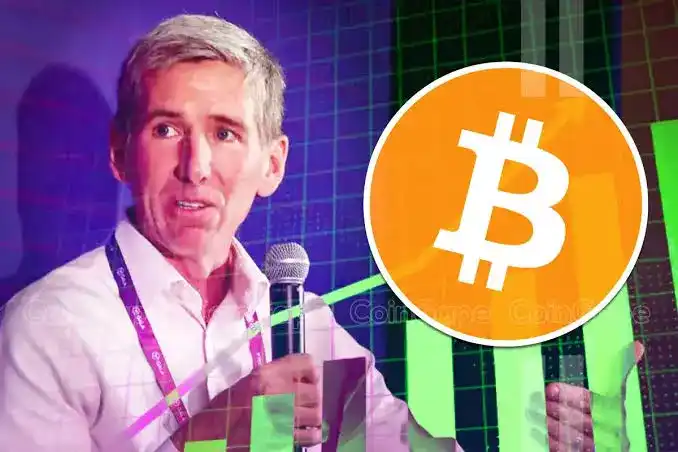
Galaxy Research: Can SEC's New Regulations Usher in a New Era for Token Financing?

marsbitPublié le 2026-08-22Dernière mise à jour le 2026-08-22

Résumé

**SEC Proposes New Framework for Token Offerings, Potentially Unlocking Legal Paths for U.S. Crypto Fundraising** On August 18, the U.S. Securities and Exchange Commission (SEC) proposed new rules, dubbed "Reg Crypto," specifically tailored for crypto asset offerings. This framework marks a departure from applying traditional securities rules designed for stocks to tokens. It creates a potential legal pathway for token sales to the U.S. public, including non-accredited investors, without full registration. The proposed rules apply to crypto assets that are not themselves securities but were sold as part of an investment contract where the issuer promised to build a product, network, or ecosystem. It establishes a four-phase lifecycle: Raise, Disclose, Build, and Exit. The "Raise" phase includes two new fundraising exemptions: a startup exemption allowing up to $5 million over four years and a larger, Regulation A-based exemption for up to $20 million or $75 million over 12 months. The "Disclose" phase requires specific token-related disclosures like supply schedules, governance, and development progress. After the issuer completes its promised development work and files a transition report, the "Exit" phase allows the associated investment contract to terminate, even if the token continues to trade. The analysis highlights that the framework's most immediate impact may be providing a formal "exit" path for existing tokens with unclear legal status, rather than immediately ...

Author: Alex Thorn, Head of Research, Galaxy Research

Compiled by: Jiahuan, ChainCatcher

On August 18, the U.S. Securities and Exchange Commission (SEC) proposed the "Regulation of Crypto Assets" (hereinafter referred to as "Reg Crypto"). This is the first set of securities rules in the United States specifically designed around the offering and sale of crypto assets, rather than simply applying existing rules formulated for corporate stocks to crypto assets.

This proposal first provides a legal pathway for certain tokens to be sold to the U.S. public, including allowing participation by non-accredited investors without requiring a registered offering. Second, it establishes a formal mechanism with clear timelines for terminating investment contracts associated with tokens.

Over the past decade, token issuers in the U.S. have effectively faced two choices: either conduct a registered offering (which very few projects have managed to complete in reality) or choose to launch overseas. Reg Crypto offers a third option and also provides an exit path for the thousands of tokens already trading but whose legal status remains unclear.

The rule only applies to crypto assets that are not securities in themselves, but whose offering or sale is part of an investment contract, and where the issuer has promised through that contract to build a product, network, or ecosystem.

Tokenized stocks and bonds, as well as arrangements that link tokens to equity or other securities, are explicitly excluded from this framework. Within this scope, the proposal is divided into four phases: Raise, Disclosure, Build, and Exit.

Four Phases: Raise, Disclosure, Build, and Exit

  • Raise: A one-time financing exemption for startups will allow issuers to raise up to $5 million over a maximum period of four years, with public filings required at the beginning and end of that period. Another, larger-scale exemption based on Regulation A (a public offering exemption mechanism under U.S. securities law that allows companies to raise funds from the public after meeting disclosure requirements) allows issuers to raise up to $20 million or $75 million within 12 months, depending on the tier.

    Using this financing exemption requires SEC qualification approval and ongoing submission of reports and financial statements. Larger Tier 2 offerings also require audited financial statements, and the issuer must maintain a substantial connection with the United States in terms of organization, management, and assets.

  • Disclose: Issuers need to provide information specifically designed for tokens, including token supply and release schedule, minting and burning mechanisms, governance mechanisms and smart contract permissions, source code, and most importantly: what the issuer promises to build and the current progress of that build.

  • Build: The startup exemption provides a window of up to four years for issuers to complete their promised core development work.

  • Exit: Once the issuer completes or permanently ceases the aforementioned work, makes no new promises to undertake such work, and files a transition report, the relevant investment contract will be deemed terminated. Thereafter, the SEC will no longer consider that crypto asset as an asset subject to that investment contract under the Securities Act and the Securities Exchange Act.

Notably, this safe harbor mechanism also applies to issuers who did not use the aforementioned financing exemptions. This means it not only impacts future token offerings but also provides a potential exit path for tokens issued years ago whose security status remains undefined.

The rule's impact becomes more intuitive from the SEC's estimates of its applicable scale. To estimate the paperwork burden, the SEC assumes about 475 issuers per year would use the investment contract safe harbor mechanism, while about 130 projects per year would conduct offerings under the two new exemptions. This suggests that in the short term, Reg Crypto is more likely to address the legal status of existing assets under securities law rather than immediately sparking a new wave of token offerings.

Investment contracts sold under either of the above exemptions will not be considered restricted securities; they can be resold immediately unless contractually restricted. The proposal will also have preemptive effect over certain state registration and qualification review requirements, covering eligible initial offerings and some secondary trading, provided the issuer continues to fulfill its obligations.

However, the rule does not address exchanges, brokers, dealers, or custodial businesses, nor is it the same as another innovation exemption previously discussed by the SEC for tokenized securities and on-chain trading. The public comment period will last 60 days after the proposal is published in the Federal Register.

The SEC canceled a public meeting originally scheduled for August 14 and released the proposal four days later. Three current commissioners—Chair Paul Atkins and Commissioners Hester Peirce and Mark Uyeda—issued statements of support. Although the comment period is 60 days, the timeline remains very tight if formal adoption is to occur before 2027.

Our View

As we wrote last week, despite the continued stalemate in the Senate over the CLARITY Act, the SEC under Chair Atkins is moving forward with measures that can increase regulatory clarity for the crypto industry.

Reg Crypto is a constructive step and one of the clearest signals to date that the SEC is not prepared to wait for Congress to modernize its own regulatory system. This disclosure regime is the most obvious manifestation of the SEC beginning to understand the uniqueness of crypto assets. It requires issuers to disclose token supply and release schedule, minting and burning mechanisms, smart contract permissions, source code links, ecosystem structure, and to continuously record what the issuer promises to build and the current progress.

This is the information token buyers actually care about, and it differs from what equity investors in a company focus on. The SEC is acknowledging something it refused to acknowledge during the tenure of Atkins' predecessor, Gary Gensler: token offerings differ from equity offerings in form and function, and therefore the required disclosures for investors should also differ.

The proposal's understanding of "time" is equally important. After a stock offering, its security nature persists. Under the Reg Crypto framework, an investment contract associated with a token can begin at issuance, bind the issuer's obligations during the project build phase, and terminate on a publicly recorded date, even if the token itself continues to exist and trade.

This is not just a new exemption; it is a regulatory framework built around the token lifecycle and translated into enforceable rules. Whether issuers will adopt these financing exemptions remains an open question.

Rule 506 under Regulation D (Regulation D is a private placement exemption rule under U.S. securities law that allows companies to raise funds from qualified investors without public registration) remains valid; it has no fundraising cap, does not require SEC qualification approval, and has no ongoing public reporting requirements. In comparison, the advantages of Reg Crypto are that it allows legal public offerings to non-accredited investors, the securities can be transferred immediately, and it has preemptive effect over certain state registration requirements.

For projects that want their tokens to circulate, rather than remain in venture capital portfolios long-term, the lack of a federal holding period might be the most underrated provision in the entire proposal. Of course, the trade-off is that issuers must undertake real disclosure and reporting obligations; if using the larger financing exemption, they must also maintain a substantial connection with the U.S.

This requirement presents another test. In the past, many token projects chose to establish offshore foundations not only to circumvent U.S. securities laws but also for reasons related to governance, treasury management, and tax treatment.

The larger financing exemption in Reg Crypto requires many projects to substantially relocate their issuing entity, management, business operations, and a majority of assets back to the U.S. Until U.S. tax treatment of token sale proceeds and treasury allocations becomes clearer, this requirement may be enough for many projects to maintain their existing structures.

The startup exemption does not have similar U.S. incorporation requirements, so despite its $5 million fundraising cap, it may see higher adoption in early stages for this reason. If these issues can be resolved positively, the most noteworthy scenario would be a truly legal Token Financing 2.0.

One of the important early applications of the crypto industry was capital formation: projects could raise funds directly from future users, rather than relying entirely on venture capital firms and traditional private financing systems. The 2017 token financing cycle demonstrated both the market's demand for the ICO model and the consequences of adopting it without credible disclosure, investor protection, and enforceable rules.

Reg Crypto fills in many of the key missing elements from that era: exemption mechanisms designed for different fundraising scales; disclosure requirements tailored to token characteristics; allowance for public investor participation within limits; and a clear endpoint for when the issuer's securities law obligations terminate.

This system could also foster new service ecosystems. Securities lawyers, audit firms, technical disclosure service providers, issuance platforms, and compliance service providers will all benefit from helping projects prepare offering materials and transition reports, much like Regulation A+ spawned its own ancillary industry.

The teams most likely to adopt this framework first are those that already have U.S. entities, relatively clear organizational structures, and can bear the ongoing disclosure costs. The SEC estimates that preparing a transition report under the standalone safe harbor mechanism requires an average of about 30 hours of effort, including external professional service costs. This means even just completing the "Exit" process can rarely be done entirely by the project team itself.

However, in the short term, "Exit" is more important than "Raise."

The most immediate and obvious impact of Reg Crypto is more likely to be cleaning up legacy tokens rather than reviving U.S. token offerings. This in itself is significant: for many years, the market has been trying to infer when an investment contract terminates through regulatory speeches, settlement agreements, and litigation cases.

Previously, the industry pinned its hopes on the "sufficient decentralization" standard, i.e., when a blockchain network is no longer controlled by a single entity and token value no longer primarily depends on the issuer's efforts, it may fall outside securities regulation. But this standard has always lacked clear definition and has been a long-term source of uncertainty in past U.S. crypto regulation.

Reg Crypto would replace this vague status with formal filings and clear dates. But note that the rule is currently in the proposal stage, not a final rule. Even if ultimately adopted, the system itself may still face changes. This SEC proposal currently still needs to go through a 60-day public comment process.

In his own statement, Chair Atkins indicated that legislation remains indispensable; only congressional action can prevent future regulators from overturning the framework the SEC is currently establishing. Considering this system could indeed be adjusted in the future, this judgment is reasonable.

Additionally, state regulators may challenge the proposal's broad federal preemption provisions. Reg Crypto may bring important regulatory clarity to the crypto industry, but only Congress can make that clarity truly lasting.

Cryptos en tendance

Questions liées

QWhat are the four key stages of the proposed 'Reg Crypto' framework for crypto asset offerings?

AThe four stages of the proposed 'Reg Crypto' framework are: Raise (Financing), Disclose (Information Disclosure), Build (Development), and Exit. The 'Raise' stage involves fundraising exemptions with specific limits and requirements. The 'Disclose' stage mandates project-specific disclosures about the token. The 'Build' stage provides a development window for the project. The 'Exit' stage formally terminates the investment contract once obligations are met.

QWhat is the primary short-term impact of the 'Reg Crypto' proposal, according to Galaxy Research?

AAccording to Galaxy Research, the primary short-term impact of the 'Reg Crypto' proposal is likely to be cleaning up the legal status of existing tokens (providing an 'Exit' path) rather than immediately spurring a new wave of token offerings in the US. It offers a formal mechanism for historically issued tokens to exit their investment contract status.

QHow does the 'Reg Crypto' proposal change the information disclosure requirements for token offerings compared to traditional equity offerings?

AThe 'Reg Crypto' proposal requires disclosures specifically tailored to crypto assets, such as token supply and release schedules, minting/burning mechanisms, governance, smart contract permissions, source code, and the status of the promised development. This acknowledges that token investors need different information than traditional equity investors.

QWhat is a key advantage of the new 'Reg Crypto' exemptions over the existing Regulation D (Rule 506) for token fundraising?

AA key advantage of the new 'Reg Crypto' exemptions over the existing Regulation D (Rule 506) is that it allows legal public offerings to non-accredited investors, permits immediate transferability of the associated securities (no federal holding period), and provides preemption from certain state-level registration requirements.

QWhat significant uncertainty in US crypto regulation does the 'Reg Crypto' proposal aim to address regarding token status?

AThe 'Reg Crypto' proposal aims to replace the vague and uncertain concept of 'sufficient decentralization' as a criterion for a token to exit securities regulation. It establishes a formal process with public filings and clear dates to terminate an investment contract, providing regulatory clarity that was previously lacking.

Lectures associées

Pourquoi le Trésor américain intensifie ses rachats de dette à long terme, et pourquoi l'or et le Bitcoin montent-ils ?

Le Trésor américain a annoncé un doublement du programme de rachat de ses obligations à long terme à partir du 9 septembre, une mesure visant à soutenir la liquidité du marché. Cette décision, intervenue dans un contexte de hausse continue des rendements obligataires et d'affaiblissement du dollar, a ravivé les craintes d'une dépréciation de la devise américaine, servant de catalyseur principal à une forte hausse du bitcoin et de l'or. Le bitcoin a connu une progression particulièrement marquée, avec des gains quotidiens d'environ 6% pendant trois séances consécutives. L'or a également bénéficié de la faiblesse du dollar, franchissant sa moyenne mobile sur 200 jours. Les analystes expliquent que l'annonce du Trésor a relancé le "trade de dépréciation monétaire", poussant les investisseurs vers des actifs considérés comme des valeurs refuges face à l'érosion anticipée du pouvoir d'achat du dollar. Cependant, le marché obligataire est resté sceptique, les rendements des obligations à 10 et 30 ans étant rapidement revenus à leurs niveaux d'avant l'annonce. Cette réaction met en doute l'efficacité réelle de l'opération pour soulager la pression sur les taux à long terme. Des facteurs supplémentaires, comme une réunion à la Maison Blanche sur la régulation des cryptomonnaies et des rachats forcés de positions vendeuses sur le bitcoin, ont aussi contribué à la hausse. En définitive, bien que l'intervention du Trésor ait provoqué un mouvement de fuite vers les actifs tangibles, elle ne semble pas avoir modifié les dynamiques fondamentales du marché obligataire, où persistent les inquiétudes concernant le déficit budgétaire, l'inflation et le fardeau de la dette publique américaine.

华尔街日报Il y a 11 mins

Pourquoi le Trésor américain intensifie ses rachats de dette à long terme, et pourquoi l'or et le Bitcoin montent-ils ?

华尔街日报Il y a 11 mins

Le mystérieux grand modèle « Ox Alpha » fait le buzz, gratuit pour un temps limité

Le monde des grands modèles de langage (LLM) est en effervescence avec l'apparition d'Ox Alpha, un modèle anonyme surnommé « Niu Lai » par les internautes chinois. Proposé gratuitement et temporairement sur OpenRouter, il dispose d'un contexte de 1 million de tokens et prend en charge texte, images et vidéos. Son évaluation sur des tâches d'ingénierie logicielle réelles (benchmark DeepSWE) montre des performances impressionnantes, avec un taux de réussite initial de 80% sur un sous-ensemble de tests, rivalisant ainsi avec les meilleurs modèles de codage actuels. Bien que d'autres tests aient rapporté un score d'environ 63%, son fort potentiel est établi. Son origine fait l'objet de vives spéculations. Plusieurs indices techniques pointent vers une version non publiée de GLM-5.3 (probablement GLM-5.3 Flash ou sa variante multimodale) développée par Zhipu AI : alignement parfait du comptage de tokens visuels et textuels avec GLM-5V-Turbo/GLM-5.3, comportements de refus et style de réponse similaires. L'entreprise n'a cependant pas confirmé. Parallèlement, un autre modèle anonyme nommé « korrine » apparaît sur Code Arena, suscitant des hypothèses le liant à Kimi, Qwen ou MiMo. Cette tendance au test anonyme (« sous couverture ») permet aux développeurs d'évaluer objectivement les capacités des modèles, sans biais de marque, et de les soumettre à des tests de stress en conditions réelles avant un lancement officiel, tout en générant du buzz marketing. La performance d'Ox Alpha, s'il s'agit bien d'un modèle « Flash » (version allégée), laisse entrevoir un potentiel encore plus élevé pour les versions complètes à venir.

marsbitIl y a 1 h

Le mystérieux grand modèle « Ox Alpha » fait le buzz, gratuit pour un temps limité

marsbitIl y a 1 h

Bitwise CIO Matt : Si vous avez actuellement une configuration crypto de 0 %, cela équivaut à être activement baissier sur le marché

Matt Hougan, CIO de Bitwise, analyse la dynamique actuelle du marché cryptographique malgré une baisse de 50% depuis les sommets. Il souligne l'engagement persistant de Wall Street, citant le lancement de fonds tokenisés par BlackRock malgré les retards réglementaires comme le CLARITY Act. Hougan estime que ce projet de loi restera dans un état d'incertitude, mais que l'industrie avancera sans lui, soutenue par les grandes institutions financières. Il observe un changement de comportement du Bitcoin, désormais résistant aux mauvaises nouvelles, signe pour lui de la fin d'un marché baissier. Concernant l'investissement, il explique que le DCA (moyenne par coût) est une assurance comportementale, mais qu'une entrée immédiate est justifiée pour les rendements absolus, anticipant une reprise. Hougan note que les grandes plateformes de gestion de patrimoine (Wells Fargo, UBS) considèrent désormais la crypto comme une classe d'actifs à part entière, se focalisant sur le long terme. Il met en avant les opportunités de la gestion d'actifs on-chain et du thème de la tokenisation d'actifs réels (RWA), bénéfiques pour Ethereum, Solana et Chainlink. Son conseil principal : une allocation de 5% en crypto est un "repas gratuit", améliorant significativement les rendements sans augmenter la volatilité globale du portefeuille. À l'inverse, une allocation de 0% n'est pas une position neutre, mais un pari actif très baissier sur l'avenir de cette classe d'actifs.

marsbitIl y a 1 h

Bitwise CIO Matt : Si vous avez actuellement une configuration crypto de 0 %, cela équivaut à être activement baissier sur le marché

marsbitIl y a 1 h

À l'instant, le premier match de tennis humain-machine au monde s'est déroulé, un robot a effectué un sauvetage limite, laissant Zheng Jie stupéfaite

Le premier match de tennis humain-robot au monde a eu lieu lors des deuxièmes Jeux mondiaux des robots humanoïdes, diffusé en direct par la télévision centrale de Chine. Le robot humanoïde "Galaxy Star仔" de Galaxy General Robotics a affronté la championne de tennis Zheng Jie en simple, après avoir participé à un double mixte. Le robot a démontré des capacités remarquables : déplacement agile, échanges fluides, service à plus de 100 km/h, et récupération de balles difficiles. Il a même réussi à se relever rapidement après une chute. Cette performance représente un point de rupture dans l'intelligence incarnée, testant en temps réel les limites de la perception, de la prise de décision, du contrôle moteur et de l'adaptation dans un environnement physique dynamique et imprévisible, bien plus complexe que les jeux de stratégie comme les échecs ou le Go. Cette réussite s'appuie sur le modèle d'intelligence incarnée "Galaxy AstraBrain", qui intègre dans une même architecture les fonctions de décision de haut niveau ("cerveau") et de contrôle moteur fin ("cervelet"), éliminant ainsi les délais de communication. Le robot a été entraîné en deux étapes : d'abord par apprentissage à partir de données imparfaites de joueurs humains, puis par un entraînement intensif en simulation où plusieurs agents s'affrontaient, permettant l'émergence autonome de compétences comme le sauvetage extrême ou la technique pour se relever. Cet événement "AstraTennis" marque le passage de l'IA d'un monde numérique à la maîtrise du monde physique, symbolisant les avancées de la Chine dans l'ère de la symbiose carbone-silicium.

marsbitIl y a 2 h

À l'instant, le premier match de tennis humain-machine au monde s'est déroulé, un robot a effectué un sauvetage limite, laissant Zheng Jie stupéfaite

marsbitIl y a 2 h

Soudain, DeepSeek annonce des tarifs creux le week-end, travailler le samedi et dimanche deviendrait plus avantageux ?

DeepSeek a annoncé une modification de sa tarification par période de pointe et creuse pour ses API, effective à partir du 23 août. Désormais, les week-ends (samedi et dimanche) seront entièrement facturés au tarif creux, sans distinction d'heure. Cette décision, généralement bien accueillie par les développeurs qui peuvent ainsi réduire leurs coûts en exécutant des tâches batch le week-end, suscite également des inquiétudes parmi les salariés. En effet, certaines industries, comme celle des mini-séries, ont déjà commencé à ajuster les horaires de travail pour profiter des périodes de calcul AI moins chères. Des cas sont rapportés où des entreprises modifient les plannings, voire imposent du travail le week-end, pour optimiser les dépenses en tokens. Les raisons de ce changement tarifaire font débat. Une hypothèse avance que les prix de pointe correspondent aux périodes d'entraînement des modèles par DeepSeek, libérant la capacité de calcul le week-end. D'autres remettent en cause cette logique, arguant que l'entraînement des modèles est hautement automatisé. Alors que la nouvelle grille tarifaire est en vigueur, la question des impacts à long terme sur l'organisation du travail et des potentielles économies réelles, compte tenu des coûts de coordination supplémentaires, reste ouverte.

marsbitIl y a 2 h

Soudain, DeepSeek annonce des tarifs creux le week-end, travailler le samedi et dimanche deviendrait plus avantageux ?

marsbitIl y a 2 h

Trading

Spot

Articles tendance

Comment acheter ERA

Bienvenue sur HTX.com ! Nous vous permettons d'acheter Caldera (ERA) de manière simple et pratique. Suivez notre guide étape par étape pour commencer votre parcours crypto.Étape 1 : Création de votre compte HTXUtilisez votre adresse e-mail ou votre numéro de téléphone pour ouvrir un compte sur HTX gratuitement. L'inscription se fait en toute simplicité et débloque toutes les fonctionnalités.Créer mon compteÉtape 2 : Choix du mode de paiement (rubrique Acheter des cryptosCarte de crédit/débit : utilisez votre carte Visa ou Mastercard pour acheter instantanément Caldera (ERA).Solde :utilisez les fonds du solde de votre compte HTX pour trader en toute simplicité.Prestataire tiers :pour accroître la commodité d'utilisation, nous avons ajouté des modes de paiement populaires tels que Google Pay et Apple Pay.P2P :tradez directement avec d'autres utilisateurs sur HTX.OTC (de gré à gré) : nous offrons des services personnalisés et des taux de change compétitifs aux traders.Étape 3 : stockage de vos Caldera (ERA)Après avoir acheté vos Caldera (ERA), stockez-les sur votre compte HTX. Vous pouvez également les envoyer ailleurs via un transfert sur la blockchain ou les utiliser pour trader d'autres cryptos.Étape 4 : tradez des Caldera (ERA)Tradez facilement Caldera (ERA) sur le marché Spot de HTX. Il vous suffit d'accéder à votre compte, de sélectionner la paire de trading, d'exécuter vos trades et de les suivre en temps réel. Nous offrons une expérience conviviale aux débutants comme aux traders chevronnés.

842 vues totalesPublié le 2025.07.17Mis à jour le 2026.06.02

Comment acheter ERA

Discussions

Bienvenue dans la Communauté HTX. Ici, vous pouvez vous tenir informé(e) des derniers développements de la plateforme et accéder à des analyses de marché professionnelles. Les opinions des utilisateurs sur le prix de ERA (ERA) sont présentées ci-dessous.

活动图片