ENS Has Quietly Completed a 'Self-Revolution'

marsbitPublié le 2026-08-12Dernière mise à jour le 2026-08-12

Résumé

On August 11th, the ENS DAO officially voted into effect the "Next Era of ENS DAO" proposal. This move by the crucial Ethereum domain name protocol establishes a legal entity, the ENS Foundation, to represent it in the real world—a long-missing piece after nearly a decade of operation. The proposal, initially introduced in June, sparked significant community debate. Critics feared it amounted to the DAO dissolving itself and handing over its treasury. The final version, however, represents a compromise, carefully balancing control. The DAO retains governance over its substantial ENS token holdings and its operational wallet. A $65 million endowment is delegated to the Foundation's Board but protected by a 9-day timelock and a Security Council veto. The DAO also holds ultimate power to appoint and remove Board members. The Foundation's role is to handle tasks the DAO is ill-suited for, such as legal representation, trademark enforcement, and engagement with traditional internet governance bodies like ICANN. This allows ENS Labs, the core development company, to focus on engineering, like the upcoming ENSv2. The five-member Foundation Board includes independent directors with provisions to manage conflicts of interest, particularly regarding funding to ENS Labs. This governance restructuring aims to create a clearer separation of duties: the DAO safeguards protocol neutrality, the Foundation handles real-world operations and diplomacy, and ENS Labs focuses on development. I...

Original author: Eric, Foresight News

At 8:00 PM Beijing time on August 11th, the ENS DAO formally voted to pass and execute the "Next Era of ENS DAO" proposal. After nearly a decade of operation, this most important domain name protocol on Ethereum has finally filled in a long-missing piece of the puzzle: a legal entity capable of representing it in the real world.

The story begins in June of this year. On June 19th, ENS Foundation Director Katherine Wu published a proposal on the governance forum, with the core idea being to delegate the DAO's daily operations, grant management, and long-term treasury strategy to a tangible, operational ENS Foundation.

This idea immediately ignited a firestorm within the community. Rotki founder Lefteris Karapetsas bluntly stated on X that this proposal essentially equated to the DAO dissolving itself and handing over a treasury worth nearly $500 million to the Foundation, even criticizing founder Nick Johnson for delegating half of his voting power to himself. An L2BEAT researcher, in anger, even started building an alternative domain name solution with no owner and no possibility of being rugged. At the peak of the debate, proposal author Katherine Wu posted a lengthy clarification but closed the comments section, which only attracted more skepticism.

The community's concerns were not unfounded. When that wave of DAOs was established in 2021, they all believed token-weighted governance could solve everything. However, after several years, problems such as voter fatigue, lack of accountability for grant recipients, and high coordination costs have plagued ENS just the same. Nick Johnson's response was frank: he stated that the DAO almost solely cared about how to spend the money in the treasury, and the low delegation rate precisely illustrated how difficult it is to maintain DAO security using token voting. In other words, this wasn't a question of whether to be decentralized, but rather what form of governance, like a DAO, is actually suitable for what tasks.

The final passed version showed significant concessions compared to the initial draft in June, which is precisely what makes this proposal worth examining in detail.

First, the approximately 54.6 million ENS tokens held by the DAO, representing 54.6% of the total supply, remain untouched, continuing to be controlled by token holders through on-chain mechanisms. The sole exception is a one-time transfer of 1 million ENS tokens, designated specifically for future employee compensation at the Foundation, which cannot participate in voting, be delegated, or lent/staked until they are vested.

Second, the operational wallet containing approximately $16 million in Ethereum and stablecoins also stays put, remaining under DAO control. The initial idea to also delegate the operational wallet to the Foundation was scrapped.

Third, although the roughly $65 million endowment fund is placed under the management of the Foundation's Board of Directors, every transaction is subject to a 9-day timelock, during which the Security Council can directly veto any unauthorized transaction. Before publishing its first annual budget, the Foundation can withdraw a maximum of $500,000 from the endowment fund for setup costs. Thereafter, annual expenditures are capped by the published budget and are subject to annual audits and quarterly grant reports.

In essence, the final solution splits the "keys to the treasury" into several parts: the Foundation holds one, the timelock holds one, the Security Council holds one, and DAO token holders always retain the master key, including the power to appoint and remove Directors. The removal process is also clearly defined: submitting a petition requires supporting evidence, the Board has a response window, there is a 30-day period between petition and vote, and impeached Directors can publicly present a written defense.

So what exactly will the Foundation do? The answer: things the DAO cannot do, and ENS Labs should not do.

ENS operates on-chain, but the rules of the domain name world are formulated in the meeting rooms of traditional institutions like ICANN, IETF, and W3C. A DAO lacks legal personhood; it cannot sign agreements, hire full-time employees, push for formal recognition of the ".ens" top-level domain at ICANN, nor initiate trademark enforcement against phishing websites impersonating ENS. Over the years, this work was either left undone or shouldered incidentally by ENS Labs, which is essentially an engineering company in Singapore, never intended to be the protocol's institutional representative.

The new Foundation's Board will have five seats. The Executive Director is Alexander Urbelis, who is also the General Counsel and Chief Information Security Officer at ENS Labs and previously served as CISO for the NFL. The Founder seat belongs to Nick Johnson. The three independent directors are: Kartik Talwar, Partner at A.Capital and co-founder of ETHGlobal; Brett Sun, co-founder of Prelude; and Anthony Leutenegger, CEO of Aragon. Independent directors receive an annual compensation of 40,000 USDC, which, if declined, is donated to a non-profit project of their designation. Conflict of interest clauses are detailed; decisions involving grants to ENS Labs require majority approval from independent directors, with the Founder seat automatically recusing itself from such votes.

For ENS Labs, this is also a form of unbinding. It can refocus its energy on product and engineering, concentrating on advancing ENSv2. In February this year, Labs made a rather decisive move by abandoning the plan to build its own L2 network, Namechain, and instead deploying ENSv2 directly on the Ethereum mainnet, citing Ethereum's own scaling having reduced registration gas costs by about 99%.

With the governance structure clarified, the true trinity of protocol, foundation, and development company, each fulfilling its distinct role, can finally take shape.

The impact of this proposal clearly extends beyond ENS. Over the past few years, the Web3 industry has witnessed numerous failures in DAO governance—either endless deliberation without decisions or domination by whales and professional governance players. The answer provided by ENS is to acknowledge the boundaries of token voting, letting it return to what it does best—guarding the protocol's neutrality—while delegating operations to a professional entity with budget constraints, audits, and a removal mechanism. The number of votes may decrease, but the weight of each vote will be heavier.

Of course, skepticism will not vanish. Handing administrative control of $65 million to a five-person board is, in essence, trading some design complexity for execution efficiency. The timelock and Security Council are technical fuses, but the real test lies in the first budget, the first grants, and the first appearance at an ICANN meeting after the inaugural board takes office. ENS aims to prove that critical internet infrastructure can be both credibly neutral and have someone to represent it at real-world negotiation tables. The outcome of this experiment will serve as a reference point for the entire DAO industry in the coming years.

Cryptos en tendance

Questions liées

QWhat was the core proposal that sparked controversy in the ENS DAO community in June, and what was the primary concern raised against it?

AThe core proposal, introduced by ENS Foundation board member Katherine Wu, was to hand over the DAO's daily operations, grant management, and long-term funding strategy to a formalized ENS Foundation entity. The primary concern raised, notably by Rotki founder Lefteris Karapetsas, was that this essentially meant the DAO was dissolving itself and ceding control of its nearly $500 million treasury to the foundation, raising fears of centralization and misappropriation.

QHow does the final, approved version of the ENS DAO proposal address concerns about treasury control compared to the initial draft?

AThe final version makes significant concessions on treasury control. The DAO retains full control over its 54.6 million ENS tokens (54.6% of supply) on-chain. The operational wallet holding ~$16M in crypto also stays under DAO control, unlike the initial draft. A ~$65M endowment fund is managed by the Foundation board but with a 9-day timelock on all transactions, during which a Security Council can veto any unauthorized moves. Spending from the endowment is also capped and subject to annual budgets, audits, and quarterly reporting.

QAccording to the article, what specific real-world tasks is the new ENS Foundation designed to handle that the DAO and ENS Labs could not effectively do?

AThe ENS Foundation is designed to handle legal and institutional tasks requiring a formal legal entity. This includes engaging with traditional bodies like ICANN, IETF, and W3C to push for official recognition of the '.ens' top-level domain, enforcing trademark rights against phishing sites impersonating ENS, signing agreements, and hiring full-time staff for such advocacy and operational roles.

QWhat is the composition of the new ENS Foundation's board of directors, and what measures are in place to manage potential conflicts of interest?

AThe board has five seats: Executive Director Alexander Urbelis, Founder Nick Johnson, and three independent directors (Kartik Talwar, Brett Sun, Anthony Leutenegger). To manage conflicts of interest, decisions involving grants to ENS Labs require majority approval from the independent directors, with the founder's seat automatically recusing itself from such votes.

QBeyond ENS itself, what broader significance does the article attribute to the passing of this governance proposal for the Web3/DAO industry?

AThe article suggests the proposal's broader significance is providing a potential model for addressing common DAO governance failures like inefficiency and capture by whales. ENS's answer is to acknowledge the limits of pure token voting for operations, reserving it for safeguarding protocol neutrality, while delegating execution to a professional, accountable entity with checks and balances (budgets, audits, removal mechanisms). The outcome of this experiment could serve as a reference point for the entire DAO industry in the coming years.

Lectures associées

Explosion des robots en mer profonde : la plus solide série A est née

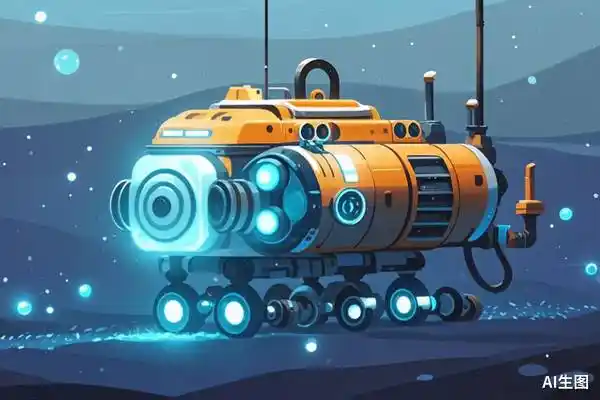
Une levée de fonds record de plus de 500 millions de yuans en série A a été réalisée par DeepSea Zhiren (深海智人), une entreprise chinoise pionnière dans les robots sous-marins profonds. Cette opération, soutenue par un consortium d'investisseurs de premier plan (GGV Capital, Dachen, Cathay Capital via son fonds énergétique, entre autres) et des fonds publics, marque un tournant stratégique pour la conquête des océans. Fondée il y a trois ans par Ma Yiming, un vétéran du secteur, l'entreprise s'attaque au marché exigeant des ROV (véhicules télécommandés) de travail en eaux profondes, longtemps dominé par les occidentaux. En développant une gamme complète de robots, comme le « Phoenix-600 » (3000m) et le « Taurus » (1000m), DeepSea Zhiren a réussi à percer à l'international. Une commande majeure des télécoms émiratis, obtenue face à la concurrence européenne, illustre ce succès. La stratégie de l'entreprise va au-delà du matériel. Avec son projet « Deep Matrix », elle vise à déployer des essaims de robots autonomes résidents sur le fond marin, pilotés par un modèle d'IA spécialisé (SEAgent). Cette approche promet de révolutionner l'exploitation offshore (pétrole, éolien, câbles) en réduisant drastiquement la dépendance aux navires-mères et aux opérateurs humains. Cette levée massive valide le potentiel du créneau de la robotique profonde, désormais priorité nationale chinoise, et positionne DeepSea Zhiren comme un acteur clé dans la redéfinition, par la technologie et l'intelligence artificielle, de notre capacité à explorer et exploiter les abysses.

marsbitIl y a 17 mins

Explosion des robots en mer profonde : la plus solide série A est née

marsbitIl y a 17 mins

1confirmation : 5 secteurs cryptographiques grand public qui méritent d'être réexaminés

L'article souligne que la plupart des entreprises échouent en raison d'un mauvais timing et que, après plus de dix ans d'expérimentation dans l'espace crypto, certains concepts autrefois ratés pourraient être prêts pour un succès grand public. Il identifie cinq domaines à réexaminer : 1. **Actifs natifs d'Internet** : Au-delà des NFT et memecoins, il existe peut-être une opportunité de créer de nouveaux actifs cryptographiques qui n'existent pas du tout dans le monde physique, capturant véritablement l'attention ou les moments culturels en ligne. 2. **X-to-Earn** : L'idée de gagner des cryptomonnaies en effectuant certaines actions (comme dans STEPN ou Axie Infinity) n'est pas fondamentalement mauvaise. La leçon est qu'une distribution incessante de jetons n'est pas durable. L'avenir pourrait voir les gens acquérir leurs premiers cryptos en les gagnant, mais le modèle économique doit être repensé. 3. **Métavers** : L'échec précédent du métavers ne signifie pas que les gens ne veulent pas passer de temps dans des mondes numériques. L'erreur a été de tenter de recréer le monde physique en ligne. La prochaine grande expérience sociale en ligne pourrait avoir une forme complètement différente. 4. **DAO** : Les DAO n'ont pas réalisé leur potentiel initial, souvent trop focalisés sur la gouvernance complexe. Le succès de ConstitutionDAO montre la puissance d'un concept plus simple : un groupe en ligne rassemblant des fonds pour un objectif commun, comme acheter un objet, financer un projet ou soutenir une cause. 5. **L'individu en tant que marché** : De nombreux projets (Friend.tech, etc.) ont échoué en essayant de créer un marché autour de chaque créateur ou personnalité. L'idée qu'il existe une demande pour "trader" sur des individus n'est pas forcément fausse, mais les implémentations passées ont échoué. La clé pourrait être de créer ces marchés sans faire de la personne elle-même le produit à échanger. En conclusion, la prochaine application crypto grand public pourrait bien provenir d'une de ces idées du passé, désormais rendue viable par une infrastructure et un contexte mûrs.

marsbitIl y a 22 mins

1confirmation : 5 secteurs cryptographiques grand public qui méritent d'être réexaminés

marsbitIl y a 22 mins

Trading

Spot

Articles tendance

Comment acheter ENS

Bienvenue sur HTX.com ! Nous vous permettons d'acheter Ethereum Name Service (ENS) de manière simple et pratique. Suivez notre guide étape par étape pour commencer votre parcours crypto.Étape 1 : Création de votre compte HTXUtilisez votre adresse e-mail ou votre numéro de téléphone pour ouvrir un compte sur HTX gratuitement. L'inscription se fait en toute simplicité et débloque toutes les fonctionnalités.Créer mon compteÉtape 2 : Choix du mode de paiement (rubrique Acheter des cryptosCarte de crédit/débit : utilisez votre carte Visa ou Mastercard pour acheter instantanément Ethereum Name Service (ENS).Solde :utilisez les fonds du solde de votre compte HTX pour trader en toute simplicité.Prestataire tiers :pour accroître la commodité d'utilisation, nous avons ajouté des modes de paiement populaires tels que Google Pay et Apple Pay.P2P :tradez directement avec d'autres utilisateurs sur HTX.OTC (de gré à gré) : nous offrons des services personnalisés et des taux de change compétitifs aux traders.Étape 3 : stockage de vos Ethereum Name Service (ENS)Après avoir acheté vos Ethereum Name Service (ENS), stockez-les sur votre compte HTX. Vous pouvez également les envoyer ailleurs via un transfert sur la blockchain ou les utiliser pour trader d'autres cryptos.Étape 4 : tradez des Ethereum Name Service (ENS)Tradez facilement Ethereum Name Service (ENS) sur le marché Spot de HTX. Il vous suffit d'accéder à votre compte, de sélectionner la paire de trading, d'exécuter vos trades et de les suivre en temps réel. Nous offrons une expérience conviviale aux débutants comme aux traders chevronnés.

371 vues totalesPublié le 2024.12.10Mis à jour le 2026.06.02

Comment acheter ENS

Discussions

Bienvenue dans la Communauté HTX. Ici, vous pouvez vous tenir informé(e) des derniers développements de la plateforme et accéder à des analyses de marché professionnelles. Les opinions des utilisateurs sur le prix de ENS (ENS) sont présentées ci-dessous.

活动图片