CLARITY Act path clears as U.S. Sheriffs drop opposition – Reasons explained!

ambcryptoPublié le 2026-07-04Dernière mise à jour le 2026-07-04

Résumé

The CLARITY Act, a crypto market structure bill, has seen improved support as the Major County Sheriffs of America (MCSA) shifted its position from opposition to neutral, particularly regarding Section 604 which offers developer protections. This change addresses prior law enforcement concerns about facilitating illicit finance. However, new ethics concerns have emerged following reports that former President Donald Trump's crypto ventures yielded over $1.4 billion in 2025, including significant profits from an "Official Trump" memecoin. In response, Senator Kirsten Gillibrand has renewed calls for provisions to bar elected officials from creating their own crypto tokens, warning that such self-dealing could threaten the bill's broader goals. While the final text is expected soon with a potential Senate vote this month, analysts are split on its chances of becoming law this year, as debates over ethics provisions could potentially derail its progress.

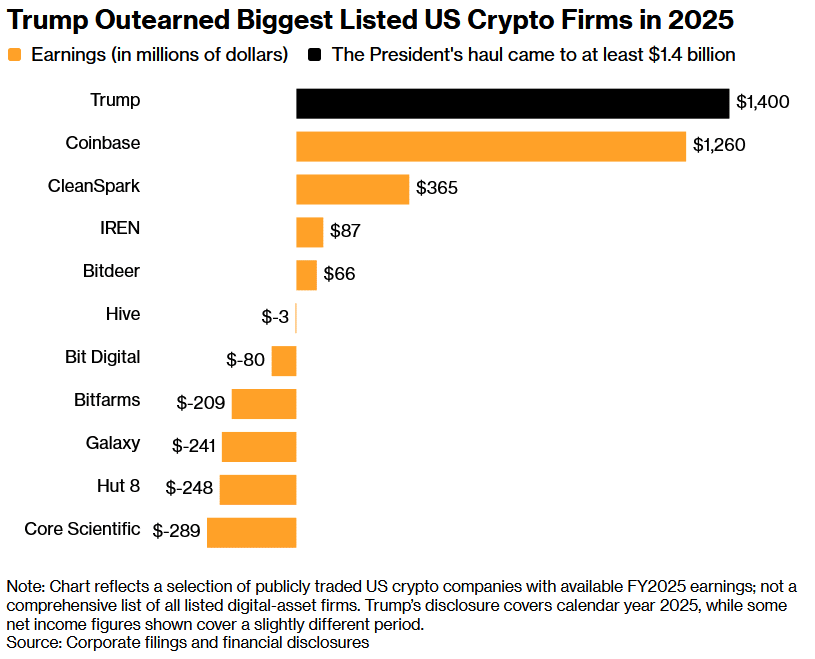
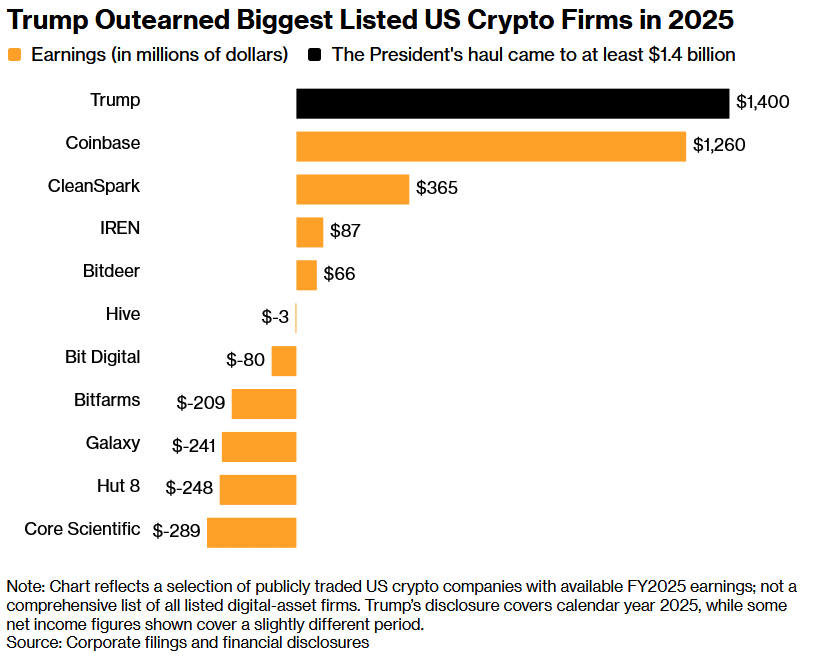
The crypto market structure bill, the CLARITY Act, has seen improved support for Section 604 (developer protections). But the ethics issue could become complicated after reports of U.S. President Donald Trump’s latest $1.4B crypto windfall.

In a letter to the Senate, the Major County Sheriffs of America (MCSA) said it has shifted its position on the bill to “neutral,” noting the ongoing talks on Section 604.

We believe there remains an opportunity to further strengthen the legislation in ways that support responsible innovation and the practical needs of state and local law enforcement.

AD

The law enforcement group further called for the framework to provide necessary resources to help federal and state officers implement the digital assets policy effectively.

In June, four different law enforcement agencies, Catholic groups, and the banking lobby opposed Section 604 of the bill, arguing that it would facilitate illicit financial flows.

As such, the neutral stance by MCSA showed improved support from some of those who previously opposed the bill.

For Coinbase CEO Brian Armstrong, the update was ‘huge,’ implying a clearer path to passage of the CLARITY Act, now that the law enforcement concerns have been addressed.

Will Trump’s $1.4B crypto profit derail CLARITY Act?

However, the ethics concerns are back on the table. Recent reports showed the Trump family’s crypto empire made over $1.4B in 2025. Over $630M of the profit was from the Official Trump memecoin.

Based on the above, Senator Kirsten Gillibrand has renewed ethics concerns and call to bar elected officials creating their own crypto tokens.

This is a commonsense requirement that should get broad bipartisan support – public officials and their spouses should not be issuing memecoins.

She added,

We cannot let self-dealing destroy an opportunity to strengthen consumer protections, crack down on illicit finance, and expand economic opportunity for the millions of Americans our financial system has left behind.

Worth noting that the ethics provisions in the CLARITY Act hit a rocky start last month. But Democrats insisted that the concerns must be addressed before they support the bill.

Reacting to Trump’s crypto windfall, Hasu, a strategic advisor at Lido, raised similar worries and noted,

Shameful is what it is. And I don’t see how it doesn’t backfire on this industry in a major way.
Source: X

The final updated CLARITY Act text was speculated to be published the July 4th weekend with a potential Senate floor vote later in the month.

While Bloomberg projected a 60% chance the bill becomes law this year, Galaxy Research is 50-50. It remains to be seen whether ethics provisions will derail the bill’s progress.


Final Summary

  • A sheriff’s group flipped its stance on the CLARITY Act from ‘opposition’ to ‘neutral’
  • However, Sen Gillibrand has renewed calls for ethics provisions after Trump’s $1.4B crypto profit


Cryptos en tendance

Questions liées

QWhat is the major change in the position of the Major County Sheriffs of America (MCSA) regarding the CLARITY Act, and what was their previous stance?

AThe Major County Sheriffs of America (MCSA) has shifted its position on the CLARITY Act from 'opposition' to 'neutral'. Their previous opposition was primarily against Section 604 of the bill.

QAccording to the article, what is the primary concern that Senator Kirsten Gillibrand renewed following reports about Donald Trump's crypto profits?

ASenator Kirsten Gillibrand renewed ethics concerns, specifically calling for a ban on elected officials and their spouses creating and issuing their own cryptocurrency tokens or memecoins.

QWhat specific section of the CLARITY Act was previously opposed by law enforcement and other groups, and what was their stated reason for opposition?

ASection 604 of the CLARITY Act was opposed by four law enforcement agencies, Catholic groups, and the banking lobby in June. They argued that it would facilitate illicit financial flows.

QWhy does Coinbase CEO Brian Armstrong consider the MCSA's updated stance to be 'huge' for the CLARITY Act?

ACoinbase CEO Brian Armstrong considered the update 'huge' because it implies a clearer path to the passage of the CLARITY Act, as a major law enforcement concern has been addressed with the group moving to a neutral stance.

QWhat are the two different probability estimates mentioned in the article for the CLARITY Act becoming law this year, and who provided them?

ABloomberg projects a 60% chance the bill becomes law this year, while Galaxy Research gives it a 50-50 chance.

Lectures associées

Q-Day : Le compte à rebours avant que l'informatique quantique ne mette fin aux cryptomonnaies ?

**Q-Day et la Cryptographie : La Menace Quantique sur les Cryptomonnaies** L'avènement de l'ordinateur quantique tolérant aux fautes (CRQC) représente une menace existentielle pour les cryptomonnaies en raison de sa capacité à casser les algorithmes de chiffrement asymétrique actuels (comme ECDSA) via l'algorithme de Shor. Le "Q-Day", point critique où cette capacité devient pratique, est estimé entre 2035 et 2045. Les blockchains, par leur nature immuable et décentralisée, sont particulièrement vulnérables. Le risque est immédiat pour les actifs dont la clé publique est déjà exposée sur la chaîne (ex : certaines anciennes adresses Bitcoin). La migration vers la cryptographie post-quantique (PQC), comme les algorithmes basés sur les réseaux (ML-KEM/DSA) ou les hachages (SLH-DSA), est donc urgente. Cependant, cette transition est extrêmement complexe : * **Pour Bitcoin** : Le défi principal est la gouvernance et la gestion sociale des UTXO historiques à risque. Une mise à jour progressive par soft fork est privilégiée, mais elle se heurte à l'inflation de la taille des signatures PQC et à un dilemme éthique sur le gel éventuel des actifs non migrés. * **Pour Ethereum** : La migration nécessite une refonte à plusieurs niveaux (comptes, consensus, couche de données). La stratégie repose sur l'agilité cryptographique, l'abstraction de compte pour les utilisateurs et des solutions techniques comme leanXMSS couplé à un zkVM pour compresser les grandes signatures. La fenêtre d'action confortable est estimée à 5-8 ans. L'industrie doit se coordonner à l'échelle de l'écosystème (protocoles, portefeuilles, bourses). La menace quantique n'anéantira pas la blockchain, mais force une reconfiguration fondamentale de ses bases cryptographiques, testant sa résilience technique et sociale.

marsbitIl y a 2 h

Q-Day : Le compte à rebours avant que l'informatique quantique ne mette fin aux cryptomonnaies ?

marsbitIl y a 2 h

Compte à rebours pour Q-Day : L'informatique quantique va-t-elle mettre fin aux cryptomonnaies ?

La cryptographie moderne est vulnérable face aux ordinateurs quantiques, en particulier l'algorithme de Shor, menaçant les systèmes actuels comme RSA et ECC. Le « Q-Day », moment où les ordinateurs quantiques pourront casser ces cryptosystèmes, est estimé entre 2035 et 2045. La cryptographie post-quantique (PQC) se développe, avec des algorithmes comme ML-KEM, ML-DSA et SLH-DSA normalisés par le NIST, pour garantir une sécurité durable. Dans le domaine de la blockchain, le Bitcoin et l'Ethereum sont particulièrement exposés. Pour Bitcoin, le risque principal concerne les UTXO dont la clé publique est déjà exposée sur la chaîne. La migration vers des algorithmes PQC se heurte à des défis techniques (signatures plus volumineuses) et à un dilemme de gouvernance concernant les fonds dormants. Ethereum, grâce à son agilité cryptographique et à l'abstraction de compte, pourrait adopter une approche plus graduelle, notamment via ses L2. La transition ne sera pas uniquement technique, mais nécessitera un large consensus social et une coordination à l'échelle de l'écosystème. Le véritable enjeu n'est pas l'absence de solutions, mais la capacité de l'écosystème à migrer de manière coordonnée avant que les risques quantiques ne deviennent une réalité économique. La fenêtre d'action confortable est estimée à 5-8 ans.

链捕手Il y a 2 h

Compte à rebours pour Q-Day : L'informatique quantique va-t-elle mettre fin aux cryptomonnaies ?

链捕手Il y a 2 h

Trading

Spot

Articles tendance

Comment acheter BILL

Bienvenue sur HTX.com ! Nous vous permettons d'acheter Billions Network (BILL) de manière simple et pratique. Suivez notre guide étape par étape pour commencer votre parcours crypto.Étape 1 : Création de votre compte HTXUtilisez votre adresse e-mail ou votre numéro de téléphone pour ouvrir un compte sur HTX gratuitement. L'inscription se fait en toute simplicité et débloque toutes les fonctionnalités.Créer mon compteÉtape 2 : Choix du mode de paiement (rubrique Acheter des cryptosCarte de crédit/débit : utilisez votre carte Visa ou Mastercard pour acheter instantanément Billions Network (BILL).Solde :utilisez les fonds du solde de votre compte HTX pour trader en toute simplicité.Prestataire tiers :pour accroître la commodité d'utilisation, nous avons ajouté des modes de paiement populaires tels que Google Pay et Apple Pay.P2P :tradez directement avec d'autres utilisateurs sur HTX.OTC (de gré à gré) : nous offrons des services personnalisés et des taux de change compétitifs aux traders.Étape 3 : stockage de vos Billions Network (BILL)Après avoir acheté vos Billions Network (BILL), stockez-les sur votre compte HTX. Vous pouvez également les envoyer ailleurs via un transfert sur la blockchain ou les utiliser pour trader d'autres cryptos.Étape 4 : tradez des Billions Network (BILL)Tradez facilement Billions Network (BILL) sur le marché Spot de HTX. Il vous suffit d'accéder à votre compte, de sélectionner la paire de trading, d'exécuter vos trades et de les suivre en temps réel. Nous offrons une expérience conviviale aux débutants comme aux traders chevronnés.

315 vues totalesPublié le 2026.05.07Mis à jour le 2026.06.02

Comment acheter BILL

Discussions

Bienvenue dans la Communauté HTX. Ici, vous pouvez vous tenir informé(e) des derniers développements de la plateforme et accéder à des analyses de marché professionnelles. Les opinions des utilisateurs sur le prix de BILL (BILL) sont présentées ci-dessous.

活动图片