Trading Moments: Bitcoin's 200-week moving average has turned into a resistance level, can the July rise still be realized?

marsbitPublié le 2026-06-29Dernière mise à jour le 2026-06-29

Résumé

**Market Recap: Key Global Developments and Outlook** Global markets are navigating shifting dynamics. Geopolitical tensions eased as the US and Iran agreed to halt further military actions, planning talks for June 30. This pushed oil prices down, with WTI crude dropping below $70. Meanwhile, gold saw a "death cross" (50-day moving average crossing below the 200-day), pressured by a strong dollar and rising real yields. A methodological revision to the US PCE inflation index, set for September, is expected to artificially lower reported core inflation, drawing criticism for lack of transparency. In US equities, major indices extended losses, with the S&P 500 and Nasdaq recording their longest losing streaks since last year. Hedge funds aggressively sold tech stocks, particularly in semiconductors, leading to a sharp rotation into defensive sectors like healthcare and utilities. SpaceX is set for rapid inclusion in the Nasdaq 100, potentially triggering significant passive fund inflows, while its valuation faces scrutiny. Bitcoin is on track for its worst monthly performance since 2022, down over 18% in June. It has failed to reclaim its 200-week moving average (now acting as resistance near $62.6k), raising the risk of a drop toward $55k. Historically, July is a strong month for BTC, with an average gain of 7.6%. Analysts suggest the current sell-off could present a buying opportunity, with a key test being whether Bitcoin can stabilize above $61k to confirm a reversal. I...

Every Monday, Wednesday, and Friday, we review the market with data and seize opportunities through trends, covering macroeconomics, US stocks, precious metals, crude oil, and crypto assets, to gain insights into key changes in the global market. Produced by PANews.

Macro Market

The US and Iran are reportedly set to halt further military actions and plan to hold talks in Doha, Qatar, on June 30 to discuss navigation issues in the Strait of Hormuz. Just 11 days after the ceasefire agreement led by Trump took effect, the market has shifted back from the extreme scenario of "Hormuz Strait closure" to the trading logic of "oil prices returning to fundamentals."

WTI crude oil fell to $68.46, with a weekly drop of nearly 10%, breaking below $70 for the first time since the US-Iran war began. Brent crude also retreated to near pre-war levels. Tariq Zahir, managing member of Tyche Capital Advisors, warned that although the oil price decline is rapid, the ceasefire agreement remains fragile, and the situation in the Strait of Hormuz is still uncertain. JPMorgan believes the rapid pullback in oil prices is not due to supply recovery but rather a contraction in Asian demand, especially from China, far exceeding market expectations.

Although spot gold rebounded 1.36% to $4096 on Friday, it repeatedly fell below the $4000 psychological barrier last week and saw its first "death cross" since September 2023, where the 50-day moving average fell below the 200-day moving average. A stronger dollar and rising real interest rates remain the core logic suppressing precious metals.

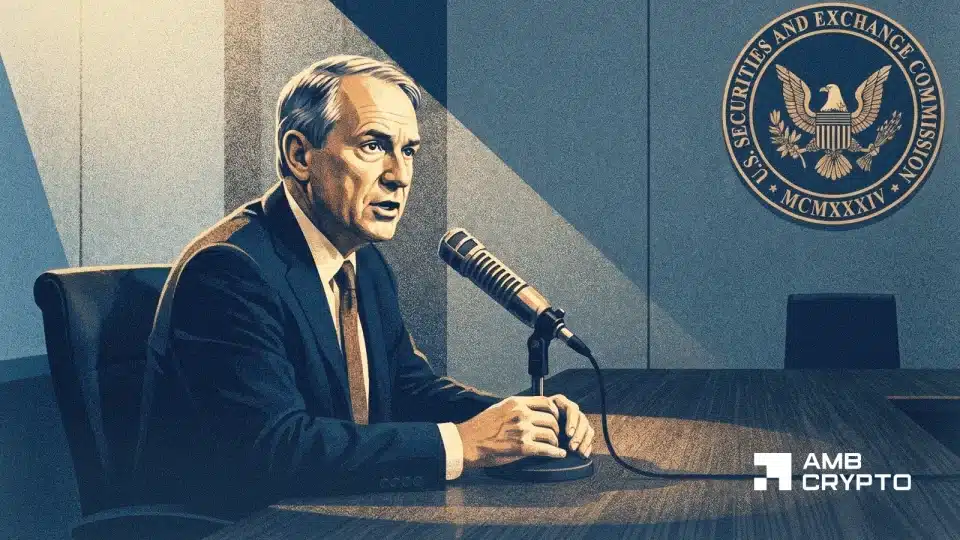
Additionally, the US Bureau of Economic Analysis (BEA) announced that it will adjust the methodology for three components of the PCE price index—computer software, portfolio management, and legal services—in September, systematically lowering core inflation. UBS economist Alan Detmeister criticized the move, citing a lack of transparency and potential political manipulation, pointing out that the revision series tilts toward the upper end of the inflation contribution distribution, seemingly designed to artificially lower inflation. Goldman Sachs estimates the new rules could lead to a downward revision of the May core PCE year-on-year by 0.2 percentage points to 3.2%, and lower the forecast for core PCE in December 2026 to 3.0%.

Key upcoming events to watch:

  1. June 30: US and Iranian delegations plan to hold high-level technical talks in Doha, Qatar. Whether they can fully resolve the dispute over international navigation lanes in the Strait of Hormuz will directly determine the lifeline of international oil prices.

  2. July 1, 21:30 Beijing Time: The European Central Bank's Global Central Banking Forum in Sintra, Portugal, commences. Fed Chair Wash will make his first overseas appearance since taking office, engaging in debates with Lagarde, Bailey, and Macklem. Markets should be wary of signals beyond inflation regarding tightening and geopolitical risk premiums.

  3. September 30: The BEA's new PCE price index statistical methodology officially takes effect. The "digital shrinkage" of the core inflation rate will fundamentally reshape the future path of Federal Reserve monetary policy games.

US Stock Market Dynamics
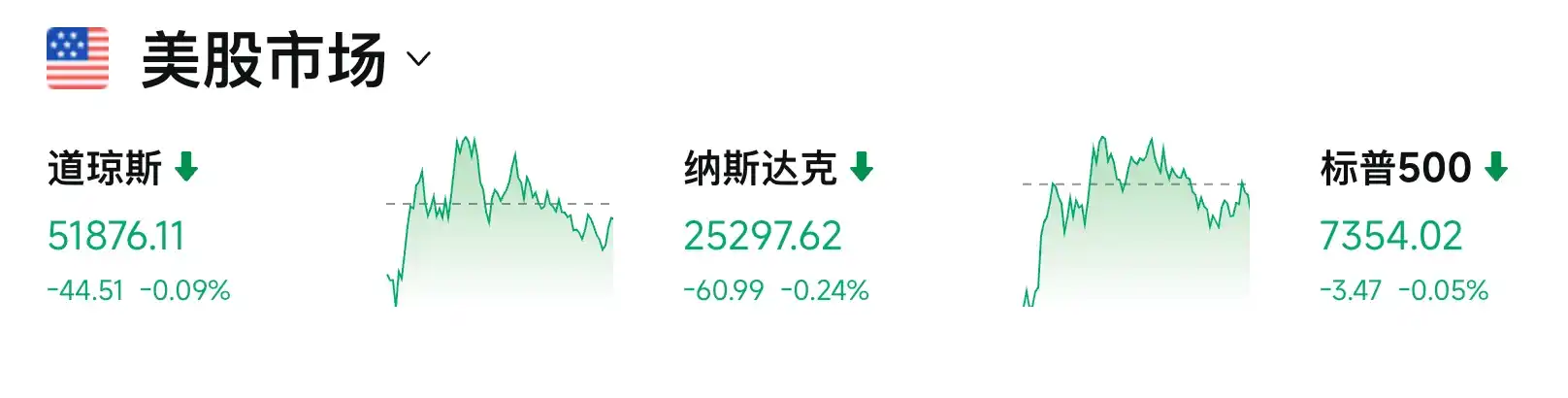
The major US stock indices barely closed flat on Friday. The S&P 500 edged down 0.05%, marking its fifth consecutive decline and the longest losing streak since August last year. The Nasdaq Composite fell 0.24%, also declining for the fifth straight session, its longest losing streak since January this year.

The frenzy over AI premiums is facing unprecedented liquidity unwinding, with hedge funds dumping US tech stocks at the most aggressive pace in a decade. Goldman Sachs PB data shows that as of the week ending June 25, the information technology sector experienced extreme selling at a 4-standard-deviation level, with a sell-to-buy ratio of 1.3 to 1. The semiconductor sector saw net selling for eight consecutive trading days, and the "Magnificent Seven" tech giants suffered continuous reductions for five weeks, with overall holdings nearing a three-year low. EPFR data corroborates this, showing a massive exodus of institutional funds from US tech funds last week following substantial prior inflows.
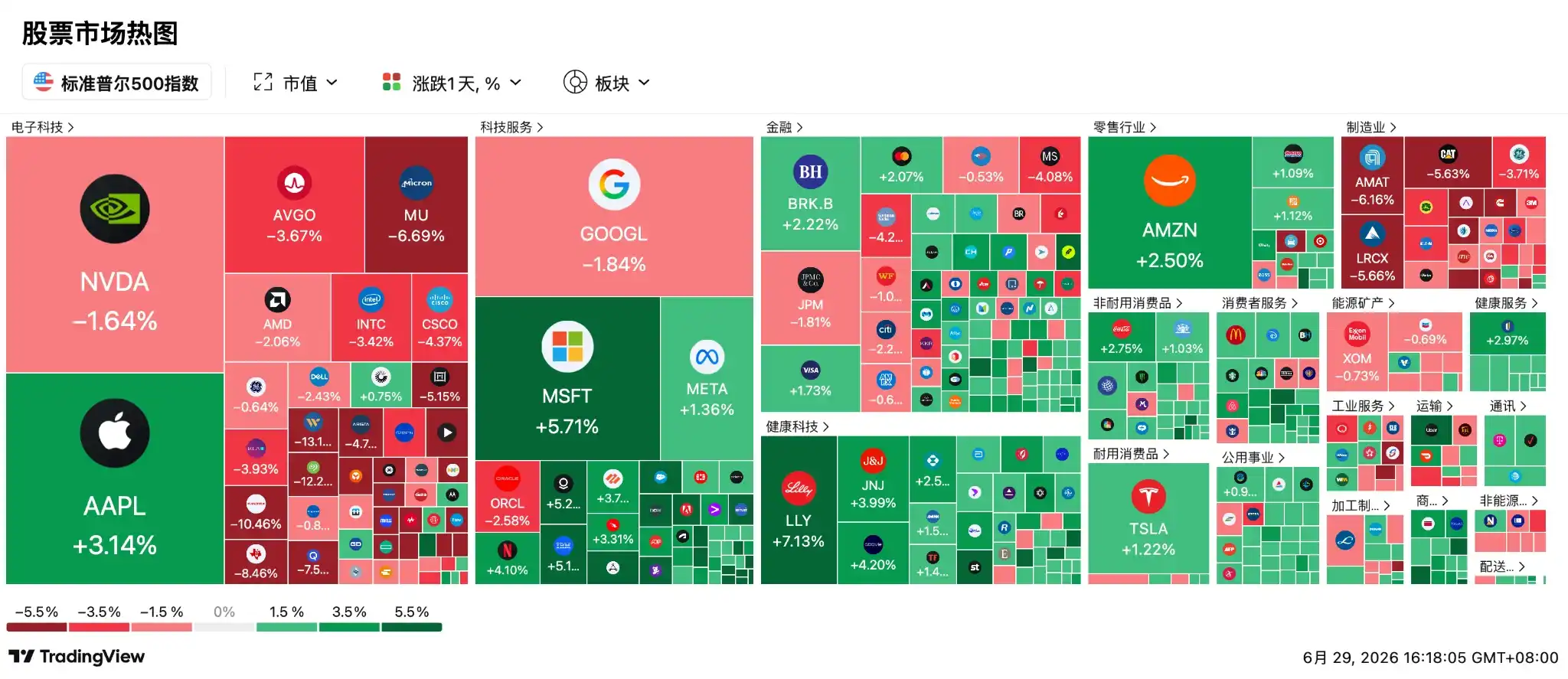
The Philadelphia Semiconductor Index plummeted 5.3% on Friday, with all 30 component stocks falling. Among them, onsemi plunged 23%, and Qualcomm dropped 7.57%. Although Micron Technology rose over 4% for the week, supported by strong earnings, it still succumbed to market pressure and fell 6.7% on Friday. Related memory stocks also declined: SanDisk fell 10.5%, while Western Digital and Seagate Technology dropped 13.17% and 12.24%, respectively. Forex.com analyst Fawad Razaqzada noted that investors have become highly sensitive to stretched AI valuations and high infrastructure costs, suggesting expectations for this sector have far exceeded commercial reality.

Funds are pouring into defensive sectors like healthcare, utilities, and real estate, with the Healthcare ETF and Biotech ETF leading gains. Mark Hackett of Nationwide stated that investor sentiment has turned pessimistic due to sharp rotations, but this looks more like a consolidation phase beneath the surface rather than the beginning of a significant downturn. John Belton, a manager at Gabelli Funds, also believes this is merely a pause, not a sell-off, and the AI platforms built by hyperscale cloud providers will continue to proliferate in the coming years.

SpaceX (SPCX) triggered a Nasdaq rule less than a month after its IPO and will be historically fast-tracked for inclusion in the Nasdaq 100 Index. JPMorgan estimates this will attract approximately $4.3 billion in passive fund inflows within a short period. However, Morningstar strategists indicate the stock is severely overvalued, and S&P Global has explicitly stated it will not follow suit, waiting at least 12 months before considering inclusion. Additionally, expectations for IPOs from OpenAI and Anthropic are heating up, with potential valuations exceeding $1 trillion.

Key upcoming events to watch:

  1. After the close on July 6: $800 billion in passive funds tracking the Nasdaq 100 will begin concentrated allocations to SpaceX stock, which is expected to cause significant supply-demand oscillations in the semiconductor and tech sectors.

  2. Before the market opens on July 7: SpaceX will officially begin trading as a component of the Nasdaq 100.

  3. Throughout July: US stocks are entering the seasonally strongest "July window" of the year. Since 2015, the Nasdaq 100 has averaged a return of 4.4% in July with a historically high win rate, potentially ushering in strong allocation repairs following pension fund rebalancing.

Cryptocurrency
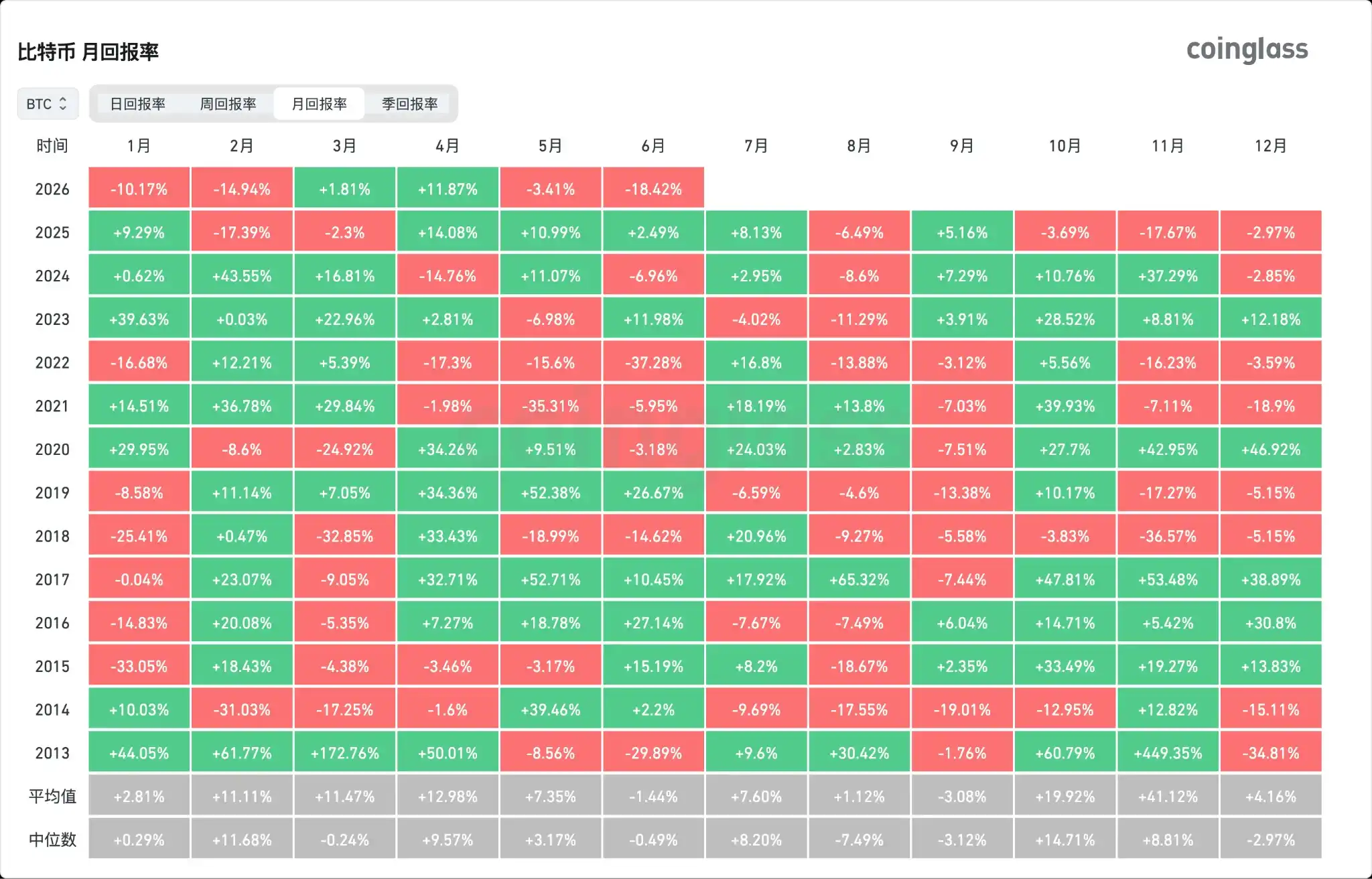
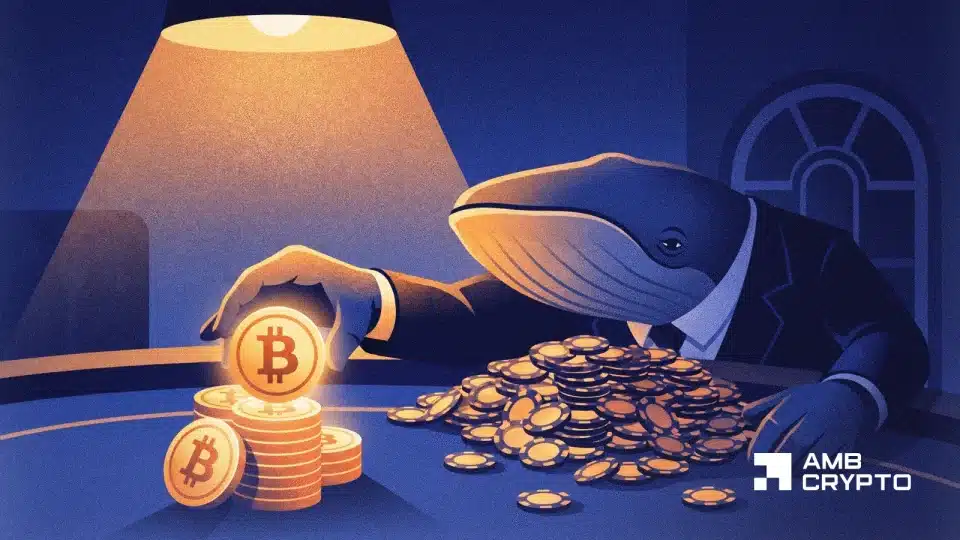
Bitcoin is experiencing its worst monthly performance since 2022. With less than two days left in June, the cumulative decline has reached 18.42%, making it one of the largest monthly drops since the 2022 bear market.

Currently, BTC price is fluctuating around the $60,000 mark, with the market focusing on its rebound potential in July. Since falling from $120,000, BTC has failed to reclaim the 200-week moving average (approx. $62,600) for the first time, turning this key support level into resistance and further increasing the risk of a decline to $55,000.

Historically, July is one of Bitcoin's best-performing months, with an average gain of 7.6% since 2013, and even reaching an average of 10.3% in midterm election years. If historical patterns repeat, BTC's theoretical target lies between $64,500 and $66,100, with an optimistic scenario possibly challenging $75,000.

Li Hua Yi, founder of Liquid Capital, stated this is the last major decline of this cycle, and July to August will present the most perfect buying opportunity for the next three years, with the potential downside limit between $51,000 and $43,000. CrypNuevo pointed out that Monday's market performance is crucial. Stabilizing above $61,000 will confirm a reversal, while falling below $57,000 could lead to a further decline to $52,000. The market is currently in a state of extreme oversold conditions, with a daily RSI divergence forming on the lows. July's performance will be a critical moment to test whether bulls can leverage seasonal effects to reclaim the 200-week SMA (approx. $62,445).

Key points for today:

  • Data: Tokens like SUI, EIGEN, FF are set for significant unlocks, with SUI's unlock valued at approximately $9.4 million.

  • SharpLink to be included in Russell 2000 and 3000 indices, effective June 29.

  • Spain's CNMV issued an urgent warning ahead of the end of the MiCA transition period on June 30.

  • 0xPPL will cease trading functionality starting June 6 and fully shut down on June 30.

  • Base ecosystem project Seamless Protocol announced a gradual shutdown, with the UI interface going offline on June 30.

  • Falcon Finance (FF) will unlock approximately 102 million tokens on June 29, valued at around $6.9 million.

  • Collector Crypt (CARDS) will unlock approximately 28.84 million tokens on June 30, valued at around $6.7 million.

  • Upbit 24-hour trading volume leaders: SLX, BTC, XRP, POWER, HUNT.

  • Bitcoin Spot ETF: Net outflows of $1.79 billion last week, the third-highest weekly net outflow in history.

  • Ethereum Spot ETF: Net outflows of $273 million last week, marking seven consecutive weeks of net outflows.

  • HYPE Spot ETF: Net inflows of $111 million last week.

  • XRP Spot ETF: Net inflows of $22.99 million last week.

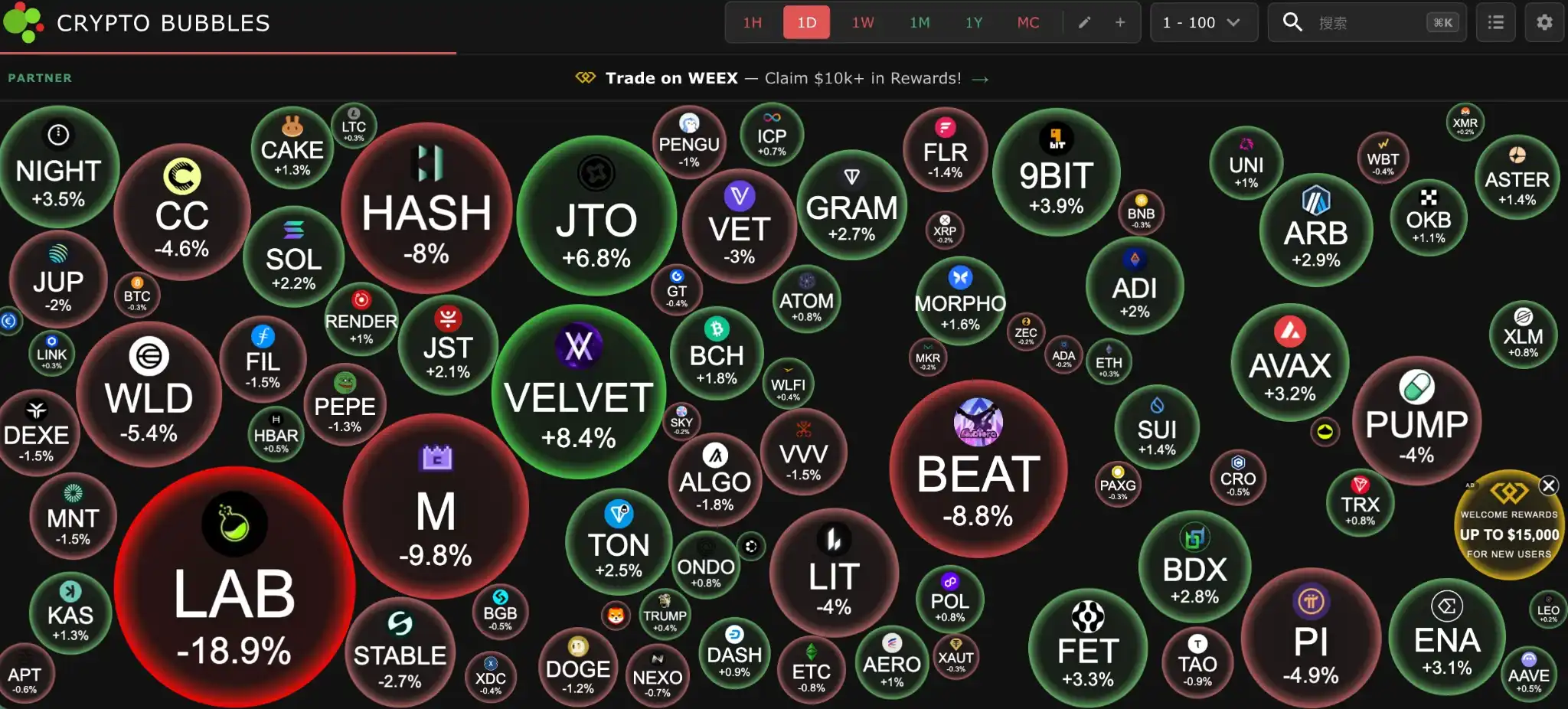
Top gainers among top 100 cryptocurrencies by market cap today: VELVET up 8.4%, JTO up 6.8%, 9BIT up 3.9%, NIGHT up 3.5%, FET up 3.3%.
Asia-Pacific Market

South Korean stocks opened under pressure from memory giants. Despite Aletheia Capital significantly raising DRAM price expectations due to global AI-driven supply shortages, absolute leverage in the market has reached historical highs of 2x-5x. SK Hynix and Samsung Electronics opened nearly 5% lower due to forced liquidation pressure, dragging the KOSPI index down over 3% intraday.

At a critical moment, the South Korean government and President Lee Jae-myung unveiled positive news, announcing the largest industrial investment plan to date, designating semiconductors, physical AI, and AI data centers as the "triangular pillars" of industrial upgrading. President Lee announced an investment of approximately 800 trillion won to build four chip factories in the southwest, with Samsung and SK Hynix each building two, aiming to double DRAM production capacity within five years. Additionally, South Korea plans to invest over 1,000 trillion won in AI data centers by 2035 and spend 81 trillion won to build an advanced packaging cluster in the Chungcheong region.

Buoyed by this news, the KOSPI index, Samsung, and SK Hynix share prices all rebounded.

The Japanese market found support from consumption recovery. May retail sales grew 5.3% year-on-year and 1.9% month-on-month, marking the third consecutive month of growth, with wage increases beginning to outpace inflation. Although the Nikkei 225 index ultimately fell about 0.15%, the consumption recovery narrative remains solid.
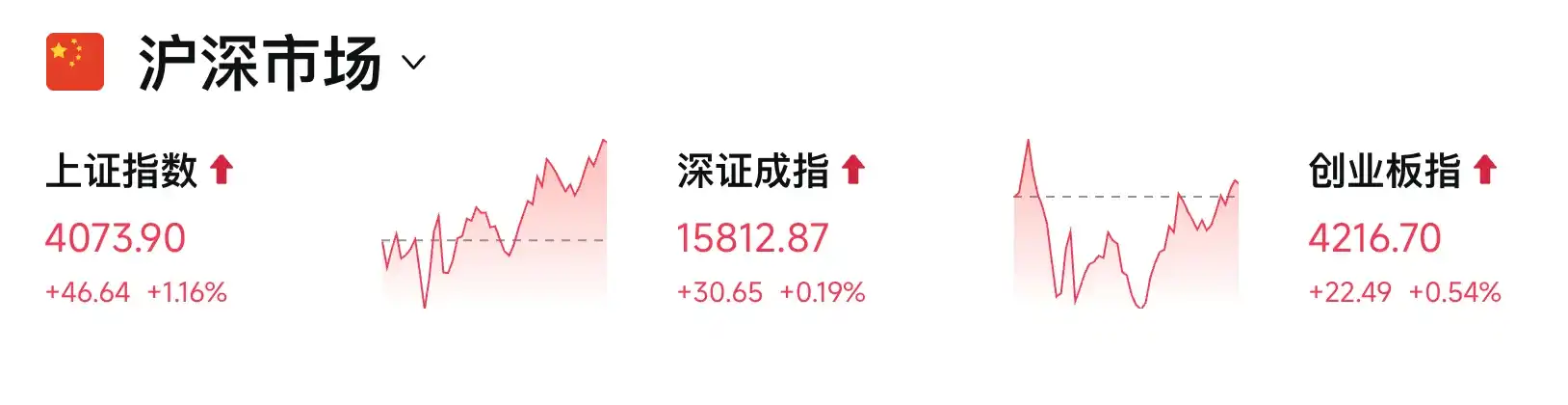
The Chinese market entered a phase of style rebalancing. The Shanghai Composite rose 1.16%, the STAR Composite Index climbed 3.12%, the Shenzhen Component edged up 0.19%, and the ChiNext gained 0.54%.

Innovative drugs were the biggest winners. The CRO sector surged 7%, with over 20 stocks hitting the daily limit-up; BeiGene rose over 10%, Baili Tianheng advanced 12%, WuXi AppTec gained 6%, and Hengrui Pharmaceuticals increased 8%. The catalyst was the National Healthcare Security Administration's announcement of 557 drugs passing the preliminary review for the national reimbursement drug list.

Consumer stocks also recovered. Kweichow Moutai rose over 3%, Dongpeng Beverage climbed 10%, and Bright Dairy & Food hit the daily limit-up. Institutions believe stable wholesale prices for Feitian Moutai indicate channel inventory adjustments are largely complete.

Hong Kong stocks clearly benefited from tech sentiment repair. The Hang Seng Index rose nearly 2%, the Hang Seng Tech Index jumped 3.23%, and the Hang Seng Biotech Index soared 7%. Alibaba surged nearly 6%, Meituan and Baidu gained over 7%, while Lenovo Group bucked the trend, falling over 10%.

Key upcoming events to watch:

  1. June 30, 09:30: NetEase will officially transition to a dual primary listing on the Hong Kong Exchange, which will profoundly impact the capital structure and valuation system of the Hong Kong tech sector.

  2. June 30: The 2026 China Intelligent Computing Industry Ecology Development Annual Conference officially opens, focusing on GW-level Token factory construction. Guidance on the second half of the AI hardware hype, including glass substrates and CPO, will be finalized at the conference.


Cryptos en tendance

Questions liées

QWhat key technical indicator for Bitcoin has turned into a resistance level, and what historical pattern suggests a potential July rebound?

ABitcoin's 200-week moving average (approximately $62,600) has turned from a key support level into a resistance level. Historically, July is one of Bitcoin's best-performing months, with an average gain of 7.6% since 2013. In midterm election years, the average July gain is even higher at 10.3%.

QAccording to the article, what significant change is the U.S. Bureau of Economic Analysis (BEA) planning for September, and what is a major criticism of this change?

AThe U.S. BEA plans to revise the methodology for three components of the PCE price index—computer software, portfolio management, and legal services—in September, which is expected to systematically lower the core inflation reading. A major criticism, voiced by UBS economist Alan Detmeister, is that the change lacks transparency and carries a risk of political manipulation, appearing designed to artificially reduce inflation figures.

QWhat is happening with investor positioning in U.S. tech stocks, particularly the 'Magnificent Seven', and what sector is seeing a significant inflow of funds instead?

AHedge funds are aggressively selling U.S. tech stocks at the most intense pace in a decade. The 'Magnificent Seven' tech giants have seen five consecutive weeks of减持 (reduction in holdings), with overall positioning nearing a three-year low. Instead, funds are flooding into defensive sectors like healthcare, utilities, and real estate, with healthcare and biotech ETFs leading the gains.

QWhat major semiconductor-related investment plan did South Korean President Yoon Suk Yeol announce, and what was its immediate market impact?

ASouth Korean President Yoon Suk Yeol announced a plan to invest approximately 800 trillion won to build four chip factories in the southwestern region, with Samsung and SK Hynix each building two. The goal is to double DRAM production capacity within five years. This announcement helped lift the KOSPI index and the share prices of Samsung and SK Hynix, which had initially fallen sharply.

QWhat is the significance of Monday's (July 1st) market action for Bitcoin's short-term trend, according to analyst CrypNuevo?

AAccording to CrypNuevo, Monday's (July 1st) market action is crucial for determining Bitcoin's short-term trend. Stabilizing above $61,000 would confirm a reversal, while a break below $57,000 would lead to a continued decline towards $52,000.

Lectures associées

Un sentiment baissier s'intensifie à l'expiration d'options Bitcoin et Ethereum d'une valeur de 2,13 milliards de dollars

Le marché des cryptomonnaies a connu une session cruciale le 3 juillet avec l'expiration d'options sur Bitcoin et Ethereum pour une valeur nominale combinée de 2,13 milliards de dollars. Environ 31 000 options Bitcoin (1,9 milliard de dollars) ont expiré avec un ratio put/call de 0,70 et un point de douleur maximal à 61 000$. Parallèlement, 135 000 options Ethereum (230 millions de dollars) ont expiré avec un ratio put/call de 1,29 et un niveau de douleur maximal de 1 650$. Le ratio put/call élevé d'Ethereum, supérieur à 1, indique un nombre plus important d'options de vente (put), reflétant une attitude défensive des traders qui se couvrent contre d'éventuelles baisses ou restent prudents. Les positions d'expiration restent concentrées près des niveaux clés d'exposition Gamma (GEX), autour de 60 000$ pour le Bitcoin et 1 700$ pour l'Ethereum. Si le Bitcoin a réussi à retrouver le seuil psychologique de 60 000$, le sentiment de marché demeure mitigé. Les analystes débattent pour savoir si la récente reprise marque le début d'un rebond durable. Au-delà des options, l'attention se porte également sur les marchés financiers traditionnels et les actifs tokenisés. Les données suggèrent que les traders abordent le troisième trimestre avec prudence. Malgré le regain du Bitcoin, le positionnement défensif sur l'Ethereum et l'activité de couverture montrent que de nombreux participants se préparent à une volatilité accrue plutôt qu'à une franche hausse. Au moment de l'analyse, le Bitcoin se négociait autour de 61 932$ et l'Ethereum vers 1 738$.

TheNewsCryptoIl y a 1 h

Un sentiment baissier s'intensifie à l'expiration d'options Bitcoin et Ethereum d'une valeur de 2,13 milliards de dollars

TheNewsCryptoIl y a 1 h

Trading

Spot

Articles tendance

Qu'est ce que BITCOIN

Comprendre HarryPotterObamaSonic10Inu (ERC-20) et sa position dans l'espace crypto Ces dernières années, le marché des cryptomonnaies a connu une augmentation de la popularité des monnaies mèmes, suscitant l'intérêt non seulement des traders, mais aussi de ceux qui recherchent un engagement communautaire et une valeur divertissante. Parmi ces jetons uniques, HarryPotterObamaSonic10Inu (ERC-20) est un projet intrigant qui mêle des références culturelles à l'univers des cryptomonnaies. Cet article explore les aspects clés de HarryPotterObamaSonic10Inu, en examinant ses mécanismes, son ethos axé sur la communauté, et son engagement avec le paysage crypto plus large. Qu'est-ce que HarryPotterObamaSonic10Inu (ERC-20) ? Comme son nom l'indique, HarryPotterObamaSonic10Inu est une monnaie mème construite sur la blockchain Ethereum, classée selon la norme ERC-20. Contrairement aux cryptomonnaies traditionnelles qui peuvent mettre l'accent sur l'utilité pratique ou le potentiel d'investissement, ce jeton prospère grâce à sa valeur divertissante et à la force de sa communauté. Le projet vise à favoriser un environnement où des utilisateurs engagés peuvent se rassembler, partager des idées et participer à des activités inspirées par divers phénomènes culturels. Une caractéristique notable de HarryPotterObamaSonic10Inu est son absence de taxe sur les transactions. Cet élément attrayant vise à encourager le trading et l'implication de la communauté, sans frais supplémentaires pouvant décourager les petits traders. L'offre totale de la monnaie est fixée à un milliard de jetons, un chiffre qui marque son intention de maintenir une circulation substantielle au sein de la communauté. Créateur de HarryPotterObamaSonic10Inu (ERC-20) Les origines de HarryPotterObamaSonic10Inu sont quelque peu obscures ; les détails concernant le créateur restent inconnus. Le développement de ce jeton ne comporte pas d'équipe identifiable ou de plan explicite, ce qui n'est pas rare dans le secteur des monnaies mèmes. Au lieu de cela, le projet a émergé de manière organique, son progrès s'appuyant fortement sur l'enthousiasme et la participation de sa communauté. Investisseurs de HarryPotterObamaSonic10Inu (ERC-20) En ce qui concerne les investissements externes et le soutien, HarryPotterObamaSonic10Inu reste également ambigu. Le jeton ne mentionne aucune fondation d'investissement connue ou un soutien organisationnel significatif. Au lieu de cela, le cœur battant du projet est sa communauté de base, qui informe sa croissance et sa durabilité par des actions collectives et un engagement dans l'espace crypto. Comment fonctionne HarryPotterObamaSonic10Inu (ERC-20) ? En tant que monnaie mème, HarryPotterObamaSonic10Inu opère principalement en dehors des cadres traditionnels qui régissent souvent la valeur des actifs. Plusieurs aspects distinctifs définissent comment le projet fonctionne : Transactions sans taxe : Sans frais de taxe sur les transactions, les utilisateurs peuvent acheter et vendre librement le jeton sans se préoccuper de frais cachés. Engagement communautaire : Le projet prospère grâce à l'interaction communautaire, exploitant les plateformes de médias sociaux pour créer du bruit et faciliter l'implication. Les discussions, le partage de contenu et l'engagement sont des éléments cruciaux qui aident à étendre sa portée et à favoriser la loyauté parmi les supporters. Pas d'utilité pratique : Il est important de noter que HarryPotterObamaSonic10Inu n'offre pas d'utilité concrète au sein de l'écosystème financier. Au contraire, il est classé comme un jeton principalement pour des activités de divertissement et communautaires. Référence culturelle : Le jeton intègre habilement des éléments de la culture populaire pour susciter l'intérêt, s'adressant à la fois aux amateurs de mèmes et aux suiveurs de crypto. HarryPotterObamaSonic10Inu illustre comment les monnaies mèmes fonctionnent différemment des projets de cryptomonnaies plus traditionnels, entrant sur le marché en tant que constructions sociales innovantes plutôt qu'actifs utilitaires. Chronologie de HarryPotterObamaSonic10Inu (ERC-20) L'histoire de HarryPotterObamaSonic10Inu est jalonnée de plusieurs étapes notables : Création : Le jeton est né d'un mème viral, captivant l'imagination de nombreux passionnés de crypto. Les dates de création spécifiques ne sont pas disponibles, soulignant son ascension organique. Listing sur les échanges : HarryPotterObamaSonic10Inu a fait son apparition sur divers échanges, permettant un accès et un trading plus faciles par la communauté. Initiatives d'engagement communautaire : Activités en cours visant à améliorer l'interaction communautaire, y compris des concours, des campagnes sur les réseaux sociaux, et la génération de contenu par des fans et des défenseurs. Plans d'expansion futurs : La feuille de route du projet comprend le lancement d'une collection NFT, de marchandises, et d'un site eCommerce lié à ses thèmes culturels, engageant davantage la communauté et tentant d'ajouter plus de dimensions à son écosystème. Points clés concernant HarryPotterObamaSonic10Inu (ERC-20) Nature axée sur la communauté : Le projet privilégie l'apport collectif et la créativité, garantissant que l'implication des utilisateurs est au cœur de son développement. Classification de monnaie mème : Il représente l'apogée de la cryptomonnaie basée sur le divertissement, se distinguant des véhicules d'investissement traditionnels. Pas d'affiliation directe avec Bitcoin : Malgré la similitude dans le nom du ticker, HarryPotterObamaSonic10Inu est distinct et n'a aucun lien avec Bitcoin ou d'autres cryptomonnaies établies. Focus sur la collaboration : HarryPotterObamaSonic10Inu est conçu pour créer un espace de collaboration et de partage d'histoires parmi ses détenteurs, offrant une voie pour la créativité et le lien communautaire. Perspectives d'avenir : L'ambition de s'étendre au-delà de son concept initial vers des NFT et des marchandises dessine un chemin pour le projet afin de potentiellement entrer dans des avenues plus grand public au sein de la culture numérique. Alors que les monnaies mèmes continuent de captiver l'imagination de la communauté des cryptomonnaies, HarryPotterObamaSonic10Inu (ERC-20) se distingue par ses liens culturels et son approche centrée sur la communauté. Bien qu'il ne corresponde pas au modèle typique d'un jeton axé sur l'utilité, son essence réside dans la joie et la camaraderie cultivées parmi ses supporters, soulignant la nature en évolution des cryptomonnaies dans un âge de plus en plus numérique. À mesure que le projet continue de se développer, il sera important de surveiller comment les dynamiques communautaires influencent sa trajectoire dans le paysage toujours changeant de la technologie blockchain.

1.7k vues totalesPublié le 2024.04.01Mis à jour le 2024.12.03

Qu'est ce que BITCOIN

Comment acheter BTC

Bienvenue sur HTX.com ! Nous vous permettons d'acheter Bitcoin (BTC) de manière simple et pratique. Suivez notre guide étape par étape pour commencer votre parcours crypto.Étape 1 : Création de votre compte HTXUtilisez votre adresse e-mail ou votre numéro de téléphone pour ouvrir un compte sur HTX gratuitement. L'inscription se fait en toute simplicité et débloque toutes les fonctionnalités.Créer mon compteÉtape 2 : Choix du mode de paiement (rubrique Acheter des cryptosCarte de crédit/débit : utilisez votre carte Visa ou Mastercard pour acheter instantanément Bitcoin (BTC).Solde :utilisez les fonds du solde de votre compte HTX pour trader en toute simplicité.Prestataire tiers :pour accroître la commodité d'utilisation, nous avons ajouté des modes de paiement populaires tels que Google Pay et Apple Pay.P2P :tradez directement avec d'autres utilisateurs sur HTX.OTC (de gré à gré) : nous offrons des services personnalisés et des taux de change compétitifs aux traders.Étape 3 : stockage de vos Bitcoin (BTC)Après avoir acheté vos Bitcoin (BTC), stockez-les sur votre compte HTX. Vous pouvez également les envoyer ailleurs via un transfert sur la blockchain ou les utiliser pour trader d'autres cryptos.Étape 4 : tradez des Bitcoin (BTC)Tradez facilement Bitcoin (BTC) sur le marché Spot de HTX. Il vous suffit d'accéder à votre compte, de sélectionner la paire de trading, d'exécuter vos trades et de les suivre en temps réel. Nous offrons une expérience conviviale aux débutants comme aux traders chevronnés.

5.5k vues totalesPublié le 2024.12.12Mis à jour le 2026.06.02

Comment acheter BTC

Qu'est ce que $BITCOIN

OR DÉMATÉRIEL ($BITCOIN) : Une Analyse Complète Introduction à OR DÉMATÉRIEL ($BITCOIN) OR DÉMATÉRIEL ($BITCOIN) est un projet basé sur la blockchain opérant sur le réseau Solana, qui vise à combiner les caractéristiques des métaux précieux traditionnels avec l'innovation des technologies décentralisées. Bien qu'il partage un nom avec Bitcoin, souvent appelé “or numérique” en raison de sa perception en tant que réserve de valeur, OR DÉMATÉRIEL est un jeton distinct conçu pour créer un écosystème unique au sein du paysage Web3. Son objectif est de se positionner comme un actif numérique alternatif viable, bien que les spécificités concernant ses applications et fonctionnalités soient encore en développement. Qu'est-ce qu'OR DÉMATÉRIEL ($BITCOIN) ? OR DÉMATÉRIEL ($BITCOIN) est un jeton de cryptomonnaie explicitement conçu pour une utilisation sur la blockchain Solana. Contrairement à Bitcoin, qui joue un rôle de stockage de valeur largement reconnu, ce jeton semble se concentrer sur des applications et caractéristiques plus larges. Les aspects notables incluent : Infrastructure Blockchain : Le jeton est construit sur la blockchain Solana, connue pour sa capacité à gérer des transactions rapides et peu coûteuses. Dynamique de l'Offre : OR DÉMATÉRIEL a une offre maximale plafonnée à 100 quadrillions de jetons (100P $BITCOIN), bien que les détails concernant son offre en circulation soient actuellement non divulgués. Utilité : Bien que les fonctionnalités précises ne soient pas explicitement décrites, il y a des indications que le jeton pourrait être utilisé pour diverses applications, impliquant potentiellement des applications décentralisées (dApps) ou des stratégies de tokenisation d'actifs. Qui est le Créateur d'OR DÉMATÉRIEL ($BITCOIN) ? À l'heure actuelle, l'identité des créateurs et de l'équipe de développement derrière OR DÉMATÉRIEL ($BITCOIN) reste inconnue. Cette situation est typique parmi de nombreux projets innovants dans l'espace blockchain, en particulier ceux alignés avec la finance décentralisée et les phénomènes de meme coin. Bien qu'une telle anonymité puisse favoriser une culture axée sur la communauté, elle intensifie les préoccupations concernant la gouvernance et la responsabilité. Qui sont les Investisseurs d'OR DÉMATÉRIEL ($BITCOIN) ? Les informations disponibles indiquent qu'OR DÉMATÉRIEL ($BITCOIN) n'a pas de bailleurs de fonds institutionnels connus ou d'investissements en capital-risque notables. Le projet semble fonctionner sur un modèle peer-to-peer axé sur le soutien et l'adoption de la communauté plutôt que sur des voies de financement traditionnelles. Son activité et sa liquidité se situent principalement sur des échanges décentralisés (DEX), tels que PumpSwap, plutôt que sur des plateformes de trading centralisées établies, soulignant davantage son approche de base. Comment fonctionne OR DÉMATÉRIEL ($BITCOIN) Les mécanismes opérationnels d'OR DÉMATÉRIEL ($BITCOIN) peuvent être élaborés en fonction de sa conception blockchain et des attributs du réseau : Mécanisme de Consensus : En s'appuyant sur le mécanisme de preuve d'historique (PoH) unique de Solana combiné à un modèle de preuve d'enjeu (PoS), le projet assure une validation efficace des transactions contribuant à la haute performance du réseau. Tokenomics : Bien que des mécanismes déflationnistes spécifiques n'aient pas été largement détaillés, l'immense offre maximale de jetons implique qu'elle pourrait répondre à des microtransactions ou à des cas d'utilisation de niche qui restent à définir. Interopérabilité : Il existe un potentiel d'intégration avec l'écosystème plus large de Solana, y compris diverses plateformes de finance décentralisée (DeFi). Cependant, les détails concernant des intégrations spécifiques restent non spécifiés. Chronologie des Événements Clés Voici une chronologie qui met en évidence des jalons significatifs concernant OR DÉMATÉRIEL ($BITCOIN) : 2023 : Le déploiement initial du jeton a lieu sur la blockchain Solana, marqué par son adresse de contrat. 2024 : OR DÉMATÉRIEL gagne en visibilité en devenant disponible à la négociation sur des échanges décentralisés comme PumpSwap, permettant aux utilisateurs de l'échanger contre SOL. 2025 : Le projet connaît une activité de trading sporadique et un intérêt potentiel pour des engagements dirigés par la communauté, bien qu'aucun partenariat notable ou avancée technique n'ait été documenté jusqu'à présent. Analyse Critique Forces Scalabilité : L'infrastructure sous-jacente de Solana prend en charge des volumes de transactions élevés, ce qui pourrait améliorer l'utilité de $BITCOIN dans divers scénarios de transaction. Accessibilité : Le potentiel faible prix de négociation par jeton pourrait attirer les investisseurs de détail, facilitant une participation plus large grâce aux opportunités de propriété fractionnée. Risques Manque de Transparence : L'absence de bailleurs de fonds, de développeurs ou de processus d'audit connus publiquement peut susciter du scepticisme quant à la durabilité et à la fiabilité du projet. Volatilité du Marché : L'activité de trading dépend fortement du comportement spéculatif, ce qui peut entraîner une volatilité des prix significative et une incertitude pour les investisseurs. Conclusion OR DÉMATÉRIEL ($BITCOIN) émerge comme un projet intrigant mais ambigu au sein de l'écosystème Solana en rapide évolution. Bien qu'il tente de tirer parti du récit de “l'or numérique”, son éloignement du rôle établi de Bitcoin en tant que réserve de valeur souligne la nécessité d'une différenciation plus claire de son utilité prévue et de sa structure de gouvernance. L'acceptation et l'adoption futures dépendront probablement de la résolution de l'opacité actuelle et de la définition plus explicite de ses stratégies opérationnelles et économiques. Remarque : Ce rapport englobe des informations synthétisées disponibles jusqu'en octobre 2023, et des développements peuvent avoir eu lieu au-delà de la période de recherche.

121 vues totalesPublié le 2025.05.13Mis à jour le 2025.05.13

Qu'est ce que $BITCOIN

Discussions

Bienvenue dans la Communauté HTX. Ici, vous pouvez vous tenir informé(e) des derniers développements de la plateforme et accéder à des analyses de marché professionnelles. Les opinions des utilisateurs sur le prix de BTC (BTC) sont présentées ci-dessous.

活动图片