Authored by Fubing Yang, Derrick Chen, Kou Jer Shun Researchers at Huobi Research Institute
Abstract
This week, we focus on the following events: 1) Celsius Network has filed for bankruptcy protection; 2) The Saudis, a collection of 5,555 NFTs, launched on July 9 and sold out within hours. 3) US Treasury Opens Door for Public Comments on Biden’s Crypto Order; ______________________________________________________________________________
Project Analysis: Sudoswap has released its SudoAMM, a concentrated liquidity AMM protocol designed specifically for NFTs. We will be exploring what SudoAMM can offer to its users and how it differentiates itself from other AMMs.
1. Industry overview
I. Overall market trend
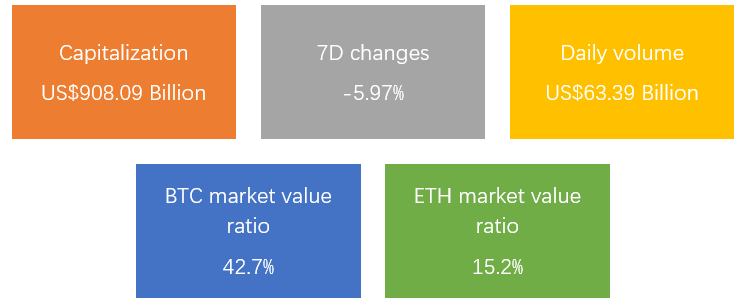
Figure 1. Overall market data
Source: CoinMarketCap
Overall, global market capitalization decreased during the last week, which is completely different from the week before that. Bitcoin’s price fell as much as 12% in the last week. The maximum price was US$21,811.81 on July 10, and the minimum price is US$19,097.6. Similarly, Ethereum price decreased as much as 18% in the last week. The maximum price was US$1,242.9 on July 9, and the minimum price was US$1,026.61 on July 13. Generally, most cryptos prices are decreasing.
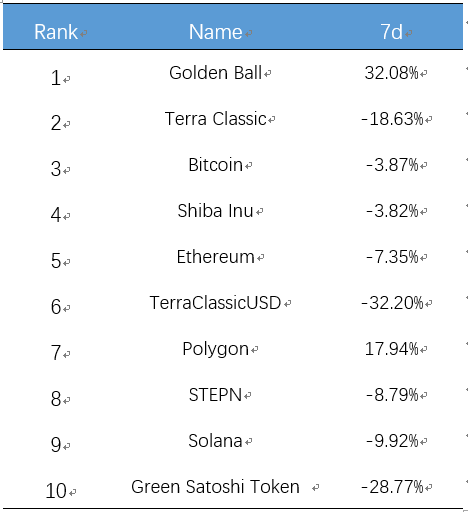
Table 1. Last week's hot currencies
Source: CoinMarketCap
Last week, the crypto market seemed bound for doom.. The crypto hedge fund Three Arrows Capital was facing a liquidity crunch, and the founders were reported missing. Three Arrows Capital isn’t the only firm facing a liquidity crunch. On July 13, Celsius Network, one of the world’s largest cryptocurrency lenders, filed for bankruptcy protection. All these events fuelled to individuals’ uncertainties, and resulted in the decline of the crypto market during the last week. Furthermore, the crypto market has positive correlation with the traditional financial market. The tech-focused Nasdaq, the S&P 500 and Dow Jones Industrial Average decreased more than 2% during the last five days. Although the market appeared to be in recovery the week before last week, it was just a short-term surge. The market consensus still considers the current situation a bear market.
II.NFT
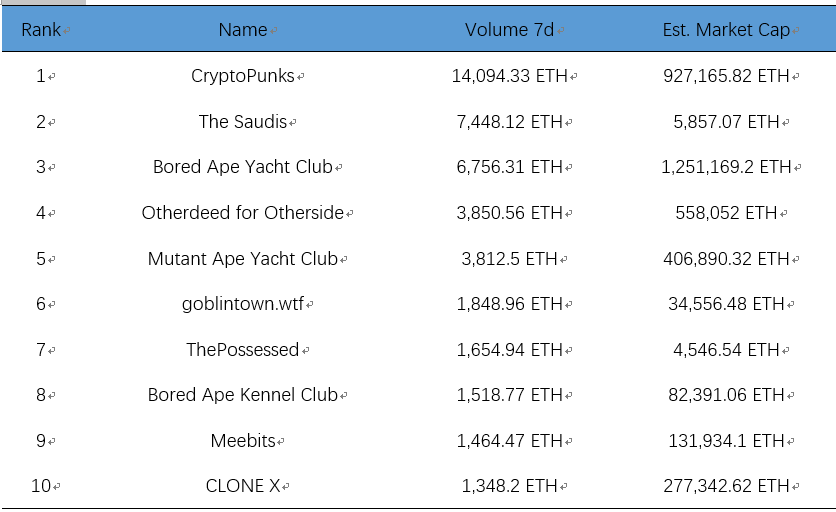
Table 2. NFT collections listed By sales volume (7d)
Source: CoinMarketCap
The NFT market last week experienced a major growth in market cap, for both the sales volume and total sales increase. According to the recent report by Verified Market Research on July 13, the global NFT market size will be worth US$231.98 billion in 2030, with compound annual growth rate of 33.7%. Amongst the top collections, the different NFT projects experienced large increases in sale volume over seven days. One interesting finding is The Saudis, which is a new free-to-mint NFT project. It become the second most traded collection on major marketplace OpenSea over the past seven days. According to its website, The Saudis is a collection of 5,555 NFTs programmatically generated from over 80 possible traits. The collection launched on July 9 and sold out within hours.
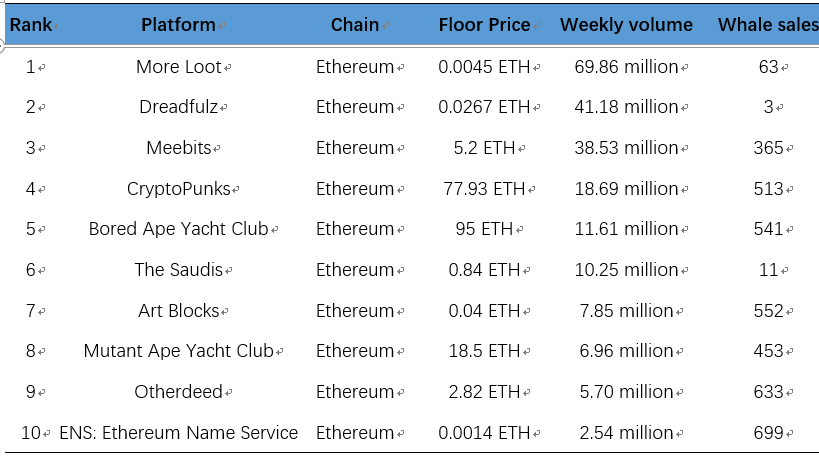
Table 3. Top trending collections on NFTGO (by weekly volume)
Source: NFTGO
III.DeFi
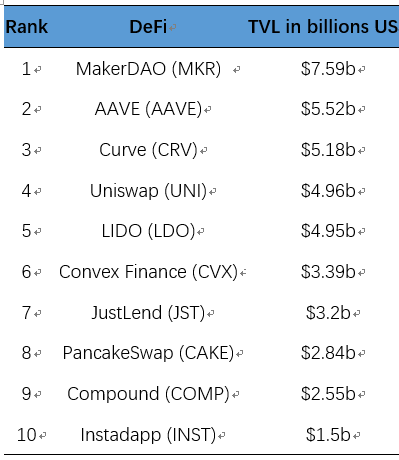
Table 4. DeFi market TVL ranking
Source: DefiLlama
IV.Layer 2
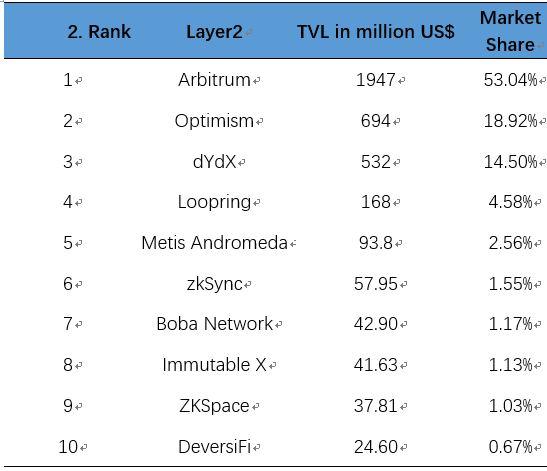
Table 5. Layer2 protocols ranking and market share
Source: l2beat
2. Market news (Sources: Coindesk, Odaily, Jinse Finance, TheBlock, VentureBeat)
I. Industry news
Celsius' Mining Unit Files for Bankruptcy Just Months After Announcing IPO Intention
Celsius Network's mining unit, which said in March it planned to go public, filed for Chapter 11 bankruptcy protection, along with its parent company, in the U.S. Bankruptcy Court for the Southern District of New York. The mining unit of the troubled lender said in March it had filed a confidential S-1 draft registration with the U.S. Securities and Exchange Commission (SEC), to take the company public. At the time shares of most publicly traded crypto mining companies were tumbling, with the broader market selloff. Fast forward to summer, with the continued bear market, miners were forced to sell their mined bitcoins to pay for operating costs and some industry participants expected lot of miners to turn to M&A to survive the downturn as some faced a debt crisis. Celsius Mining's bankruptcy filing is likely to be another blow to investor sentiment in the mining sector.
A Saudi Arabia-Themed NFT Collection Is the Latest Free-to-Mint Hit
The Saudis, the collection of 5,555 NFTs, whose artwork is a derivative of the famed CryptoPunks collectibles, were free to mint on July 9 and sold out within hours. The project’s floor price (which is the price of the cheapest edition currently for sale on the open market) is around 0.75 ETH (roughly US$867), after peaking at around 1.3 ETH (roughly US$1,650) on Saturday. The collection has so far totalled 6,700 ETH (roughly US$7.7 million) in sales volume since its mint, the highest of any project during that span.
CoinFLEX Restarts Withdrawals With 10% Limit
Physical futures crypto exchange CoinFLEX is now allowing customers to withdraw 10% of their account balances, excluding its flexUSD (FLEXUSD) stablecoin. Last month, the crypto firm suspended withdrawals after an individual's account went into negative equity during the market crash, affecting the exchange's balances.“We will be making 10% of user balances available for withdrawal with the exception of FLEXUSD, which cannot be withdrawn until further notice,” CoinFlex’s co-founders Sudhu Arumugam and Mark Lamb said in a blog post on Thursday. The remaining 90% of user funds will remain locked in customer accounts. CoinFLEX recently began arbitration in an attempt to recover US$84 million in debt owed by a “large individual customer” as part of a broader revival strategy. The individual was revealed to be prominent crypto investor Roger Ver, a claim that Ver denied on social media.
II. Investment and Financing
Solana-based MonkeyLeague game developer raises US$24 million
UnCaged Studios, the developer of the Solana-based game MonkeyLeague, has raised US$24 million in a Series A funding round as it plans expansion.The round was led by Griffin Gaming Partners, with Maverick Ventures Israel, Drive by DraftKings, Vgames and 6th Man Ventures participating, Israel-based UnCaged Studios announced in a statement on Thursday. As part of the deal, Nick Tuosto, managing director of Griffin Gaming Partners, has joined UnCaged's board of directors, Tal Friedman, co-founder of UnCaged, told The Block.
Hologram raises US$6.5 million for blockchain-based avatars that you can use in video calls
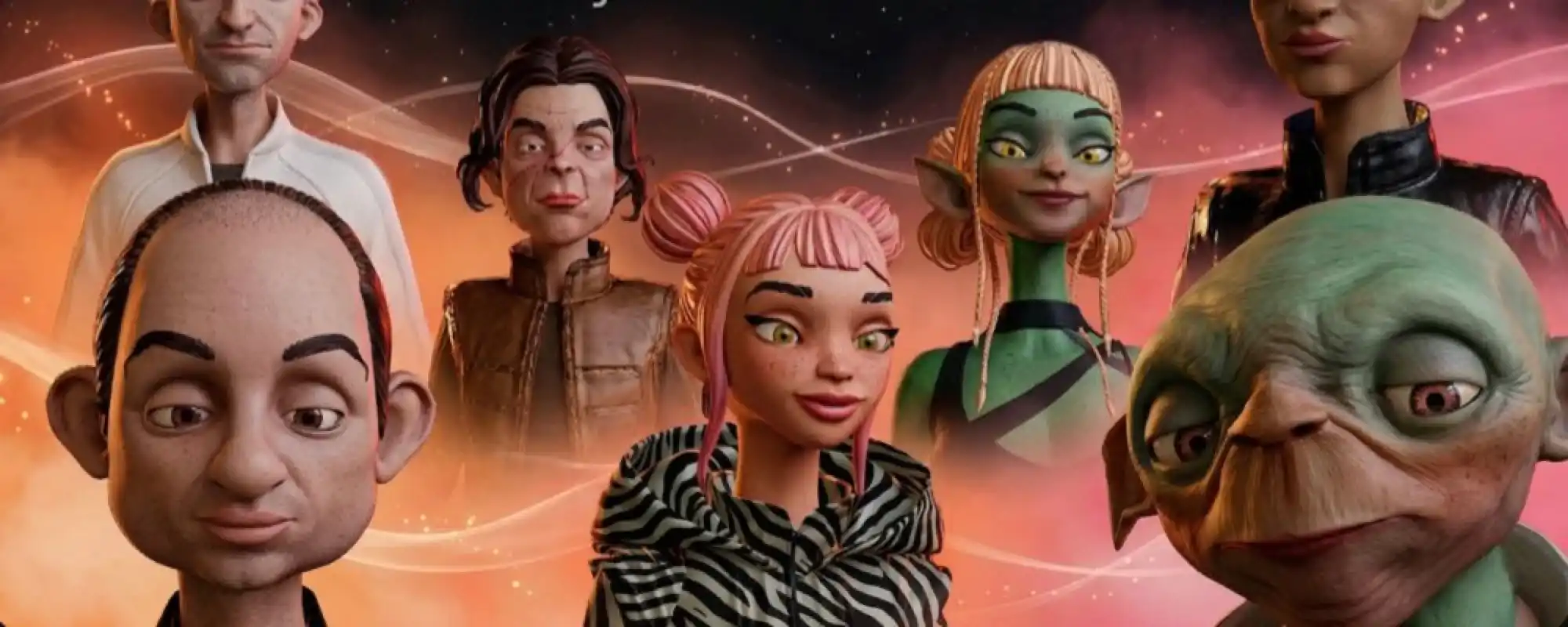
Hologram, an all-in-one platform for virtual beings, today announced that it has raised US$6.5 million in seed funding for avatars that you can use in video calls. The whole aim is to enable avatars to move across applications, much like you would expect them to do in the metaverse, the universe of virtual worlds that are all interconnected, like in novels such as Snow Crash and Ready Player One. Polychain Capital led the round, with participation from Nascent, Inflection, The Operating Group, Quantstamp, Neon DAO, Foothill Ventures and South Park Commons.
NFT financing platform Supermojo raises US$6 million in seed funding
Supermojo, a financing platform for NFTs, announced Thursday that it raised US$6 million in seed funding. The funding round was led by BH Digital, DRW Venture Capital, Intersection Growth Partners and Neuberger Berman, with additional participation from Sfermion, Arca, Gemini, Everyrealm, Arrington Capital, BlockFi Ventures, Circle Ventures, Crossbeam Venture Partners, Draper, FJ Labs, FBG Capital, OP Crypto, Red Beard Ventures and Ripple, according to a release shared with The Block.Supermojo's platform features a buy now pay later (BNLP) service for NFTs. BNPL a process in which a user pays a portion for a product outright and pays the rest in later installments, often with interest.
III. Supervision
US Treasury opens door for public Comments on Biden’s Crypto Order
The U.S. public can now weigh in on President Joe Biden’s order to come up with new rules for the cryptocurrency industry. In March, the president ordered several U.S. agencies to start work on a comprehensive system to oversee digital assets, and the Treasury Department is now inviting the public to submit comments on what they think it should look like. Letters must be received by Aug. 8 2022, according to the Tuesday announcement.
UK lawmakers start inquiry into crypto use
The U.K Treasury Committee is beginning an inquiry into crypto-related risks and opportunities and the appropriate response from the government and regulatory bodies. The committee is requesting evidence on matters such as the possibility of digital currencies replacing fiat money, the effect of crypto on social inclusion and whether the government and regulators are equipped to "grasp the opportunities" presented by crypto assets. The Treasury Committee is a cross-party panel of lawmakers whose job it is to scrutinize the policy of the Treasury, Revenue and Customs and other public bodies, including the Bank of England and the Financial Conduct Authority.
India's crypto industry advocacy body disbanded
The Blockchain and Crypto Assets Council (BACC), the only advocacy body representing the interests of India's crypto industry, has been disbanded by its parent organization, the Internet and Mobile Association of India (IAMAI), according to an official statement sent over WhatsApp. The IAMAI made the decision without discussing the matter with the BACC, people with knowledge of the decision said.
3. Trending project analysis – Sudoswap AMM, is it any better?
What is Sudoswap?
Sudoswap is a over-the-counter (OTC) swap app for NFT and token trades built on top of the 0x protocol. It was launched in April 2021 by a pseudonymous developer only known as 0xmons. He is a renowned and well regarded veteran in the NFT industry especially for releasing the eponymously-named 0xmons pixel monster collection and zkNFT.
Despite the minimalist front end, Sudoswap has maintained 1400 unique users even during volatile markets. 0xmons’s ultimate goal for Sudo is for it to become a widely used protocol for NFT trading, rather than just a cost-efficient swap mechanism. He aims to create a user-friendly experience, driven by Sudoswap’s unique backend technology as well as a litquidity aggregator to offer Sudo’s users the best in-class pricing depth, listing fees and customizability.
Differentiating factors for Sudoswap
Sudoswap differentiates itself through a structural trifecta: gas-efficient & non-custodial swaps, low fees, and multi-asset swaps. On a transactional level, swaps are cheaper as compared to similar transactions on OpenSea. A non-custodial backend means that Makers pay no gas to list, they only need to sign a transaction. Takers pay a fee to execute the swap, the fee however could be equal to or considerably lower as compared to other major NFT exchanges. NFTs on their platform can also be exchanged for ETH just like many other exchanges or swapped into any combination of a variety of ERC tokens. Furthermore, Sudoswap does not charge any fees.

Figure 1: Multi-Asset Swaps
Source: Sudoswap
The new Sudoswap update – SudoAMM
The sudoAMM is a concentrated liquidity AMM protocol designed specifically for NFTs. Traders can enjoy low-slippage swaps between NFTs and tokens, and liquidity providers can better control the price ranges they LP for as well as set up dynamic buy/sell walls.
Unlike most other NFT marketplaces today, sudoAMM uses on-chain liquidity pools rather than off-chain order books. sudoAMM liquidity pools are different from those of e.g. Uniswap. While this does add some gas overhead, the Sudoswap team has been mindful in keeping these costs to a minimum. Deploying a new pool costs around 180,000 gas, and pre-existing pools can be reused when you want to buy/sell additional items.
In return, anyone can run their own front-end and indexer, allowing for a decentralization-focused approach. This also allows other on-chain entities like DAOs to more easily participate in NFT markets, opening up interactions like transparently setting up NFT buy walls on-chain.
The SudoAMM protocil will be governed by the $SUDO governance token that will only be released at a later date. Once launched, the SudoAMM contracts will be governed directly by the $SUDO holders, with no multisig from the dev team acting as an intermediary. The token will be non-transferable at launch, with a transferability vote also being deffered to on-chain governance after launch.
Comparative Advantages Sudoswap has
1) Sudoswap charges significantly less fees
Sudoswap’s fees are currently less than 1% while LooksRare and OpenSea are still charging single digit percentages. The only exception might be Seaport, which has not yet gone live. Sudoswap is significantly cheaper for swaps as compared to its peers.
2) Sudoswaps offer Low-cost/Low-slippage NFT trades
Besides the protocol fee being only 0.5%, users can buy and sell their NFTs in one bulk transaction, which is more cost efficient as users can save on gas.
3) Sudoswap offers flexibility
If Sudoswap is able to have listings supported via an aggregator, then discoverability becomes less important than offereing the best price in the short term. Aggregation will also likely make Liquidity Pools (LPs) very profitable to start.
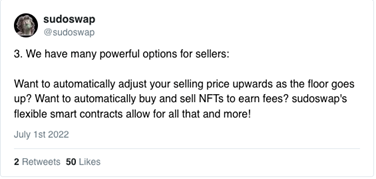
Figure 2: Tweet from Sudoswap
Source: Twitter
4) Composability and participation
Due to the fact that pools are on-chain, DAOs and multi-sigs can manage them without delegating for signing or writing custom governance code. There is a lot more programmability which would allow for the creation of custom products and pools as can be seen on Uniswap v3.
5) Lively and decentralized on-chain NFT marketplace
Having the marketplace on-chain means that there are lower barriers to entry for users to create a website and showcase their items on Sudoswap. This improves decentralization and makes it easier for other on-chain groups such as DAOs and multisigs to participate in the NFT market.
Difference between Sudoswap AMM and other AMMs
Traditional AMMs allow for liquidity provision that supports prices from 0 to infinity. SudoAMM is an concentrated liquidity AMM for trading whole NFTs, meaning that people are free to customize the price ranges that they provide liquidity to.
SudoAMM does not fractionalize NFTs into divisible ERC tokens but instead uses bonding curves to facilitate the trading of whole NFTs. Accordingly, a given pool’s price quotes will be determined by which bonding curve style the creator of the pool chooses — truly a unique approach to marketplaces in the NFT ecosystem.
4. Calendar of future popular asset events
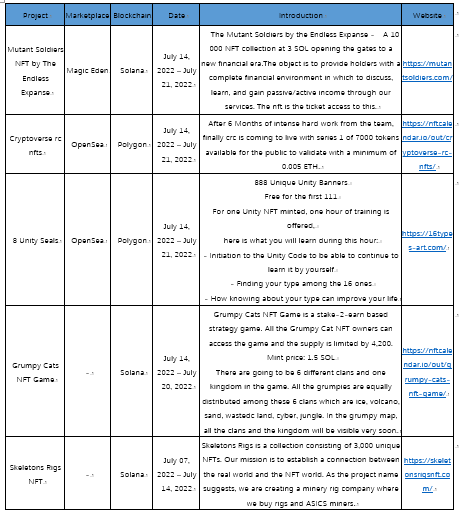
I. NTF mint Calendar
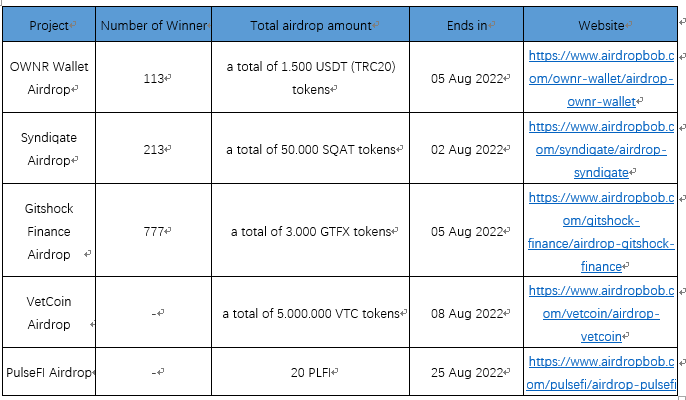
II. Token Airdrops