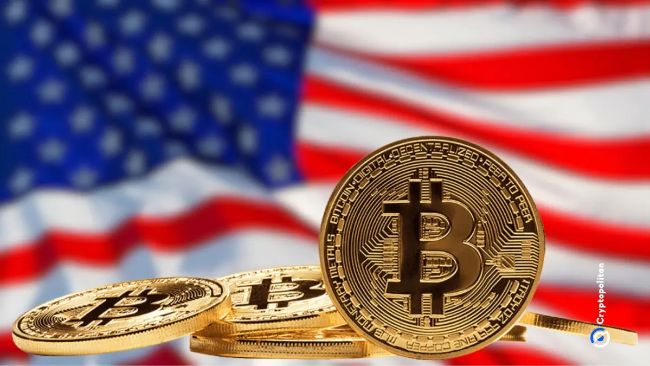
In a gilded White House ballroom lit by chandeliers and expectation, U.S. President Donald Trump’s return to power was marked not just by political spectacle but by a quiet financial revolution. At a long dinner table sat an unexpected coalition — Wall Street executives, Silicon Valley investors, and crypto visionaries.
Between the silverware and policy talk, one message rang clear: the Trump administration is preparing to make the United States the most crypto-friendly nation on earth.
This wasn’t just another White House dinner. Those who attended described it as part celebration, part quiet strategy — an evening where the giants of old Wall Street rubbed shoulders with the new builders of digital finance.
At one end of the table sat Ripple’s senior executives, alongside figures from Coinbase, Fidelity, and BlackRock. Their presence told its own story. Crypto, once brushed off as a fringe experiment, now had a seat at one of the most powerful tables in America. What was once dismissed as a speculative fad had now found its place at America’s most powerful table.
The return of a Market Maker
Trump’s enthusiasm for crypto has never been subtle. During his campaign, he positioned himself as a champion for innovation and deregulation, promising to “make America the crypto capital of the world.” Now, that rhetoric seems to be transforming into policy direction.
The dinner signaled the beginning of a financial realignment. For Wall Street, it was an invitation to adapt. For the crypto community, it was validation. And for Ripple, the company that fought a bruising battle with the U.S. Securities and Exchange Commission, it was something more—a return to legitimacy.
Ripple’s representatives attended the event fresh from a string of strategic moves. The company recently acquired GTreasury for $1 billion, raised another billion for its institutional digital asset arm, and announced partnerships with Absa Bank in Africa and Bahrain FinTech Bay.
These weren’t mere expansion plays; they were signals that Ripple was quietly positioning itself as the connective tissue between blockchain and global banking.
When Wall Street meets the Blockchain
For decades, Wall Street has thrived on predictability, regulation, and the slow churn of traditional markets. Crypto, by contrast, built its reputation on disruption. The two worlds rarely met on equal terms. But under Trump’s second presidency, that distance appears to be shrinking.
The presence of major banks and asset managers at the White House dinner underscored a new reality: traditional finance no longer wants to fight crypto—it wants to own it.
Executives from major firms reportedly discussed the potential for tokenized assets, blockchain-based settlement systems, and stablecoin regulation that could favor U.S. firms over global competitors.
Ripple’s growing influence fits neatly into this narrative. Its partnerships with central banks, fintech hubs, and digital payment networks make it one of the few blockchain firms already embedded within the institutional ecosystem.
If Trump’s administration moves toward friendlier regulatory frameworks, perhaps even revisiting parts of the SEC’s enforcement record—companies like Ripple stand to gain the most.
Crypto’s second wind
Market analysts have already started calling this moment “Crypto’s Second Wind.” The optimism surrounding a pro-crypto White House, coupled with Wall Street’s open embrace, has revived market sentiment after two years of volatility. Bitcoin and XRP both saw brief surges following reports from the event, and investor confidence has trickled back into blockchain-focused equities.
But this moment isn’t just about market moves or token prices. It’s about perception and power. When a sitting U.S. president seats crypto executives beside Wall Street titans and tech giants, the symbolism is hard to ignore.
What was once brushed off as a passing trend has now become part of the financial mainstream. Crypto isn’t looking in from the outside anymore. It’s sharing space with the institutions that once kept their distance. The lines between traditional finance and digital assets are starting to blur, and the shift feels historic.
Ripple’s rise tells that story better than most. A few years ago, it was the outlier, battling lawsuits, skeptical regulators, and a system reluctant to change. Now, it’s part of that very system, shaping how money moves across borders.
Through collaborations with the Gates Foundation and leading global banks, Ripple has positioned itself not as a challenger, but as the bridge connecting old-world finance with the new digital economy. XRP’s underlying infrastructure is quietly becoming part of the plumbing that could move money across borders faster, cheaper, and at a scale the legacy system can’t match.
What it means for America
Trump’s embrace of crypto could reshape more than just the industry—it could redefine America’s role in financial innovation. A friendlier policy climate would likely draw back the capital, companies, and talent that left during years of regulatory uncertainty. It could also spur new investment, fresh jobs, and a wave of blockchain-based enterprises rooted once again in U.S. soil.
For Wall Street, this is a clear signal. Tokenization—the process of turning real-world assets like bonds, property, or commodities into digital tokens—could finally move from concept to reality. For the crypto industry, it is validation: the White House is no longer keeping its distance.
And for the broader economy, it’s a strategic opening. By bringing blockchain under its wing, America could reclaim leadership over a sector that has flourished everywhere but home.
Of course, optimism doesn’t erase complexity. The administration will still have to confront hard questions about investor protection, stablecoin oversight, and the environmental cost of mining. But the tone has shifted.
Washington has shifted its perspective: crypto is no longer seen as something to control or suppress. Instead, it’s increasingly recognized as a technology to embrace, and potentially a sector where the U.S. can lead globally.
The Ripple effect
For Ripple, being part of that White House dinner carries weight far beyond appearances. It marks a turning point—a hard-earned place at the table it once struggled to reach.
After navigating regulatory challenges, market doubts, and global uncertainties, the company is now in a position to help shape how America approaches the future of digital finance.
Ripple’s CEO has made it clear: the firm’s goal is to make the XRP Ledger the institutional standard for cross-border payments. With global banking partnerships multiplying and U.S. regulatory winds changing, that ambition suddenly feels less like corporate optimism and more like a national opportunity.
A new financial consensus
As the evening drew to a close and champagne glasses clinked, what lingered wasn’t the opulence of the White House, it was the quiet acknowledgment of a shift in power. Crypto is no longer knocking on the door of Washington or Wall Street. It’s sitting beside them, shaping the next phase of global finance.
In Donald Trump’s pro-crypto America, blockchain has found not just legitimacy but political gravity. The White House dinner was more than a celebration, it was a declaration: the age of digital finance has officially entered the halls of power.
Also Read: Ripple Labs to Raise $1B to Build New Digital Asset Treasury