Crypto Mines Busted: Authorities Uncover Underground Mining Farms In Russia

bitcoinistPublié le 2024-09-25Dernière mise à jour le 2024-09-25

Résumé

Amid the new legislation for crypto mining in Russia, local authorities have uncovered illegal crypto mining farms in the southern...

Amid the new legislation for crypto mining in Russia, local authorities have uncovered illegal crypto mining farms in the southern Republic of Dagestan. The regional prime minister urged law enforcement to increase their efforts to tackle unlawful mining operations as the region struggles with electricity consumption.

 Underground Crypto Mining Centers Busted

On Tuesday, news media outlet Reuters reported that Dagestan authorities have called out for stronger actions against illegal crypto mining centers in the region. Abdulmuslim Abdulmuslimov, Dagestan’s prime minister, asked law enforcement to pay more attention to the evolving methods miners continuously develop to operate.

At a meeting to discuss preparations for energy, housing, and utilities facilities for winter, the regional leader uncovered the new hiding methods of unregistered mining farms, revealing that several mining centers have been discovered under the ground:

 The owners of illegal cryptocurrency mining installations are coming up with new methods of ‘circumventing’ the law – they install mining farms underground.

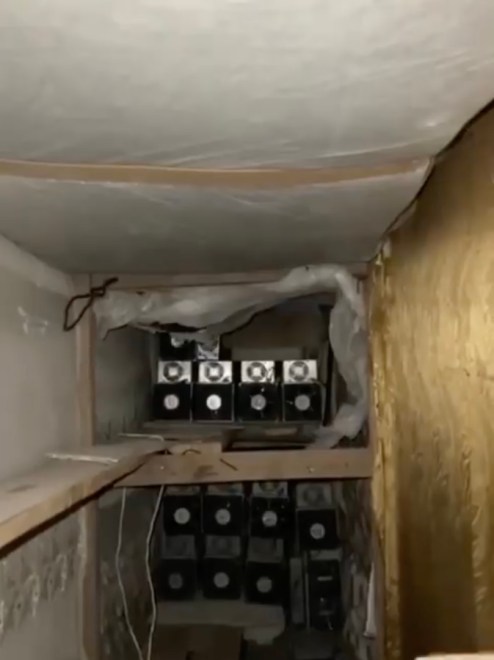
Per the report, authorities showed a video of a makeshift underground cavern in the Sergokalinsky district. It shows that the entry is a narrow square at ground level, which can be easily disguised, with a ladder leading to the cave. After descending, authorities found over 15 mining machines with dozens of fans cooling the computers.
Crypto

Inside of the underground cave used for illegal crypto mining. Source: Mario Nawfal on X

Abdulmuslimov pointed out this was one of several underground crypto mining farms in the region. Moreover, he shared that miners also use “mobile installations” for their farms, allowing them to move more easily.

Russia’s New Mining Era

As reported by Bitcoinist, crypto mining was recently legalized in Russia. In August, Russia’s President Vladimir Putin signed a new law to give the sector a legal status within the country, attempting to be at the forefront of innovation and tackle illegal operations.

The new legislation will go into effect on November 1, 2024, allowing registered companies and individuals to operate legally. Under the new law, crypto miners and mining companies will have the “exclusive rights” to mine in the country.

However, individuals who do not exceed the energy consumption limits set by the Russian government will have the right to mine without registering.  It’s worth noting that the crackdown on crypto mining farms has been an ongoing issue in the Republic of Dagestan.

A report by The Insider detailed that police raids on mining centers had become more frequent in the region since late 2023. The investigation claims that Dagestan “is most likely first in all of Russia when it comes to the number of detected electricity thefts” used for crypto mining, and authorities consider that mining operations are responsible for the electrical problems due to their high consumption.

Ultimately, Dagestan’s prime minister ordered law enforcement to toughen the measures, alleging that the illegal mining centers have caused electrical outages, including the recent fire at a substation that left several districts without power over a week ago.
Crypto, Bitcoin, BTC, BTCUSDT

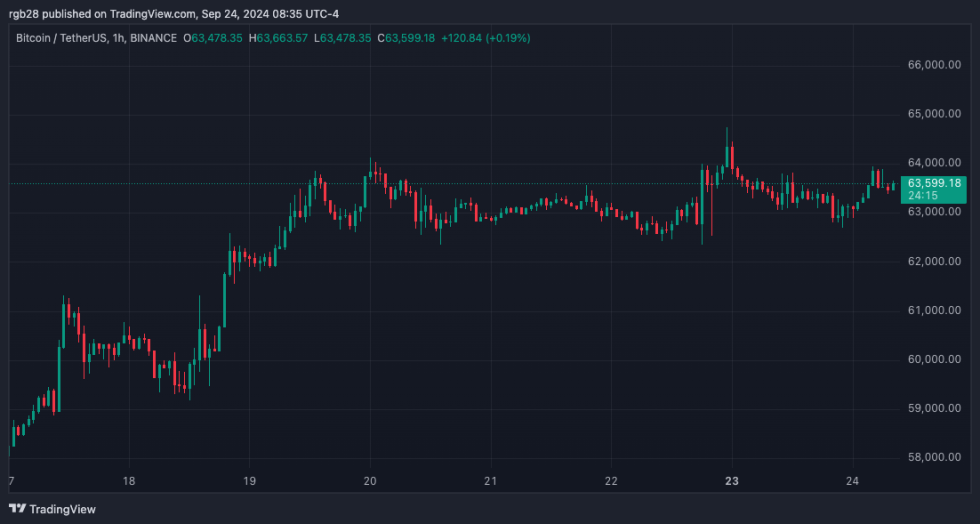
Bitcoin is trading at $63,599 in the weekly chart. Source: BTCUSDT on TradingView
Featured Image from Unsplash.com, Chart from TradingView.com
Rubmar Garcia

Rubmar Garcia

Rubmar is a crypto enthusiast who likes learning and improving constantly. She enjoys reporting on the latest news and developments in the crypto industry. Rubmar also enjoys scrapbooking, crafting, simulation games, and watching football.

Lectures associées

Les robots de Shenzhen vont bientôt sonner à la cloche

L'effervescence des robots à Shenzhen se concrétise par une vague d'introductions en bourse. La société de robotique Doogiang, basée à Nanshan, a vu sa demande d'introduction au ChiNext acceptée, après son IPO réussie à Hong Kong en 2024. Fondée en 2015 par Liu Peichao et son équipe dans un petit appartement, l'entreprise illustre le parcours typique de Shenzhen : partir d'une idée, prototyper rapidement grâce à un écosystème manufacturier dense, et se développer en s'appuyant sur une chaîne d'approvisionnement locale efficace. Doogiang s'est d'abord imposée dans les environnements industriels avant d'étendre ses robots collaboratifs aux espaces commerciaux. Cette dynamique s'inscrit dans un paysage robotique florissant à Shenzhen, surnommée "première ville des robots humanoïdes". Le "Nanshan Robot Valley", une ceinture industrielle de 28 km², regroupe des leaders comme Ubtech (valeur de près de 50 milliards de HKD) et des startups prometteuses telles que Zhipingfang et Ziliang. Des événements comme le "X-Day" au lac Xili servent de plateforme cruciale pour connecter les projets émergents aux capitaux et aux ressources industrielles, ayant déjà facilité des investissements et financements substantiels. La scène robotique de Shenzhen évolue ainsi des applications industrielles vers des domaines plus tournés vers l'expérience et le quotidien, solidifiant sa position de pôle d'innovation mondial.

marsbitIl y a 35 mins

Les robots de Shenzhen vont bientôt sonner à la cloche

marsbitIl y a 35 mins

La Corée s’enrichit, les États-Unis changent de ton

Les États-Unis ont intenté un procès antitrust contre les fabricants sud-coréens de mémoire Samsung et SK Hynix, ainsi que contre l'américain Micron, les accusant d'avoir artificiellement fait grimper les prix de la DRAM de 700%. Cette action survient alors que la Corée du Sud, grâce à sa domination sur le marché crucial de la mémoire HBM (High-Bandwidth Memory) essentielle à l'IA, capte 35% des profits mondiaux de l'IA, derrière les États-Unis (49%). L'affaire dépasse une simple plainte sur les prix. Elle reflète la tension stratégique autour des ressources clés de l'ère de l'IA. Les GPU de Nvidia, leader américain, dépendent étroitement des puces HBM sud-coréennes. Alors que la demande explose, la conversion des capacités de production vers la HBM, plus rentable, réduit l'offre en mémoire classique, faisant flamber les prix. En réponse à la pression américaine, la Corée du Sud a annoncé un plan massif d'investissement (800 billions de wons) pour renforcer sa production de semi-conducteurs, visant à conserver son avance. Les États-Unis, de leur côté, soutiennent Micron pour rapatrier une partie de la fabrication. Le procès apparaît ainsi comme un outil de pression pour ralentir les géants coréens et gagner du temps. Ce conflit juridique marque probablement le début des rivalités géostratégiques pour le contrôle des infrastructures physiques de l'IA (GPU, HBM, énergie), devenues les nouvelles ressources critiques, à l'image du pétrole ou de l'acier par le passé. L'interdépendance entre Nvidia et les fabricants coréens crée une relation à la fois symbiotique et conflictuelle, où la répartition des immenses profits reste un enjeu majeur.

marsbitIl y a 1 h

La Corée s’enrichit, les États-Unis changent de ton

marsbitIl y a 1 h

Trading

Spot
活动图片