Unmasking the Titan: Haipo Yang on How Coinex Transformed From Underdog to Powerhouse

bitcoinistPublié le 2024-09-05Dernière mise à jour le 2024-09-05

Résumé

From its relatively humble beginnings in 2017, CoinEx has grown into a major cryptocurrency exchange player that has been working...

From its relatively humble beginnings in 2017, CoinEx has grown into a major cryptocurrency exchange player that has been working its way up the market rankings with ease. Recently, CoinEx was rated by the media as one of the Top Crypto Exchanges in 2024. Managing the exchange is CEO Haipo Yang, who has guided his ward through the cutthroat competition with a different approach: innovation and keep their mantra of “user first.” Recently, Yang spoke about CoinEx’s growth trajectory, the strategies propelling this success, and the outlook of the future for the cryptocurrency industry.

CoinEx’s Emergence and Market Position

Not as high-profile, CoinEx has still managed to establish an excellent standing for itself against its competitors in the highly-stacked cryptocurrency exchange arena. Yang calls the platform “a resilient and robust pillar in the crypto world,” adding that though CoinEx may not be as prominent as some market giants, the exchange has managed to create a solid backbone through its steady progress and continuous innovation. From its very beginning, CoinEx has adhered to the principle of putting a premium on its users and offering “good, fast, comprehensive” tokens. This has helped it achieve such remarkable success: it already supports more than 10 million users from over 200 countries and regions. “Our users trust us deeply and interact with us frequently,” Yang points out, underlining the very foundation of CoinEx’s success in its growing user base.

Yang’s Extensive Knowledge in Tech and Blockchain

Thanks to his extensive experience in the tech and blockchain sector, Haipo Yang led the development of CoinEx and set its strategic course. Before founding CoinEx, Yang worked as a software engineer for big technology companies like Tencent and started embracing the blockchain world in 2014. He has worked in various fields of the sector, including mining machines, mining pools, cloud mining services, wallets, exchanges, and public chains. “I believe my background has provided valuable insights into both the business operations and technical aspects of the crypto industry,” says Yang. However, he insists that what forms the very foundation of CoinEx’s success is not himself, but the values held dear by the company. “The most important influence on an enterprise should always be its values,” he says, explaining that CoinEx’s orientation to long-termism drove sustained value for users and the industry through product development, team management, and service refinement.

Introducing the CoinEx Team

CoinEx’s success relies on approximately 400 global workers. Yang says, “They are the most significant asset of the company and the fundamental power that drives CoinEx ahead.” The team includes top blockchain, FinTech, Internet, and brand marketing experts. “I recruited and trained most of them,” Yang claims. “Most have professional credentials.

The organization values “integrity, entrepreneurship, excellence, and win-win.” The above concepts guide their business decisions. Yang says these shared ideals help the team execute their business sectors with precision, speed, and vigor. “We have built a strong foundation through the continuous influx of talented professionals who share our vision and commitment,” he adds. CoinEx means a great deal with an organization that is full of expertise and commitment, as this can innovate and adapt to the rapidly changing market.

Adapting to Market Changes and Challenges

Since the founding of CoinEx, the market of digital currency has more or less changed. The sector consisted only of technocratic enthusiasts because of general mistrust of new technology and digital assets, recalls Yang. The market now has over 700 million users with a valuation of more than $2 trillion.

But with new open doors come different challenges. Cryptocurrency-related regulation is getting clearer and more complex to follow. Yang points this out: “While regulatory clarity brings standardization, it also introduces operational challenges.” He adds that the industry needs to carefully traverse regulatory landscapes if it’s going to successfully balance the dynamics of compliance and innovation for sustainability.

CoinEx: Competitive Advantage

The competitive space has indeed allowed CoinEx to inch its way to the top by leveraging a wide range of products and services. Yang attributes their success to a rigorous approach towards compliance and security, diverse products and services, and strategic global partnerships. “Commitment to compliance and security has been one of the cornerstones of our success,” he says. The services offered on its platform range from spot trading to leveraged trading, futures trading, and financial management services. Yang highlights the importance of offering high-value, risk-filtered projects to users, complete with deep market resources. “We work with only the best projects and service providers globally, ensuring that our users can access top-of-the-line products,” he said.

Of course, another important point is CoinEx’s global strategy: with users in different geographic locations, CoinEx has worked out a localized strategy to meet regional needs and adapt to the different regulatory situations. Yang also underscored the power of innovation within the firm. “Whether it is DeFi or NFTs, we explore and participate in emerging trends.”

The Role of CET in CoinEx’s Ecosystem

According to Yang, CoinEx’s platform token, CET, is a crucial tool for connecting with and incentivizing our users. By holding and using CET, users can enjoy various discounts and services on the platform, such as trading fee discounts, VIP exclusive privileges and priority participation in platform events. These benefits enhance the user’s trading experience and increase their loyalty and engagement with the platform.

CET plays an important role in incentivizing within our ecosystem. Through various activities and programs, such as CET staking and reward plans, we encourage users to hold and use CET. These incentive mechanisms increase the demand for CET and enhance user engagement.Yang said,CET is more than a token; it reflects CoinEx’s principles and commitment toward the future of cryptocurrencies.

Commitment to the Value and Future of CET

That commitment of CoinEx towards CET is reflected in the way it manages and promotes the token. According to Yang, a part of CET belongs to CoinEx itself for team incentives and market promotions. Yet, it has no intention to sell those tokens in the market. “This approach demonstrates our confidence in CET and our long-term vision,” he says. He added that the exchange is committed to further developing more use cases for CET while enhancing its value through innovative products and services. Some initiatives include adding CoinEx Dock for IEO, CET Staking for on-chain staking, and CoinEx Mining for token airdrops. CoinEx, Yang said, intends to further promote the development of CET and deepen its position in the digital currency ecosystem. “We would still invest in CET and continue to find other opportunities for its growth.”

Crypto Market: The Road Ahead

With that, Yang is now cautiously optimistic about 2024 for the cryptocurrency market. The founder does, however, acknowledge the less-than-ideal macroeconomic environment, usually characterized by high interest rates and tight monetary policies, which would naturally favor low-risk traditional assets at the expense of liquidity in the crypto market. While these conditions present challenges, Yang said the core value and technological advantages of cryptocurrencies remain strong.

While it continues to grow and innovate, CoinEx is well-positioned for future success with its special focus on user experience, strategic expansion, and commitment to CET. The keen insights of Yang show clarity of vision to sail through the changing crypto landscape and ensure years of sustained growth.

About CoinEx

Established in 2017, CoinEx is a global cryptocurrency exchange committed to making trading easier. The platform provides a range of services, including spot and futures trading, margin trading, swap, automated market maker (AMM), and financial management services for over 10 million users across 200+ countries and regions. Since its establishment, CoinEx has steadfastly adhered to a “user-first” service principle. With the sincere intention of nurturing an equitable, respectful, and secure crypto trading environment, CoinEx enables individuals with varying levels of experience to effortlessly access the world of cryptocurrency by offering easy-to-use products.

To learn more about CoinEx, visit: Website | Twitter | Telegram | LinkedIn | Facebook | Instagram  | YouTube


Bitcoinist

Bitcoinist

Bitcoinist is the ultimate news and review site for the crypto currency community!

Lectures associées

Un groupe d'ingénieurs de Suzhou obtient par surprise la liberté financière

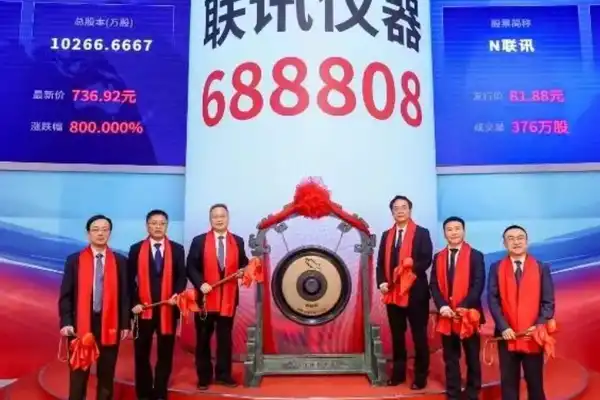
Une équipe d'ingénieurs de Suzhou a obtenu une liberté financière inattendue grâce à l'introduction en bourse spectaculaire de leur entreprise, **联讯仪器 (Lianxun Instruments)**. Spécialisé dans les instruments de test pour les communications optiques, le leader du secteur a vu son action multiplier par 30 en seulement deux mois après son entrée sur le marché STAR de la Bourse de Shanghai, atteignant plus de 2000 yuans par titre. Cette envolée a créé une immense richesse pour les employés. Pour fidéliser ses talents techniques, la société avait mis en place, bien avant son IPO, trois plateformes de participation des salariés détenant collectivement 15,91% du capital. Avec une capitalisation boursière actuelle dépassant 2300 milliards de yuans, la valeur de ces parts dépasse les 360 milliards de yuans, bénéficiant à près d'une centaine d'ingénieurs et cadres techniques. Parmi eux, une quarantaine sont devenus des millionnaires en dollars, tandis que les parts les plus modestes valent plusieurs millions de yuans. Fondée en 2017 pour répondre aux dépendances technologiques étrangères, l'entreprise a connu une croissance rapide portée par une forte R&D (80% des effectifs). Sa réussite coïncide avec l'explosion de la demande en puissance de calcul pour l'IA, ses clients incluant des géants mondiaux comme Broadcom et Lumentum. Ce cas illustre une nouvelle tendance de création de richesse en Chine : l'ère de **l'enrichissement par la technologie**. Contrairement aux cycles précédents dominés par l'immobilier et internet, la valorisation boursière des entreprises de haute technologie dans des secteurs comme les communications optiques, les puces ou l'IA permet désormais à un large nombre d'ingénieurs et de techniciens de partager les bénéfices de la croissance, récompensant ainsi le vivier exceptionnel de talents d'ingénieurs du pays.

marsbitIl y a 6 mins

Un groupe d'ingénieurs de Suzhou obtient par surprise la liberté financière

marsbitIl y a 6 mins

Le document le plus « dangereux » de l’année par Nvidia : L’IA se reproduit grâce à du code, une évolution à l’infini

**Article :** Nvidia publie ce qui est qualifié de « l'article le plus dangereux de l'année » sur l'IA auto-reproductrice et l'évolution exponentielle. **Résumé en français :** Des chercheurs de Nvidia, de Cambridge et d'autres institutions ont présenté la « Machine de Gödel de la Reine Rouge » (RQGM), un système d'IA capable d'une évolution récursive et auto-alimentée. Le système fonctionne comme un jeu de survie brutal : une IA génère et teste de nouveaux algorithmes d'apprentissage dans un bac à sable, éliminant les échecs et conservant les succès pour la prochaine itération d'auto-amélioration. L'innovation la plus frappante est que le système ne fait pas seulement évoluer les agents qui exécutent des tâches (comme écrire du code ou des articles), mais fait également évoluer les « examinateurs » ou évaluateurs qui les jugent. En utilisant un processus appelé « évolution utilitaire contrôlée », le système sélectionne périodiquement de nouveaux évaluateurs plus performants et plus stricts, qui à leur tour poussent les agents à s'améliorer davantage, créant ainsi une course aux armements récursive. Cela reflète l'hypothèse de la Reine Rouge en biologie : « il faut courir aussi vite qu'on peut pour rester au même endroit ». L'article démontre l'efficacité de la RQGM sur plusieurs tâches : amélioration des taux de réussite pour la génération de code (Polyglot), doublement du taux d'« acceptation » pour la rédaction d'articles scientifiques par des pairs humains, et meilleures performances en résolution de preuves mathématiques de niveau Olympiade. De plus, le système a corrigé un biais connu des LLM en tant que juges : une préférence pour le contenu généré par l'IA. En faisant évoluer les évaluateurs pour qu'ils identifient et rejettent les textes produits par l'IA tout en conservant la précision, la RQGM a obtenu des juges plus impartiaux. Ce travail brise une barrière théorique vieille de 20 ans associée à la « Machine de Gödel » originale, qui exigeait une preuve mathématique formelle de toute auto-modification. La RQGM utilise à la place la sélection évolutive. Ces avancées alimentent des prédictions audacieuses, comme celle du co-fondateur d'Anthropic, Jack Clark, qui estime à 60 % la probabilité qu'une IA capable d'une auto-évolution récursive (RSI) hautement autonome émerge d'ici fin 2028. Le document suggère qu'une fois qu'une IA commence à concevoir ses propres critères d'évaluation et à s'engager dans une telle boucle d'amélioration exponentielle, la voie vers une intelligence artificielle super intelligente (ASI) pourrait être raccourcie de manière imprévisible et alarmante.

marsbitIl y a 32 mins

Le document le plus « dangereux » de l’année par Nvidia : L’IA se reproduit grâce à du code, une évolution à l’infini

marsbitIl y a 32 mins

Rééquilibrage du pouvoir entre Apple et les « Microns » : Décortiquer la facture des bénéfices derrière l'iPhone

Un rapport récent analyse la répartition des profits dans l'iPhone d'Apple, démontrant un rééquilibrage du pouvoir au profit des fabricants de mémoire comme Micron. Alors qu'Apple conserve historiquement environ 25% du profit par iPhone, la part des fabricants de mémoire est passée d'environ 2% (époque iPhone X) à 12-15% du coût des matériaux (iPhone 17), leurs prix ayant considérablement augmenté. Cette inversion de tendance est principalement alimentée par la demande explosive de l'IA, qui détourne la production de mémoire (notamment le HBM et le DDR5 haut de gamme) des marchés grand public comme celui des smartphones. Le PDG d'Apple, Tim Cook, a décrit cette pression sur les coûts comme un événement sans précédent en 40 ans, conduisant à des hausses de prix sur plusieurs produits Apple. Les fabricants de mémoire, autrefois soumis à la forte pression tarifaire d'Apple, profitent désormais d'une position de force. La profitabilité record de Micron illustre ce changement. Face à cette pénurie, Apple explorerait même l'approvisionnement auprès du fabricant chinois CXMT pour diversifier ses sources. L'article conclut que l'ère de la domination absolue d'Apple sur sa chaîne d'approvisionnement en mémoire pourrait prendre fin, cédant la place à une dynamique plus équilibrée.

Odaily星球日报Il y a 2 h

Rééquilibrage du pouvoir entre Apple et les « Microns » : Décortiquer la facture des bénéfices derrière l'iPhone

Odaily星球日报Il y a 2 h

Les huit pères du Transformer, où sont-ils aujourd'hui ?

En juin 2026, Google a été marqué par le départ de deux figures clés : Noam Shazeer, co-auteur du Transformateur, et John Jumper d'AlphaFold. Ce dernier a rejoint OpenAI, ce qui a provoqué une forte réaction des marchés et des inquiétudes quant à l'exode des talents de Google. Cet événement a remis en lumière les huit co-auteurs de l'article fondateur « Attention Is All You Need » (2017), qui ont tous quitté Google. Ce modèle révolutionnaire a remplacé les réseaux neuronaux récurrents (RNN) par un mécanisme d'attention permettant le traitement parallèle, devenant la base de l'IA moderne. Aujourd'hui, leurs trajectoires sont diverses : * **Ashish Vaswani**, après avoir cofondé Adept AI et Essential AI, serait en pourparlers pour rejoindre NVIDIA. * **Noam Shazeer** a quitté Google une seconde fois pour OpenAI après avoir fondé et revendu Character.AI. * **Niki Parmar** a cofondé Essential AI avant de rejoindre Anthropic. * **Jakob Uszkoreit** a cofondé Inceptive, une entreprise de biotechnologie utilisant l'IA pour la conception de médicaments à base d'ARN. * **Llion Jones** a cofondé Sakana AI au Japon, une société axée sur des modèles collaboratifs inspirés de la nature. * **Aidan N. Gomez** a cofondé Cohere, une entreprise spécialisée dans l'IA pour les entreprises, plaidant pour la souveraineté numérique. * **Łukasz Kaiser** a rejoint OpenAI où il a contribué aux modèles de raisonnement comme o1 et GPT-4. * **Illia Polosukhin** a cofondé NEAR Protocol, une plateforme blockchain qu'il voit comme la future infrastructure pour les agents IA. En 2024, sept des huit auteurs se sont réunis lors du GTC de NVIDIA, recevant un hommage pour avoir « transformé le monde ». Pourtant, malgré leur succès, ils partagent une conviction : le Transformateur n'est pas une fin en soi. Leur héritage réside dans leur quête continue du prochain paradigme qui devra être « nettement, indéniablement meilleur ». Leurs chemins séparés continuent d'explorer les frontières de l'IA.

marsbitIl y a 2 h

Les huit pères du Transformer, où sont-ils aujourd'hui ?

marsbitIl y a 2 h

Trading

Spot
活动图片