Pepecoin Could Challenge Dogecoin Marketcap, Mpeppe Presale Could 100X On Launch

bitcoinistPublié le 2024-09-03Dernière mise à jour le 2024-09-03

Résumé

As the cryptocurrency market continues to evolve, meme coins like Pepecoin (PEPE) and Dogecoin (DOGE) remain at the forefront of...

As the cryptocurrency market continues to evolve, meme coins like Pepecoin (PEPE) and Dogecoin (DOGE) remain at the forefront of investor interest. Both of these digital currencies have carved out significant niches in the market, each boasting strong communities and unique appeal. However, a new contender, Mpeppe (MPEPE), is emerging as a potential game-changer, with its presale showing signs that it could 100X on launch.

Pepecoin (PEPE) and Dogecoin (DOGE): The Meme Coin Titans

Pepecoin (PEPE) has recently seen a surge in popularity, fueled by its connection to meme culture and a dedicated community. With its 9.8% price jump in just 24 hours, PEPE is solidifying its place as a major player in the meme coin arena. This surge is reminiscent of Dogecoin’s (DOGE) own meteoric rise, which has been driven by a similarly passionate community and widespread recognition.

Dogecoin (DOGE), the original meme coin, has become a household name in the cryptocurrency world. Initially created as a joke, DOGE has defied expectations, gaining a substantial following and achieving a market cap that has consistently placed it among the top cryptocurrencies. Despite its playful origins, Dogecoin (DOGE) has proven to be resilient, with a community that has kept it relevant and thriving.

Can Pepecoin (PEPE) Challenge Dogecoin’s Market Cap?

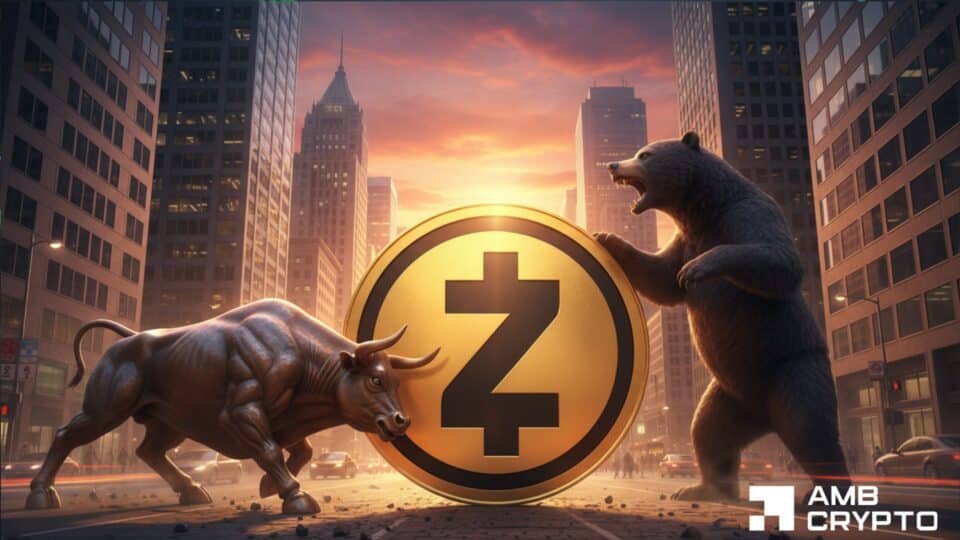
The question on everyone’s mind is whether Pepecoin (PEPE) has the potential to challenge Dogecoin (DOGE) in terms of market cap. While Dogecoin (DOGE)’s position is well-established, Pepecoin (PEPE)’s rapid rise suggests that it could be a serious contender. Both coins share a similar appeal—leveraging humor, community, and relatability to capture the interest of investors. However, Pepecoin (PEPE) is still in its early stages, and it will need to maintain its momentum to reach the heights that Dogecoin (DOGE) has achieved.

Dogecoin’s (DOGE) market cap is supported by its use in transactions and its status as a “gateway” cryptocurrency for new investors. For Pepecoin (PEPE) to challenge Dogecoin (DOGE), it will need to expand its utility and continue to build on its community-driven success. The recent 9.8% surge is a positive sign, but sustained growth will require ongoing innovation and engagement with its user base.

Mpeppe (MPEPE): Investors Optimism

While Pepecoin (PEPE) and Dogecoin (DOGE) battle for supremacy in the meme coin world, Mpeppe (MPEPE) is quietly positioning itself as a dark horse in the race. Mpeppe (MPEPE) presale has caught the attention of savvy investors, with many speculating that the token could see a 100X return on launch. This optimism is fueled by Mpeppe (MPEPE)’s unique approach, combining the meme coin appeal with innovative features that could set it apart from its competitors.

Mpeppe (MPEPE) is not just another meme coin; it offers a blend of decentralized finance (DeFi) and artificial intelligence (AI) technology, making it an attractive option for investors looking for both entertainment and utility. The presale’s success indicates strong investor confidence, and if the token can deliver on its promises, it could quickly become a major player in the cryptocurrency market.

The Future of Meme Coins: Pepecoin (PEPE), Dogecoin (DOGE), and Mpeppe (MPEPE)

The future of meme coins is undoubtedly exciting, with Pepecoin (PEPE), Dogecoin (DOGE), and Mpeppe (MPEPE) each offering something unique to the market. Dogecoin (DOGE) has the advantage of being a well-known and widely accepted cryptocurrency, while Pepecoin (PEPE) is gaining traction with its rapid growth and strong community support. Mpeppe (MPEPE), on the other hand, represents the next generation of meme coins, integrating advanced technology to offer more than just a fun investment.

For Pepecoin (PEPE) to reach Dogecoin (DOGE)’s market cap, it will need to continue building its brand and expanding its use cases. Dogecoin (DOGE)’s established presence makes it a formidable opponent, but Pepecoin (PEPE)’s recent performance shows that it has the potential to challenge the status quo. Meanwhile, Mpeppe (MPEPE)’s potential 100X return on launch makes it a token to watch closely, as it could redefine what investors expect from meme coins.

Conclusion: A New Era for Meme Coins?

Mpeppe (MPEPE) is becoming a serious competitor with the ability to upend the current quo, even as Pepecoin (PEPE) and Dogecoin (DOGE) continue to rule the meme coin market. It remains to be seen if Pepecoin (PEPE) can overtake Dogecoin in terms of market capitalisation, but rivalry is intensifying. Given its success during its presale, Mpeppe (MPEPE) has the potential to become a major player in the cryptocurrency space and provide investors with substantial rewards.

For more information on the Mpeppe (MPEPPE) Presale: 

Visit Mpeppe (MPEPPE)

Join and become a community member: 

https://t.me/mpeppecoin

https://x.com/mpeppecommunity?s=11&t=hQv3guBuxfglZI-0YOTGuQ


Bitcoinist

Bitcoinist

Bitcoinist is the ultimate news and review site for the crypto currency community!

Lectures associées

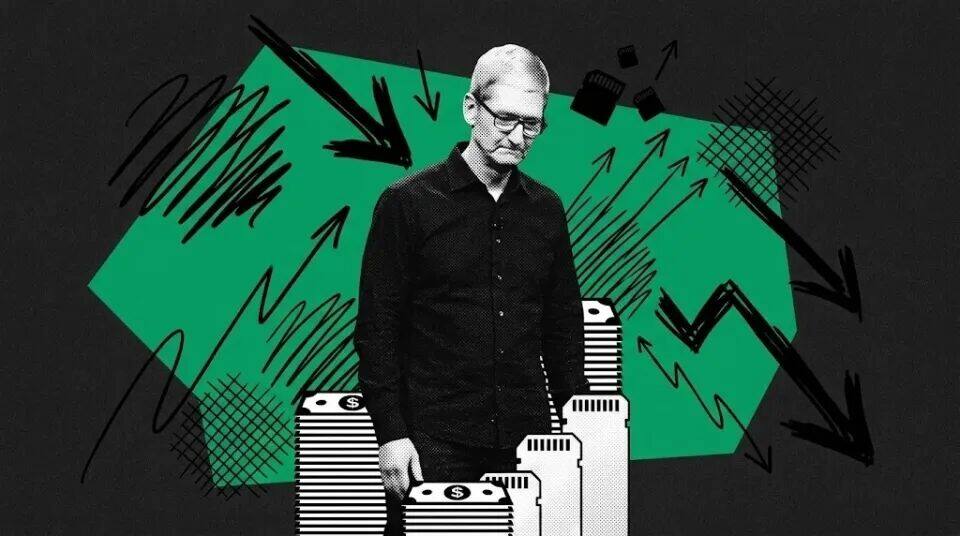
Rééquilibrage du pouvoir entre Apple et les « Microns » : Décortiquer la facture des bénéfices derrière l'iPhone

Un rapport récent analyse la répartition des profits dans l'iPhone d'Apple, démontrant un rééquilibrage du pouvoir au profit des fabricants de mémoire comme Micron. Alors qu'Apple conserve historiquement environ 25% du profit par iPhone, la part des fabricants de mémoire est passée d'environ 2% (époque iPhone X) à 12-15% du coût des matériaux (iPhone 17), leurs prix ayant considérablement augmenté. Cette inversion de tendance est principalement alimentée par la demande explosive de l'IA, qui détourne la production de mémoire (notamment le HBM et le DDR5 haut de gamme) des marchés grand public comme celui des smartphones. Le PDG d'Apple, Tim Cook, a décrit cette pression sur les coûts comme un événement sans précédent en 40 ans, conduisant à des hausses de prix sur plusieurs produits Apple. Les fabricants de mémoire, autrefois soumis à la forte pression tarifaire d'Apple, profitent désormais d'une position de force. La profitabilité record de Micron illustre ce changement. Face à cette pénurie, Apple explorerait même l'approvisionnement auprès du fabricant chinois CXMT pour diversifier ses sources. L'article conclut que l'ère de la domination absolue d'Apple sur sa chaîne d'approvisionnement en mémoire pourrait prendre fin, cédant la place à une dynamique plus équilibrée.

Odaily星球日报Il y a 4 mins

Rééquilibrage du pouvoir entre Apple et les « Microns » : Décortiquer la facture des bénéfices derrière l'iPhone

Odaily星球日报Il y a 4 mins

Les huit pères du Transformer, où sont-ils aujourd'hui ?

En juin 2026, Google a été marqué par le départ de deux figures clés : Noam Shazeer, co-auteur du Transformateur, et John Jumper d'AlphaFold. Ce dernier a rejoint OpenAI, ce qui a provoqué une forte réaction des marchés et des inquiétudes quant à l'exode des talents de Google. Cet événement a remis en lumière les huit co-auteurs de l'article fondateur « Attention Is All You Need » (2017), qui ont tous quitté Google. Ce modèle révolutionnaire a remplacé les réseaux neuronaux récurrents (RNN) par un mécanisme d'attention permettant le traitement parallèle, devenant la base de l'IA moderne. Aujourd'hui, leurs trajectoires sont diverses : * **Ashish Vaswani**, après avoir cofondé Adept AI et Essential AI, serait en pourparlers pour rejoindre NVIDIA. * **Noam Shazeer** a quitté Google une seconde fois pour OpenAI après avoir fondé et revendu Character.AI. * **Niki Parmar** a cofondé Essential AI avant de rejoindre Anthropic. * **Jakob Uszkoreit** a cofondé Inceptive, une entreprise de biotechnologie utilisant l'IA pour la conception de médicaments à base d'ARN. * **Llion Jones** a cofondé Sakana AI au Japon, une société axée sur des modèles collaboratifs inspirés de la nature. * **Aidan N. Gomez** a cofondé Cohere, une entreprise spécialisée dans l'IA pour les entreprises, plaidant pour la souveraineté numérique. * **Łukasz Kaiser** a rejoint OpenAI où il a contribué aux modèles de raisonnement comme o1 et GPT-4. * **Illia Polosukhin** a cofondé NEAR Protocol, une plateforme blockchain qu'il voit comme la future infrastructure pour les agents IA. En 2024, sept des huit auteurs se sont réunis lors du GTC de NVIDIA, recevant un hommage pour avoir « transformé le monde ». Pourtant, malgré leur succès, ils partagent une conviction : le Transformateur n'est pas une fin en soi. Leur héritage réside dans leur quête continue du prochain paradigme qui devra être « nettement, indéniablement meilleur ». Leurs chemins séparés continuent d'explorer les frontières de l'IA.

marsbitIl y a 34 mins

Les huit pères du Transformer, où sont-ils aujourd'hui ?

marsbitIl y a 34 mins

La réponse chinoise à la puissance de calcul spatial : plus efficace avec les photons, Musk et Huang Renxun prennent un chemin trop détourné

La course à la puissance de calcul spatial est devenue une véritable course aux armements. Elon Musk prédit que d'ici 2032, les satellites d'IA spatiaux alimentés à l'énergie solaire deviendront la solution informatique la plus rentable au monde. Cependant, les défis techniques dans l'espace sont bien plus rudes que sur Terre : absence de convection pour le refroidissement, exposition aux rayonnements cosmiques et contraintes énergétiques sévères. Le calcul optique, utilisant des photons plutôt que des électrons, apparaît comme une solution naturelle pour le spatial. Il offre trois avantages décisifs : une immunité naturelle aux particules énergétiques, une dissipation thermique quasi nulle et une consommation d'énergie très faible. Ces propriétés permettent d'envisager une densité de calcul supérieure pour un poids et un volume de charge utile équivalents, contournant ainsi certaines limites physiques de l'électronique traditionnelle. Le cœur de cette technologie repose sur l'exécution ultra-rapide des opérations de matrice pour l'IA via la propagation de la lumière. Malgré des défis persistants, comme l'intégration à grande échelle et la séparation mémoire/calcul, des architectures innovantes comme le calcul en mémoire photonique émergent pour les surmonter. La route vers un déploiement commercial à grande échelle reste longue, nécessitant de valider la robustesse des systèmes durant le lancement et en orbite. Si le calcul spatial parvient à atteindre un coût inférieur à celui des solutions terrestres ou à offrir des services uniques, le calcul optique, avec son potentiel de "calcul et interconnexion par la lumière", pourrait bien être la carte maîtresse pour repousser les plafonds de performance dans cette nouvelle frontière.

marsbitIl y a 1 h

La réponse chinoise à la puissance de calcul spatial : plus efficace avec les photons, Musk et Huang Renxun prennent un chemin trop détourné

marsbitIl y a 1 h

Trading

Spot
活动图片