Original Author: Ma He, Foresight News
In January 2026, Thunderbolt Company and its subsidiary Wangxin Technology filed a civil lawsuit against Chen Lei and his core team on the grounds of "dispute over liability for damaging company interests," seeking compensation of up to 200 million yuan. The case has been accepted and filed by the relevant court in Shenzhen.
This lawsuit stems from a series of allegations in 2020, including Chen Lei's suspected embezzlement of company assets through fabricated transactions and false contracts, as well as the misappropriation of tens of millions of funds for illegal cryptocurrency trading. To evade investigation, Chen Lei left the country in early April 2020 and has since remained overseas for an extended period, leading to the criminal investigation being dropped due to difficulties in obtaining evidence.
This incident not only exposed the internal governance chaos at Thunderbolt but also reflected the wild growth and regulatory risks of early Chinese internet companies venturing into the cryptocurrency space.

Chen Lei began learning programming in high school, enrolled in the Computer Science Department of Tsinghua University for college, pursued further studies in the United States, gained experience at Google and Microsoft, and then returned to China to join Tencent. Chen Lei is a standard sample of a technical elite.
In 2014, he joined Thunderbolt as Chief Technology Officer (CTO) when the company was facing a decline in its download business. As a former Microsoft employee, Chen Lei excelled in distributed computing and cloud computing technologies, which aligned with Thunderbolt's core P2P download business. From 2015 to 2017, he served as Thunderbolt's co-CEO, and in July 2017, he officially became CEO and director.
At this time, the global blockchain boom was rising, Bitcoin prices were soaring, and Chinese companies were actively exploring this emerging field. Chen Lei led Thunderbolt's transformation toward blockchain, viewing it as the key to the company's revival.
Wankeyun: From Glory to Decline
Thunderbolt's landmark product in the cryptocurrency space was "Wankeyun." In October 2017, Thunderbolt launched the Wankeyun hardware, a smart shared storage device where users were rewarded with "Wankey Coins" for contributing idle bandwidth and storage resources.
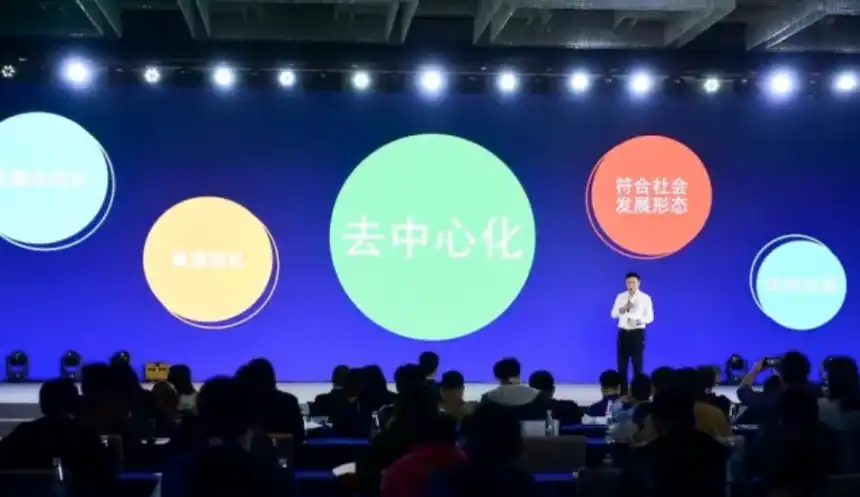
This model quickly ignited the market, with Wankeyun sales surging and the price of LinkToken soaring hundreds of times at one point. At its peak, the daily revenue from Wankeyun devices exceeded 100 million yuan, and the originally 399-yuan Wankeyun devices were resold for as much as 3,000 yuan even as second-hand items. The initial unofficial opening price of LinkToken was 0.1 yuan, and it once rose to nearly 10 yuan.
Chen Lei repeatedly emphasized in public that this was Thunderbolt's innovation in "shared economy + blockchain," aimed at building a distributed computing ecosystem. Thunderbolt also established a blockchain laboratory to promote projects like Onething Chain, attempting to position itself in the field of decentralized storage and computing.
However, in late 2017 and early 2018, due to the impact of the 94 ban and the announcement by the China Internet Finance Association, Wankey Coin was renamed "LinkToken." The price of LinkToken continued to fall, leading to protests from some investors.
Having a Child with a Lover, Misappropriating Tens of Millions for Cryptocurrency Trading
Thanks to the blockchain布局, Thunderbolt's stock price once soared from $4 to $27.
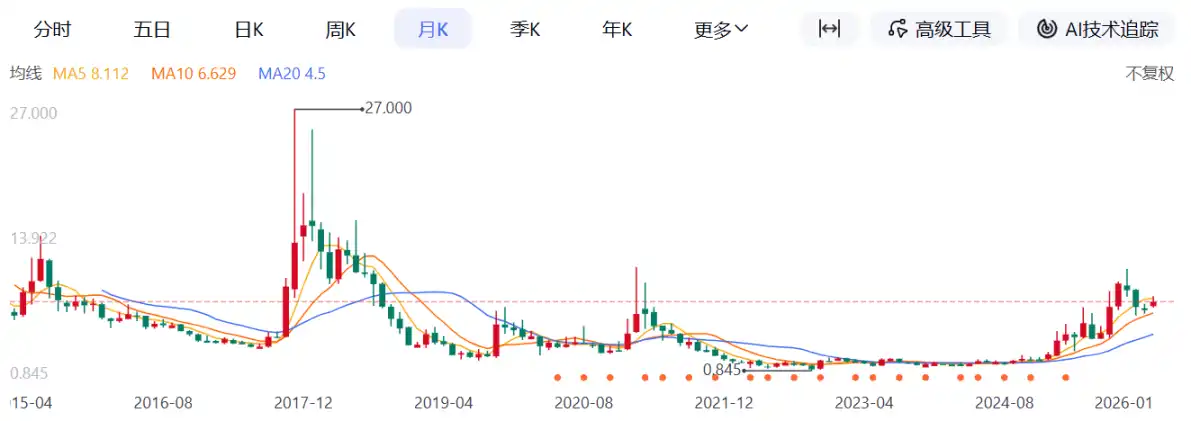
Chen Lei's cryptocurrency布局 seemed successful but埋下hidden dangers: company resources were倾斜toward blockchain, internal management was loose, and fund flows were unclear. Entering 2019, Thunderbolt's blockchain business faced bottlenecks. The global crypto market corrected, Chinese regulation tightened, and Wankeyun sales declined. Chen Lei attempted to expand edge computing through subsidiary Wangxin Technology, but internal conflicts gradually emerged.
According to informed sources, Chen Lei had a close relationship with then Senior Vice President Dong Xia, who recruited many fellow townspeople and relatives from Heilongjiang into key positions, forming a "small circle."
This provided the soil for subsequent corruption allegations. In April 2020, Thunderbolt's board suddenly dismissed Chen Lei, citing suspected job-related embezzlement. The new management's audit found that Chen Lei transferred funds through the company "Xingronghe" (a Thunderbolt bandwidth supplier) that he actually controlled. Xingronghe was established in 2019 and had frequent transactions with Wangxin Technology. Chen Lei was suspected of fabricating transaction links and creating false contracts to embezzle approximately 200 million yuan from the company.
More notably, there were allegations of misappropriating funds for cryptocurrency trading. The audit showed that Chen Lei was suspected of misappropriating tens of millions of company funds for illegal cryptocurrency trading activities explicitly prohibited by the state.
Specific details include: through close associates like Dong Xia, placing personnel in departments such as finance and procurement to create false reimbursements and overpaid salaries, with the funds ultimately flowing into the cryptocurrency market. At the time, Bitcoin prices were rebounding from lows in early 2020, and Chen Lei may have used this for speculation. This behavior violated China's ban on virtual currency transactions and涉嫌job-related embezzlement.
Additionally, Chen Lei and Dong Xia had a child together during their tenure, and their relationship was not purely professional, further fueling suspicions of利益输送.

Public information shows that Dong Xia once served as Senior Vice President of Thunderbolt Group and Marketing Vice President of Wangxin Technology, overseeing core departments such as business marketing and human resources, reporting directly to then CEO Chen Lei. The two had early interactions during the Tencent Cloud era (Dong Xia was once an ordinary public relations staff member at Tencent Cloud). After Chen Lei joined Thunderbolt in 2014, Dong Xia was gradually promoted and became an important confidant. As early as during Chen Lei's tenure, there were internal rumors that the two were lovers (or had an improper relationship).
The Thunderbolt board once questioned Chen Lei face-to-face, and he guaranteed with his "Christian reputation" that they were merely colleagues with no other relationship.
However, after Chen Lei was dismissed, the company's audit and investigation found that Chen Lei and Dong Xia had a child together during their tenure at Thunderbolt. This directly contradicted Chen Lei's previous guarantee, confirming that the two had an intimate personal relationship and formed a tight利益共同体.
To evade investigation, Chen Lei left the country with Dong Xia in early April 2020, transferring equity at low prices to relatives, making it difficult for Thunderbolt to pursue accountability.
In October 2020, Thunderbolt reported to the Shenzhen Public Security Bureau that Chen Lei and others were suspected of job-related embezzlement, and the police filed a case for investigation. The company issued a公告calling for Chen Lei to return to the country to cooperate, but to no avail. The criminal case was dropped at the end of 2022 due to Chen Lei's overseas stay and obstacles in obtaining evidence.
Five years later, in 2026, Thunderbolt restarted civil litigation, with the focus still on fund transfers and misappropriation for cryptocurrency trading. New evidence shows that Chen Lei dismissed dozens of core employees before his dismissal, causing brain drain and compensation losses.
If this case is won, it may provide an example for corporate governance in China. Chen Lei started with Thunderbolt's blockchain innovation and ended with涉嫌misappropriating funds for cryptocurrency trading, reflecting the opportunities and pitfalls of the early cryptocurrency space. Thunderbolt once revived with the blockchain concept but collapsed due to regulation and internal corruption. Chen Lei's case serves as a warning that technological innovation must comply with regulations, and personal ambition that crosses boundaries will inevitably lead to serious consequences.