Three CZs, Three Different Stories

marsbitPublicado a 2026-01-09Actualizado a 2026-01-09

Resumen

Three individuals share the initials "CZ" but represent vastly different paths in the era of globalization. The first, Chen Zhi, epitomized the lawless, gray-area entrepreneurship of the mid-2010s. Operating from Cambodia, he built a transnational fraud network, generating up to $30 million daily through scams and forced labor. His empire, built on exploiting regulatory gaps and weak international cooperation, collapsed in 2026 when he was arrested and repatriated to China, signaling the end of an era of unregulated profiteering. The second, Changpeng Zhao (CZ), founder of Binance, represents the tech-entrepreneurial era. A technologist at heart, he built the world's largest cryptocurrency exchange through product excellence and innovation. Unlike Chen Zhi, his venture created value but eventually faced escalating regulatory scrutiny. In 2023, Zhao and Binance pleaded guilty to U.S. charges, resulting in a $4.3 billion fine and his resignation as CEO. His story illustrates that technological innovation must ultimately adapt to regulatory frameworks to survive. The third, CZ Chen, a Millennial and COO of AI firm Manus, represents a new model of success in the AI age. As a skilled professional, she achieved rapid wealth and influence by joining the right company at the right time. Manus, hailed as the first通用 AI Agent, was acquired by Meta in 2025. However, the deal faced review by Chinese authorities, highlighting that her success is now intertwined with geopolitical tensio...

Author: Yizhiyu CoolFish

Recently, group members have been discussing three "CZs"—Binance founder Changpeng Zhao, Manus COO CZ Chen, and the recently arrested and repatriated boss of the Prince Group, Chen Zhi.

If Bao in "Blossoms Shanghai" represents a glamorous transformation in 1990s Shanghai amid era opportunities, then the following stories are three different scripts offered by three CZs choosing different paths in the wave of globalization.

Three people, three stories, spanning nearly half a century.....

I. Chen Zhi and the Era of the Unruly—The Myth of Rapid Wealth in the Gray Zone

In the mid-2010s, Chinese capital was eager to go global. It was a special moment: on one hand, China's economic strength continued to grow, foreign exchange reserves were ample, and domestic companies and investment institutions were increasingly willing to expand globally, urgently seeking new growth points in overseas markets; on the other hand, the regulatory framework for global cross-border capital flows lagged behind the pace of market changes, with entry rules and review standards in some countries still being adjusted and improved, creating a certain flexibility due to regulatory differences across markets.

There were many gray areas, and many opportunities.

Chen Zhi (abbreviated as CZ) rose against this backdrop. This 38-year-old businessman built a transnational fraud network, with daily revenues once reaching $30 million. This number is enough to make anyone's eyes widen. But more importantly, this number represents an unconstrained gray area.

In Chen Zhi's story, we see unruly entrepreneurship going global, but in the wrong direction—very wrong. He did not create value through product innovation, technological advancement, or management optimization. He accumulated wealth through direct, aggressive, and even illegal means.

He established a "fraud center" in Cambodia, using forced labor to conduct online fraud targeting victims worldwide. He attempted to launder money through financial tools, using cryptocurrencies, cross-border payments, and multi-country registrations to evade regulation.

Why could this model exist?

The answer is simple: because no one could effectively stop it. In the mid-2010s, global regulation of transnational cybercrime was not as tight as it is now. Law enforcement cooperation between countries was not close enough. A person with the courage, resources, and ability to reduce the probability of being regulated and held accountable through lobbying, regulatory favoritism, and jurisdictional immunity could survive in the gaps of the law—and even thrive.

But all this came to an abrupt end in October 2025. U.S. prosecutors filed charges against Chen Zhi. In January 2026, he was arrested in Cambodia and subsequently repatriated to China. His empire collapsed overnight. Interested friends can read my other article: "‘Even a Penny Falling from the Sky Is His’—Uncovering the Crimes and Downfall of Cambodia’s ‘Prince’ Chen Zhi."

What does Chen Zhi represent?

He represents an era that has passed. The characteristics of that era were: regulatory vacuums, numerous gray areas, and the possibility of rapid wealth accumulation. But the fate of this era is: once global regulation begins to coordinate, once countries strengthen law enforcement cooperation, once the international order begins to rebuild, this model collapses completely.

Chen Zhi's arrest is not just the tragedy of one person but the end of a gray era.

II. Changpeng Zhao and the Era of Technological Entrepreneurship—The Game of Innovation and Compliance

If Chen Zhi represents the era of gray wealth, then Changpeng Zhao represents the era of technological entrepreneurship.

This is a completely different story.

Changpeng Zhao was born in 1977 in Lianyungang, Jiangsu. His upbringing was typical: he moved to Canada at age 12, studied computer science at McGill University, and after graduation worked at Bloomberg and the Tokyo Stock Exchange, among others, developing technology and financial software.

He is a technologist, a programmer who understands finance.

This background is important. Unlike Chen Zhi, Zhao did not create value by evading regulation but by technological innovation that changed the entire industry's ecosystem.

In 2013, Zhao entered the cryptocurrency field, working at Blockchain.info and later serving as CTO of OKCoin.

Notably, in 2014, he sold his Shanghai property and invested the proceeds in Bitcoin.

After leaving OKCoin in less than a year, he founded his second company, Bijie Technology, but this was not his greatest achievement.

In 2017, Zhao founded Binance. This was a critical moment. 2017 was a big year for cryptocurrencies, with Bitcoin rising from $3,000 to nearly $20,000, and the entire crypto community was euphoric. Against this backdrop, Zhao launched Binance—an efficient, user-friendly cryptocurrency exchange.

Binance's success was astonishing. In less than eight months, it became the world's largest cryptocurrency exchange, capable of processing about 1.4 million orders per second.

Zhao himself became a legendary figure. In February 2018, Forbes magazine listed him as the "richest person in cryptocurrency." By May 2018, his net worth exceeded $1.39 billion.

But there is a key difference: Zhao's success was built on product innovation. Binance succeeded because it offered a better user experience, higher trading efficiency, and more currency pairs.

But Zhao also faced a problem: catching up. Although Binance changed the exchange ecosystem through product innovation, it did not obtain formal financial licenses in any country. This might have been acceptable in 2017 and 2018, but over time, global regulators began to focus on cryptocurrency exchanges.

Zhao faced a choice: either resist regulation or compromise and surrender to it. He ultimately chose the latter.

In November 2023, Zhao and Binance pleaded guilty to the U.S. Department of Justice, admitting violations of the Bank Secrecy Act and anti-money laundering regulations. Binance was fined $4.3 billion, and Zhao stepped down as CEO.

This is an interesting contrast. When faced with regulatory pressure, Chen Zhi chose to flee and resist, ultimately being arrested. Zhao chose to plead guilty and survived. Although Binance was severely hit, it still exists and has strengthened cooperation with U.S. regulators. In the long run, the market will become more standardized, and Binance remains the world's largest cryptocurrency exchange.

What does Changpeng Zhao represent?

He represents the typical characteristics of the technological entrepreneurship era. In this era, a entrepreneur with a technical background and product innovation capabilities can rise rapidly by changing the industry's ecosystem. But this era is also characterized by gradual regulatory catch-up. Innovators can temporarily bypass regulation but must eventually face it.

The success of the technological entrepreneurship era lies not in resisting regulation but in adapting to it. The true winners are those enterprises and entrepreneurs who can continue to innovate within the regulatory framework.

III. CZ Chen and the AI Era—New Possibilities for Leapfrogging

If Chen Zhi represents the unruly era and Changpeng Zhao represents the technological entrepreneurship era, then CZ Chen represents the great leap forward in the wave of AI.

This is a brand-new story.

CZ Chen is a post-90s generation. She is not an entrepreneur but a professional manager. She graduated with a bachelor's degree from Shanghai University of Finance and Economics and a master's degree from Columbia University. Her career trajectory is also perfect: she worked at Vanke, MM Capital (an investment bank), and finally joined Manus AI as Chief Operating Officer.

CZ Chen did not create wealth by founding a company but achieved leapfrogging through precise career choices. She joined the right company at the right time and ultimately reaped huge rewards.

The story behind Manus and its founder Xiao Hong is also interesting (for details, see my other article: "Xiao Hong: From Small-Town Youth to Manus CEO, the Long-Termism of a Bitcoin Believer").

In March 2025, Manus shocked the global tech circle, with media calling it the world's first general-purpose AI Agent. By December, Manus had achieved $100 million in annual recurring revenue (ARR), setting a record for the fastest startup to reach this milestone.
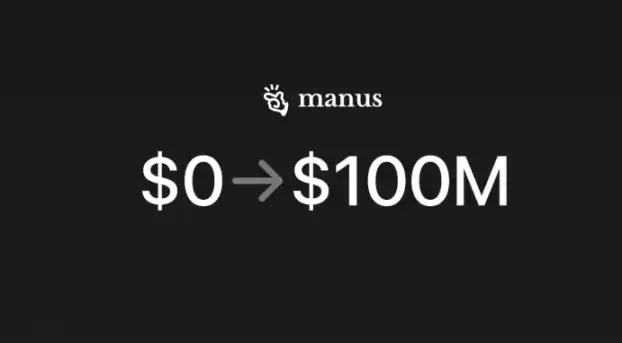
In the same month, Meta announced its acquisition of Manus. This was a huge success. As the company's COO, CZ Chen undoubtedly gained immense wealth and fame.

But the story is not over. On January 8, 2026, China's Ministry of Commerce stated that it would review Meta's acquisition of Manus to assess whether the transaction violates Chinese laws and regulations on technology export controls, imports and exports, and overseas investment.

CZ Chen suddenly seems to be facing uncertainty, but this uncertainty is entirely different from that faced by Chen Zhi or Changpeng Zhao.

Chen Zhi faced moral and legal judgment—his business model itself was illegal. Zhao faced compliance pressure—his business model needed to compromise with regulation.

CZ Chen faces geopolitical risk—her success itself is not problematic, but her success involves Sino-U.S. technological competition.

What does CZ Chen represent? She represents the new possibilities of the AI era. In this era, a well-educated, internationally minded professional elite can achieve rapid wealth leapfrogging by joining the right company and making the right choices at the right time.

In Conclusion

Times are changing, and so are the rules.

Three "CZs," three different lives, yet like three prisms, they refract three facets of the博弈 between individuals and power, technology, and national will in the wave of era development.

Some gamble on gray areas, some embrace regulatory pain, some ride the AI wave. The era's tickets are always being issued, but each era's ticket looks different.

If you can't adapt, you can only be out.

Preguntas relacionadas

QWhat are the three different stories of the three 'CZ's mentioned in the article?

AThe three stories are: 1) Chen Zhi, who represents the era of gray-area wealth accumulation through illegal means like transnational fraud networks; 2) Zhao Changpeng (CZ), who represents the technology entrepreneurship era, building innovative products like Binance while navigating regulatory challenges; and 3) CZ Chen, who represents the AI era, achieving rapid wealth and career growth by joining the right company (Manus AI) at the right time, though facing geopolitical risks.

QHow did Chen Zhi's business model operate and why did it collapse?

AChen Zhi operated a transnational fraud network, establishing a 'fraud center' in Cambodia that used forced labor to conduct online scams targeting global victims. He utilized financial tools like cryptocurrencies, cross-border payments, and multi-country registrations to evade regulation. His model collapsed in late 2025 when U.S. prosecutors filed charges against him, leading to his arrest in Cambodia and repatriation to China in January 2026, marking the end of an era with regulatory gaps.

QWhat was Zhao Changpeng's background and how did Binance achieve success?

AZhao Changpeng (CZ) was born in 1977 in China, moved to Canada at age 12, studied computer science at McGill University, and worked in tech and financial software development at companies like Bloomberg and the Tokyo Stock Exchange. He founded Binance in 2017 during the cryptocurrency boom. Binance succeeded by offering a user-friendly, efficient cryptocurrency exchange with high transaction capacity (handling 1.4 million orders per second), quickly becoming the world's largest exchange through product excellence and innovation.

QWhat challenges did Zhao Changpeng face with regulators, and how did he resolve them?

AZhao Changpeng and Binance faced increasing regulatory scrutiny over time, particularly for operating without formal financial licenses in many countries. In November 2023, they pleaded guilty to U.S. Department of Justice charges for violating the Bank Secrecy Act and anti-money laundering regulations. Binance was fined $4.3 billion, and Zhao stepped down as CEO. Unlike Chen Zhi, who resisted regulators, Zhao chose to cooperate and adapt, allowing Binance to continue operating within a more regulated framework.

QWho is CZ Chen and what risks does she face in the AI era?

ACZ Chen is a post-90s professional who graduated from Shanghai University of Finance and Economics and Columbia University. She worked at companies like Vanke and MM Capital before becoming COO of Manus AI, which developed a groundbreaking AI Agent and was acquired by Meta in December 2025. She represents the AI era's potential for rapid career advancement through strategic choices. However, she faces geopolitical risks, as China's Ministry of Commerce announced an investigation into Meta's acquisition of Manus for potential violations of technology export controls and regulations, reflecting broader Sino-U.S. tech competition tensions.

Lecturas Relacionadas

Resumen Semanal de Financiación | Crypto.com obtiene 400 millones de dólares de inversión, los sectores CeFi y de stablecoins siguen atrayendo capital

**Resumen Financiero Semanal: Cripto y IA Acaparan Grandes Inversiones** La semana pasada, los mercados de capitales de cripto y IA experimentaron una actividad significativa. En el sector cripto, se registraron 17 rondas de financiación, sumando más de 812 millones de dólares, mostrando una concentración de capital en transacciones grandes. El titular principal fue la ronda de 400 millones de dólares para el exchange **Crypto.com**, respaldada por Citadel Securities, valorando la empresa en 200.000 millones. Otras operaciones destacadas en finanzas centralizadas (CeFi) e infraestructura incluyeron 135 millones para el bróker API **Alpaca** y 70 millones para la plataforma bancaria transfronteriza **Flex**. El sector de **infraestructura y herramientas** recaudó fuertes sumas, con proyectos enfocados en pagos con stablecoins y liquidación, como **Cyclops** (20 millones) y **Pact Labs** (7 millones liderados por Tether). **Glacis Labs**, una plataforma de liquidación, levantó 6,8 millones. La **IA y la robótica** dominaron las megainversiones fuera del ámbito cripto. **Fireworks**, servicio en la nube para IA, recaudó 1.500 millones con respaldo de NVIDIA. En robótica, **Walden Robotics** (separada de Toyota) y la china **逐际动力 (Climber Robotics)** completaron rondas de 300 y casi 200 millones, respectivamente, para el desarrollo de robots humanoides. Otras áreas con actividad fueron DeFi, mercados de predicción y AI+Web3, con rondas menores. Además, se reportaron varias adquisiciones estratégicas, como la de MoonPay sobre la startup de depósitos Glide. En general, el capital continúa fluyendo hacia segmentos maduros como CeFi, stablecoins e infraestructura de trading en cripto, mientras que la IA y la robótica atraen apuestas masivas de capital riesgo para su comercialización.

marsbitHace 59 min(s)

Resumen Semanal de Financiación | Crypto.com obtiene 400 millones de dólares de inversión, los sectores CeFi y de stablecoins siguen atrayendo capital

marsbitHace 59 min(s)

¿El mercado bajista más moderado? Los bajistas del BTC cierran posiciones, ARK y Bitwise colectivamente son optimistas

**Resumen:** El 20 de julio, BTC se mantenía cerca de 75.000 USD, mientras que ETH retrocedía a 1.900 USD tras acercarse a los 2.000 USD. El mercado altcoin se mostraba mayormente débil. En las últimas 24 horas, se liquidaron 116 millones de USD en contratos, principalmente posiciones cortas (62.7 millones). El índice de miedo se sitúa en 35, indicando un sentimiento de pánico. Las perspectivas de diversas instituciones y analistas sugieren un posible punto de inflexión. **Polymarket** indica una probabilidad del 33% de que BTC caiga por debajo de 50.000 USD este año. **ARK Invest** señala señales de agotamiento de los vendedores, como el aumento de la ofente en manos de "hodlers" a largo plazo y del suministro en pérdidas (~54%). **Bitwise** describe esta caída como el "mercado bajista estructuralmente más suave" registrado, con una corrección del ~50% desde máximos, menor que en ciclos anteriores. Destaca que los inversionistas institucionales están comprando en la baja y que la base de cada ciclo es más alta. El análisis técnico de **Bit** sugiere que el mínimo de la onda C podría haberse formado, con un rango de soporte clave entre 59.000 y 70.000 USD. Sin embargo, **Glassnode** advierte que si BTC no logra superar con fuerza los 66.000 USD, el riesgo de un techo local aumenta. El analista **Darkfost** resalta la intensa zona de soporte entre 59.000 y 70.000 USD, donde se ha intercambiado el 50% del suministro circulante. Finalmente, el trader **Doctor Profit** anunció haber cerrado todas sus posiciones cortas (reportando grandes ganancias) y haber comenzado a comprar BTC spot desde los 64.000 USD, su primera compra para largo plazo desde septiembre de 2025. Argumenta que el consenso del mercado que espera mínimos más bajos en septiembre/octubre podría estar equivocado, y que el fondo del ciclo podría llegar antes de lo esperado, citando también avances regulatorios e institucionales como motivos estructurales para su cambio de postura.

Foresight NewsHace 1 hora(s)

¿El mercado bajista más moderado? Los bajistas del BTC cierran posiciones, ARK y Bitwise colectivamente son optimistas

Foresight NewsHace 1 hora(s)

Evolución del orden en la era de la IA y Web3: Las dimensiones competitivas y los caminos de exploración de m&W

La humanidad está evolucionando de la mejora de la productividad a la reconfiguración de las relaciones de producción. La rápida evolución de los Agentes de IA está liberando una capacidad productiva sin precedentes. En este contexto, la colaboración a largo plazo entre humanos y agentes de IA requiere la construcción de relaciones de confianza, la evaluación de contribuciones complejas y mecanismos de distribución de valor justos y sostenibles. Mientras que Web3 ha sentado bases técnicas para la desconfianza en activos e identidades, la era de los Agentes de IA exige un nuevo sistema de orden que aborde crédito, colaboración e incentivos económicos. El artículo analiza el enfoque de m&WDAO, que propone EcoFi (Finanzas/Orden del Ecosistema), un modelo que busca conectar activos cognitivos humanos, capacidades de ejecución de agentes de IA y mecanismos económicos on-chain. Se exploran y contrastan varias direcciones existentes: * **Colony**: Enfocado en gobernanza y colaboración organizacional humana basada en contribución (reputación). * **SingularityNET (ASI)**: Centrado en la creación de un mercado abierto para el intercambio y composición de servicios de IA. * **Gitcoin Passport / Verax**: Especializados en infraestructura de verificación de identidad y resistencia a sybil. * **Farcaster / Lens Protocol**: Orientados a redes sociales y de información descentralizadas con identidad propia. Frente a estos enfoques, m&W busca una integración más profunda, proponiendo una evolución en tres etapas: 1. **m&W 1.0 - Anclaje de Crédito**: Selección de nodos de alta calidad ("Builders") y sedimentación de sus contribuciones en activos de crédito no transferibles (SBT). 2. **m&W 2.0 - Economía Colaborativa**: Implementación del protocolo EcoFi, donde el crédito se conecta con tareas reales, utilizando una verificación híbrida (IA + juicio humano + arbitraje) para tareas no estructuradas y creando un ciclo de retroalimentación valor-crédito. 3. **m&W 3.0 - Orden Inteligente**: Evolución hacia una economía de agentes, donde el historial de crédito humano sirve como base de confianza para que sus "gemelos digitales" (Agentes de IA) participen autónomamente en la red económica. El camino presenta desafíos significativos como el arranque frío por el filtrado estricto, el equilibrio entre verificación por IA y gobernanza humana, y la estabilidad del modelo económico del token ($CMW). La misión final de m&W no es ser otra plataforma de IA, sino explorar los cimientos de un nuevo orden productivo para la economía colaborativa humano-IA, utilizando blockchain para establecer credibilidad, reglas y un marco económico sostenible.

链捕手Hace 1 hora(s)

Evolución del orden en la era de la IA y Web3: Las dimensiones competitivas y los caminos de exploración de m&W

链捕手Hace 1 hora(s)

China arrasa con puntajes perfectos en la IMO 2026, el Shanghai High School barre con el oro, GPT-5.6 revive el momento AlphaGo

¡China arrasa en la IMO 2026 con puntuación perfecta y la inteligencia artificial alcanza un hito! El equipo chino se ha proclamado campeón absoluto en la 67ª Olimpiada Internacional de Matemáticas (IMO) celebrada en Shanghái, logrando una hazaña histórica. Consiguieron el primer puesto por equipos con 232 puntos, superando por 25 puntos al segundo clasificado. Todos sus miembros obtuvieron medalla de oro. Tres estudiantes, Deng Leyan y Zhang Bolun de la Escuela Secundaria Shanghái, y Liu Che de la Escuela Secundaria Afiliada a la Universidad Normal del Este de China, lograron la puntuación perfecta de 42 puntos. Estados Unidos y Rusia completaron el podio. Este es el 26º título por equipos para China desde 1989. Destaca que, por primera vez, la IMO se celebró en una escuela secundaria (la Escuela Secundaria Shanghái), institución que acumula ya 20 oros olímpicos. La noticia va más allá del éxito humano. Se reporta que la inteligencia artificial, específicamente el modelo GPT-5.6 Pro, resolvió por sí solo los seis problemas de la IMO 2026 en su primer intento, sin intervención humana. Si se confirma, este logro marcaría un punto de inflexión: la IA pasaría de encontrar soluciones mediante búsqueda computacional a generar demostraciones perfectas a la primera, un dominio que hasta ahora parecía exclusivo de las mentes matemáticas más brillantes. OpenAI ofreció una suscripción anual de ChatGPT Pro a todos los ganadores de la medalla de oro. Fuentes: Sitio oficial de la IMO 2026 y publicaciones en redes sociales.

marsbitHace 1 hora(s)

China arrasa con puntajes perfectos en la IMO 2026, el Shanghai High School barre con el oro, GPT-5.6 revive el momento AlphaGo

marsbitHace 1 hora(s)

Trading

Spot
活动图片