The First Cut of the New Year! Who is Secretly Harvesting Your 'Red Envelope'? Understand These 4 Signals to Avoid It!

marsbitPublicado a 2026-01-04Actualizado a 2026-01-04

Resumen

The crypto market has seen significant outflows from Bitcoin and Ethereum ETFs at the start of the new year, with institutions potentially taking profits and rotating capital into altcoins like Solana and XRP. This shift suggests a tactical move rather than a bearish turn, as macroeconomic factors such as potential Fed rate cuts and growing crypto adoption create both opportunities and volatility. Key strategies include holding core long-term positions in major cryptocurrencies, cautiously exploring altcoins with institutional inflows, and avoiding emotional reactions to short-term news or price fluctuations. Technical analysis indicates a tug-of-war between bullish and bearish forces near key resistance levels, emphasizing the need for patience and disciplined risk management. Overall, the focus should be on preserving capital, leveraging market inefficiencies, and making informed decisions based on broader trends rather than speculative hype.

Happy New Year, sisters! Qinglan's Crypto Class is starting. I'm Sister Qinglan!

Just after New Year's Day, are you, like me, hoping for a 'bountiful harvest' for your wallet in the new year? But have you noticed that despite all the positive news—expectations of Fed rate cuts, accelerated cryptocurrency adoption... our Bitcoin and Ethereum are actually seeing net outflows?

If you only look at the K-line charts and listen to the news, the 'New Year's red envelope' you just tucked into your pocket might quietly shrink by more than half in the blink of an eye!

Today, Sister Qinglan will cut through the fog for you and see who is behind this 'first cut' of the year. We not only need to avoid pitfalls but also learn to 'simmer' our wealth steadily amidst the waves and fluctuations, just like making soup!

One: ETF Funds 'Flowing Openly but Diverting Secretly': Don't Take the Big Players' Portfolio Adjustments Seriously. Data doesn't lie: At the start of the new year, Bitcoin spot ETFs saw a single-day net outflow of $348 million, Ethereum ETFs also saw an outflow of $72.05 million, and even giants like BlackRock are selling.

On the surface, it looks bearish, but behind it is 'expectation gap harvesting'.

Institutions don't celebrate the Spring Festival. They take advantage of the thin holiday trading and relaxed vigilance of retail investors to do two things:

Lock in profits: After such a big rise, taking profits is the way to go.

Create panic: Use large outflows to scare the market, making inexperienced sisters think 'the bull market is over, run!'.

But did they really run? No. Coinbase is still shouting 'accelerated crypto adoption in 2026'. This is suppressing the price while giving you a candy. Institutions are playing 'feint in the east, attack in the west'—quietly shifting profitable funds from mainstream coins to more promising directions.

Your mistake: Selling the moment you see outflows, only for the price to rise after you sell; chasing the rally as soon as you hear good news, only to get trapped.

Sister Qinglan's advice for you:

Hold your long-term positions (Bitcoin, Ethereum) steady. As long as the fundamentals haven't changed, ignore short-term fluctuations.

Don't rush to chase with short-term funds. Appropriately reduce positions that have risen too much, keep cash, and wait for the market to stabilize or for mistaken selling opportunities before entering the market in batches. This is the steady way of 'long-term foundation + swing trading for extra returns'.

Two: Altcoins 'Undercurrents Surging': Institutions Have Quietly Changed Battlefields. Just as funds were flowing out of Bitcoin and Ethereum, another signal lit up: ETFs for Solana and XRP are being bought by big money! Franklin Templeton's XRP ETF holdings have doubled in market value, and the Solana ETF assets have also broken through $950 million.

This is clearly an open secret of 'asset rotation'! Institutions know that the short-term explosive power of mainstream coins is weakening, so they take profits and switch to埋伏 (ambush) altcoins with stronger narratives and relatively lower positions. When market heat returns,配合 (coordinating with) news to pump the price, it's another perfect harvest.

Your mistake: Only staring at Bitcoin's rises and falls, chasing altcoins only after the rise is over,结果套在山顶 (resulting in being trapped at the top); or completely ignoring fund flows, missing swing opportunities.

Sister Qinglan's advice for you:

Keep holding long-term mainstream coins.

For short-term, you can pay small-position attention to altcoins with institutional inflows and positive expectations (like SOL, XRP). But remember: Altcoins are highly volatile,务必轻仓试探 (must use light positions to test), enter in batches, and run after making a profit—absolutely do not greedily linger in the battle!

Three: Macro Policy 'Simultaneous Ice and Fire': Don't Let News Lead You by the Nose. The macro picture is like a roller coaster:

On one side, Moody's predicts the Fed may aggressively cut rates three times in the first half of 2026 (bullish).

On the other side, market data shows a high probability of maintaining rates unchanged in January and March (reality).

At the same time, many countries are advancing crypto legalization, with Iran even accepting cryptocurrency payments.

This is a typical 'expectation gap game'. Rate cut predictions might just be a 'smokescreen' for institutions to boost market sentiment; when the actual rate cuts land, it might instead be 'buy the rumor, sell the news'. Regulatory legalization is a long-term positive, but it's often used to cover up distribution in the short term.

Your mistake: Hearing about rate cuts and thinking the bull market is confirmed, going All in; treating long-term positives as short-term暴涨 (surging) signals, resulting in being washed out repeatedly.

Sister Qinglan's advice for you:

Be bullish on the industry's future long-term, don't be disturbed by short-term noise.

Use the expectation gap for swing trading (buy low, sell high) short-term, but always set stop-profit and stop-loss, without greed or fear. Remember: Policy is the foundation, but not a guarantee of short-term surges.

Four: The K-line Chart is 'Lying': Bull-Bear Tug-of-War, the Calm Win. The technicals are interesting:

The daily and 1-hour trends are weakly downward.

But the 4-hour chart is strongly upward. The price is stuck near $88,000, with the $90,000关口 (gateway/level) close at hand.
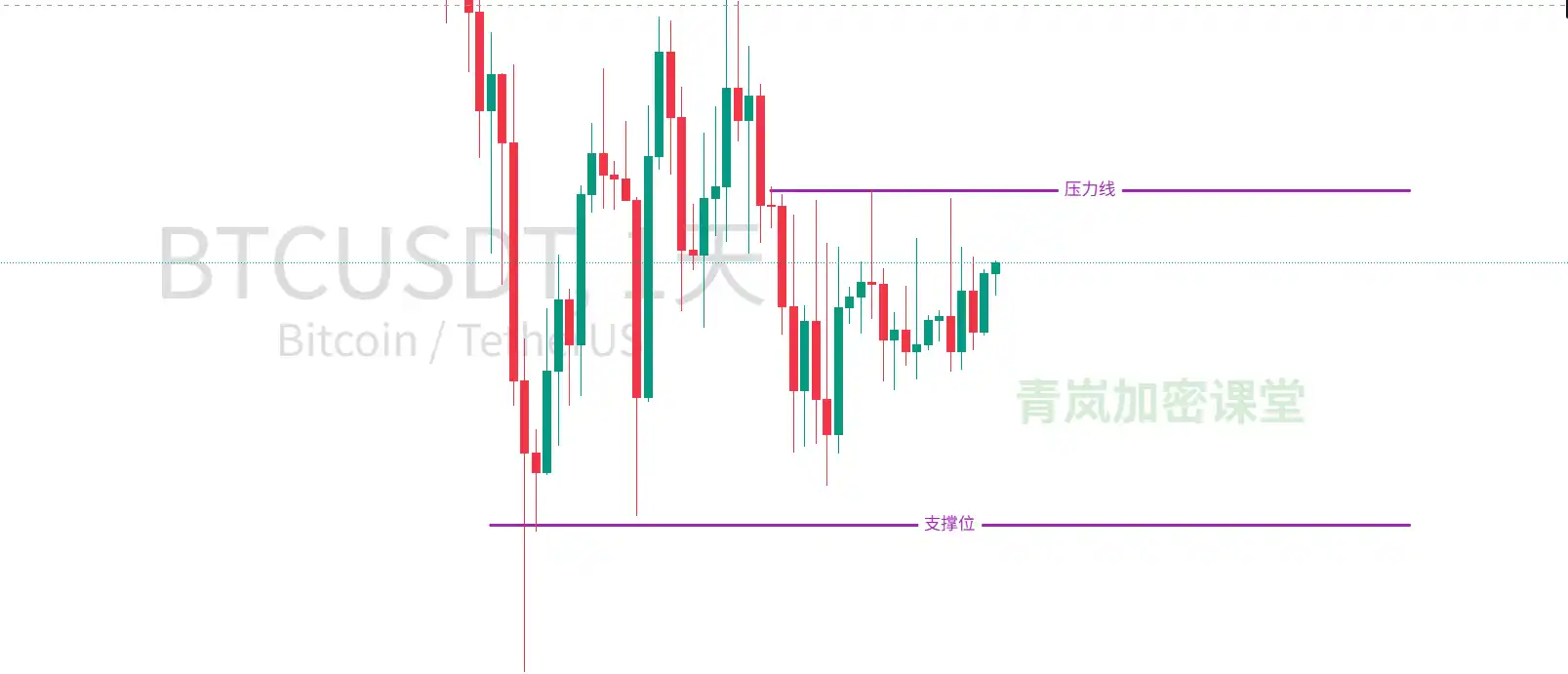
This is precisely a microcosm of the bull-bear psychological game: The weak trend shows bears are still applying pressure, possibly wanting to smash the price to accumulate; The strong rebound shows bulls are also gathering strength, wanting to use the opportunity to break through. Many sisters waver here, thinking the bull market is back when it rises, and thinking it will crash immediately when it falls.

Your mistake: Being confused by short-term fluctuations, trading frequently, losing all the money to fees, and容易在关键点位冲动决策 (easily making impulsive decisions at key points).

Sister Qinglan's advice for you:

Look at the major trend. Before the daily chart stabilizes, treat rebounds as 'dead cat bounces'.

If you want to speculate short-term, only试探 (test) with small positions at key support levels (like near $87,000), and must use a stop-loss.

The真正安全的加仓点 (truly safe point to add positions) is after a volume breakout above $90,000 and holding steady. Before that, hold cash and wait patiently.

Summary: For the Start of 2026, Do This to Protect Your Red Envelope and Grow Steadily. See through fund flows: ETF outflows don't mean the bull market is over; it could be institutional repositioning. Stabilize your long-term core holdings.

Follow the smart money: Pay attention to altcoins where funds are flowing,布局 (position) with small sizes, quick in and out.

Be rational about macro: Long-term positive ≠ short-term surge, use the expectation gap, but don't迷信 (superstitiously believe) news.

Respect the technicals: Look at the trend combining multiple timeframes, don't act impulsively at key points, wait for clear signals.

The crypto circle is like a江湖 (river lake - meaning a complex world), deep waters and rough waves. Don't just focus on how much others have earned; think more about how you can step on fewer pitfalls and survive more cycles. In 2026, let's together, with patience and strategy, simmer our wealth out steadily!

I am Sister Qinglan, accompanying you through bull and bear markets, earning money within our understanding clearly. See you next time!


Preguntas relacionadas

QAccording to the article, what is the main reason for the net outflow of funds from Bitcoin and Ethereum ETFs at the beginning of the new year?

AThe main reason is that institutions are locking in profits and creating panic to manipulate the market, while secretly shifting funds to more promising areas like certain altcoins.

QWhat strategy does Qinglan suggest for dealing with the short-term volatility of mainstream cryptocurrencies like Bitcoin and Ethereum?

AQinglan suggests holding long-term positions steady and not reacting to short-term fluctuations, while using short-term funds to reduce positions in overvalued assets, retain cash, and wait for market stabilization or opportunities to buy in batches.

QWhich altcoins are mentioned as receiving significant institutional investment inflows despite the outflow from major cryptocurrencies?

ASolana and XRP are mentioned as altcoins that are being bought by large funds, with Franklin Templeton's XRP ETF holdings doubling and Solana ETF assets exceeding $950 million.

QHow does the article advise interpreting macroeconomic policy signals like interest rate cuts and crypto legalization?

AThe article advises viewing interest rate cut predictions as potential 'smoke screens' to boost market sentiment and recognizing that long-term regulatory benefits are not guarantees of short-term price surges. It recommends using expectation disparities for trading but not relying solely on news.

QWhat technical analysis insight does Qinglan provide regarding the current price action of Bitcoin near the $88,000 to $90,000 range?

AQinglan notes that daily and 1-hour charts show weak downward trends, while the 4-hour chart shows a strong upward trend, indicating a tug-of-war between bulls and bears. She advises treating rebounds as potential 'dead cat bounces' until the daily trend stabilizes, and only cautiously testing key support levels with small positions and stop-losses.

Lecturas Relacionadas

Entrevista con Michael Saylor: Dije que vendería BTC, pero nunca sería un vendedor neto

En una entrevista reciente, Michael Saylor, presidente ejecutivo de MicroStrategy, aclaró las declaraciones de la empresa sobre la posible venta de Bitcoin para pagar dividendos de su producto de deuda digital STRC. Saylor enfatizó que, aunque la empresa podría vender algunas de sus tenencias de Bitcoin para este fin, la estrategia general es seguir siendo un **comprador neto** de la criptomoneda. Explicó que el modelo de negocio se basa en utilizar Bitcoin como "capital digital", emitiendo instrumentos de crédito como STRC para financiar la compra de más Bitcoin. Dado que Bitcoin se aprecia (alrededor del 30-40% anual proyectado), la empresa puede destinar parte de esa plusvalía a pagar los dividendos, manteniendo siempre un crecimiento neto de sus reservas. Por ejemplo, en abril, MicroStrategy recaudó $3.2 mil millones en STRC y compró una cantidad equivalente en Bitcoin, mientras que el dividendo requerido fue de solo $80-90 millones. Saylor también abordó las críticas, argumentando que Bitcoin es un activo legítimo y que los productos de crédito digital respaldados por él, como STRC, ofrecen un alto rendimiento con menor volatilidad, atrayendo a inversionistas institucionales. Destacó la liquidez del mercado de Bitcoin, afirmando que incluso grandes compras por parte de MicroStrategy no mueven significativamente su precio. Finalmente, Saylor reiteró que la lógica fundamental sobre Bitcoin no ha cambiado: es la mejor clase de activo de capital, y su "aplicación asesina" es servir como colateral para el crédito digital, impulsando innovación en los sectores financiero tradicional y cripto.

Odaily星球日报Hace 17 min(s)

Entrevista con Michael Saylor: Dije que vendería BTC, pero nunca sería un vendedor neto

Odaily星球日报Hace 17 min(s)

Atrayendo capital global, una nueva ronda de 'súper ciclo' se está desarrollando en Asia

Los inversores están volviendo su mirada hacia Asia en busca de la próxima fase de crecimiento en los mercados bursátiles globales. Impulsados por la ola de inteligencia artificial (IA), mercados como el de Corea del Sur han liderado las ganancias mundiales. Morgan Stanley destaca que el motor del ciclo industrial asiático está cambiando desde la manufactura tradicional hacia inversiones en infraestructura de IA, seguridad energética, transición energética, defensa y resiliencia de la cadena de suministro. Se prevé que la inversión en capital fijo en Asia aumente de unos 11 billones de dólares en 2025 a 16 billones en 2030. El gasto en centros de datos de IA a nivel global podría alcanzar unos 2,8 billones de dólares entre 2026-2028, beneficiando a las cadenas de suministro de hardware en Asia. China, en particular, se centra en desarrollar un ecosistema de IA autónomo, con un mercado de chips doméstico que podría alcanzar los 67.000 millones de dólares para 2030. Más allá de la IA, la robótica, especialmente los robots humanoides e industriales, emerge como la próxima gran historia de exportación de la manufactura china, similar a la trayectoria inicial de los vehículos eléctricos. La seguridad energética y el aumento del gasto en defensa en varios países asiáticos ofrecen pilares de crecimiento adicionales. China, Corea del Sur y Japón se posicionan como los mayores beneficiarios debido a su integración en la cadena de suministro y sus ventajas en fabricación y tecnología. Sin embargo, existen riesgos como la sobrecapacidad, la presión sobre los márgenes de beneficio, las restricciones tecnológicas y la fricción geopolítica. Además, la adopción de la IA podría afectar significativamente a la estructura del empleo en la región.

marsbitHace 1 hora(s)

Atrayendo capital global, una nueva ronda de 'súper ciclo' se está desarrollando en Asia

marsbitHace 1 hora(s)

38,000 aplicaciones expuestas y más de 2,000 con filtraciones, la programación con IA convierte las 'redes internas' en Internet público

Los investigadores de la startup israelí de ciberseguridad RedAccess descubrieron que aproximadamente 380,000 aplicaciones web creadas con herramientas de programación asistida por IA, como Lovable, Replit, Base44 y Netlify, son accesibles públicamente. De estas, unas 5,000 carecen de mecanismos de seguridad o autenticación, y un análisis más profundo revela que casi 2,000 exponen datos sensibles. La información expuesta incluye registros médicos, datos financieros, documentos estratégicos internos de empresas e incluso conversaciones detalladas de chatbots con información personal de clientes. En algunos casos, se podría obtener acceso de administrador. El problema surge porque estas herramientas de "vibe coding" permiten a usuarios sin formación técnica crear y desplegar aplicaciones fácilmente, a menudo con configuraciones predeterminadas que las hacen públicas y visibles en los motores de búsqueda. Muchos usuarios, denominados "desarrolladores ciudadanos", no son conscientes de los riesgos de seguridad y eluden los controles y revisiones tradicionales de las empresas. Aunque algunas de las empresas de desarrollo con IA cuestionan la metodología del informe y enfatizan que la responsabilidad final de la configuración recae en el usuario, los investigadores demostraron casos reales de fugas de datos. Incidentes anteriores, como uno en Cursor que eliminó una base de datos de producción, y estudios de otras firmas como Escape.tech, que también encontraron miles de aplicaciones vulnerables, respaldan la gravedad de la tendencia. Expertos como Gartner predicen que este fenómeno aumentará significativamente los defectos del software en los próximos años.

marsbitHace 1 hora(s)

38,000 aplicaciones expuestas y más de 2,000 con filtraciones, la programación con IA convierte las 'redes internas' en Internet público

marsbitHace 1 hora(s)

Trading

Spot
Futuros

Artículos destacados

Cómo comprar RED

¡Bienvenido a HTX.com! Hemos hecho que comprar RedStone (RED) sea simple y conveniente. Sigue nuestra guía paso a paso para iniciar tu viaje de criptos.Paso 1: crea tu cuenta HTXUtiliza tu correo electrónico o número de teléfono para registrarte y obtener una cuenta gratuita en HTX. Experimenta un proceso de registro sin complicaciones y desbloquea todas las funciones.Obtener mi cuentaPaso 2: ve a Comprar cripto y elige tu método de pagoTarjeta de crédito/débito: usa tu Visa o Mastercard para comprar RedStone (RED) al instante.Saldo: utiliza fondos del saldo de tu cuenta HTX para tradear sin problemas.Terceros: hemos agregado métodos de pago populares como Google Pay y Apple Pay para mejorar la comodidad.P2P: tradear directamente con otros usuarios en HTX.Over-the-Counter (OTC): ofrecemos servicios personalizados y tipos de cambio competitivos para los traders.Paso 3: guarda tu RedStone (RED)Después de comprar tu RedStone (RED), guárdalo en tu cuenta HTX. Alternativamente, puedes enviarlo a otro lugar mediante transferencia blockchain o utilizarlo para tradear otras criptomonedas.Paso 4: tradear RedStone (RED)Tradear fácilmente con RedStone (RED) en HTX's mercado spot. Simplemente accede a tu cuenta, selecciona tu par de trading, ejecuta tus trades y monitorea en tiempo real. Ofrecemos una experiencia fácil de usar tanto para principiantes como para traders experimentados.

441 Vistas totalesPublicado en 2025.03.05Actualizado en 2025.03.21

Cómo comprar RED

Discusiones

Bienvenido a la comunidad de HTX. Aquí puedes mantenerte informado sobre los últimos desarrollos de la plataforma y acceder a análisis profesionales del mercado. A continuación se presentan las opiniones de los usuarios sobre el precio de RED (RED).

活动图片












