Ray Dalio's New Article: The World Is Entering a War Cycle

marsbitPublicado a 2026-04-08Actualizado a 2026-04-08

Resumen

Ray Dalio argues that the world is in the early stages of a prolonged "world war" that is unlikely to end soon. This conflict is not a single declared war but a combination of multiple regional hot wars (e.g., Russia-Ukraine, Israel-Gaza, US-Iran) and non-shooting wars (economic, technological, capital, and geopolitical influence wars). These interconnected conflicts are reshaping global order, driven by shifting alliances, resource competition, and the weaponization of critical trade routes like the Strait of Hormuz. Key powers are aligning into opposing blocs: China, Russia, Iran, and North Korea versus the US, Israel, Gulf states, Japan, and Australia. Dalio emphasizes that victory in such conflicts depends not on absolute strength but on which side can endure prolonged pain and resource depletion. He warns that the US, while powerful, is overextended globally and may struggle to manage multiple fronts simultaneously. The current phase resembles historical pre-war periods (e.g., 1913–1914, 1938–1939), where economic and military tensions escalate into broader conflicts. Dalio urges observers to look beyond short-term events and focus on structural shifts: rising debt, internal political pressures, and the erosion of the US-led multilateral order into a "might-makes-right" system. He assesses a >50% probability of at least one major conflict escalating within five years, including scenarios in Ukraine, Korea, or the South China Sea.

Original Title: The Big Thing: We Are In A World War That Isn’t Going To End Anytime Soon

Original Author: Ray Dalio

Original Compilation: Peggy, BlockBeats

Editor's Note: While the market continues to price in short-term questions like "How long will the conflict last?" and "How high will oil prices go?", this article attempts to pull the perspective back to a longer time scale. Bridgewater Associates founder Ray Dalio believes that the current series of regional conflicts are piecing together into an as-yet unnamed "world-class conflict", whose evolutionary logic is closer to the cyclical stage on the eve of major historical wars.

{"@context":"https://schema.org","@type":"FAQPage","mainEntity":[{"@type":"Question","name":"According to Ray Dalio, what is the most important perspective to understand the current global situation?","acceptedAnswer":{"@type":"Answer","text":"The most important perspective is that we are in the early stages of a world war that will not end soon, and it is part of a larger 'Big Cycle' of structural changes in global order, rather than just focusing on short-term events."}},{"@type":"Question","name":"What does Dalio identify as the key factor in determining which side wins a prolonged conflict, rather than absolute strength?","acceptedAnswer":{"@type":"Answer","text":"The key factor is which side can endure pain and sustain the conflict better, as victory comes not from weakening the enemy but from making them surrender, and the ability to承受痛苦 (endure suffering) is crucial."}},{"@type":"Question","name":"How does Dalio describe the current shift in the world order?","acceptedAnswer":{"@type":"Answer","text":"The world order is shifting from one dominated by the US and its allies with rules-based multilateralism to a state with no single dominant power, where 'might makes right' prevails, resembling pre-1945 historical periods more than the post-war order."}},{"@type":"Question","name":"What are some of the indicators or signals that Dalio uses to track the progression into a conflict phase?","acceptedAnswer":{"@type":"Answer","text":"Indicators include the depletion of military and resource stockpiles, rising fiscal spending, debt, money printing, and capital controls, rival nations learning from each other's strengths and weaknesses through conflicts, and overextended dominant powers facing multiple distant conflicts simultaneously."}},{"@type":"Question","name":"Why does Dalio suggest that China might be less vulnerable in the context of a potential closure of the Strait of Hormuz?","acceptedAnswer":{"@type":"Answer","text":"Because China has a supportive relationship with Iran, likely ensuring oil passage to China; strong ties with Russia for alternative oil supplies; significant other energy sources like coal and solar; large oil reserves (90-120 days); and consumes 80-90% of Iran's oil output, strengthening its leverage."}}]}

Preguntas relacionadas

QAccording to Ray Dalio, what is the most important perspective to understand the current global situation?

AThe most important perspective is that we are in the early stages of a world war that will not end soon, and it is part of a larger 'Big Cycle' of structural changes in global order, rather than just focusing on short-term events.

QWhat does Dalio identify as the key factor in determining which side wins a prolonged conflict, rather than absolute strength?

AThe key factor is which side can endure pain and sustain the conflict better, as victory comes not from weakening the enemy but from making them surrender, and the ability to承受痛苦 (endure suffering) is crucial.

QHow does Dalio describe the current shift in the world order?

AThe world order is shifting from one dominated by the US and its allies with rules-based multilateralism to a state with no single dominant power, where 'might makes right' prevails, resembling pre-1945 historical periods more than the post-war order.

QWhat are some of the indicators or signals that Dalio uses to track the progression into a conflict phase?

AIndicators include the depletion of military and resource stockpiles, rising fiscal spending, debt, money printing, and capital controls, rival nations learning from each other's strengths and weaknesses through conflicts, and overextended dominant powers facing multiple distant conflicts simultaneously.

QWhy does Dalio suggest that China might be less vulnerable in the context of a potential closure of the Strait of Hormuz?

ABecause China has a supportive relationship with Iran, likely ensuring oil passage to China; strong ties with Russia for alternative oil supplies; significant other energy sources like coal and solar; large oil reserves (90-120 days); and consumes 80-90% of Iran's oil output, strengthening its leverage.

Lecturas Relacionadas

¿Por qué vendió Strategy 32 Bitcoins? El CEO revela la verdadera razón

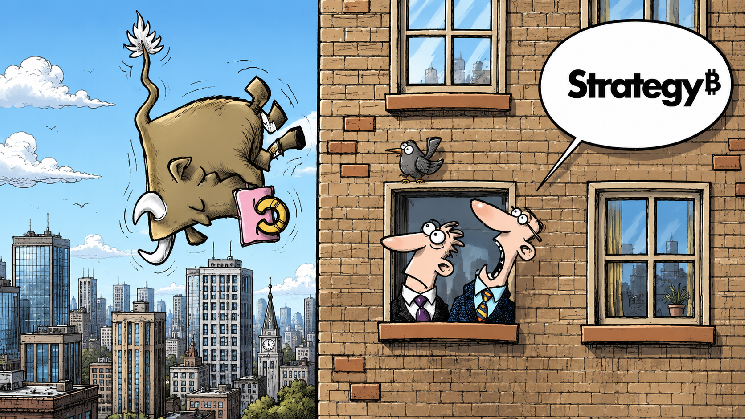
El CEO de Strategy, Phong Le, explicó que la venta de 32 Bitcoin por parte de la empresa no se debió a necesidades de liquidez, sino a un esfuerzo deliberado para mostrar al mercado que la firma puede vender BTC cuando sea necesario y para probar su proceso interno de ejecución. Estas declaraciones se produjeron después de que Strategy comprara más de 1.500 BTC aproximadamente una semana después de esa pequeña venta, su primera enajenación desde 2022. En una entrevista con CNBC, Le rechazó la idea de que la venta marcara un cambio en su estrategia de acumulación a largo plazo. Subrayó que la empresa sigue siendo un comprador neto de Bitcoin, como lo demuestra la adquisición de unos 1.500 BTC en el último mes. Le detalló las dos razones principales para la venta: "inocular" al mercado haciéndole ver que están dispuestos a vender si es necesario, y realizar una prueba operativa de sus sistemas, ya que vender es operativamente más complejo que comprar. También aclaró que la venta no fue para financiar dividendos, ya que pueden cubrirlos con otras actividades. Reconoció que la transacción causó frustración entre algunos inversores minoristas que adhieren a una postura de "nunca vender", pero argumentó que Strategy debe responder a un conjunto más amplio de partes interesadas, incluidos accionistas comunes, preferentes y tenedores de deuda. Concluyó que los accionistas institucionales no se mostraron perturbados por la venta, y que la compañía, como el mayor tenedor y comprador mundial de Bitcoin, mantiene su compromiso con el activo.

bitcoinistHace 4 hora(s)

¿Por qué vendió Strategy 32 Bitcoins? El CEO revela la verdadera razón

bitcoinistHace 4 hora(s)

¿Cuánto tiempo puede sostenerlo el último gran comprador de Ethereum?

A medida que el mercado de criptomonedas continúa cayendo, Bitmine se mantiene como el comprador marginal más constante y agresivo de ETH, a pesar de sufrir pérdidas no realizadas de más de 10.000 millones de dólares. La empresa planea alcanzar su objetivo de poseer el 5% del suministro total de ETH para fines de 2026, faltando menos de 400.000 ETH. Para financiar sus compras, Bitmine emitió acciones preferentes perpetuas con un dividendo del 9,5%. Su ventaja clave sobre competidores como Strategy es el ingreso por staking de ETH, que actualmente genera entre 230 y 296 millones de dólares anuales, suficiente para cubrir los dividendos de la emisión inicial. Sin embargo, si la emisión de acciones preferentes se expande, este rendimiento del ~3-4% del staking no podrá cubrir el dividendo del 9,5%, dependiendo entonces del aumento del precio del ETH. El análisis plantea tres escenarios: pesimista (caída a 1.000 USD si se detienen las compras), base (consolidación entre 1.500-2.000 USD) y optimista (recuperación impulsada por inclusión en índices y adopción institucional, con precio objetivo a largo plazo de 40.000 USD para 2030 según Standard Chartered). La pregunta central es quién sostendrá el precio del ETH una vez que Bitmine complete su objetivo del 5% y reduzca sus compras, dado el flujo saliente de los ETF y la retirada de algunas instituciones, mientras que la demanda incremental de stablecoins y RWA es aún un factor a largo plazo.

marsbitHace 8 hora(s)

¿Cuánto tiempo puede sostenerlo el último gran comprador de Ethereum?

marsbitHace 8 hora(s)

Trading

Spot
Futuros

Artículos destacados

Cómo comprar WAR

¡Bienvenido a HTX.com! Hemos hecho que comprar WAR (WAR) sea simple y conveniente. Sigue nuestra guía paso a paso para iniciar tu viaje de criptos.Paso 1: crea tu cuenta HTXUtiliza tu correo electrónico o número de teléfono para registrarte y obtener una cuenta gratuita en HTX. Experimenta un proceso de registro sin complicaciones y desbloquea todas las funciones.Obtener mi cuentaPaso 2: ve a Comprar cripto y elige tu método de pagoTarjeta de crédito/débito: usa tu Visa o Mastercard para comprar WAR (WAR) al instante.Saldo: utiliza fondos del saldo de tu cuenta HTX para tradear sin problemas.Terceros: hemos agregado métodos de pago populares como Google Pay y Apple Pay para mejorar la comodidad.P2P: tradear directamente con otros usuarios en HTX.Over-the-Counter (OTC): ofrecemos servicios personalizados y tipos de cambio competitivos para los traders.Paso 3: guarda tu WAR (WAR)Después de comprar tu WAR (WAR), guárdalo en tu cuenta HTX. Alternativamente, puedes enviarlo a otro lugar mediante transferencia blockchain o utilizarlo para tradear otras criptomonedas.Paso 4: tradear WAR (WAR)Tradear fácilmente con WAR (WAR) en HTX's mercado spot. Simplemente accede a tu cuenta, selecciona tu par de trading, ejecuta tus trades y monitorea en tiempo real. Ofrecemos una experiencia fácil de usar tanto para principiantes como para traders experimentados.

694 Vistas totalesPublicado en 2024.12.11Actualizado en 2026.06.02

Cómo comprar WAR

Discusiones

Bienvenido a la comunidad de HTX. Aquí puedes mantenerte informado sobre los últimos desarrollos de la plataforma y acceder a análisis profesionales del mercado. A continuación se presentan las opiniones de los usuarios sobre el precio de WAR (WAR).

活动图片