PIPPIN crashes 49% after $560K transfer to exchanges triggers sell-off

ambcryptoPublicado a 2026-03-17Actualizado a 2026-03-17

Resumen

PIPPIN experienced a sharp 49% price decline, falling from the $0.35–$0.40 range to around $0.19. On-chain data indicates that two wallets transferred approximately $560,000 worth of PIPPIN to Gate.io just minutes before the sell-off began. The rapid price drop triggered a cascade of long liquidations, flipping the funding rate deeply negative to -0.8. The move underscores how exchange inflows and derivatives activity can rapidly shift sentiment in low-liquidity markets. While the market is now short-dominated, the extreme positioning could also set the stage for a short-term rebound if buying interest returns.

PIPPIN recorded a sharp 49% decline over the latest trading session, with on-chain data suggesting that exchange inflows may have preceded the move.

The drop pushed the token from the $0.35–$0.40 range to around $0.19, marking one of its steepest single-session losses in recent weeks.

Data from Bubblemaps showed that two wallets transferred roughly $560k in PIPPIN to deposit addresses. These addresses then routed the tokens to Gate.io at around 8:00 UTC, just minutes before the price breakdown began.

Wallet transfers preceded the sell-off

According to Bubblemaps, the transfers occurred within minutes of each other, with both wallets sending funds to exchange-linked deposit addresses shortly before the decline.

While the data does not confirm intent, the timing suggests that tokens were moved to exchanges ahead of increased selling pressure.

In crypto markets, such inflows are often monitored as potential indicators of distribution, particularly when followed by sharp price movements.

Price breakdown triggers liquidation cascade

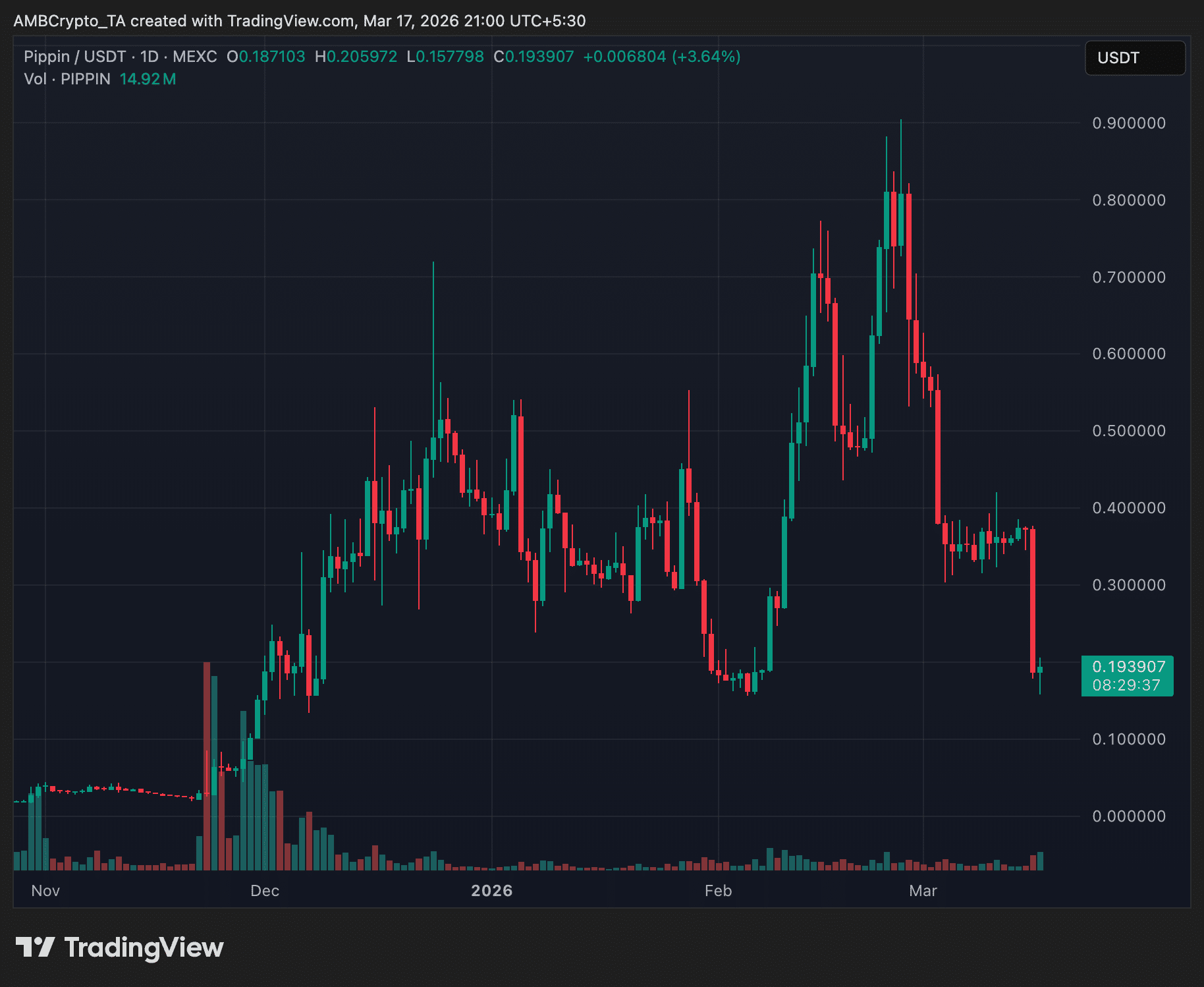
The price chart showed a clear loss of structure before the drop accelerated. After failing to hold the $0.30 consolidation level, PIPPIN broke lower with strong momentum, accompanied by a visible spike in trading volume.
Source: TradingView

The move accelerated losses, wiping out recent gains and pushing the token back toward levels last seen in its trading range. The speed of the decline pointed to forced selling and cascading liquidations, rather than gradual profit-taking.

Funding flips as longs get wiped

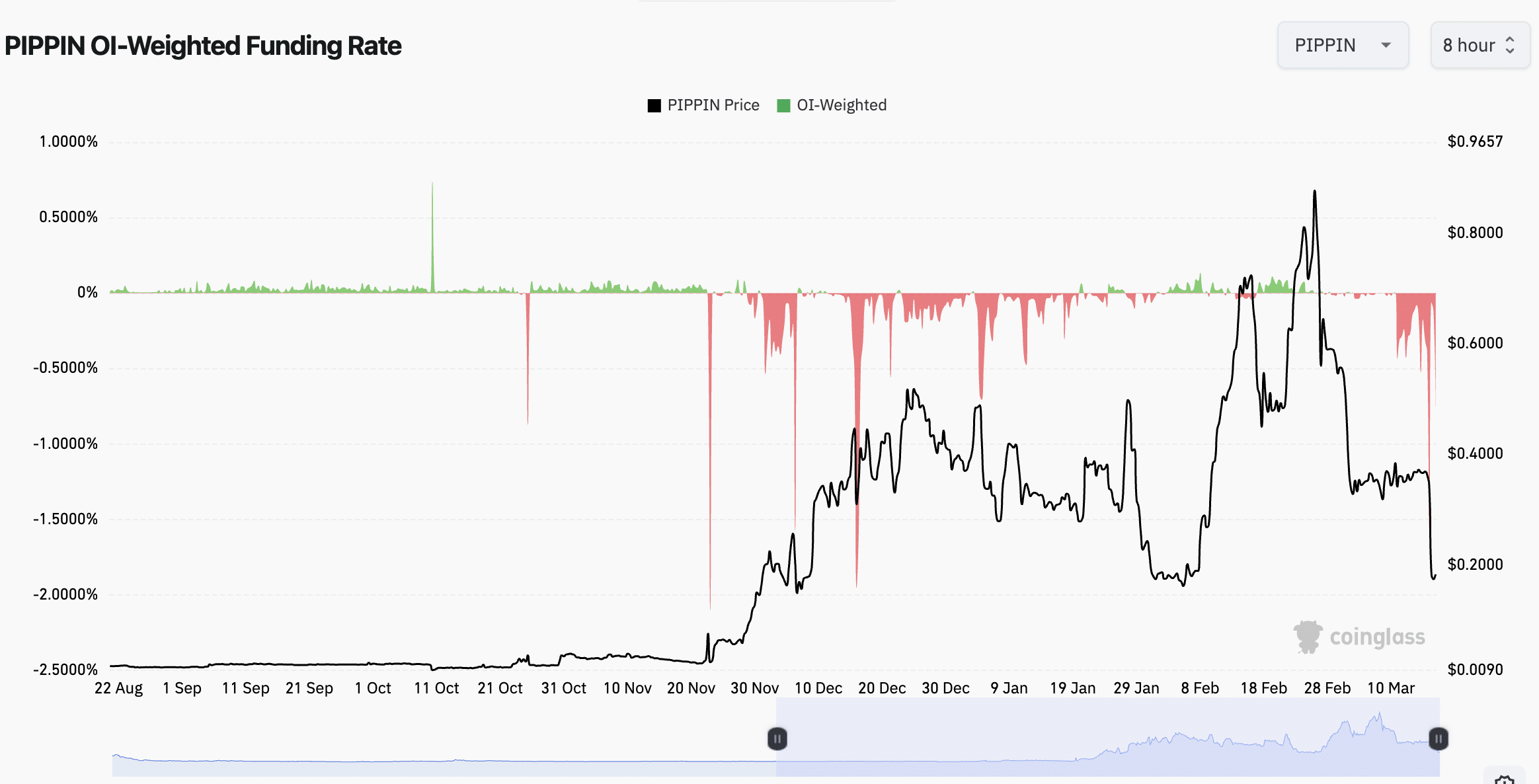
Derivatives data reinforced the liquidation narrative. The OI-weighted funding rate flipped deeply negative following the drop. As of this writing, the funding rate was -0.8, an improvement from –1.5 in the previous trading session.

This indicates that long positions were aggressively closed or liquidated during the move.
Source: Coinglass

Earlier in the cycle, funding had remained relatively stable or slightly positive, suggesting that the market was positioned for upside. The sudden reversal highlights a shift from crowded longs to short dominance, a typical pattern following a long squeeze.

What next for PIPPIN?

With funding now negative and price significantly lower, the market faces a split outlook.

On one hand, continued weakness could follow if the exchange inflows reflect a broader distribution. On the other hand, crowded short positioning may create conditions for a short-term rebound if buying interest returns.

For now, PIPPIN’s price action appears to be driven by a combination of on-chain flows, spot selling pressure, and derivatives liquidations, with the latest move underscoring how quickly sentiment can shift in low-liquidity environments.


Final Summary

  • PIPPIN’s 49% drop followed $560k in token transfers to exchanges, with timing suggesting inflows may have preceded the sell-off.
  • The move triggered long liquidations and flipped funding negative, leaving the market tilted toward shorts in the near term.

Criptos en tendencia

Preguntas relacionadas

QWhat was the percentage decline in PIPPIN's price and what event preceded it according to on-chain data?

APIPPIN recorded a sharp 49% decline, with on-chain data suggesting that $560k in token transfers to exchanges preceded the sell-off.

QWhich exchange received the tokens from the two wallets, and what was the approximate timing of these transfers?

AThe tokens were routed to Gate.io at around 8:00 UTC, just minutes before the price breakdown began.

QWhat key price level did PIPPIN fail to hold before the drop accelerated?

APIPPIN failed to hold the $0.30 consolidation level before breaking lower with strong momentum.

QHow did the funding rate change following the price drop, and what does this indicate?

AThe OI-weighted funding rate flipped deeply negative to -0.8, indicating that long positions were aggressively closed or liquidated during the move.
QWhat are the two potential outlooks for PIPPIN's market following this event?

AThe outlook is split: continued weakness could follow if the exchange inflows reflect broader distribution, or crowded short positioning may create conditions for a short-term rebound if buying interest returns.

Lecturas Relacionadas

Por qué el Bitcoin se mantiene en $64,000 tras la dura pausa de la Fed

Bitcóin cierra julio cerca de los 64.000 dólares tras una volátil reacción a la decisión de la Fed de mantener las tasas sin cambios, aunque sin indicar un pronto aflojamiento monetario. Esto ha provocado una rotación de capital hacia los ETF de Bitcoin, que registraron una entrada neta de 32,1 millones de dólares, mientras que los fondos de Ethereum experimentaron salidas. El mercado de criptomonedas, con una capitalización de unos 2,29 billones de dólares, se mantiene en un rango lateral, con Bitcoin encontrando soporte en 63.000-63.500 dólares y resistencia en 66.000 dólares. La Fed mantuvo su tasa clave, pero tres miembros votaron a favor de un aumento, señalando una postura más dura de lo esperada. En este entorno macroeconómico incierto, los inversores institucionales parecen favorecer a Bitcoin como activo principal, aunque persiste el interés selectivo en activos como Solana. Mientras, la aprobación de la ley CLARITY en EE.UU. se retrasa hasta después del receso de agosto. Para el último día de julio, el enfoque estará en los datos macro de EE.UU. El escenario base para Bitcoin es la consolidación entre 63.000 y 66.000 dólares, con su ruptura superior dependiendo de nuevos flujos institucionales. La estabilidad por encima de 63.000 dólares para BTC, el mantenimiento de Ethereum sobre 1.860 dólares y las entradas continuas en ETF son claves para una posible base de recuperación en la segunda mitad del año.

cryptonews.ruHace 2 hora(s)

Por qué el Bitcoin se mantiene en $64,000 tras la dura pausa de la Fed

cryptonews.ruHace 2 hora(s)

Parker Lewis responde por qué bitcoin sigue siendo el mejor dinero

El influyente analista de Bitcoin, Parker Lewis, critica las estrategias de marketing de corporaciones que actúan como tesorerías cripto. Advierte que la venta de "crédito digital" mediante acciones preferentes perpetuas distorsiona la esencia de la criptomoneda. Lewis enfatiza que Bitcoin no genera rendimiento fiduciario por diseño y que las promesas de dividendos son riesgosas, dependiendo de nuevos inversores. Destaca el riesgo de estos derivados, señalando que el mercado de acciones preferentes perpetuas es minúsculo comparado con el crédito global, lo que demuestra que los grandes actores evitan estos riesgos, trasladándolos a minoristas. Rechaza la idea de que Bitcoin es "demasiado volátil", argumentando que la volatilidad es una consecuencia natural de la adopción masiva de un activo con oferta fija e inelástica. En lugar de comprar derivados corporativos como acciones de MicroStrategy, recomienda adquirir Bitcoin directamente, considerándolo más seguro. Lewis alerta que este enfoque distrae de la verdadera amenaza: la rápida devaluación del dinero fiduciario. Ilustra la inflación real con su "Índice Ribeye", mostrando un aumento del 90% en el precio de un filete desde 2020, muy superior a las cifras oficiales. Concluye que la estrategia más prudente es la posesión directa de Bitcoin y el control total de las claves privadas, protegiendo así los ahorros de la inflación y los riesgos sistémicos de los derivados corporativos.

cryptonews.ruHace 2 hora(s)

Parker Lewis responde por qué bitcoin sigue siendo el mejor dinero

cryptonews.ruHace 2 hora(s)

Trading

Spot

Artículos destacados

Cómo comprar PIPPIN

¡Bienvenido a HTX.com! Hemos hecho que comprar pippin (PIPPIN) sea simple y conveniente. Sigue nuestra guía paso a paso para iniciar tu viaje de criptos.Paso 1: crea tu cuenta HTXUtiliza tu correo electrónico o número de teléfono para registrarte y obtener una cuenta gratuita en HTX. Experimenta un proceso de registro sin complicaciones y desbloquea todas las funciones.Obtener mi cuentaPaso 2: ve a Comprar cripto y elige tu método de pagoTarjeta de crédito/débito: usa tu Visa o Mastercard para comprar pippin (PIPPIN) al instante.Saldo: utiliza fondos del saldo de tu cuenta HTX para tradear sin problemas.Terceros: hemos agregado métodos de pago populares como Google Pay y Apple Pay para mejorar la comodidad.P2P: tradear directamente con otros usuarios en HTX.Over-the-Counter (OTC): ofrecemos servicios personalizados y tipos de cambio competitivos para los traders.Paso 3: guarda tu pippin (PIPPIN)Después de comprar tu pippin (PIPPIN), guárdalo en tu cuenta HTX. Alternativamente, puedes enviarlo a otro lugar mediante transferencia blockchain o utilizarlo para tradear otras criptomonedas.Paso 4: tradear pippin (PIPPIN)Tradear fácilmente con pippin (PIPPIN) en HTX's mercado spot. Simplemente accede a tu cuenta, selecciona tu par de trading, ejecuta tus trades y monitorea en tiempo real. Ofrecemos una experiencia fácil de usar tanto para principiantes como para traders experimentados.

1.1k Vistas totalesPublicado en 2025.01.11Actualizado en 2026.06.02

Cómo comprar PIPPIN

Discusiones

Bienvenido a la comunidad de HTX. Aquí puedes mantenerte informado sobre los últimos desarrollos de la plataforma y acceder a análisis profesionales del mercado. A continuación se presentan las opiniones de los usuarios sobre el precio de PIPPIN (PIPPIN).

活动图片













