Memecoin Leads the Rebound: Prelude to a Bull Market or a Trap Set by Whales?

marsbitPublicado a 2026-01-06Actualizado a 2026-01-06

Resumen

The memecoin market, led by tokens like PEPE and SHIB, has surged with its total valuation exceeding $50 billion, reigniting discussions about speculative fervor. After a prolonged decline, the "memecoin dominance rate" has rebounded strongly from historic lows, with the sector’s market cap reclaiming the $500 billion mark. Key tokens, including PEPE, BONK, and FLOKI, recorded double-digit gains at the start of the year. Analysts are divided on whether this surge represents a short-term speculative burst or an early signal of a broader market shift. Data from CryptoQuant shows memecoin dominance peaked at 11% of the altcoin market in late 2024 before plummeting to a record low of 3.2% by December 2025. This rebound mirrors past patterns where liquidity inflows eventually lifted the entire altcoin sector. Santiment reported a 20.8% surge in memecoin market cap in the first week of the year, reaching $45.3 billion, while CoinGecko estimated the total memecoin economy at $51.6 billion. The rally, driven by retail FUD (fear, uncertainty, doubt) peaking around Christmas, saw savvy investors accumulating during panic selling. Notably, this cycle differs from previous ones due to increased institutional involvement. Leveraged memecoin ETFs, such as 21Shares' 2x Long Dogecoin ETF, have performed strongly, indicating demand beyond crypto-native traders. This institutionalization affects exchange listings and forces traditional finance to adapt to memecoin-driven liquidity. The mem...

Author: Oluwapelumi Adejumo

Compiled by: Chopper, Foresight News

As the prices of tokens like PEPE and SHIB surge, the total market valuation of the Memecoin market has exceeded $50 billion, once again sparking discussions about speculative fervor.

After a year of continuous decline, a core metric measuring the share of Memecoins in the altcoin market, the "Memecoin Dominance Rate," has rebounded strongly from its historical low. The total market capitalization of Memecoins has returned to the $500 billion mark, with tokens like PEPE, BONK, and FLOKI recording double-digit gains at the beginning of the year.

This sharp rise has forced both institutional fund managers and retail traders to confront a key question: Is this merely a short-lived burst of post-holiday speculative sentiment, or an early signal of a comprehensive shift in market dynamics?

Data from market intelligence firm CryptoQuant highlights the intensity of this shift. After the "Memecoin Mania" peaked in November 2024, the sector's dominance rate in the altcoin market began a prolonged downward trend.
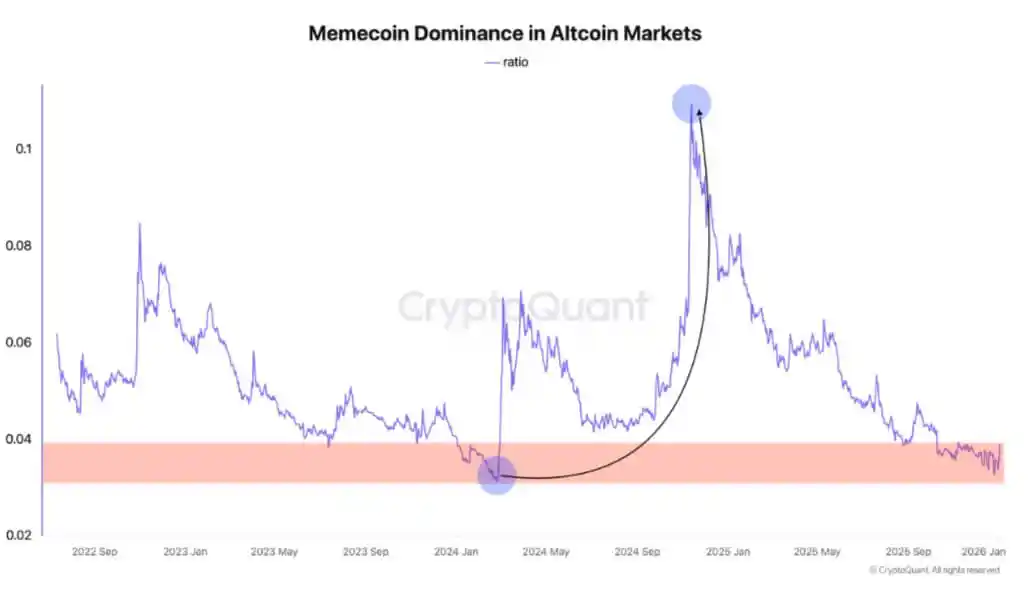
Memecoin Market Dominance Rate, Data Source: CryptoQuant

At its peak, Memecoins accounted for 11% of the total altcoin market capitalization, with a dominance rate of 0.11. By December 2025, this figure had plummeted to just 0.032, hitting a historical bottom.

However, analysts point out that the last time this indicator hit such a low level, it was followed by a massive influx of speculative liquidity, which ultimately drove the entire altcoin sector higher.

Now, speculative investors are viewing the current rebound from the bottom as a potential leading indicator.

If this trend continues, it would mean that market risk appetite is recovering at a faster-than-expected pace, potentially kicking off a new altcoin bull run and having a profound impact on blockchain activity and token listing standards throughout 2026.

Key Signals Amid the Noise

Data from analytics platform Santiment shows that in the first week of the new year, the overall market capitalization of Memecoins surged by over 20.8%, with the sector's total value exceeding $45.3 billion.

Cryptocurrency price-tracking website CoinGecko provides an even higher valuation, estimating that the "Memecoin economy," encompassing dog, frog-themed, and politically satirical coins, has reached approximately $51.6 billion.

Leading this rebound are the veteran coins that dominated previous bull markets. Over the past seven days, PEPE and the self-deprecatingly named USELESS coin both gained 54%; MOG rose 38%; and Solana-based BONK recorded a 34% increase. Even legacy assets like Dogecoin and Shiba Inu joined the rally, with a renewed trading frenzy on Sunday pushing Shiba Inu up 13% in a single day.

Santiment analysts attribute the timing of this rebound to a classic contrarian investment signal. The rally began shortly after Christmas, precisely when retail trader FUD (Fear, Uncertainty, Doubt) towards speculative assets peaked.
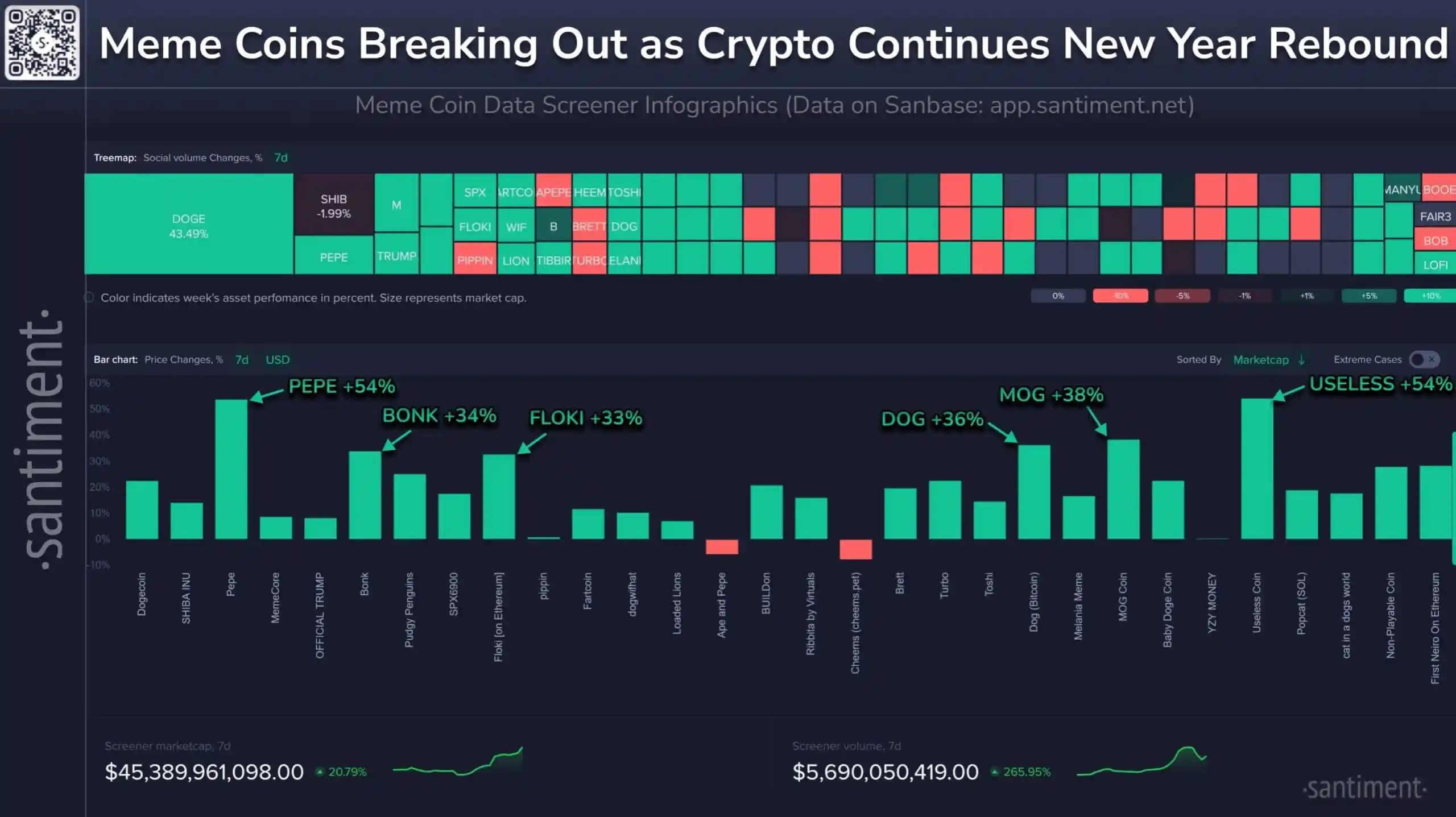
Memecoins Lead Cryptocurrency Market Rebound, Data Source: Santiment

When market sentiment hits rock bottom and ordinary traders turn bearish and exit, savvy capital chooses to enter against the trend, aggressively accumulating positions at low prices during periods of selling.

For fund managers who shifted their asset allocation to "quality coins" in 2025, the resurgence of the Memecoin sector presents a dilemma.

This rally tests the industry's willingness to re-embrace leveraged trading: ignoring this rebound could mean missing the first phase of a risk-on cycle; while chasing the rally would mean having to re-enter the most volatile asset class in the crypto market.

The ETF Boost

Unlike previous Memecoin bull runs, which were almost entirely driven by overseas exchanges and decentralized exchanges (DEXs), the 2026 rebound also carries a mark of compliance.

The approval and listing of several complex cryptocurrency ETFs in the U.S. have opened new channels for the speculative fervor to penetrate traditional brokerage accounts.

Bloomberg Intelligence ETF analyst Eric Balchunas pointed out that some of the best-performing fund products at the start of the year are leveraged Memecoin ETFs.

Among them, the 21Shares Double Long Dogecoin ETF (TXXD) performed particularly well, a phenomenon indicating that investment demand for Memecoins is no longer limited to crypto-native狂热 traders using on-chain wallets.
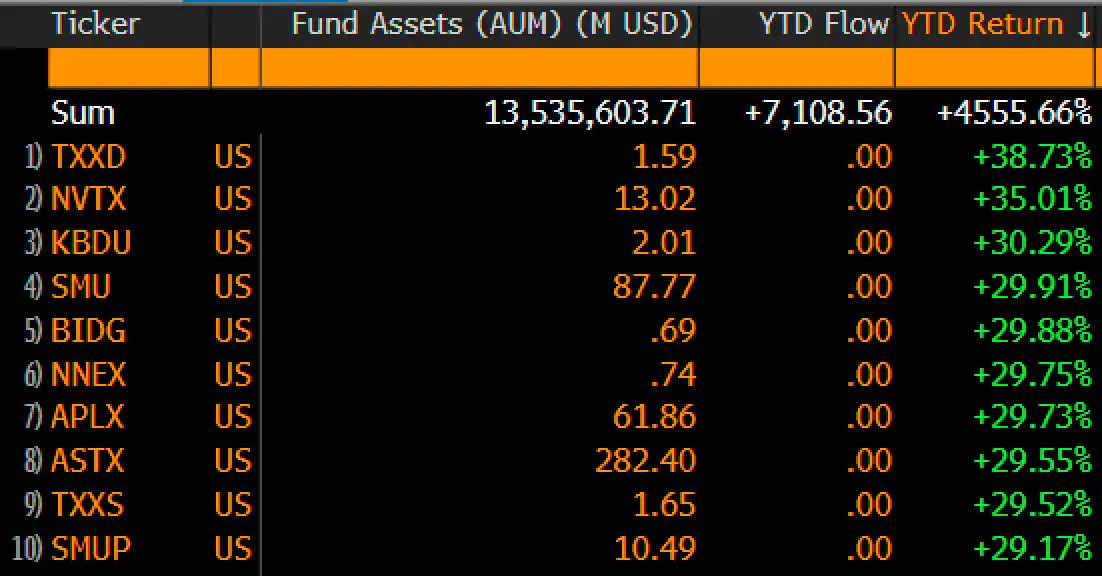
21Shares Dogecoin ETF Leads Market Gains, Data Source: Eric Balchunas

The institutionalization of the "Memecoin economy" has fundamentally changed its weight in influencing the entire crypto market. When billions of dollars flow into Memecoin-related assets, the ripple effects spread outward.

This impacts listing decisions on large centralized exchanges, which rely on trading fees from high-volume tokens to subsidize operations of other businesses; it also forces asset management firms to broaden their product lines.

Once this $50 billion asset class begins to dictate the rhythm of market cycles, the entire crypto industry's infrastructure will be forced to adapt to the liquidity demands of these assets once deemed "fleeting joke coins."

Meanwhile, the internal landscape of the Memecoin sector is also constantly diversifying. CoinGecko's data divides the $51.6 billion Memecoin market into multiple segments, revealing a complex hierarchical structure.

"Boy's Club" and "Frog-Themed" coins currently account for 10.9% and 10.7% of the Memecoin market share respectively, challenging the long-dominant "Dog-Themed" coins (approx. 6.1% market share).
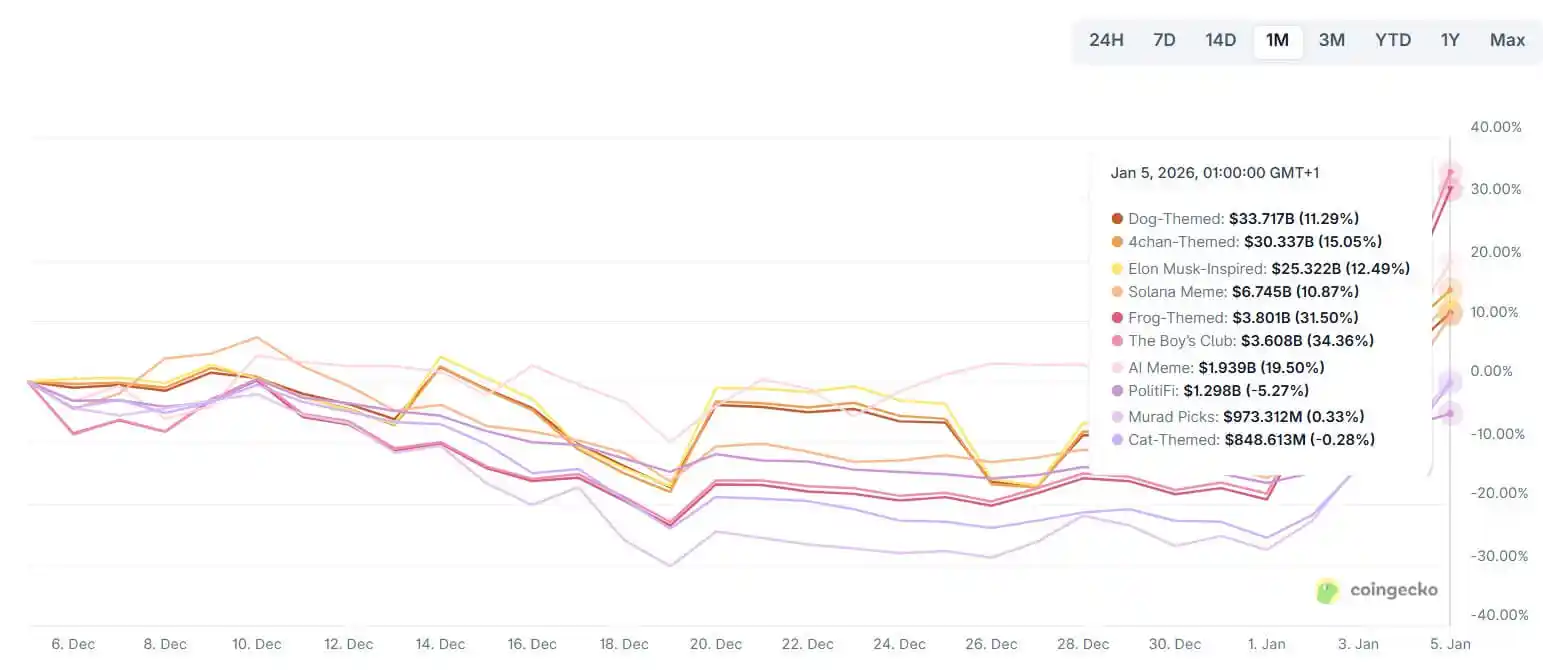
Memecoin Sub-Sector Market Share, Data Source: CoinGecko

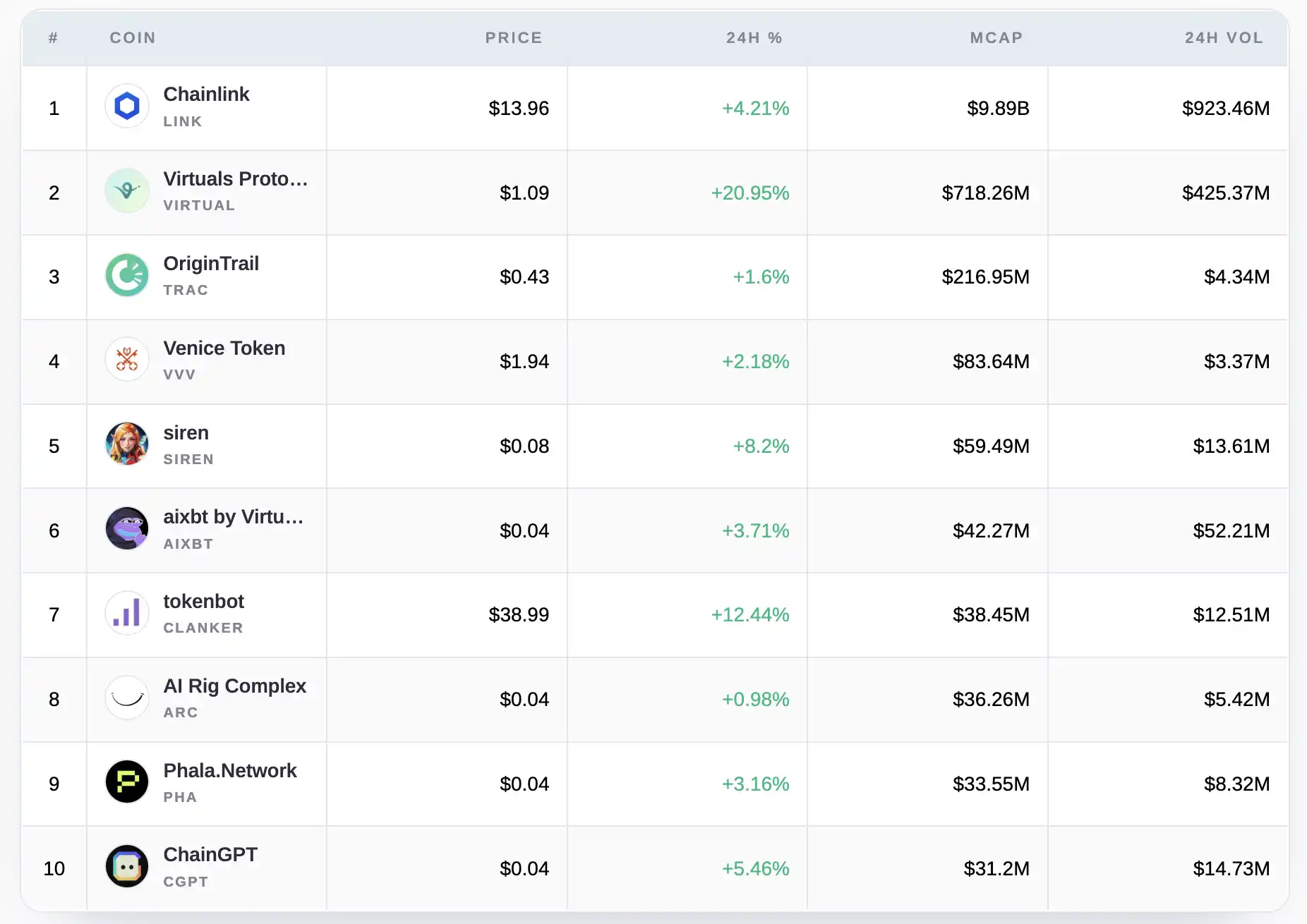
Emerging categories like "PolitiFi coins" and "AI Memecoins" have also captured market capitalizations in the billions of dollars, a trend indicating that the Memecoin sector is developing its own internal rotation patterns.
Public Chain Ecosystem Wars Reignite

The comeback of Memecoins also serves as a stress test and growth engine for the underlying blockchain networks, with the Solana blockchain and Coinbase's Layer-2 network Base particularly standing out.

Within the Solana ecosystem, activity on Memecoin Launchpads has climbed to a three-month high. Daily trading volume, the number of new tokens issued, and the "daily token graduation count"—referring to the number of tokens with enough traction to successfully migrate from initial launch platforms to decentralized exchanges—have all surged significantly.
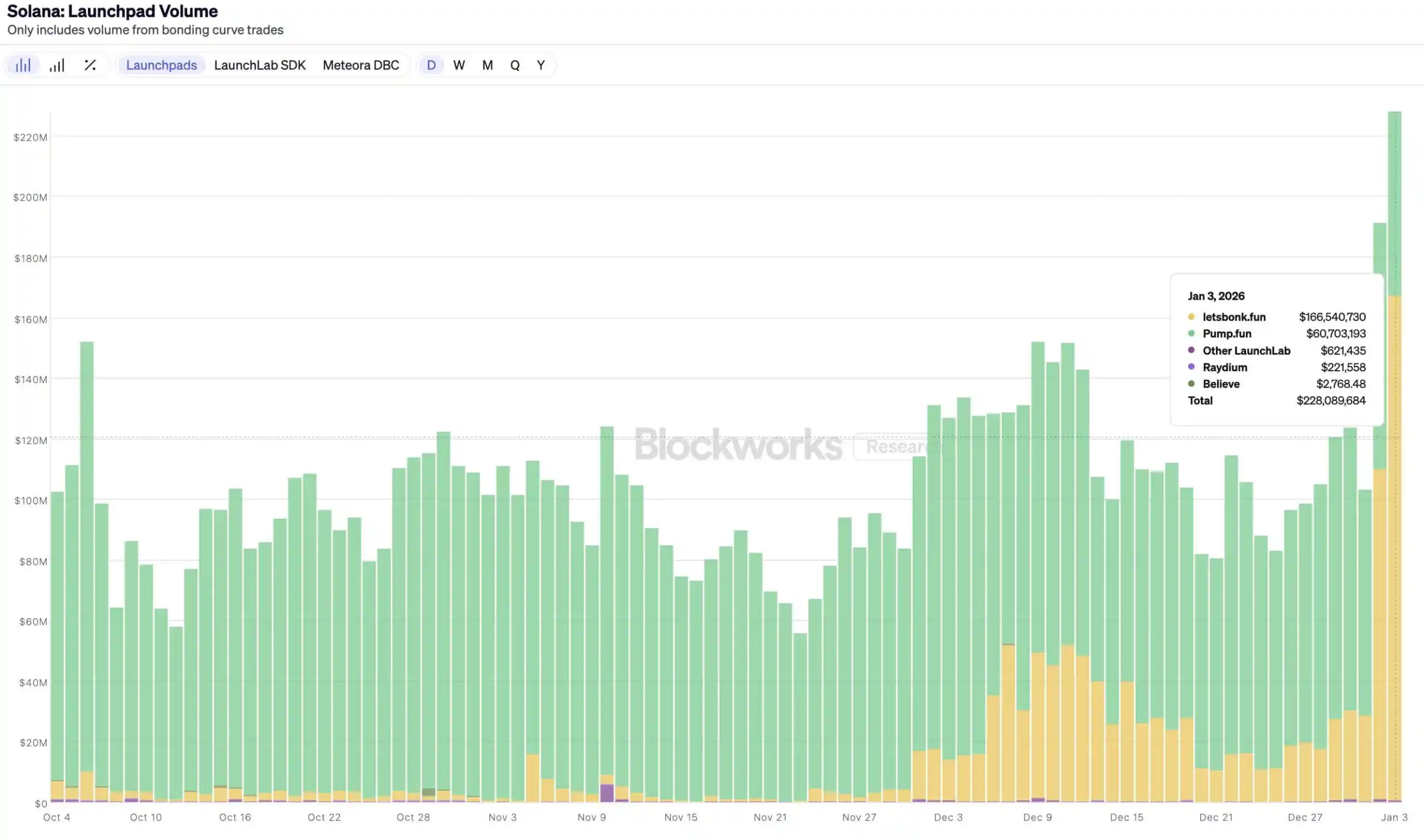
Solana Memecoin Launchpad Platform Trading Volume, Data Source: Blockworks Research

This resurgence of activity has reignited the topic of "fee wars"—the competition among different public chains vying to become the preferred venue for high-frequency speculative trading.

Last year, platforms like Pump.fun and LetsBonk contributed significant revenue to the Solana network; data from early 2026 shows this trend is accelerating once again.

This market dynamic has also sparked discussion among industry leaders, who believe the significance of the Memecoin phenomenon extends far beyond speculative gambling.

Base network's lead developer, Jesse Pollak, stated that such assets have practical functions within the crypto economy. He defined Memecoins as "collaborative anchors for communities," capable of bringing people together and providing a context for collective creative activity.

"We need more Memecoins because we need more creativity, community vitality, and collective action," Pollak stated, viewing Memecoins as a user acquisition mechanism that attracts users who may eventually transition to other on-chain applications.

For the blockchain networks themselves, the impact of this Memecoin frenzy is tangible: sustained rises increase demand for the native tokens of public chains, test network throughput, and attract more liquidity providers.

The Centralization Paradox

Although the narrative around Memecoins always revolves around "community autonomy" and "decentralized fun," existing data reveals a significant risk regarding the concentration of holdings.

On the surface, the current rally appears broad-based, but ownership of top tokens is highly concentrated.

Data from Santiment shows that for Shiba Inu, one of the leaders in the Memecoin space, 10 wallets control nearly 63% of the total supply. Among them, the largest single wallet holds approximately 41% of the supply, currently worth about $3.3 billion.

This highly concentrated ownership structure is not unique to Shiba Inu; coins in several popular sectors like "Solana Memecoins" and "Frog-Themed" coins exhibit similar distribution characteristics.

This poses a huge hidden danger for retail investors entering later: with liquidity concentrated in the hands of a few "whale" wallets, the market is always at risk of a sell-off.

CryptoQuant analysts warn that although the current market structure resembles signals seen before previous bull runs began, "it is still too early to conclude whether the trend can be sustained."

For speculative investors, this is a classic high-risk, high-reward moment. The rebound of the Memecoin dominance rate from historical lows suggests the market is awakening, but the highly concentrated ownership structure and the leverage-driven nature of the rally still leave the foundation of the entire sector precarious.


Preguntas relacionadas

QWhat is the recent trend in the Memecoin market, and what does it indicate?

AThe Memecoin market has recently rebounded strongly, with its total valuation surpassing $50 billion. The 'Memecoin dominance rate,' a key metric measuring its share in the altcoin market, has recovered from a historical low, suggesting a potential shift in market risk appetite and possibly signaling the start of a new altcoin bull cycle.

QHow have major Memecoins like PEPE and SHIB performed in this rally?

AMajor Memecoins such as PEPE and SHIB have seen significant price surges. PEPE and USELESS tokens both increased by 54% in the past week, while MOG rose by 38%, and Solana-based BONK gained 34%. Even established assets like Dogecoin and Shiba Inu recorded substantial gains, with Shiba Inu rising 13% in a single day.

QWhat role do ETFs play in the current Memecoin market dynamics?

AETFs have introduced a new, compliant channel for Memecoin speculation, allowing it to reach traditional brokerage accounts. Leveraged Memecoin ETFs, such as 21Shares' 2x Long Dogecoin ETF (TXXD), have performed exceptionally well, indicating that demand for Memecoin investments now extends beyond crypto-native traders to include institutional and traditional investors.

QWhich blockchain networks are benefiting from the Memecoin resurgence, and how?

ASolana and Base (Coinbase's Layer 2 network) are key beneficiaries of the Memecoin resurgence. Solana's Memecoin launchpad activity has reached a three-month high, with increased daily trading volume, new token launches, and successful token graduations to decentralized exchanges. This activity drives demand for the native tokens, tests network throughput, and attracts more liquidity providers.

QWhat are the risks associated with the current Memecoin market rally?

AThe rally is characterized by highly concentrated ownership, where a small number of 'whale' wallets control a large portion of the supply. For example, 10 wallets hold nearly 63% of Shiba Inu's total supply, with the largest single wallet owning about 41%. This concentration poses significant risks of market manipulation and sudden sell-offs, making the market vulnerable despite the bullish signals.

Lecturas Relacionadas

El mercado de CoreWeave, que Duan Yongping compró en la caída, se ha convertido en un sangriento campo de batalla entre alcistas y bajistas

El proveedor de capacidad de computación en la nube para IA, CoreWeave (CRWV), experimentó una caída del 11,4% en sus acciones tras presentar sus resultados del primer trimestre. Aunque los ingresos se duplicaron interanuales hasta los 2.080 millones de dólares, las pérdidas netas también se ampliaron, superando los 740 millones. La guía del Q2, inferior a las expectativas del mercado, avivó las ventas. La compañía, una de las apuestas más controvertidas del sector, presenta una narrativa alcista basada en una cartera de pedidos de casi 1.000 billones de dólares, una relación privilegiada con Nvidia y una creciente diversificación de clientes, incluyendo a Meta y Anthropic. Sin embargo, los bajos márgenes operativos (solo un 1% ajustado), el rápido aumento del gasto en capital y la deuda (unos 25.000 millones) alimentan la tesis bajista. En este contexto, destaca la operación del inversor chino Duan Yongping, quien tomó una pequeña posición (0,12% de su cartera) en el cuarto trimestre de 2025, coincidiendo con mínimos anuales de la acción. Su movimiento contrasta con las continuas ventas de directivos e inversores internos de CoreWeave. La cuestión clave es si la compañía, que el CEO Michael Intrator promete alcanzará una facturación anualizada de más de 30.000 millones en 2027, encontrará el punto de inflexión hacia la rentabilidad, o si la expansión agresiva seguirá erosionando los márgenes. El próximo informe del segundo trimestre servirá como una prueba decisiva para la credibilidad de la narrativa de crecimiento a largo plazo frente a los datos financieros actuales.

marsbitHace 3 min(s)

El mercado de CoreWeave, que Duan Yongping compró en la caída, se ha convertido en un sangriento campo de batalla entre alcistas y bajistas

marsbitHace 3 min(s)

El "Burning Man" tecnológico chino hace su debut en Shanghái, muShanghai crea una "ciudad pop-up" global para geeks

Del 10 de mayo al 6 de junio de 2026, se celebró en Shanghai el experimento de "ciudad efímera" (Pop-up City) organizado por muShanghai, iniciado por la comunidad internacional de código abierto The Mu y coorganizado por el Centro Alibaba de Hongqiao. Esta "fiesta tecnológica al estilo Burning Man" china reunió durante 28 días a desarrolladores, investigadores y emprendedores de más de 50 países para construir colectivamente una "ciudad paralela" para la comunidad tecnológica global. El evento atrajo más de 2000 solicitudes, con 800 participantes seleccionados de países como Estados Unidos, Argentina, Canadá, Japón, Francia, Sudáfrica, Reino Unido y China. La asistencia incluyó talentos destacados como ex ingenieros de OpenAI, fundadores de startups y contribuidores clave de proyectos como OpenClaw. La agenda se estructuró en cuatro semanas temáticas con cerca de 100 eventos: * **Semana de IA (11-15 mayo):** Conferencias sobre grandes modelos, seguridad de IA y aplicaciones de consumo. * **Semana de Biotecnología (18-22 mayo):** Enfocada en longevidad, automatización de laboratorios y ciencia de materiales. * **Semana de Robótica (25-29 mayo):** Con competiciones, desfiles de moda cibernética y exposiciones de hardware. * **Semana Cultural (1-6 junio):** Explorando futuras formas sociales, cultura ciberpunk y creación de videojuegos. Se destacaron los "mercados de innovadores" semanales y el principio de "Build in Public" para fomentar la iteración abierta de proyectos. El Centro Alibaba de Hongqiao sirvió como hub de apoyo integral para talento internacional. Tras éxitos en Argentina, San Francisco y la Expo Osaka 2025, The Mu eligió Shanghai para este desafío, superando obstáculos logísticos y regulatorios. El evento contó con la presencia de autoridades locales en su inauguración. En resumen, muShanghai fue tanto un festival tecnológico de vanguardia como una ventana crucial para la conexión del ecosistema de innovación chino con el mundo.

marsbitHace 4 min(s)

El "Burning Man" tecnológico chino hace su debut en Shanghái, muShanghai crea una "ciudad pop-up" global para geeks

marsbitHace 4 min(s)

GensynAI : Que la IA no repita los errores de Internet

En los últimos meses, el auge de la IA ha atraído talento del sector cripto. Muchos proyectos exploran cómo la blockchain puede integrarse en la infraestructura de IA, pero pocos logran un modelo de negocio cerrado. Gensyn se distingue al enfocarse en el núcleo más costoso: el entrenamiento de modelos. Su propuesta es organizar recursos de GPU dispersos globalmente en una red abierta para entrenamiento de IA. Los desarrolladores pueden enviar tareas, los nodos aportan capacidad de cálculo, y la red verifica los resultados y distribuye incentivos. Esto aborda un problema crítico: la creciente centralización del poder de cálculo en grandes tecnológicas, donde el acceso a GPUs como la H100 se ha convertido en una barrera clave para la innovación. Gensyn destaca por cuatro razones: 1. Ataca la capa de infraestructura central de la IA (entrenamiento), no solo aplicaciones. 2. Ofrece un modelo de colaboración abierto que puede optimizar costes y eficiencia para equipos más pequeños. 3. Su principal barrera tecnológica y ventaja es la capacidad de verificar resultados y garantizar fiabilidad en un entorno distribuido. 4. Responde a una demanda real y creciente en un mercado ya validado, más allá de la narrativa cripto. En conclusión, la frontera entre cripto e IA se desdibuja. La IA necesita coordinación de recursos e incentivos para la colaboración global, áreas donde la tecnología blockchain puede aportar soluciones. Gensyn representa un paso hacia una infraestructura de IA más abierta y accesible, no solo controlada por unos pocos gigantes.

marsbitHace 14 hora(s)

GensynAI : Que la IA no repita los errores de Internet

marsbitHace 14 hora(s)

Trading

Spot
Futuros
活动图片




