From Aztec to Zcash: Privacy Evolving from 'Gray Industry Tool' to 'Institutional Necessity'

比推Publicado a 2025-12-26Actualizado a 2025-12-26

Resumen

From Aztec to Zcash: The Rise of Pragmatic Privacy in Blockchain In 2025, blockchain privacy evolved from a niche concern to a mainstream priority, driven by the concept of "pragmatic privacy" that balances individual anonymity with regulatory compliance. This shift is marked by the strong performance of privacy-focused assets like Zcash and new institutional initiatives. Several new privacy-centric blockchains launched or advanced significantly. Aztec Network's Ignition L2 mainnet went live, raising over 6,100 ETH. Nillion launched its "blind computer" mainnet for encrypted data computation. Cosmos-based Namada introduced a "composable privacy" L1, while Miden spun out from Polygon to build its own privacy chain. Umbra raised $154.9 million in an ICO to build on Solana. Horzen transitioned to a Base L3 privacy solution. Institutions are actively embracing privacy. Coinbase hired a team from Iron Fish to develop privacy primitives for Base. Circle is testing a privacy-preserving wrapped USDC (USDCx) on Aleo. The Canton Network and EY's Nightfall L2 are focusing on confidential enterprise solutions. The Ethereum Foundation formed a dedicated "Privacy Cluster" and an "Institutional Privacy Working Group." Vitalik Buterin also launched Kohaku, an open-source wallet framework for compliant privacy. At the application layer, tools like 0xbow's Privacy Pools (based on Vitalik's research) and Railgun (using "proof of innocence") allow users to anonymize transactions without aidi...

Source: The Block

Original Title: From Aztec to Zcash: The year 'pragmatic privacy' took root

Compiled and Edited by: BitpushNews


Since Satoshi Nakamoto wrote the Bitcoin whitepaper, the privacy limitations of blockchain have been evident. The cryptocurrency pioneer pointed out at the time: despite using anonymous mechanisms, Bitcoin addresses could still be traced back to real-world identities.

For many years since, this "pseudo-anonymous" characteristic has been tacitly accepted as "acceptable enough," causing most blockchain privacy projects to remain on the margins for a long time.

However, this year has seen a renewed interest in blockchain privacy, with Zcash becoming one of the best-performing assets of the year, and the Ethereum Foundation launching multiple end-to-end encryption initiatives. The concept of "Pragmatic Privacy" has also begun to take root, aiming to balance individual privacy with compliance considerations.

Emerging Privacy Chains

2025 has witnessed the launch of several new privacy-focused blockchains at various stages of development.

Perhaps the most notable is the Aztec Network's Ignition chain going live on mainnet in November. This is not only because it is the "first fully decentralized L2 on Ethereum," with multiple innovations in consensus and ZK technology, but also because it has overcome numerous obstacles since the project's inception in 2017.

Earlier this month, Ignition also raised 19,476 ETH (approximately $61 million) from 16,741 participants using a new "Continuous Clearing Auction" mechanism co-developed with Uniswap Labs.

Nillion is another blockchain project that launched its mainnet in 2025. This so-called "blind computer" aims to perform computations on encrypted data and has already integrated with multiple networks, including Layer 1's Near and Layer 2's Arbitrum, to enhance privacy at the application layer.

Namada, built on Cosmos, also launched its Layer 1 mainnet in June, focusing on "composable privacy" and supporting multiple blockchain ecosystems—including Bitcoin L2s (like Lombard and Babylon), Ethereum, and Solana—via cross-chain bridges.

Miden, which has been in development since at least 2022, is preparing to launch its mainnet next year. Even so, the project took a huge step towards independence this year: spinning off from Polygon and raising $25 million to build the privacy-focused blockchain Edge.

Similarly, the privacy protocol Umbra, powered by Arcium, conducted its Initial Coin Offering (ICO) on MetaDAO in October, raising $154.9 million. Umbra plans to launch concurrently with Arcium's mainnet Alpha, becoming one of the first privacy protocols built on Solana utilizing its infrastructure.
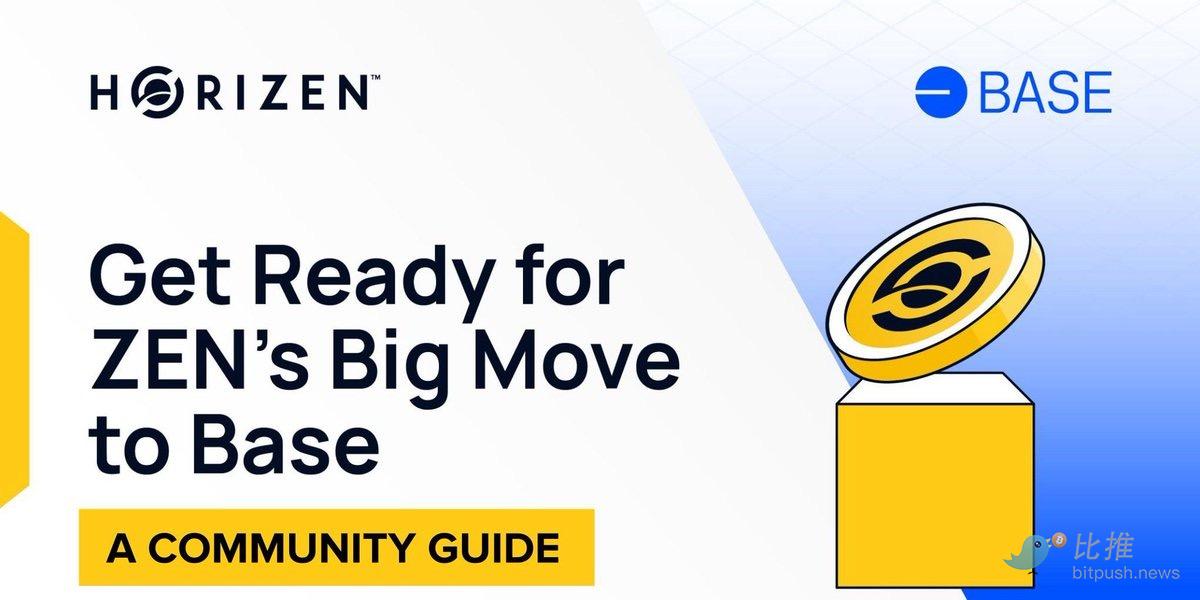
Horizen, one of the oldest crypto privacy projects, also underwent a major transformation this year: it shut down its proprietary Layer 1 and L2 incubator and relaunched as a Layer 3 privacy solution on Base, the network incubated by Coinbase.

Grayscale, which manages the ZEN token fund, also filed a registration statement with the U.S. Securities and Exchange Commission (SEC) to convert its Grayscale Zcash Trust into the first ZEC ETF. Zcash, which launched the Zebra 3.1 upgrade, has been one of the best-performing tokens in the second half of the year.

Institutional Privacy Initiatives

Coinbase signaled multiple times this year that privacy is not optional for Base. Earlier this year, the company announced it had hired a development team from Iron Fish (a long-standing PoW privacy project) to provide "privacy-preserving primitives" for Base.

Circle, the largest U.S. stablecoin issuer, also made waves by announcing it was testing a privacy-preserving wrapped USDC called USDCx on the Aleo testnet.

USDCx appears to focus on "configurable compliance," aiming to support enterprise-level use cases such as payroll management and e-commerce.

Meanwhile, the Canton Network, backed by Goldman Sachs and BNY Mellon, and Nightfall, an Ethereum L2 incubated by EY, focus on enterprise blockchain solutions that require extreme confidentiality. Nightfall has already announced support for two blockchains: the real-world asset (RWA) network Plume and CELO.

The Ethereum Foundation initiated multiple privacy programs this year, signaling that the topic has moved from a niche research area to a core concern for Ethereum developers. In October, the Foundation formed the so-called "Privacy Cluster," a dedicated team of dozens of engineers aimed at consolidating its privacy efforts, including a roadmap for achieving native end-to-end encryption. The Foundation also launched the "Institutional Privacy Working Group" to guide institutions and enterprises into Ethereum.
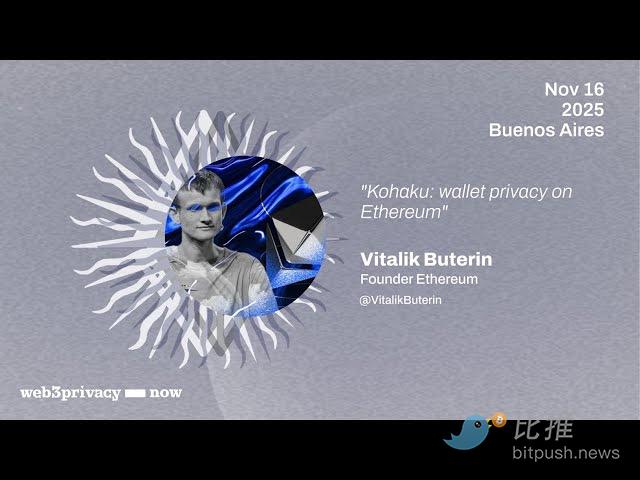
Ethereum's Vitalik Buterin also introduced Kohaku, an open-source centralized wallet framework for privacy, aimed at fostering "default and compliant" privacy features.

Pragmatic Privacy

The concept of "pragmatic privacy" is perhaps most fully realized at the application layer. This year, 0xbow launched Privacy Pools, a tool for ordinary blockchain users to erase transaction records without running into legal trouble.

Privacy Pools are based on research published by Buterin and several other senior cryptographers on "association lists," designed to prevent bad actors from profiting from crypto mixers. The 0xbow team recently raised a $3.5 million seed round, expanded support for Sky's USDS stablecoin, and provided a method for Tornado Cash users to remain anonymous "without helping hackers." It is also part of the Ethereum Foundation's Kahaku software framework.

Similarly, Railgun is listed in Kahaku's GitHub repository as a means of shielding funds. Railgun achieves blockchain privacy through a "proof of innocence" system, where users generate ZK proofs showing their funds/transactions do not belong to a preset list of flagged/malicious addresses.
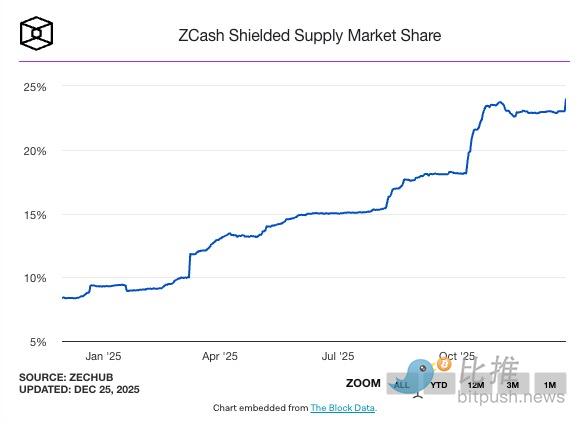
Finally, it's worth noting that as a standard-bearer for crypto privacy, Zcash's anonymous pool supply has grown to nearly 25%, marking a steady increase in network privacy adoption. Zcash provides users with functional privacy and the ability to achieve compliance through selective disclosure of information.


Twitter:https://twitter.com/BitpushNewsCN

Bitpush TG Discussion Group:https://t.me/BitPushCommunity

Bitpush TG Subscription: https://t.me/bitpush

Original link:https://www.bitpush.news/articles/7598558

Preguntas relacionadas

QWhat is the main concept that has gained traction in blockchain privacy in 2025, as discussed in the article?

AThe main concept is 'Pragmatic Privacy', which aims to balance individual privacy with compliance considerations.

QWhich privacy-focused blockchain launched its mainnet in November 2025 and is noted as 'Ethereum's first fully decentralized L2'?

AAztec Network's Ignition chain launched its mainnet in November 2025 and is described as Ethereum's first fully decentralized L2.

QWhat significant step did the Ethereum Foundation take in October 2025 regarding privacy?

AIn October 2025, the Ethereum Foundation formed a 'Privacy Cluster', a dedicated team of dozens of engineers to consolidate its privacy efforts, including a roadmap for native end-to-end encryption.

QWhat is the purpose of Privacy Pools, as mentioned in the article?

APrivacy Pools is a tool for ordinary blockchain users to erase transaction records without getting into legal trouble, based on research about 'association lists' to prevent bad actors from benefiting from crypto mixers.

QWhich stablecoin issuer is testing a privacy-preserving wrapped version of USDC called USDCx on the Aleo testnet?

ACircle, the largest U.S. stablecoin issuer, is testing a privacy-preserving wrapped version of USDC called USDCx on the Aleo testnet.

Lecturas Relacionadas

Sueldos de un millón al año por un electricista: Meta tiene tanta prisa que hasta abre su propia escuela técnica

La nueva barrera en la carrera de la IA no está en el código, sino en la construcción física. Empresas como Meta y OpenAI enfrentan una grave escasez de trabajadores calificados —electricistas, fontaneros, ingenieros HVAC— para construir sus megacentros de datos, como el proyecto "Stargate" de 160.000 millones de dólares. Aunque ofrecen salarios altísimos (hasta 280.000 dólares anuales para electricistas), la falta de mano de obra cualificada retrasa proyectos y genera pérdidas millonarias. La complejidad es extrema: las instalaciones consumen cientos de megavatios, requieren sistemas de refrigeración líquida avanzados y una ingeniería eléctrica sin precedentes. La solución: las Big Tech están creando sus propias escuelas de formación. Meta invirtió 115 millones en un programa que cubre todos los gastos para formar a miles de nuevos técnicos. OpenAI se alía con sindicatos. El reclutamiento ya llega a las escuelas secundarias, prometiendo carreras lucrativas sin necesidad de universidad. El resultado es un cambio generacional: un 60% de la Generación Z considera ahora trabajar en oficios especializados. Pero el desafío energético es colosal: los centros de datos de IA consumirán hasta el 12% de la electricidad de EE.UU. para 2028, encareciendo las facturas y dependiendo de una fuerza laboral que, una vez terminadas las construcciones masivas, deberá encontrar nuevo empleo en otros sectores.

marsbitHace 52 min(s)

Sueldos de un millón al año por un electricista: Meta tiene tanta prisa que hasta abre su propia escuela técnica

marsbitHace 52 min(s)

¿La Fed subirá los tipos en septiembre? ¿Cómo soportarán la presión las criptomonedas y las acciones estadounidenses?

En solo una semana, las apuestas del mercado sobre una subida de tipos en septiembre por parte de la Fed han pasado de menos del 50% a más del 80%. Este rápido cambio se debe al voto dividido 9-3 en la última reunión, donde tres miembros abogaron por una subida inmediata, y a la escalada del precio del petróleo provocada por tensiones geopolíticas en el Estrecho de Ormuz. El próximo dato clave será el IPC de julio, publicado el 12 de agosto. Para los criptoactivos como Bitcoin, que muestran una alta sensibilidad a la liquidez, el aumento de las expectativas de subidas es una mala noticia, ya que eleva el costo de oportunidad de mantener activos que no generan intereses. Sin embargo, el impacto puede ser limitado si el mercado interpreta la medida como el final del ciclo de endurecimiento. Las acciones vinculadas a las criptomonedas, como Coinbase, podrían experimentar una volatilidad aún mayor. En el mercado bursátil estadounidense, las acciones tecnológicas y de alto crecimiento enfrentan presión por el aumento de las tasas de descuento. El gasto de capital récord de los gigantes tecnológicos está siendo escrutinado, y una subida de tipos en septiembre podría reducir la tolerancia del mercado hacia empresas con flujos de efectivo negativos si no muestran crecimiento en ingresos. Los próximos datos de inflación y las declaraciones de la Fed serán cruciales para confirmar o no esta expectativa de endurecimiento.

marsbitHace 1 hora(s)

¿La Fed subirá los tipos en septiembre? ¿Cómo soportarán la presión las criptomonedas y las acciones estadounidenses?

marsbitHace 1 hora(s)

Trading

Spot
活动图片





