Bankless Founder: By 2026, Tokens Will Finally Be Treated as 'Equity'

marsbitPublicado a 2026-02-03Actualizado a 2026-02-03

Resumen

Bankless co-founder David Hoffman argues that most tokens are treated poorly compared to equity, leading to low market valuations. However, 2026 marks a shift with innovative token distribution models. MegaETH locks 53% of its MEGA tokens in a KPI-based program, where tokens unlock only if specific growth targets—like TVL, decentralization progress, and performance metrics—are met. This aligns dilution with actual ecosystem growth and distributes new tokens to long-term stakers, reducing sell pressure. Meanwhile, Cap protocol replaces traditional airdrops with a "stabledrop," distributing stablecoins (cUSD) instead of governance tokens to users. Those seeking CAP tokens must participate in a public sale, ensuring holders are committed investors. These models move away from indiscriminate token distribution toward targeted, conditional mechanisms that reward genuine participation and long-term alignment, potentially improving token value and holder quality.

Author: David Hoffman

Compiled by: Deep Tide TechFlow

Deep Tide Introduction: Are most tokens garbage? Bankless co-founder David Hoffman points out that historically, teams have treated tokens far less seriously than equity, and the market has responded to this through token prices.

But 2026 saw a turning point:

MegaETH locked 53% of its tokens in a KPI plan, which only unlocks upon achieving growth targets;

The Cap protocol replaced governance token airdrops with stablecoin airdrops, allowing only real investors to obtain CAP through token sales.

These innovative strategies are ending the era of "spray-and-pray" token distribution, shifting towards precise, conditional allocation mechanisms.

Full text as follows:

The crypto industry has a "good coins problem".

Most tokens are garbage.

Most tokens are not treated with the same legal and strategic seriousness as equity by their teams. Because teams have historically not given tokens the same respect as equity in traditional companies, the market has reflected this in token prices.

Today I want to share two sets of data that make me optimistic about the state of tokens in 2026 and beyond:

  1. MegaETH's KPI Plan
  2. Cap's Stablecoin Airdrop (Stabledrop)

Conditional Token Supply

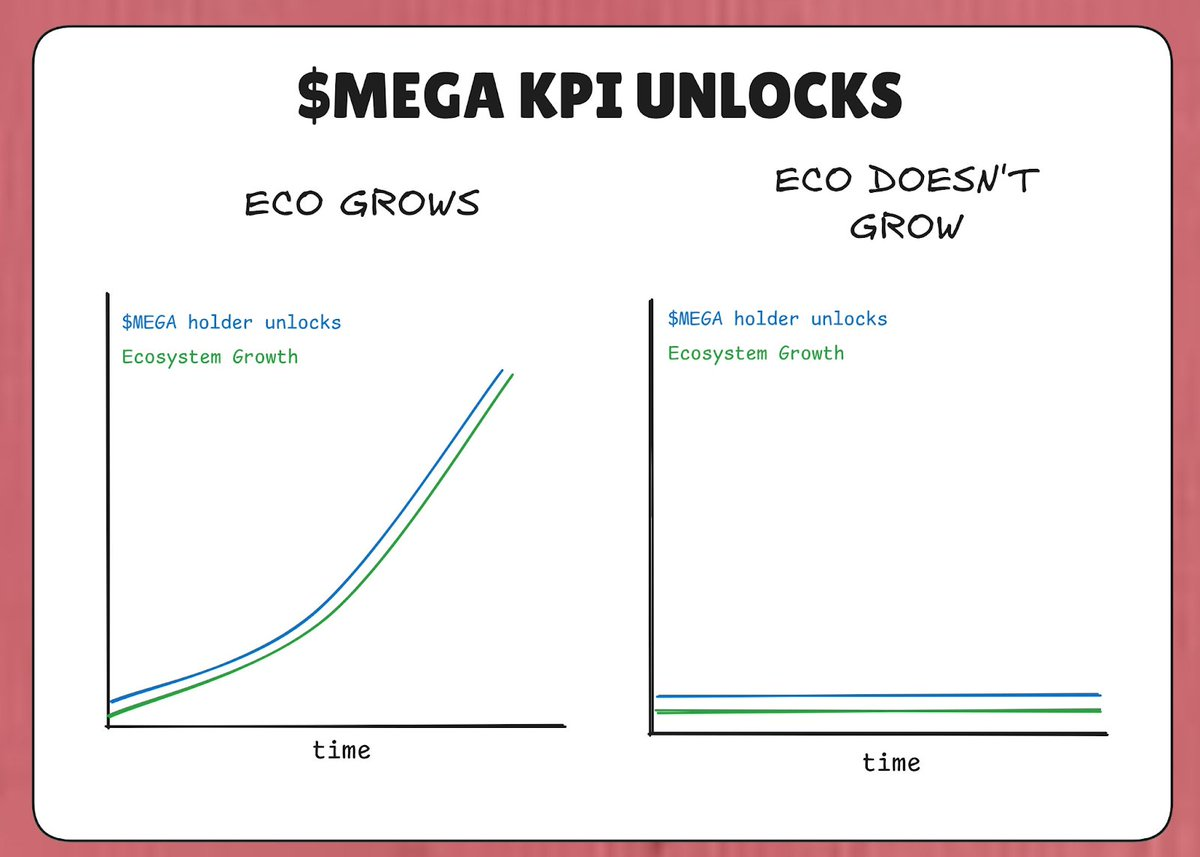
MegaETH has locked 53% of the total MEGA token supply in a "KPI Plan". The logic is: if MegaETH does not achieve its KPIs (Key Performance Indicators), these tokens will not unlock.

Therefore, in a pessimistic scenario where the ecosystem does not grow, at least no additional tokens flood the market to dilute holders. MEGA tokens only enter the market when the MegaETH ecosystem actually achieves growth (as defined by the KPIs).

The KPIs for this plan are divided into 4 scoreboards:

  1. Ecosystem Growth (TVL, USDM supply)
  2. MegaETH Decentralization (L2Beat stage progress)
  3. MegaETH Performance (IBRL)
  4. Ethereum Decentralization

Thus, in theory, as MegaETH achieves its KPI targets, the value of MegaETH should grow correspondingly, mitigating the negative price impact of MEGA dilution on the market.
This strategy is very similar to Tesla's "pay for performance" compensation philosophy for Elon Musk. In 2018, Tesla granted Musk an equity compensation package that vested in tranches, only payable if Tesla simultaneously achieved increasing market capitalization targets and revenue targets. Elon Musk only gets paid if Tesla's revenue grows AND its market capitalization grows.

MegaETH is trying to transplant the same logic into its tokenomics. "More supply" is not a given—it's something the protocol must earn by scoring real points on meaningful scoreboards.

Unlike Musk's Tesla benchmarks, I don't see anything in Namik's KPI targets about MEGA market cap as a KPI target—perhaps for legal reasons. But as a public MEGA investor, this KPI is very interesting to me. 👀

Who Gets the Unlock Matters

Another interesting factor of this KPI plan is: who gets the MEGA when KPIs are met. According to Namik's tweet, the recipients of the unlocked MEGA are those who stake MEGA into the locking contract.

Those who lock more MEGA for longer periods receive a larger share of the 53% MEGA tokens entering the market.
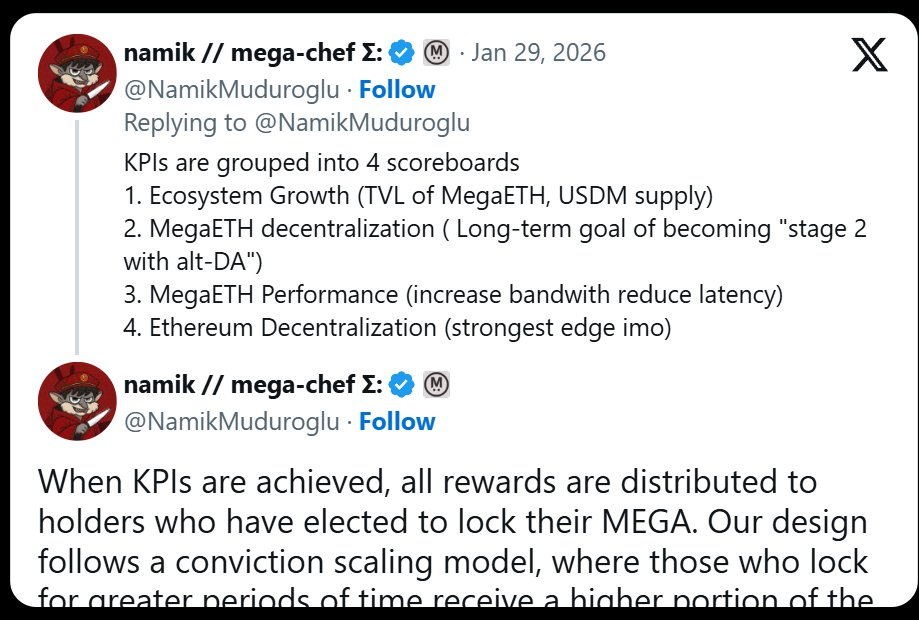
The logic behind this is simple: allocate MEGA dilution to those who have already proven themselves as MEGA holders and are interested in holding more MEGA—those least likely to become MEGA sellers.

Alignment and Trade-offs

It's worth emphasizing that this also introduces risks. We have seen historical cases where similar structures went seriously wrong. Look at this excerpt from Cobie's article: "(content)"
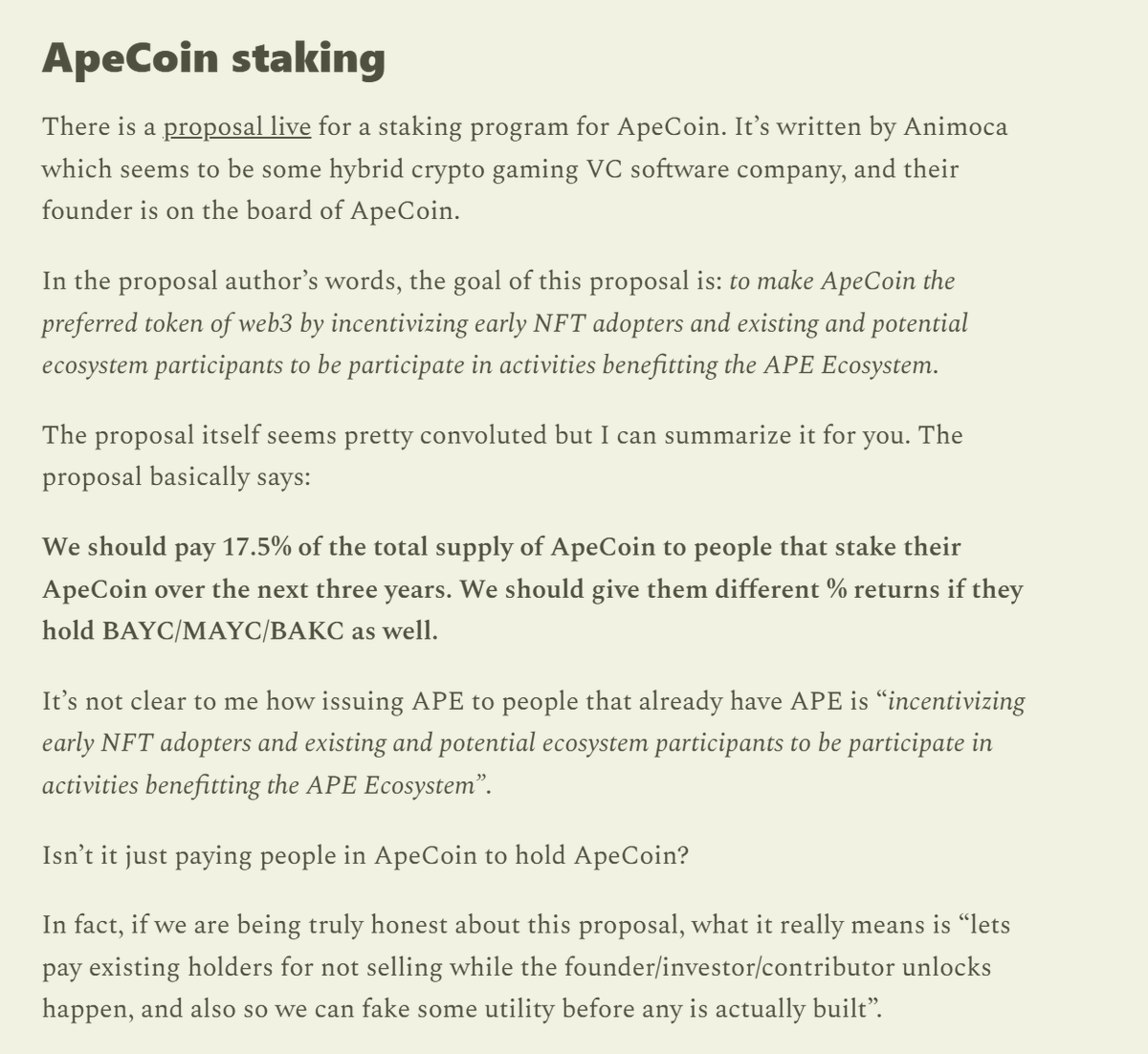
If you are a token pessimist, a crypto nihilist, or just bearish, this alignment problem is what you worry about.

Or, from the same article: "Staking mechanisms should be designed to support the goals of the ecosystem"
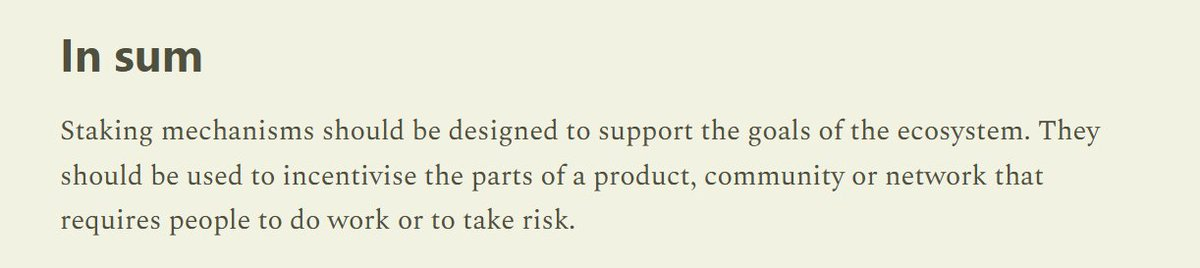
Locking token dilution behind KPIs that should actually reflect growth in the value of the MegaETH ecosystem is a much better mechanism than any vanilla staking mechanism we saw in the 2020-2022 liquidity mining era. In that era, tokens were being issued regardless of the team's fundamental progress or ecosystem growth.

Therefore, the net effect is that MEGA dilution is:

  • Conditionally constrained by corresponding MegaETH ecosystem growth
  • Diluted into the hands of those least likely to sell MEGA

This does not guarantee that MEGA value will rise as a result—the market will do what the market wants. But it is an effective and honest attempt to fix a core underlying problem that seems to plague the entire crypto token industrial complex.

Treating Tokens as Equity

Historically, teams have been "spraying and praying" their tokens across the ecosystem. Airdrops, mining rewards, grants, etc.—teams would not engage in these activities if they were distributing something truly valuable.

Because teams distributed tokens like worthless governance tokens, the market priced them as worthless governance tokens.

You can see the same philosophy in MegaETH's stance on CEX listings after Binance opened MEGA token futures on its platform (historically Binance's attempt to extort teams):
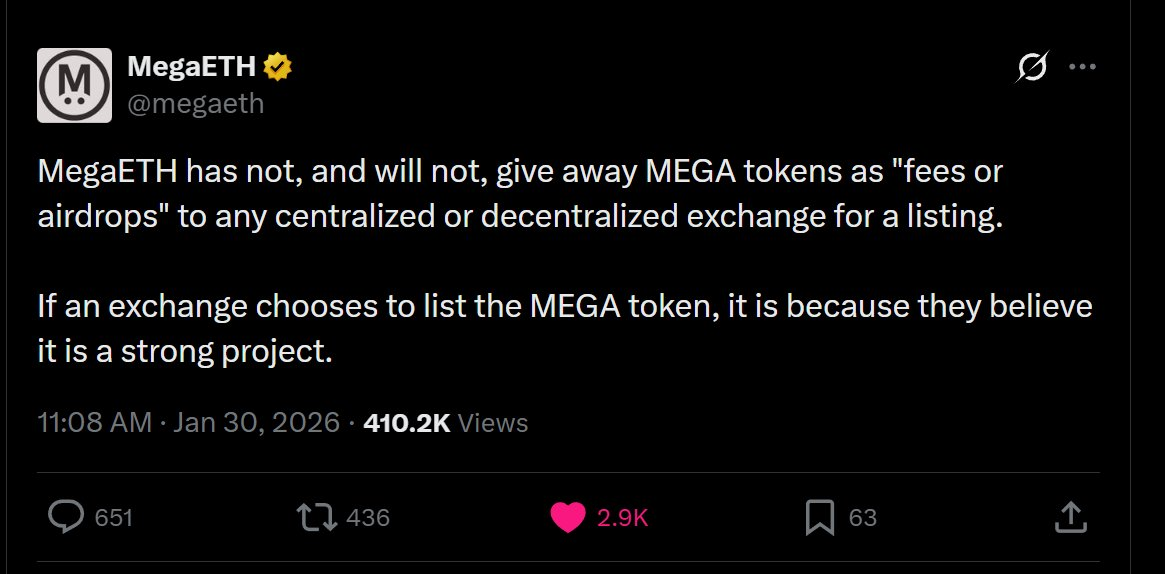
Hopefully, teams will start being more selective with their token distribution. If teams start treating their tokens as precious, perhaps the market will respond in kind.

Cap's Stablecoin Airdrop

The stablecoin protocol Cap introduced a "stablecoin airdrop" (stabledrop) instead of a traditional airdrop. Instead of airdropping the native governance token CAP, they distributed the native stablecoin cUSD to users who earned Cap points.

This approach rewards points farmers with real value, thus fulfilling the social contract. Users who deposited USDC into Cap's supply side accepted smart contract risk and opportunity cost, and the stablecoin airdrop compensated them accordingly.

For those who want CAP itself, Cap is conducting a token sale via a Uniswap CCA. Anyone seeking CAP tokens must become a real investor and commit real capital.

Filtering for Committed Holders

The combination of a stablecoin airdrop plus a token sale filters for committed holders. A traditional CAP airdrop would flow to speculative farmers likely to sell immediately. By requiring a capital investment through the token sale, Cap ensures CAP flows to participants willing to accept full downside risk for upside potential—a group more likely to hold long-term.

The theory is that this structure gives CAP a higher probability of success by creating a concentrated holder base aligned with the protocol's long-term vision, rather than a less precise airdrop mechanism that puts tokens into the hands of those focused solely on short-term profits.

Watch this video:

https://x.com/DeFiDave22/status/2013641379038081113

Token Design is Maturing

Protocols are getting smarter and more precise with their token distribution mechanisms. No more shotgun spray-and-pray token issuance—MegaETH and Cap are choosing to be highly selective about who gets their tokens.

"Optimizing for distribution" is no longer the thing—perhaps a toxic hangover from the Gensler era. Instead, these two teams are optimizing for concentration to provide a stronger foundational holder base.

I hope that as more apps launch in 2026, they can observe and learn from these strategies, and even improve upon them, so the "good coins problem" is no longer a problem, and we are left with only "good coins".


Criptos en tendencia

Preguntas relacionadas

QWhat is the 'good coins problem' mentioned in the article, and why does it exist?

AThe 'good coins problem' refers to the issue that most tokens are considered garbage because they haven't been treated with the same legal and strategic seriousness as equity by teams. Historically, teams did not respect tokens as much as equity in traditional companies, and the market reflected this through token prices.

QHow does MegaETH's KPI plan work to conditionally unlock its tokens?

AMegaETH locks 53% of its MEGA tokens in a 'KPI plan,' where tokens only unlock if specific Key Performance Indicators are met. These KPIs include ecosystem growth (TVL, USDM supply), MegaETH decentralization (L2Beat stage progress), MegaETH performance (IBRL), and Ethereum decentralization. This ensures tokens enter the market only when real growth occurs, reducing dilution for holders.

QWhat is Cap Protocol's 'stabledrop' and how does it differ from traditional airdrops?

ACap Protocol's 'stabledrop' distributes its native stablecoin cUSD to users who earned Cap points, instead of airdropping the governance token CAP. This rewards users with real value for their participation. Those who want CAP tokens must become real investors by purchasing them through a Uniswap CCA token sale, ensuring committed holders.

QWhy does the article suggest that token design is evolving towards more selective distribution mechanisms?

AToken design is evolving because teams like MegaETH and Cap are moving away from 'spray-and-pray' distribution methods (e.g., indiscriminate airdrops) to highly selective mechanisms. These strategies, such as KPI-based unlocks and stabledrops, aim to distribute tokens only to committed holders, aligning incentives and creating a stronger base for long-term success.

QHow does MegaETH's approach to token distribution resemble Elon Musk's Tesla compensation plan?

AMegaETH's KPI plan is similar to Elon Musk's Tesla compensation philosophy, where Musk's equity grants vested only when Tesla achieved increasing market cap and revenue targets. Similarly, MegaETH's tokens unlock only when the protocol meets specific growth and performance KPIs, tying token issuance to tangible ecosystem progress.

Lecturas Relacionadas

Goldman Sachs: Julio golpeó las operaciones apretadas, el rally de Wall Street no se rompió pero es más difícil

En julio, el mercado de acciones de EE.UU. no colapsó a nivel de índices, sino que experimentó una liquidación a nivel de posiciones. El S&P 500 se mantuvo estable, con un rango de fluctuación de solo el 3,5% durante el mes y a menos del 2% de su máximo. Sin embargo, las transacciones más concentradas y apalancadas, como las acciones tecnológicas de alto momentum, la cadena de IA y las estrategias largos/cortos en Asia, enfrentaron una fuerte desapalancación. Según Tony Pasquariello de Goldman Sachs, la desapalancación superó un simple ajuste de cartera, reflejando una reducción significativa de la exposición global a la tecnología y una caída en los ETF apalancados de Corea del Sur. La pregunta clave para la negociación de IA ya no es solo la narrativa, sino si los grandes gastos de capital generarán retornos claros y sostenibles, como sugirieron los resultados de Microsoft y Amazon. La comunicación de la Fed se ha vuelto menos transparente, y las fluctuaciones en los tipos de interés a largo plazo añaden presión, especialmente para las acciones de crecimiento sensibles a las tasas de descuento. En general, las perspectivas para las acciones de EE.UU. siguen siendo favorables debido al sólido crecimiento económico y de ganancias, pero la recompensa por riesgo ya no es barata y la elasticidad alcista global es más débil. El Nasdaq 100, aunque aún en tendencia alcista, muestra un camino más difícil, con caídas intermitentes y volatilidad. Julio recordó que el mercado no premia las operaciones congestionadas ni perdona el apalancamiento excesivo.

marsbitHace 1 hora(s)

Goldman Sachs: Julio golpeó las operaciones apretadas, el rally de Wall Street no se rompió pero es más difícil

marsbitHace 1 hora(s)

La esperada ley de criptomonedas, conocida como 'Ley de Claridad', alcanza un momento crítico: La Casa Blanca la revisará este fin de semana

El futuro de la Ley CLARITY, que busca regular el mercado de criptomonedas en EE.UU., podría depender de la respuesta de la administración Trump a una nueva propuesta bipartidista sobre cuestiones éticas. Según la periodista Eleanor Terret, la administración está revisando una contrapropuesta de los senadores Tom Tillis (republicano) y Ruben Gallego (demócrata), que permitiría a fiscales generales estatales demandar a funcionarios federales si el Departamento de Justicia no hace cumplir las normas éticas y de prevención de conflictos de interés. La propuesta busca abordar las preocupaciones demócratas de que el Departamento de Justicia, bajo control de Trump, no ofrezca garantías suficientes. El anterior proyecto, respaldado por la Casa Blanca, fue criticado por mantener las competencias de aplicación en ese departamento y por expirar en enero de 2029. Se espera que la Casa Blanca revise la propuesta este fin de semana. Si se alcanza un acuerdo sobre las disposiciones éticas, podría procederse a una votación en el Senado sobre la Ley CLARITY, aunque aún no se cuenta con los 60 votos necesarios. El proyecto de ley, aprobado en comité con 15 votos a favor y 9 en contra, define los límites de autoridad de la SEC y la CFTC sobre los criptoactivos y establece un marco integral para este sector. También incluye normas sobre los rendimientos de las stablecoins y ciertas protecciones legales para desarrolladores de software que no prestan servicios de custodia. Un compromiso alcanzado en la regulación de stablecoins limita los pagos similares a intereses basados únicamente en la tenencia de tokens, pero permite recompensas ligadas a transacciones, pagos, programas de fidelidad o uso de la plataforma, buscando equilibrar las preocupaciones de los bancos y las demandas de las empresas de criptomonedas. Sin un acuerdo sobre las disposiciones éticas, el avance de la Ley CLARITY podría estancarse nuevamente, prolongando la incertidumbre regulatoria.

cryptonews.ruHace 2 hora(s)

La esperada ley de criptomonedas, conocida como 'Ley de Claridad', alcanza un momento crítico: La Casa Blanca la revisará este fin de semana

cryptonews.ruHace 2 hora(s)

Entrevista con un ejecutivo de Robinhood: Meme + Tokenización de acciones de EE.UU. como estrategia de adquisición de clientes "en forma de pesa", todas las líneas de negocio generan ingresos por valor de cientos de millones

**Resumen: Robinhood Chain, el enfoque "Bimodal" para la captación de usuarios** Robinhood Chain, la L2 de Ethereum de Robinhood, lanzó su red principal hace tres semanas, logrando un volumen de intercambio semanal en DEX de $30 mil millones, más de 100 millones de transacciones y un TVL superior a $3 mil millones. Johann Kerbrat, Vicepresidente Sénior y Director General de Crypto e Internacional de Robinhood, explica la estrategia "bimodal": atraer a los usuarios con memecoins y al mismo tiempo ofrecer activos del mundo real tokenizados (RWA), como acciones estadounidenses disponibles en más de 120 países. El objetivo central es llevar gradualmente los 27 millones de cuentas de Robinhood a la cadena, simplificando la complejidad de DeFi con una interfaz de usuario familiar. Esto representa la fusión entre CeFi y DeFi. La cadena usa la tecnología de Arbitrum, priorizando velocidad, bajo coste en gas y la seguridad de Ethereum, en lugar de construir una L1 propia. Robinhood ve el futuro como una oportunidad para "agrandar el pastel" de las finanzas descentralizadas para todos, no solo competir por la cuota de mercado con plataformas como Base. Las colaboraciones con socios DeFi se basan en el cumplimiento normativo y la creación de experiencias únicas. El plan a largo plazo es convertir a Robinhood en una "súper app" financiera integral.

marsbitHace 3 hora(s)

Entrevista con un ejecutivo de Robinhood: Meme + Tokenización de acciones de EE.UU. como estrategia de adquisición de clientes "en forma de pesa", todas las líneas de negocio generan ingresos por valor de cientos de millones

marsbitHace 3 hora(s)

Trading

Spot

Artículos destacados

Cómo comprar AR

¡Bienvenido a HTX.com! Hemos hecho que comprar Arweave (AR) sea simple y conveniente. Sigue nuestra guía paso a paso para iniciar tu viaje de criptos.Paso 1: crea tu cuenta HTXUtiliza tu correo electrónico o número de teléfono para registrarte y obtener una cuenta gratuita en HTX. Experimenta un proceso de registro sin complicaciones y desbloquea todas las funciones.Obtener mi cuentaPaso 2: ve a Comprar cripto y elige tu método de pagoTarjeta de crédito/débito: usa tu Visa o Mastercard para comprar Arweave (AR) al instante.Saldo: utiliza fondos del saldo de tu cuenta HTX para tradear sin problemas.Terceros: hemos agregado métodos de pago populares como Google Pay y Apple Pay para mejorar la comodidad.P2P: tradear directamente con otros usuarios en HTX.Over-the-Counter (OTC): ofrecemos servicios personalizados y tipos de cambio competitivos para los traders.Paso 3: guarda tu Arweave (AR)Después de comprar tu Arweave (AR), guárdalo en tu cuenta HTX. Alternativamente, puedes enviarlo a otro lugar mediante transferencia blockchain o utilizarlo para tradear otras criptomonedas.Paso 4: tradear Arweave (AR)Tradear fácilmente con Arweave (AR) en HTX's mercado spot. Simplemente accede a tu cuenta, selecciona tu par de trading, ejecuta tus trades y monitorea en tiempo real. Ofrecemos una experiencia fácil de usar tanto para principiantes como para traders experimentados.

720 Vistas totalesPublicado en 2024.12.11Actualizado en 2026.06.02

Cómo comprar AR

Discusiones

Bienvenido a la comunidad de HTX. Aquí puedes mantenerte informado sobre los últimos desarrollos de la plataforma y acceder a análisis profesionales del mercado. A continuación se presentan las opiniones de los usuarios sobre el precio de AR (AR).

活动图片