On 15 September, the Ethereum merge occurred. Described by Glassnode as the “most impressive feat of engineering in the blockchain industry,” the merge marked the final transition of the Ethereum network from the consensus mechanism of Proof-of-Work (PoW) to Proof-of-Stake (PoS).
Although many harbored doubts concerning the success of the merge, Ether [ETH] holders believed that the successful completion of the merge event would instigate a rally in the price of the leading altcoin. However, to many investors’ dismay, the expected price rally has failed to arrive.
At press time, ETH exchanged hands at $1,326.34, having declined by 19% since the merge, data from CoinMarketCap revealed.
A 30-day review of the POS network
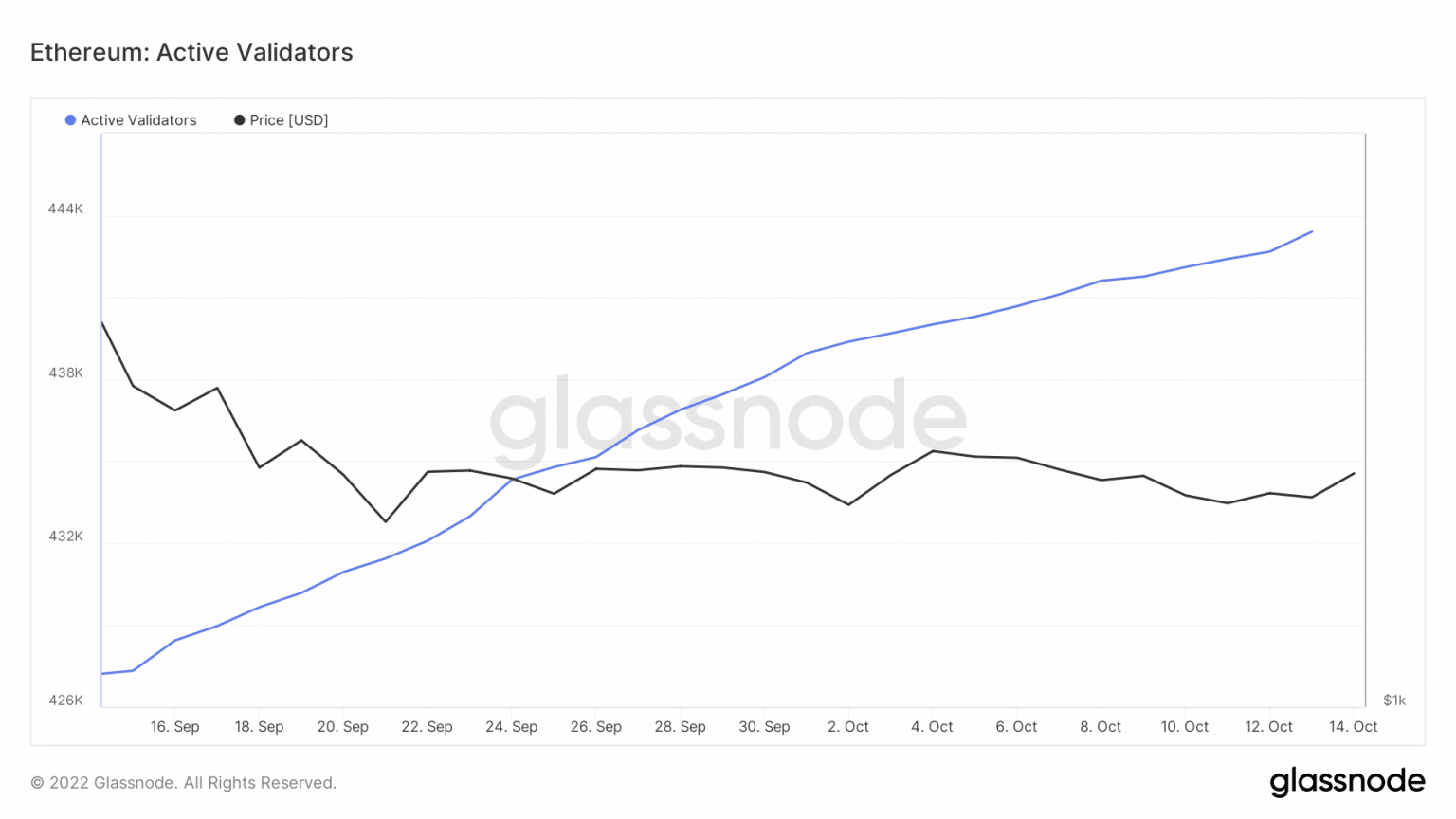
Following the completion of the merge, miners who previously ran the Ethereum network were replaced with validators. As a result, since the merge, the active validators count on the PoS network has rallied.
As per Glassnode, there were 443,403 active validators on the Ethereum POS network, having grown by 4% since 15 September.
Source: Glassnode
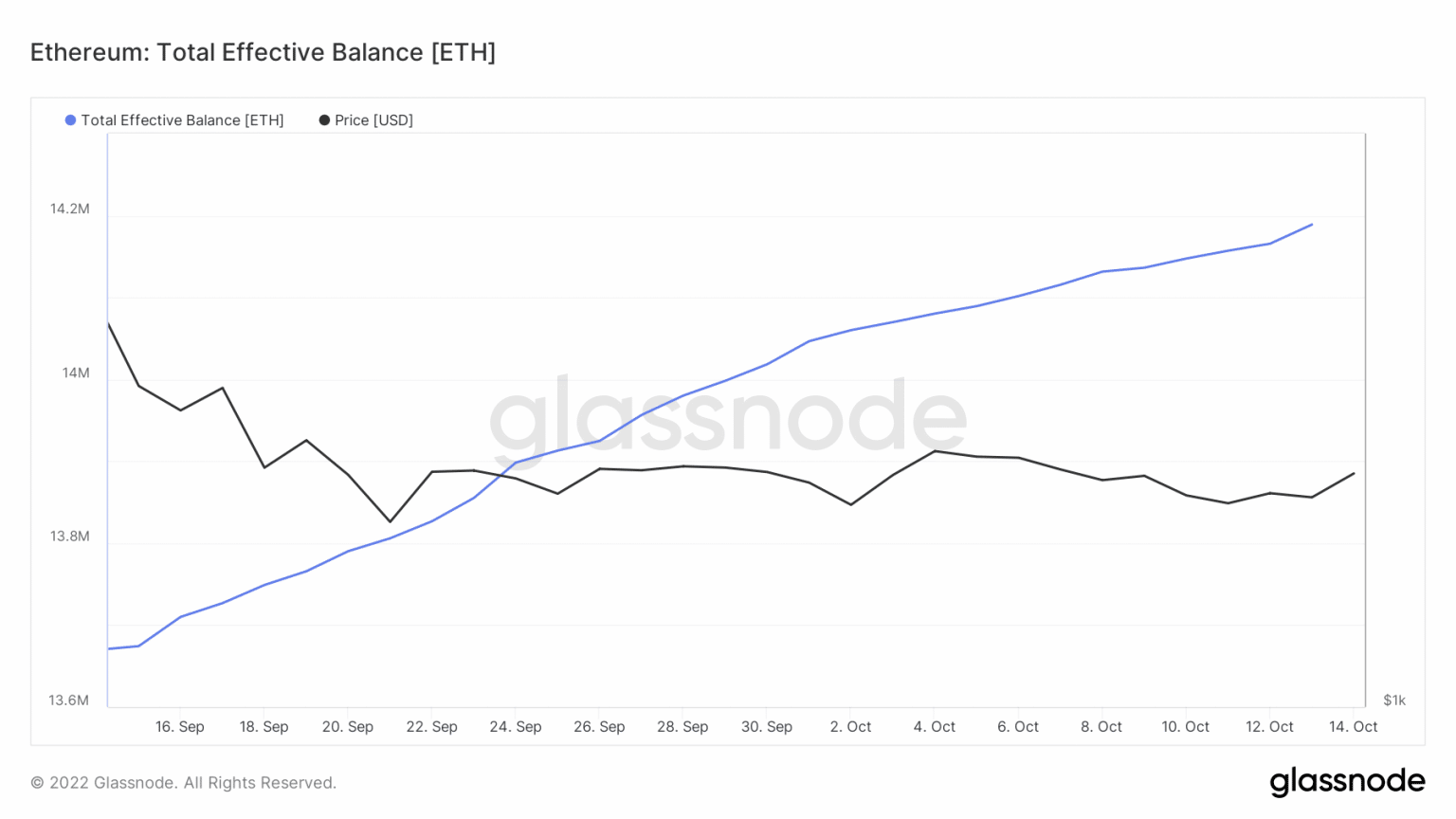
As reported by Glassnode, validators have staked over 14.23 million ETH in the PoS chain. This represents over 12% of the total ETH supply.
On the day of the merge, the total ETH staked was 13.74 million ETH. Since the merge, the total value of ETH staked has gone up by 3%.
To keep the POS chain running, a portion of the total ETH staked is actively participating in the consensus on the chain. This is referred to as Effective Balance.
As of this writing, the Effective Balance on the Ethereum POS chain was 14,188,772. Since the merge, this has increased by 4%. The Effective Balance is over 11% of ETH’s total supply.
Source: Glassnode
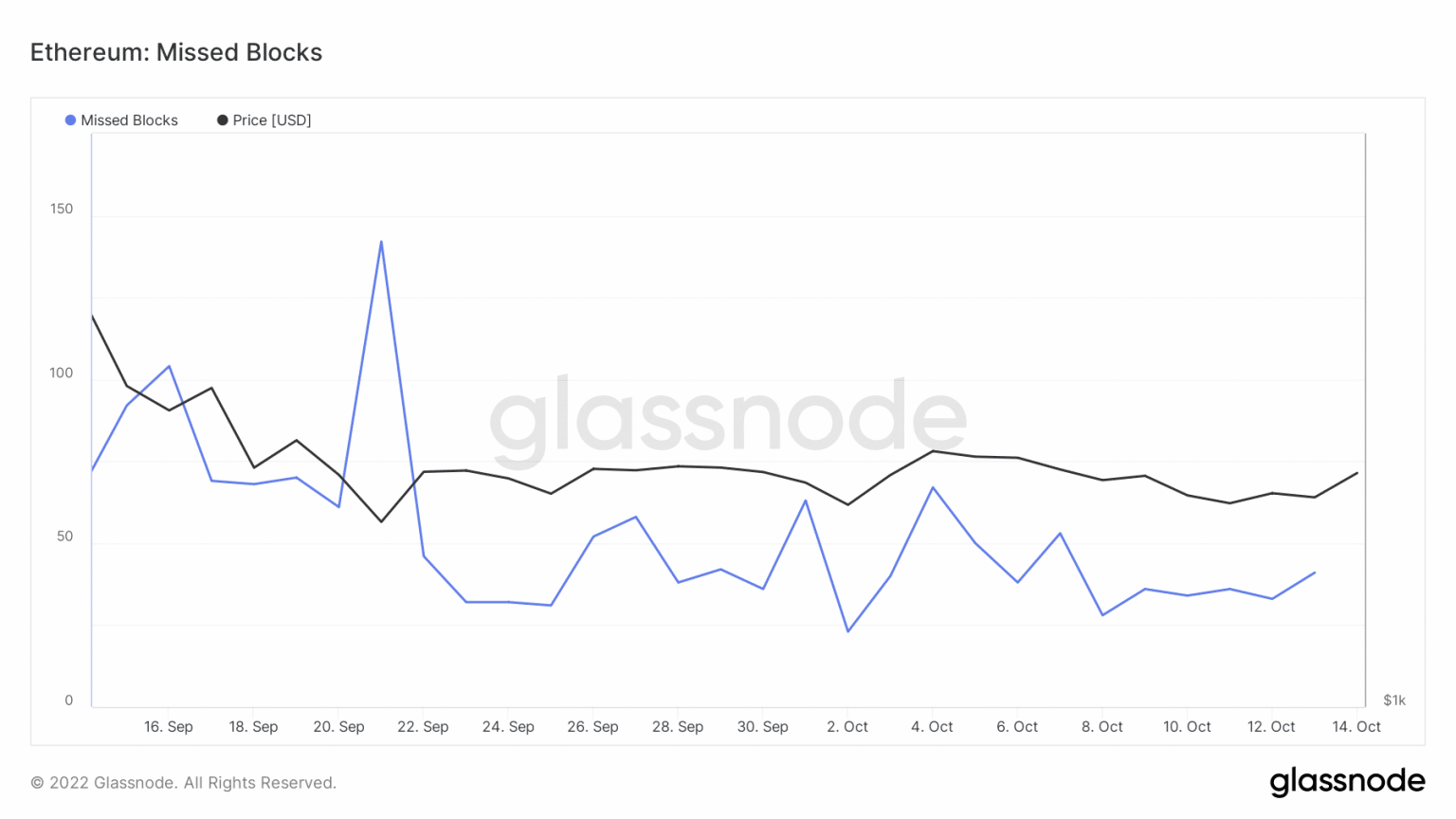
Furthermore, since the merge, there has been a decline in the daily count of missed blocks on the PoS network. The validators on Ethereum are automatically organized into sets of committees and block proposers for each 32-slot Epoch.
In every committee, a validator is responsible for producing blocks for each 12-second slot. In the rare occurrence that the block-producing validator is unavailable, a block is missed, and the count is logged on the chain.
According to Glassnode, since 15 September, the highest daily count of missed blocks was 141 blocks on 21 September. However, this has fallen sharply; as of 13 October, only 43 blocks were missed.
Source: Glassnode
The forked network
Following the merge, the Ethereum mainnet was forked, and the EthereumPoW chain emerged. According to data from OKLink, since its launch on 15 September, 1.72 billion transactions have been processed on the EthereumPoW network.
The amount totaled for all transactions completed on the forked network was 9.63 billion ETHW, at press time.