[Key interpretation] BTC was sold $656 million, and HT short position loss increased 40 times

HuobiPublicado a 2022-10-13Actualizado a 2022-10-14

Resumen

The BTC amplitude decreases to less than 2%. Pay attention to the possibility of the variable disc in the short term.

1. BTC amplitude reduction

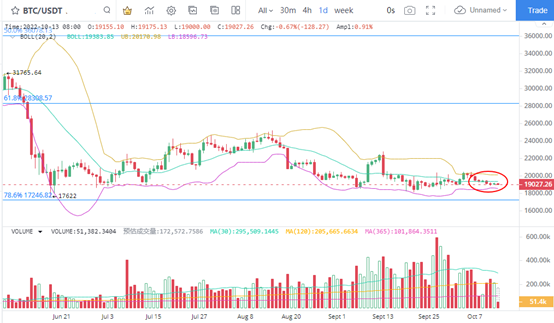
The daily K line chart of BTC shows that the price amplitude has dropped significantly, and the BTC volatility has dropped to 2.13% and 1.43% on October 11 and 12, further compressing the fluctuation space. In the same period, there was little room for the BTC daily trading volume to rebound, and the volume could be maintained at a low level. The market still needed capital to push for a clear direction signal.
2. Top 100 main positions of BTC

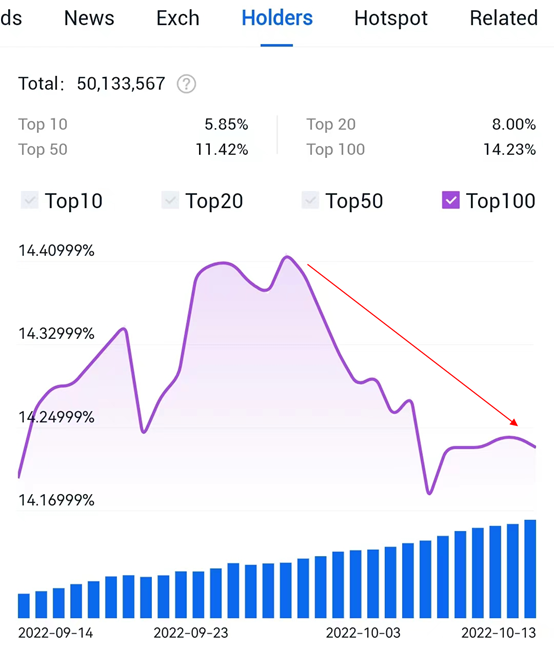
From the perspective of the main coin holding direction, there is an obvious sign that the main players in the top 100 coin holdings have reduced their positions recently. The number of coins held fell from 14.41% on September 29 to 14.23% on October 13, down 0.18 percentage points, equivalent to US $656 million. The main position reduction of BTC is in line with the pace of price decline. In particular, the BTC price trend is very weak in the near future, with limited rebound space, indicating that lower prices will appear in the short term. The main shipment further indicates the increase of selling pressure and concerns about transaction risk.
3. ETH Bollinger Line starts to expand

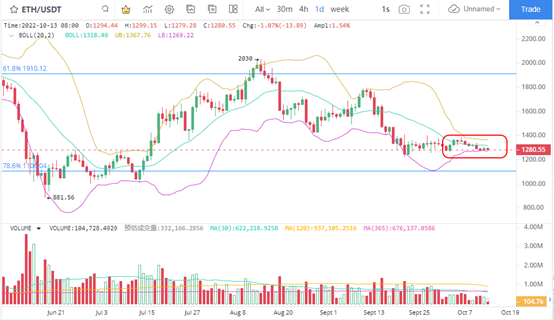
In terms of the Nikkei K Line, the ETH price was slightly withdrawn, and the price operated near the off track of the Bolin Line. As the ETH price retreated slightly, although the amplitude did not exceed 3%, the direction selection is being confirmed. The support for the offline of Bollinger Line is limited, which may open the space for the downward movement of prices in the short term.
4. ETH multi empty ratio is still lower than 1

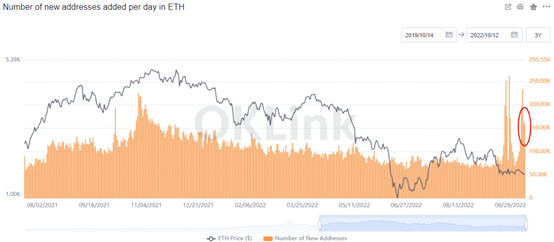
The number of active ETH addresses has changed significantly, and the number of coin holding addresses has rebounded significantly recently. The reason is that the number of receiving addresses of ETH increased more clearly, indicating that more investors started to buy ETH in the low price area. Of course, the overall number of active addresses of ETH is still in a low state, with limited support for the near future.
5. Significant growth of HT short positions

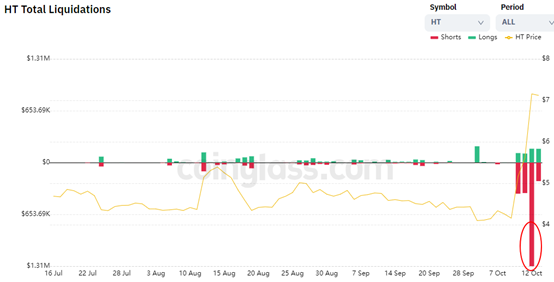
In terms of popular currencies, HT's recent band growth exceeded 70%, with short-term growth leading the market. The short position explosion data shows that the short position explosion of HT in the recent period is significantly higher than the previous average. On October 12, the short position of HT reached 1.31 million US dollars, which was more than 40 times of the previous average. On October 10 and October 11, short positions also reached 390000 dollars and 380000 dollars, respectively. The growth of data means that the market is at a key node.

For all parties, signs pay attention to the supporting effect of HT at $6.5, and pay attention to the low absorption opportunities after the breakthrough.

Lecturas Relacionadas

Análisis del Hook de Uniswap v4: Diseño de Arquitectura, Vulnerabilidades Comunes y Prácticas de Protección

Desde el lanzamiento de Uniswap v4 en la red principal, el mecanismo Hook se ha convertido en una de las innovaciones más destacadas en DeFi. Plataformas como Flaunch en Base utilizan Hooks para precios fijos en preventa y liquidaciones automáticas, mientras que protocolos como Bunni v2 los emplean para liquidez programable y modelos de re-staking. Sin embargo, el auge de estos casos de uso también ha traído un aumento significativo en ataques dirigidos a vulnerabilidades en la implementación de los Hooks. Este artículo analiza la arquitectura de seguridad de los Hooks de Uniswap v4. La principal innovación es un contrato único PoolManager que gestiona todos los pools y utiliza un sistema de "flash accounting" (contabilidad temporal), donde los cambios en los saldos se resuelven al final de cada transacción. Cada pool puede vincular de forma permanente un contrato Hook, que se ejecuta en puntos clave como `beforeSwap` o `afterAddLiquidity`. Un aspecto crítico es que los permisos del Hook (qué funciones ejecuta) están codificados en los últimos bits de su dirección de despliegue, lo que requiere un cálculo cuidadoso usando herramientas como HookMiner. Un error común es que funciones de callback como `beforeSwap` no tienen control de acceso por defecto en plantillas como BaseHook, dejándolas expuestas si el desarrollador no lo implementa explícitamente. El análisis de la pila de llamadas, como en un intercambio (`swap`), revela que los Hooks pueden modificar los montos de la operación devolviendo un `delta`. Un Hook "asíncrono" o de "curva personalizada" puede incluso anular completamente la lógica de intercambio de Uniswap, asumiendo todo el riesgo. Aunque el sistema garantiza que el libro mayor final esté equilibrado (`NonzeroDeltaCount == 0`), esto no previene la manipulación maliciosa de los estados subyacentes. El caso de Cork Protocol subraya estos riesgos, mostrando que auditar un Hook requiere tratarlo como un subprotocolo completo, dada su compleja interacción con el PoolManager y el potencial de confusiones entre tipos de tokens en diferentes mercados. En resumen, la seguridad en v4 se ha fragmentado: ya no depende solo del protocolo principal, sino de la correcta implementación de cada Hook individual en cada pool.

marsbitHace 57 min(s)

Análisis del Hook de Uniswap v4: Diseño de Arquitectura, Vulnerabilidades Comunes y Prácticas de Protección

marsbitHace 57 min(s)

Trading

Spot
Futuros
活动图片