Court Suspends Effect of Prediction Market Ban in Minnesota Before Its August 1st Start

cryptonews.ruPublicado a 2026-07-28Actualizado a 2026-07-28

Resumen

A Minnesota court has temporarily blocked the state's ban on prediction markets from taking effect on August 1. The ruling, secured by companies Kalshi and Polymarket, allows these fast-growing platforms to continue operating. The case has significant implications for the crypto sector, as these markets are deeply intertwined with digital assets. Polymarket settles trades using blockchain stablecoins, and crypto-related contracts form a substantial portion of trading on both platforms. The legal fight will test how far states can go in regulating markets that increasingly involve digital assets, while regulators debate whether prediction markets fall under derivatives or gambling laws. The prediction market sector has grown dramatically, with monthly trading volumes reaching tens of billions of dollars in 2026. Crypto is a major trading category, accounting for roughly 20% of Polymarket's volume. The Minnesota case could determine whether these platforms develop under federal derivatives oversight or a patchwork of state gambling laws, shaping their future integration with blockchain-based financial infrastructure. While Kalshi, a CFTC-regulated exchange, currently leads in trading volume, Polymarket is reportedly seeking broader U.S. regulatory approval. The preliminary court order is a temporary reprieve; the broader legal question remains unresolved. The outcome will influence not only prediction markets but also how institutional investors view blockchain-based finance...

Companies Kalshi and Polymarket have obtained a preliminary court injunction that prevents the enforcement of a prediction market ban in Minnesota, allowing the two fastest-growing trading services to continue operating amid record sector growth.

This ruling will have broader implications for cryptocurrencies. Polymarket settles margin transactions on-chain using stablecoins. Furthermore, cryptocurrency-related trades constitute a significant portion of the trading operations for both mentioned companies.

Thus, a statewide ban would affect not just two companies but also determine how far states can go in regulating markets that are increasingly intertwined with digital assets, while regulators are still trying to determine whether prediction markets fall under derivatives legislation or gambling laws.

Why the State Court Decision Affects Cryptocurrencies

Prediction markets allow people to trade via contracts linked to future events. The contract value reflects the probability of the prediction coming true, as noted in a Pew Research Center study.

Cryptocurrencies have become one of the largest trading categories in the industry. According to Pew estimates, digital asset-related contracts account for roughly 20% of Polymarket's trading volume and about 7% of Kalshi's, second only to sports and politics.

This clearly shows that the Minnesota lawsuit is important not only for these two companies. Polymarket's development of a high-performance centralized limit order book (CLOB v2) and the launch of a new USDC-backed token called pUSD demonstrate a trend of leading prediction markets evolving into more sophisticated infrastructure for crypto-oriented trading.

As these platforms become faster, more liquid, and better integrated with blockchain-based settlement systems, court rulings in Minnesota are gaining greater significance for the entire digital asset ecosystem. By blocking the enforcement of the Minnesota ruling, the court allows a significant portion of crypto trading in the state to continue.

A Sector That Has Outgrown Its Niche

The industry's rapid growth explains why this case has attracted more attention. Artemis data shows that prediction market trading volume fluctuated between $25 and $30 billion monthly in the first five months of 2026, then reached a historic record of $52.8 billion in June.

In July, trading volume from the month's start reached $50.9 billion, indicating high trading activity even after the FIFA World Cup, which was one of the year's largest trading events.

Unlike previous years, which focused on political events and trends, this year's development of prediction markets has been driven by sports events, macroeconomic expectations, central bank activity, and developments in cryptocurrency markets.

According to Galaxy Research data, the all-time cumulative volume of prediction markets has exceeded $150 billion. Analysts at Bernstein, cited by Galaxy, believe that with improved regulation, prediction market volume could reach $1 trillion by 2030.

However, whether this happens depends on a crucial question currently being examined in Minnesota and several other states: market access.

Kalshi Pulls Ahead While Polymarket Considers Bringing Production Back to the US

Competition has also shifted in favor of Kalshi. According to Token Terminal data, over the last five years, the regulated exchange has captured 61.1% of the cumulative notional volume, reaching $159.5 billion against Polymarket's $101.7 billion. In the last 30 days, Kalshi generated $39.5 billion in notional volume compared to Polymarket's $8.7 billion, highlighting the recent surge in the exchange's popularity.

The key difference lies in regulation. Kalshi is a regulated contract market overseen by the Commodity Futures Trading Commission (CFTC), whereas Polymarket's international platform is not under CFTC supervision.

According to Galaxy estimates, Polymarket's U.S. operations generated about $1.3 billion in April, while the international platform generated about $9 billion. Additionally, Polymarket is reportedly seeking broader regulatory approval in the U.S. for its flagship platform.

Thus, the dispute that began in Minnesota has implications beyond the state. If judges persist in favoring federal regulation of prediction exchanges over state-level gambling regulation, prediction markets could become a key area where cryptocurrencies gain widespread acceptance by leveraging existing market regulation rules rather than bespoke crypto laws. However, if states ultimately prevail, the market may face numerous hurdles operating under conflicting rules.

What Traders Should Watch Next

The court's decision is preliminary, and the broader question of whether states are allowed to restrict federally regulated prediction markets remains open. Traders will be interested to see what Minnesota's next move will be, whether other states adopt similar restrictions, and how Polymarket manages to expand its regulatory footprint in the U.S.

The outcome of the case could impact more than just prediction markets. As stablecoins and digital asset contracts become increasingly integrated into these platforms, this case could affect how institutional investors view blockchain-based financial infrastructure. The dispute in Minnesota may ultimately help define what will define the next phase of development for this rapidly expanding market: federal derivatives oversight or state gambling laws.


Criptos en tendencia

Preguntas relacionadas

QWhat was the immediate impact of the Minnesota court's ruling regarding the ban on prediction markets?

AThe court issued a temporary injunction that prevents the state of Minnesota from enforcing its ban on prediction markets, allowing the companies Kalshi and Polymarket to continue operating in the state beyond the intended enforcement date of August 1st.

QWhy does the legal case in Minnesota have significant implications for the cryptocurrency sector?

AThe case is significant because Polymarket uses blockchain and stablecoins for margin settlements, and cryptocurrency-related contracts make up a substantial portion of trading volume on these platforms. The ruling will influence how far states can go in regulating markets that are increasingly intertwined with digital assets and whether these markets are treated as financial derivatives or gambling under the law.

QAccording to the article, what was the estimated trading volume for prediction markets in June 2026?

AAccording to data from Artemis cited in the article, trading volume on prediction markets reached a historical high of $52.8 billion in June 2026.

QWhat is a key regulatory difference between the companies Kalshi and Polymarket mentioned in the article?

AA key regulatory difference is that Kalshi is a regulated marketplace, supervised by the U.S. Commodity Futures Trading Commission (CFTC), whereas Polymarket's international platform currently operates without CFTC oversight.

QWhat are the two potential regulatory outcomes highlighted by the article for the future of prediction markets?

AThe article highlights two potential regulatory paths: federal oversight under derivatives regulations, which could provide a clear framework and wider legitimacy, or state-level regulation under gambling laws, which could create a fragmented market with conflicting rules and obstacles.

Lecturas Relacionadas

Bitcoin en agosto: los expertos esperan una prueba del rango, no una rápida reversión

**Bitcóin en agosto: expertos esperan prueba del rango, no una rápida reversión** Los analistas prevén que Bitcoin permanezca bajo presión en agosto. Tras la recuperación de julio, el mercado no parece listo para un crecimiento sostenido, y persiste el riesgo de caer por debajo de $60,000. A finales de julio, la principal criptomoneda cotizaba alrededor de $63,500. Los expertos señalan una combinación macroeconómica difícil: altas tasas de interés en EE. UU., inflación persistente y un dólar fuerte, lo que limita el apetito por activos de riesgo como las criptomonedas. Además, se registró una fuerte salida neta de fondos ETF de Bitcoin en el primer semestre. Agosto históricamente es un mes débil para el sector. Los analistas anticipan que será más un período de prueba de niveles clave que de un repunte decisivo. Rufat Abyasov plantea tres escenarios para el mes: movimiento lateral entre $58,000-$68,000 (50% de probabilidad), caída a $50,000-$55,000 (30%), o subida a $71,000-$75,000 (20%). La zona crítica de soporte se sitúa en $60,000-$61,000. Aunque algunos, como Víctor Pershikov, ven posible un repunte a $70,000, se coincide en que el ciclo correctivo probablemente no terminará antes del último trimestre del año. Los inversores deben monitorear las tasas, la inflación, los flujos de los ETF y el interés general por el riesgo. Se recomienda acumulación gradual a largo vista, pero con cautela ante posibles caídas a corto plazo.

cryptonews.ruHace 1 hora(s)

Bitcoin en agosto: los expertos esperan una prueba del rango, no una rápida reversión

cryptonews.ruHace 1 hora(s)

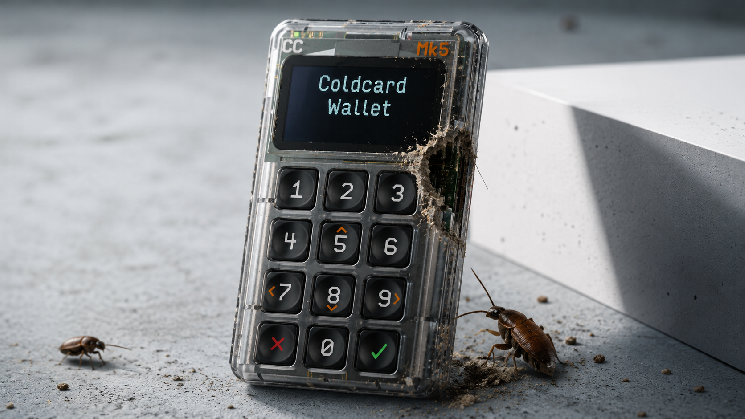
Billetera de hardware Coldcard hackeada: piratas informáticos retiraron 594 bitcoins en 25 minutos

Las carteras hardware han sido consideradas la forma más segura de almacenar criptomonedas, pero un reciente incidente con los dispositivos Coldcard de Coinkite cuestiona esta idea. El 30 de julio de 2026, atacantes drenaron 594.5 bitcoins (unos $40 millones) de quinientas direcciones en solo veinticinco minutos. La causa fue un error en el código introducido en marzo de 2021 y no detectado durante cinco años. Un error tipográfico en una macro desactivó la función del chip seguro que generaba números aleatorios verdaderos para crear la frase semilla (seed phrase). En su lugar, las claves se generaban usando datos predecibles, como el número de serie del procesor y la hora del sistema, reduciendo drásticamente la entropía y haciéndolas vulnerables a ataques por fuerza bruta offline. Los atacantes no necesitaron acceso físico. Simplemente generaron millones de frases semilla posibles basándose en los parámetros del generador comprometido, las contrastaron con el registro público de la cadena de bloques y firmaron transacciones para robar los fondos. Inicialmente, Coinkite declaró que los modelos nuevos no estaban en riesgo, pero luego reconoció que todos los dispositivos con firmware afectado eran vulnerables. El CEO, Rodolphe Novak (NVK), se disculpó, asumiendo la responsabilidad, pero descartó compensaciones financieras para los usuarios afectados. Los propietarios de dispositivos vulnerables deben actualizar el firmware a una versión segura, generar una NUEVA frase semilla en el dispositivo actualizado y transferir TODOS sus fondos a direcciones derivadas de esta nueva semilla. El uso de una frase de contraseña BIP-39 ayuda, pero no sustituye este proceso. Otros productos de Coinkite (TAPSIGNER, OPENDIME, SATSCARD) no se vieron afectados. El incidente subraya que incluso el hardware especializado requiere auditorías de código independientes y continuas, especialmente en funciones criptográficas críticas.

cryptonews.ruHace 1 hora(s)

Billetera de hardware Coldcard hackeada: piratas informáticos retiraron 594 bitcoins en 25 minutos

cryptonews.ruHace 1 hora(s)

Trading

Spot

Artículos destacados

Cómo comprar BAN

¡Bienvenido a HTX.com! Hemos hecho que comprar Comedian (BAN) sea simple y conveniente. Sigue nuestra guía paso a paso para iniciar tu viaje de criptos.Paso 1: crea tu cuenta HTXUtiliza tu correo electrónico o número de teléfono para registrarte y obtener una cuenta gratuita en HTX. Experimenta un proceso de registro sin complicaciones y desbloquea todas las funciones.Obtener mi cuentaPaso 2: ve a Comprar cripto y elige tu método de pagoTarjeta de crédito/débito: usa tu Visa o Mastercard para comprar Comedian (BAN) al instante.Saldo: utiliza fondos del saldo de tu cuenta HTX para tradear sin problemas.Terceros: hemos agregado métodos de pago populares como Google Pay y Apple Pay para mejorar la comodidad.P2P: tradear directamente con otros usuarios en HTX.Over-the-Counter (OTC): ofrecemos servicios personalizados y tipos de cambio competitivos para los traders.Paso 3: guarda tu Comedian (BAN)Después de comprar tu Comedian (BAN), guárdalo en tu cuenta HTX. Alternativamente, puedes enviarlo a otro lugar mediante transferencia blockchain o utilizarlo para tradear otras criptomonedas.Paso 4: tradear Comedian (BAN)Tradear fácilmente con Comedian (BAN) en HTX's mercado spot. Simplemente accede a tu cuenta, selecciona tu par de trading, ejecuta tus trades y monitorea en tiempo real. Ofrecemos una experiencia fácil de usar tanto para principiantes como para traders experimentados.

927 Vistas totalesPublicado en 2024.12.11Actualizado en 2026.06.02

Cómo comprar BAN

Discusiones

Bienvenido a la comunidad de HTX. Aquí puedes mantenerte informado sobre los últimos desarrollos de la plataforma y acceder a análisis profesionales del mercado. A continuación se presentan las opiniones de los usuarios sobre el precio de BAN (BAN).

活动图片