Google Shaken, Market Cap Evaporates Hundreds of Billions. Can Gemini Spark Save the Day?

marsbitPublicado a 2026-07-01Actualizado a 2026-07-01

Resumen

Google is facing a turbulent period marked by a significant brain drain of top AI talent. Key figures like Noam Shazeer, John Jumper, Jonas Adler, and Alexander Pritzel have recently left for competitors OpenAI and Anthropic, causing investor concern and a sharp stock decline wiping hundreds of billions from Alphabet's market cap. Amidst this talent exodus and the delayed launch of the anticipated Gemini 3.5 Pro model, Google has unveiled its major new offering: Gemini Spark. This is not a standard chatbot but a persistent, cloud-based AI agent designed to automate multi-step workflows across Google's ecosystem (Gmail, Calendar, Docs, Drive, etc.) and some third-party apps. Powered by the Antigravity framework with Tasks, Skills, and Schedules, it aims to function as a continuous digital assistant. However, its high price point—exclusive to the $100/month AI Ultra tier—has drawn criticism. The article positions Spark as Google's critical, albeit late, move into the AI agent arena, where AI transitions from a tool to an autonomous workforce. While competitors and startups are already advancing in this space, Google's vast integration with Workspace gives it a potential edge, though its historical caution due to scale and risk may have cost it the lead. Ultimately, Spark represents a necessary shift for Google, but the question remains whether this "digital employee" can compensate for the loss of foundational talent and restore investor confidence in the company's future.

Recently, morale is low at Google, with the company seemingly on shaky ground.

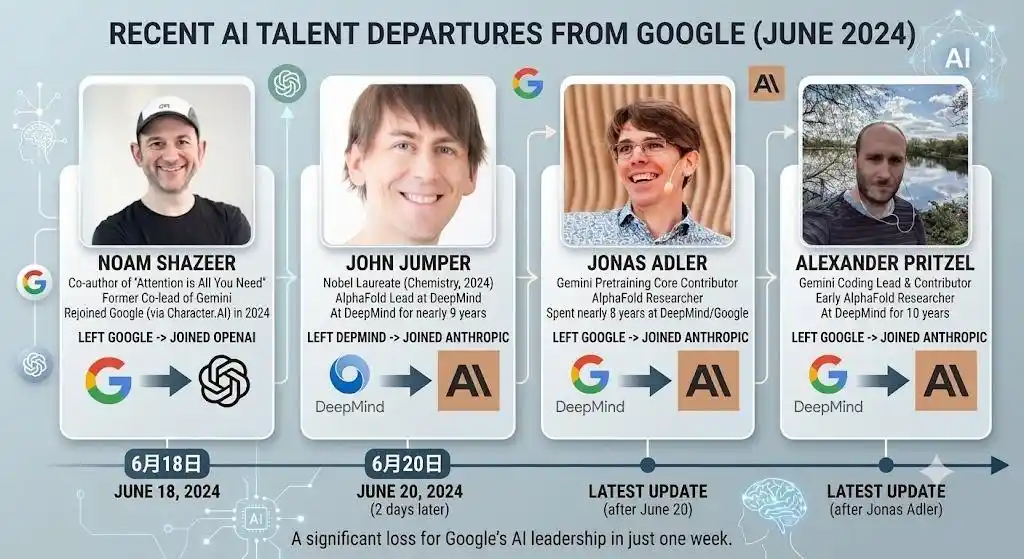
On June 18th, Noam Shazeer, one of the original eight authors of the 'Attention Is All You Need' paper, announced his departure from Google for OpenAI. In 2024, Google spent approximately $2.7 billion to bring him back, placing him in the role of co-lead for Gemini. In less than two years, he's gone again.

Two days later, John Jumper also left, heading to Anthropic. He is a 2024 Nobel Laureate in Chemistry, the lead developer of AlphaFold, and had been at DeepMind for nearly nine years.

Then came Jonas Adler and Alexander Pritzel, core contributors to Gemini's pre-training and programming directions, who also worked on AlphaFold. The latest news: these two are also preparing to join Anthropic.
If these were just ordinary resignations, Google could certainly withstand them.

The problem is, these four individuals each represent crucial nerve centers in the field of large models: architecture, science, programming, and pre-training.

The capital market's reaction was swift and direct, voting with its feet. On June 22nd, Alphabet's stock price fell 5% to 6% over two days, wiping hundreds of billions of dollars from its market capitalization.
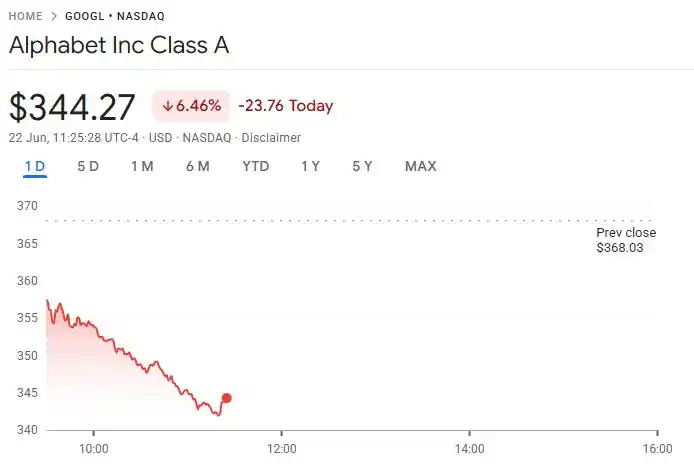
What investors fear isn't a specific product; it's something more fundamental: can Google still retain the people who built its most important creations?

Making things more awkward, during the very same month this brain drain occurred, Google served up its long-brewed new card: Gemini Spark.
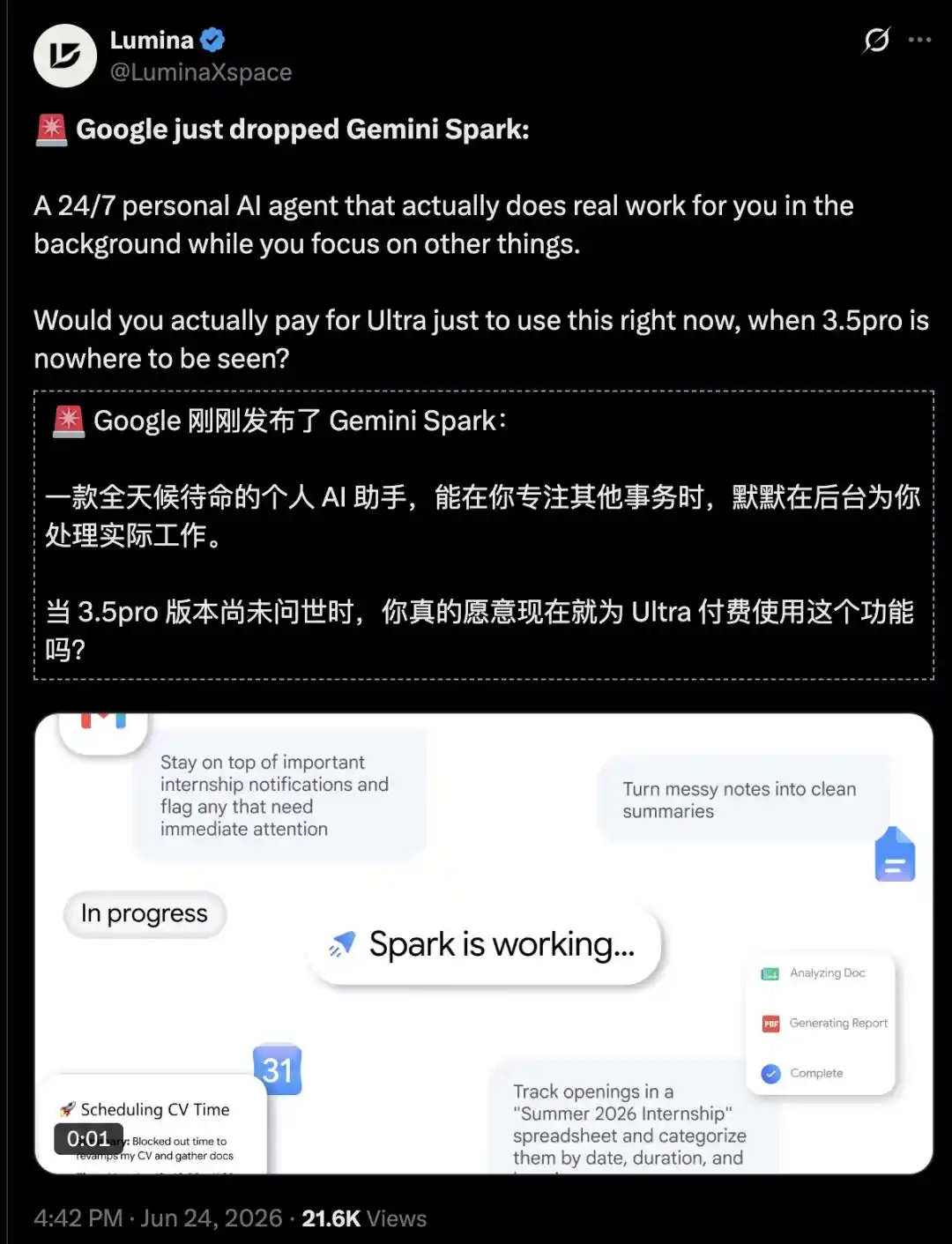
On one side, a brain drain; on the other, a massive push for breakthroughs.

The most authentic portrait of Google in 2026 is hidden within this schism.

Gemini 3.5 Pro Possibly Delayed. Is Google's Breakthrough Tied to Spark?

The talent exodus isn't the only issue; Google's product cadence looks even worse.

At I/O 2026, everyone was waiting for Gemini 3.5 Pro.

Google's CEO stood on stage and said, "Give us another month," reportedly eliciting a collective sigh from the audience.
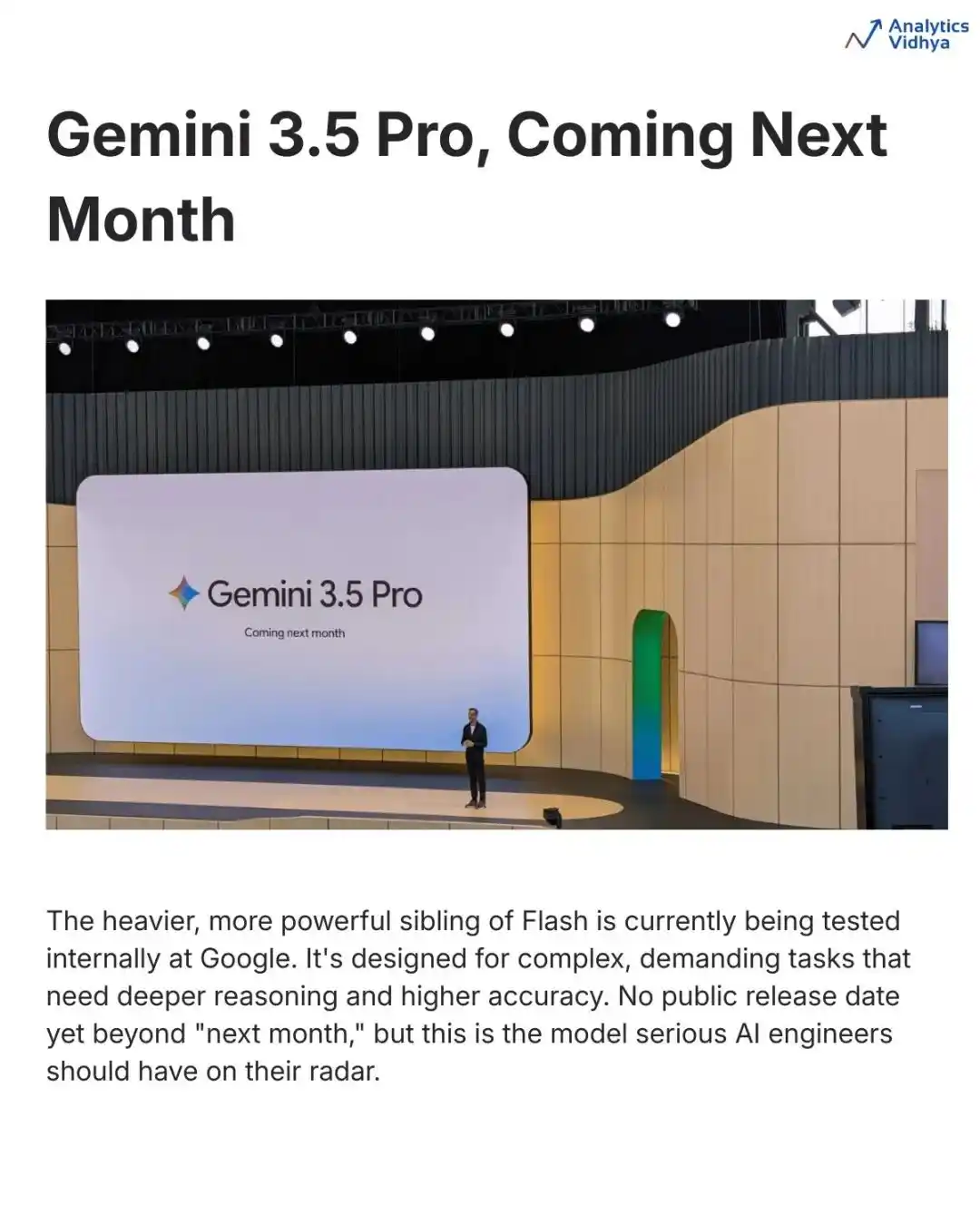
A month passed, and the latest news: Gemini 3.5 Pro has been pushed back from June to July.
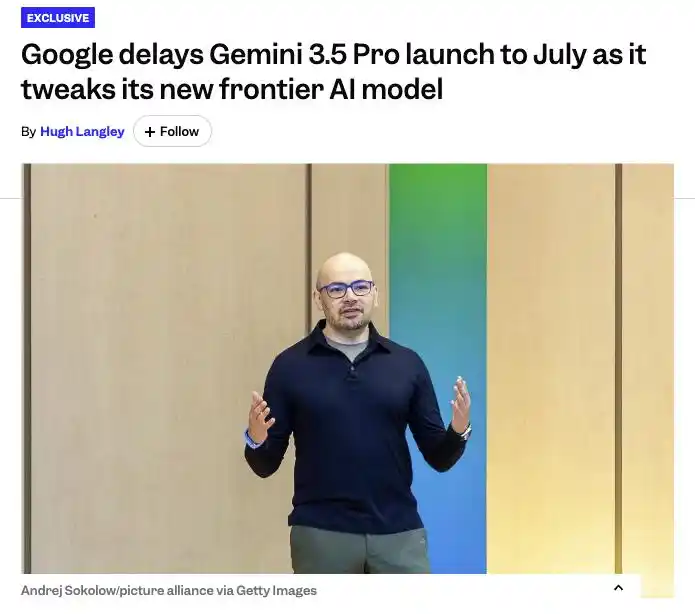
Two million token context, Deep Think reasoning—on paper, it's powerful. It just can't seem to reach your hands.

It was into this twilight that Google played its heaviest card of the year: Gemini Spark.
First, let's clarify how it differs from the Gemini app on your phone.
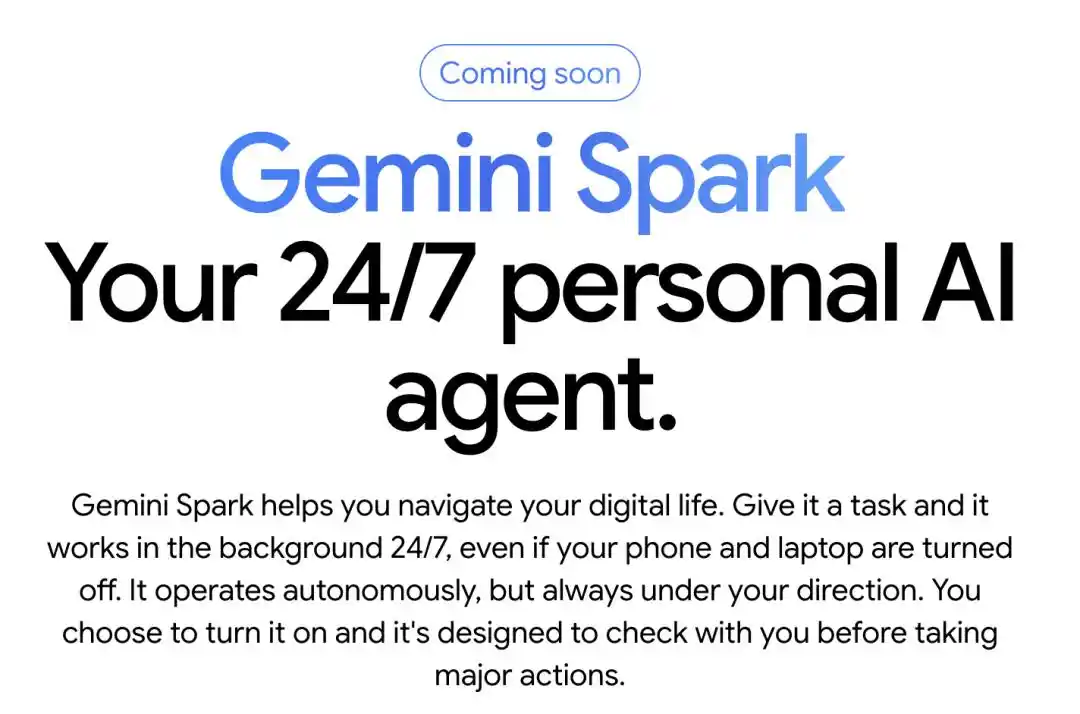
A regular chatbot: you ask, it answers. You close the app, it ceases to exist.

Spark is not like that. It runs on dedicated virtual machines in Google Cloud. You close your laptop, lock your phone, fall asleep—it remains awake in the cloud, continuing to work for you.

You don't need to keep your computer on for it to operate.

It connects most deeply to the Google tools you use every day: Gmail, Calendar, Docs, Sheets, Slides, Drive, plus Maps and YouTube.
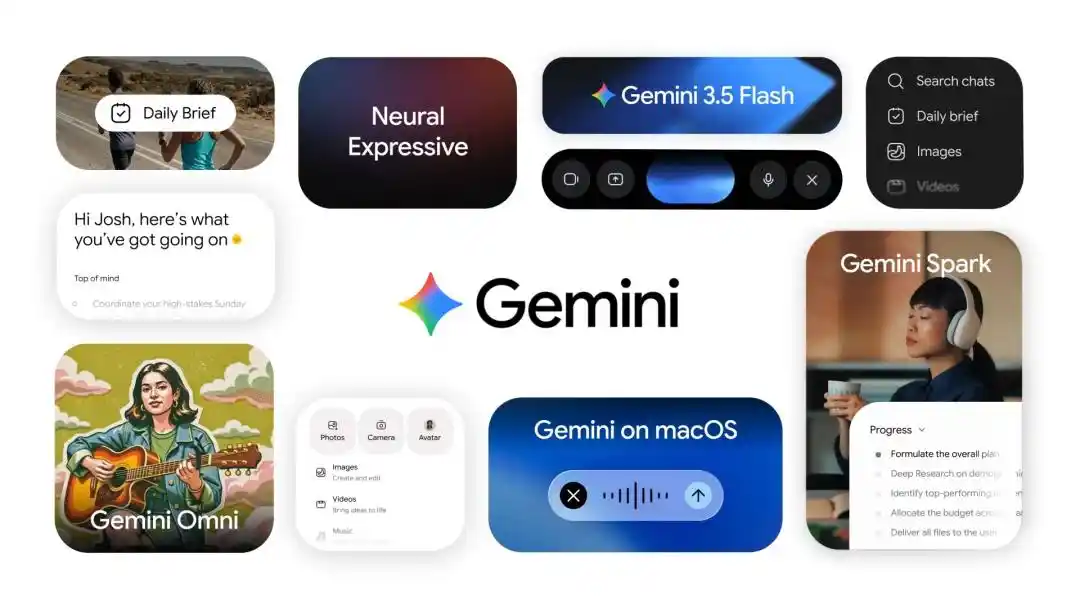
Words aren't enough; let's see what it can actually do.

You're a photographer. An inquiry email comes in. Spark automatically extracts the client's name and requested date, logs it into your "Client Tracker" spreadsheet, and creates a new Drive folder named after that client.

You have kids. Have it monitor your inbox for notifications from the school, extract key deadlines, and send you and your partner a daily summary.

Do you see the pattern?

These aren't one-off "help me write an email" prompts. You give it a goal, and it breaks it down into several steps, running across multiple apps to complete it.

Google equipped it with a framework called Antigravity, divided into Tasks, Skills, and Schedules. It can run on a schedule or wait for a specific trigger condition.

Tasks: You can set AI agents to work, connecting them to your Google Workspace ecosystem, including Gmail, Calendar, Docs, Sheets, and Slides.

Skills: By building skills, you can precisely define how Spark handles your frequently recurring tasks, customizing your experience and freeing you from repetitive prompting.

Schedules: By setting time-based or condition-based trigger rules, you can execute tasks exactly when you need them, automating your workload on your own terms.

It can also reach outward.

Through the MCP protocol, it connects to Canva, OpenTable, Instacart. Theoretically, you could have it book a restaurant or order groceries. For high-risk actions involving spending money or sending emails, it will pause and ask for your confirmation first.

Imagine an unpaid intern who doesn't drink coffee and is permanently online in the cloud. That's roughly the illusion Spark aims to create.

The cost? It's currently only available to Google AI Ultra users, the $100 per month tier.

Pro users get access to something else called Daily Brief, a morning briefing, not the Spark core.

Netizens are calling the pricing a joke.
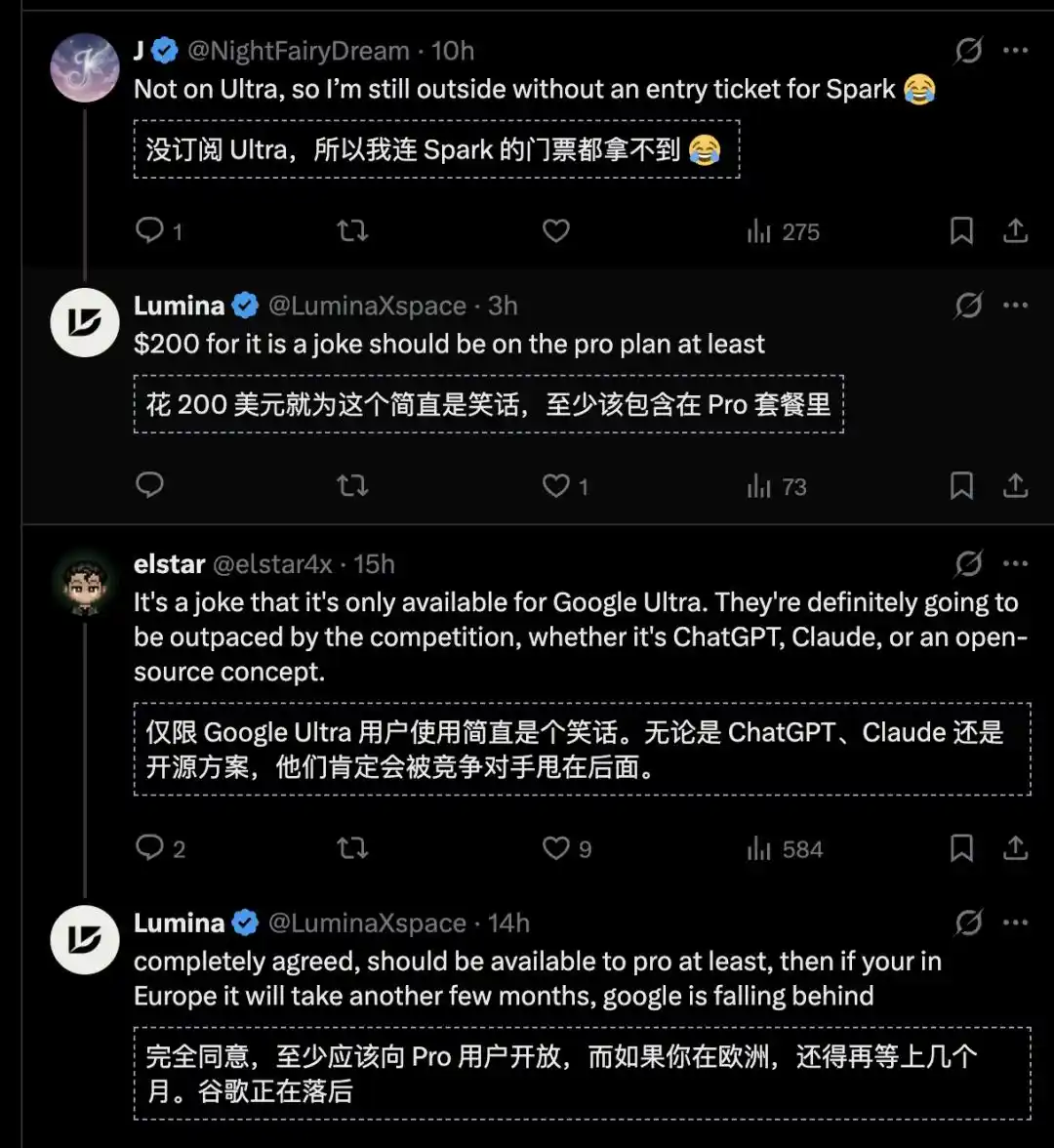
An invisible gate keeps the "digital employee" confined to the most expensive tier.

Google Started Early but Arrived Late to the Party

Placing Spark back into the broader Agent landscape makes its significance even more complex.

OpenAI has its own Agent product roadmap.

Anthropic, from Computer Use to Claude Code, is also delving deeper into "having AI do things for you."

Then there's a plethora of vertical Agent startups cutting into niches like legal, sales, recruitment, customer service, data analysis, and programming.
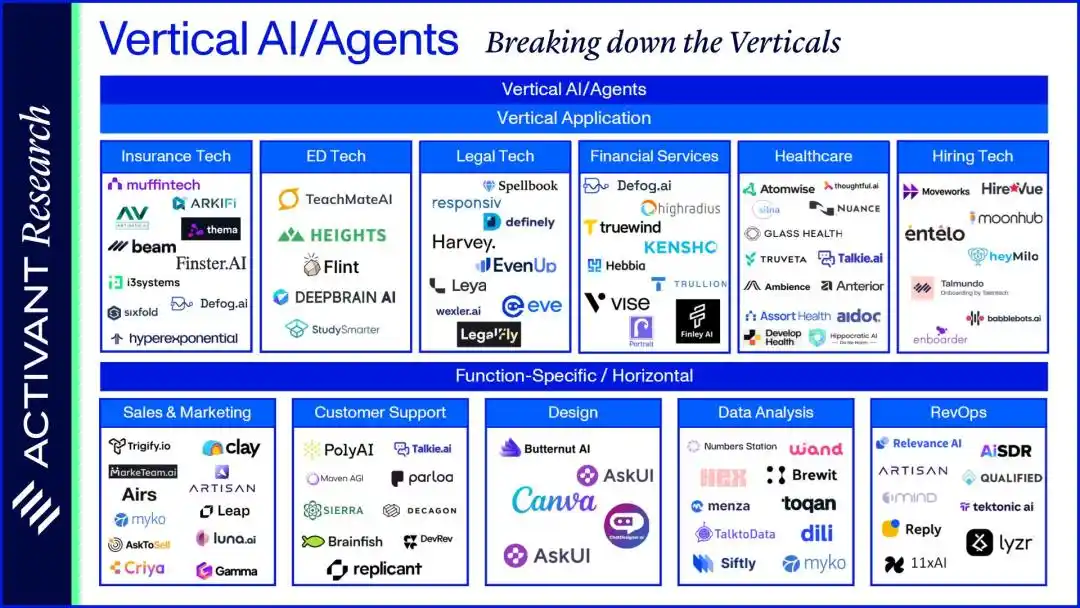
The industry has reached a high degree of consensus: AI is transitioning from being a tool to becoming labor.

Past AI was a co-pilot. You drive, it reminds you. Present AI is the driver. You state the destination, it plans the route.

And here lies Google's most awkward position: it should have won this race.

No company is better suited than Google to build a productivity Agent.

Gmail, Calendar, Docs, Sheets, Drive—these aren't isolated apps; they are the capillaries of modern work life.

A true digital employee, if it could natively access these systems, would possess a terrifying efficiency advantage.

The problem is, Google held the best cards but didn't play them first.

The reason isn't hard to understand. The bigger Google is, the more it fears mishaps.

What if the AI misreads an email? Deletes a file by mistake? Sends out content it shouldn't? Accesses user privacy, triggering a PR disaster?

These are risks for startups, but minefields for Google.

Thus, it was cautious, hesitant, scrutinizing, waiting.

And while Google hesitated, open-source projects like OpenClaw have been redefining "browser agents."

They operate like parasites, directly taking over web browser actions with impressive efficiency.

Google's setback is, at its core, a story of "giant's arrogance and fear."

The emergence of Spark marks the turning point where Google finally decided to loosen the reins, allowing AI to truly enter the background and "do the work."

This is Google's most painful paradox: it started early but arrived late to the party.

Can Google stem the bleeding with Spark? Unlikely.

But Spark at least points the way: AI must step out of the "dialog box" and enter the capillaries of productivity.

And for those investors who watched the market cap evaporate by $200 billion, the question they most want answered is: The creators have left. Can this remaining "work machine" truly support Google's next decade?

References:

https://x.com/LuminaXspace/status/2069702715999998139

https://www.datacamp.com/blog/gemini-spark

This article is from the WeChat public account "New Zhiyuan," author: ASI Apocalypse

Criptos en tendencia

Preguntas relacionadas

QAccording to the article, what is the primary reason for the recent sharp decline in Alphabet's stock price?

AThe primary reason for Alphabet's recent sharp stock decline is a loss of investor confidence triggered by the departure of key AI talent. The article cites the high-profile exits of core contributors from projects like Gemini and AlphaFold to competitors like OpenAI and Anthropic, making investors question Google's ability to retain the people who build its most important technologies.

QHow does the functionality of Gemini Spark differ fundamentally from a standard chatbot like the Gemini app?

AGemini Spark differs fundamentally from a standard chatbot by being a persistent, autonomous agent. Instead of a simple question-and-answer interface, Spark runs on a dedicated cloud virtual machine, continues working even when the user's device is off, and can execute multi-step tasks across multiple Google Workspace apps (Gmail, Calendar, Docs, etc.) and external services based on user-defined goals, schedules, or triggers.

QWhat are the three core components of the Antigravity agent framework that powers Gemini Spark, as described in the article?

AThe three core components of the Antigravity agent framework powering Gemini Spark are Tasks, Skills, and Schedules. Tasks connect the agent to the Google Workspace ecosystem. Skills allow users to customize how Spark handles repetitive actions. Schedules enable task execution based on time or conditional triggers.

QWhat is the main paradox or contradiction highlighted in the article regarding Google's position in the AI agent race?

AThe main paradox is that Google, which possesses the most suitable ecosystem for productivity agents (its deeply integrated Google Workspace apps), has been slow to launch a full-fledged agent product like Gemini Spark. The article attributes this delay to a combination of 'giant's arrogance and fear'—caution over potential risks and PR disasters—which allowed smaller, more agile players to move first, meaning Google 'woke up early but arrived late to the game.'

QWhat critical question does the article pose to investors at the end, regarding Google's future?

AThe article concludes by posing a critical question to investors: With the key innovators and 'god-makers' leaving the company, can the remaining 'work machine' (referring to products like the task-automating Gemini Spark) truly support Google's next decade?

Lecturas Relacionadas

¿La fiesta de los chips se enfría? Michael Wilson de Morgan Stanley: El capital fluye hacia gigantes de la supercomputación IA como Microsoft, Amazon

Los mercados estadounidenses podrían tener dificultades para alcanzar nuevos máximos a corto plazo, según Michael Wilson de Morgan Stanley. Su informe señala que el impulso en las acciones de semiconductores se está desvaneciendo, lo que está provocando una rotación de fondos hacia los principales gigantes de la hiperescala de IA, como Microsoft, Amazon y Meta. El índice de semiconductores de Filadelfia ha caído casi un 14% desde su máximo histórico del mes pasado, lo que refleja preocupaciones sobre la presión de valoración a pesar de los fuertes avances anteriores. Wilson argumenta que estas empresas de hiperescala son atractivas dentro del ecosistema de la IA debido a sus sólidos negocios principales, y su rendimiento rezagado en comparación con los semiconductores sugiere un espacio potencial de recuperación. Esta rotación se produce en un contexto general de debilidad del mercado. Además de los gigantes de la nube, Wilson también ve oportunidades en sectores como el consumo discrecional, el transporte y la biotecnología. Esta visión es compartida por estrategas de JP Morgan, quienes anticipan que el repunte del mercado se ampliará más allá del sector tecnológico en la segunda mitad del año. Wilson mantiene su precio objetivo para el S&P 500 en 8000 puntos a fin de año, lo que implica un potencial alza de aproximadamente un 7% desde los niveles actuales, aunque advierte sobre riesgos de volatilidad a corto plazo.

链捕手Hace 6 min(s)

¿La fiesta de los chips se enfría? Michael Wilson de Morgan Stanley: El capital fluye hacia gigantes de la supercomputación IA como Microsoft, Amazon

链捕手Hace 6 min(s)

El primer filósofo de IA del mundo, en sus 9 años en Google DeepMind: Corriendo por la seguridad de la AGI

**Resumen: El filósofo dentro de Google DeepMind: 9 años abogando por la seguridad de la AGI** Iason Gabriel, filósofo político de Oxford, ha trabajado durante nueve años en Google DeepMind, siendo durante mucho tiempo el único filósofo en un laboratorio de IA de vanguardia. Su tarea era responder a preguntas fundamentales sobre la ética y la naturaleza de la IA. Gabriel desarrolló un marco de alineación que considera cuatro partes: el sistema de IA, el usuario, el desarrollador y la sociedad, reconociendo que sus intereses pueden entrar en conflicto. Este marco, adoptado por el equipo de seguridad de AGI de DeepMind, influyó directamente en las decisiones de entrenamiento de modelos como Gemini. Su investigación temprana sobre los riesgos de la antropomorfización llevó a que los modelos de lenguaje de Google se entrenaran para no fingir ser humanos. Sin embargo, el rápido despliegue tecnológico supera el ritmo de la reflexión ética. El incidente de 2025, donde un hombre estadounidense acabó con su vida tras miles de mensajes con Gemini, mostró las limitaciones de los mecanismos de seguridad. El concepto de "social reward hacking", acuñado por Gabriel, describe cómo una IA entrenada para complacer puede terminar socavando el juicio humano. El panorama actual está dominado por una carrera masiva de inversión (se estiman 670.000 millones de dólares para 2026), lo que presiona a las empresas como DeepMind a cambiar a un "modo de guerra" comercial. Este contexto hace que líneas rojas éticas anteriores, como la prohibición de aplicaciones militares, se vuelvan difíciles de mantener, como demuestra un acuerdo de 2026 entre Google y el ejército de EE.UU. Gabriel y su equipo ahora estudian el impacto sistémico de la AGI en la economía y la política, anticipando una transformación comparable a la Revolución Industrial. Lo que comenzó como una pregunta sobre la IA ("¿Qué es? ¿Es segura?") ha evolucionado hacia una cuestión filosófica más profunda sobre nosotros mismos: ante una máquina que rivaliza con capacidades humanas únicas, **¿qué somos nosotros?**

marsbitHace 55 min(s)

El primer filósofo de IA del mundo, en sus 9 años en Google DeepMind: Corriendo por la seguridad de la AGI

marsbitHace 55 min(s)

Gemini 3.5 Pro se filtra en secreto, superando a Fable 5 en frontend

**Gemini 3.5 Pro: Filtraciones revelan su capacidad superior en generación de código front-end, superando a Fable 5** Tras dos meses de espera, las filtraciones apuntan a que Gemini 3.5 Pro, el modelo estrella de Google, podría lanzarse el 17 de julio. Lo más destacado es su aparente salto de capacidad en la generación visual y de código para front-end, donde según pruebas de desarrolladores superaría a Fable 5. Sus mejoras clave incluyen: un mejor criterio de diseño (colores, espaciado), interfaces de usuario más limpias y con menos código redundante, una generación de SVG significativamente más precisa y capaz, y una mayor completitud en la creación de páginas con una sola instrucción. Ejemplos mostrados generan desde retratos en SVG complejos hasta una isla flotante estilo steampunk con Three.js, todo a partir de descripciones breves. Sin embargo, el modelo no sería superior en todas las áreas. En tareas de razonamiento complejo, ingeniería de software a gran escala (nivel repositorio) o ejecución de agentes de larga duración, las filtraciones indican que aún estaría por detrás de Fable 5 y GPT-5.6. La demora en su lanzamiento se atribuiría a que Google no solo amplió el modelo, sino que realizó un nuevo preentrenamiento desde una base diferente a la de Gemini 3.5 Flash. Este nuevo "cimiento" también serviría para 'Nano Banana Pro', un futuro modelo de generación de imágenes que competiría con GPT-Image 2. La posible llegada de Gemini 3.5 Pro marca un intento de Google por recuperar terreno en la intensa competencia de modelos de IA, centrando su fortaleza en un ámbito específico mientras trabaja para igualar a sus rivales en otros frentes. La comunidad espera la confirmación oficial para el 17 de julio.

marsbitHace 58 min(s)

Gemini 3.5 Pro se filtra en secreto, superando a Fable 5 en frontend

marsbitHace 58 min(s)

¿Ethereum se prepara para aligerar la carga? ¿Qué opinan los guardias E sobre la mejora 'Lean Ethereum' y su impacto futuro?

Autora: Biteye Tras una racha bajista en junio, el precio de Ethereum (ETH) se ha recuperado recientemente, impulsado por las expectativas de recortes de tasas. En este contexto, Vitalik Buterin ha presentado el mapa de ruta de "Lean Ethereum", descrito como la "tercera gran actualización" de la red. El objetivo es rediseñar desde principios fundamentales la capa de consenso (CL), la capa de datos (DL) y la capa de ejecución (EL), buscando hacer a Ethereum **más simple, seguro (resistente a la computación cuántica), verificable y escalable**. Este movimiento coincide con la reestructuración de la Fundación Ethereum (despidos del 20%) y la creación de nuevas organizaciones como EthLabs, sugiriendo un esfuerzo colectivo para que el ecosistema avance de manera más ágil. **Opiniones optimistas:** * **Sassal.eth (The Daily Gwei):** Considera que reducirá drásticamente los requisitos para operar un nodo, aumentando la descentralización. Lo ve como el estado final deseable para una blockchain. * **Ryan Sean Adams (Bankless):** Interpreta Lean Ethereum como un regreso del enfoque hacia los problemas fundamentales del protocolo: seguridad, escalabilidad, privacidad y credibilidad a largo plazo. * **BITWU y otros:** Lo ven como una fase de "depuración" para crear una base mínima y confiable, que responda a la pregunta de por qué Ethereum seguirá siendo relevante en la próxima década. * **gigi发财猪 y Xiyu:** Perciben una reorganización positiva dentro del ecosistema y creen que la nueva narrativa puede ayudar a reparar el sentimiento del mercado. **Opiniones cautelosas:** * **Ignas (investigador DeFi):** Aunque la hoja de ruta es atractiva, señala que no aborda la economía del token y que la competencia en el espacio RWA es feroz. Su éxito depende de una entrega puntual. * **Dankrad Feist (ex-investigador de la Fundación Ethereum):** Coincide en la dirección, pero critica el horizonte temporal de 3-4 años como demasiado lento para la velocidad actual del mercado. **Conclusión:** Mientras los optimistas ven en Lean Ethereum una reafirmación crucial de la visión descentralizada a largo plazo, los cautelosos enfatizan que las buenas ideas deben traducirse en entregas rápidas y valor tangible para sostener el precio de ETH. En cualquier caso, la propuesta ha devuelto a Ethereum una narrativa técnica propia en un momento clave.

marsbitHace 2 hora(s)

¿Ethereum se prepara para aligerar la carga? ¿Qué opinan los guardias E sobre la mejora 'Lean Ethereum' y su impacto futuro?

marsbitHace 2 hora(s)

Trading

Spot

Artículos destacados

Cómo comprar CAP

¡Bienvenido a HTX.com! Hemos hecho que comprar Cap (CAP) sea simple y conveniente. Sigue nuestra guía paso a paso para iniciar tu viaje de criptos.Paso 1: crea tu cuenta HTXUtiliza tu correo electrónico o número de teléfono para registrarte y obtener una cuenta gratuita en HTX. Experimenta un proceso de registro sin complicaciones y desbloquea todas las funciones.Obtener mi cuentaPaso 2: ve a Comprar cripto y elige tu método de pagoTarjeta de crédito/débito: usa tu Visa o Mastercard para comprar Cap (CAP) al instante.Saldo: utiliza fondos del saldo de tu cuenta HTX para tradear sin problemas.Terceros: hemos agregado métodos de pago populares como Google Pay y Apple Pay para mejorar la comodidad.P2P: tradear directamente con otros usuarios en HTX.Over-the-Counter (OTC): ofrecemos servicios personalizados y tipos de cambio competitivos para los traders.Paso 3: guarda tu Cap (CAP)Después de comprar tu Cap (CAP), guárdalo en tu cuenta HTX. Alternativamente, puedes enviarlo a otro lugar mediante transferencia blockchain o utilizarlo para tradear otras criptomonedas.Paso 4: tradear Cap (CAP)Tradear fácilmente con Cap (CAP) en HTX's mercado spot. Simplemente accede a tu cuenta, selecciona tu par de trading, ejecuta tus trades y monitorea en tiempo real. Ofrecemos una experiencia fácil de usar tanto para principiantes como para traders experimentados.

25 Vistas totalesPublicado en 2026.06.26Actualizado en 2026.06.26

Cómo comprar CAP

Discusiones

Bienvenido a la comunidad de HTX. Aquí puedes mantenerte informado sobre los últimos desarrollos de la plataforma y acceder a análisis profesionales del mercado. A continuación se presentan las opiniones de los usuarios sobre el precio de CAP (CAP).

活动图片