Tron – Why TRX’s $1.96T stablecoin boom still faces ONE challenge

ambcryptoPublicado a 2026-06-30Actualizado a 2026-06-30

Resumen

Tron achieved $1.96 trillion in stablecoin settlements in Q1 2026, driven by its role as a fast, low-cost network for real-world dollar transfers and remittances. Daily active users grew 16% recently to 4.4 million, reflecting strong engagement. However, new user growth and broader DeFi adoption remain challenges. While stablecoin liquidity supports network activity and capital retention, with TVL at $4.4 billion, usage in lending and smart contracts is limited. Tron's future growth depends on expanding beyond payments into a more diversified on-chain ecosystem.

TRON’s [TRX] stablecoin settlement growth reflects more than rising transaction volumes. This is because it increasingly serves as the preferred network for real-world dollar transfers.

Low fees, fast settlement, and deep Tether [USDT] liquidity continue attracting remittances, peer-to-peer payments, and cross-border transactions that require speed over complex DeFi functionality.
Source: TRONSCAN

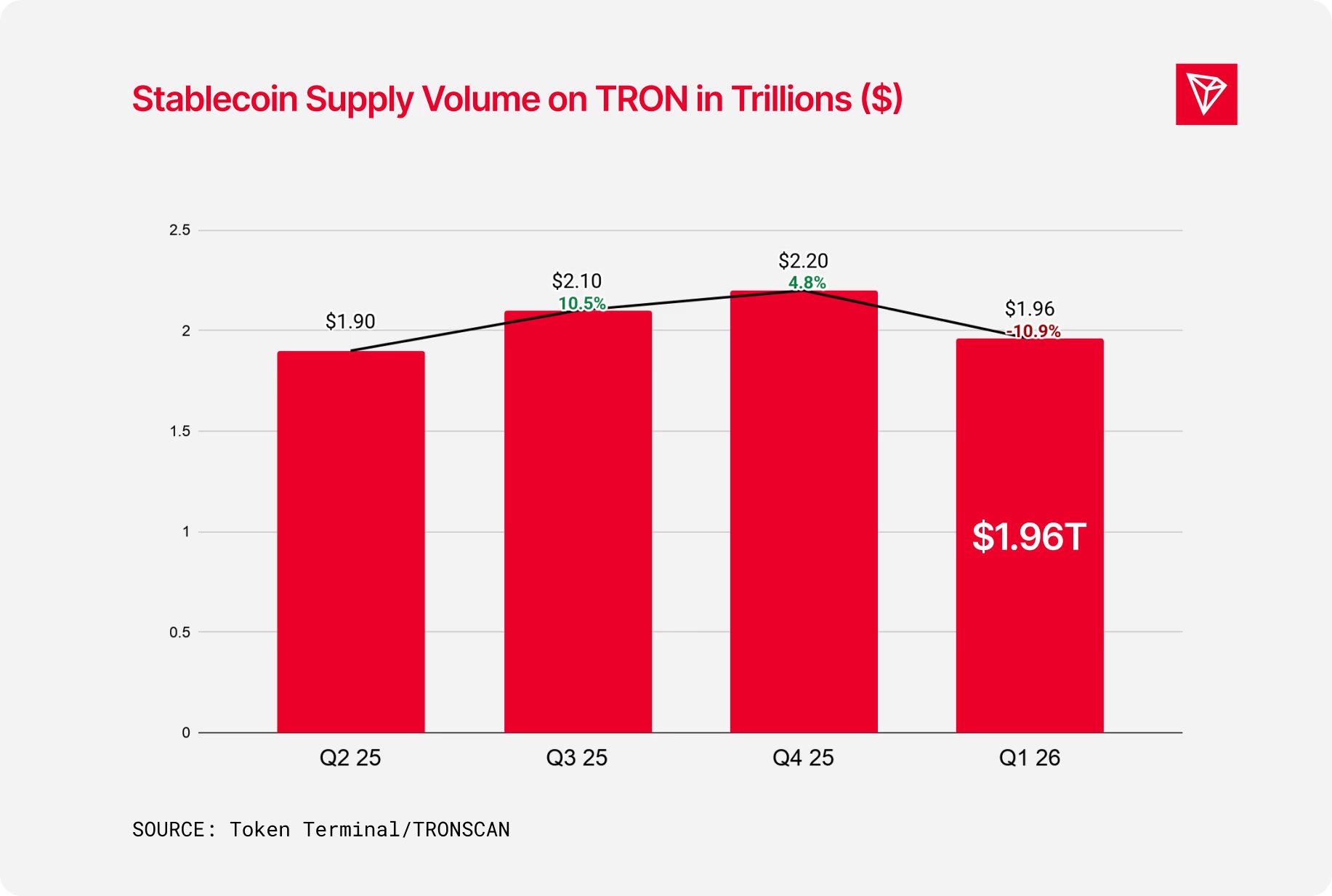
This trend was helpful for processing $1.96 trillion in stablecoin settlements for the first quarter of 2026 on TRON. Meanwhile, TRON also hosts approximately $85-86 billion in USDT. Much of this usage stems from users’ need for recurring payments.

As such, there is strong evidence to support that the usage patterns are providing a foundation for structural value in the network.

If the flow of payment dollars into the system continues to grow at the same rate or possibly increases and if USDT issuance continues to expand, then TRON will solidify itself as a leader in stablecoin settlement. Otherwise, faster competitors could erode its edge.

User activity reflects payment growth

TRON’s growing use of stablecoins for transaction settlement has boosted network activity. However, adoption trends show both positive and negative signals.

Daily active users rose 16% over the past thirty days to roughly 4.4 million, exceeding the Q1 average of 3.2 million and indicating stronger engagement from existing participants.
Source: TRONSCAN

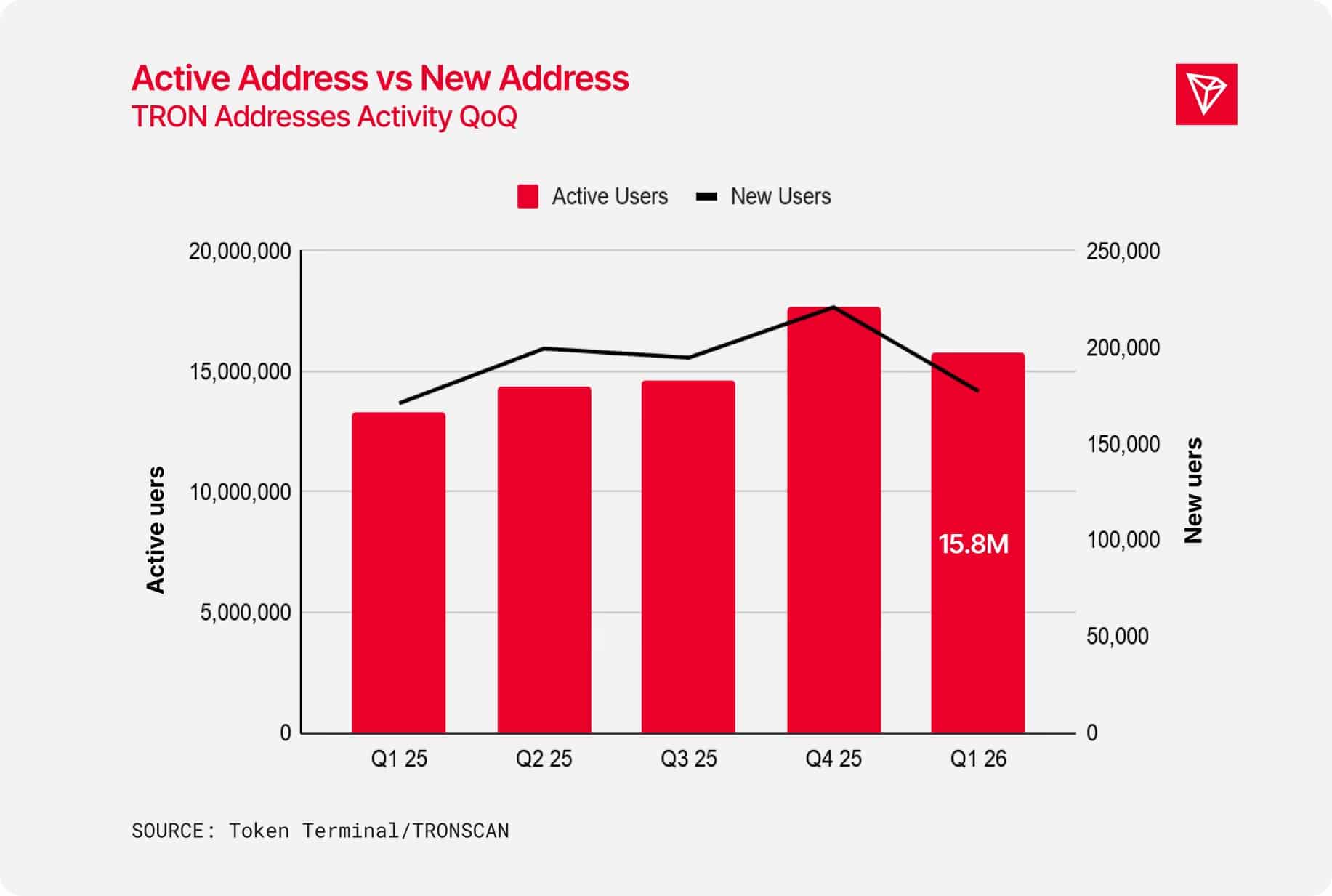
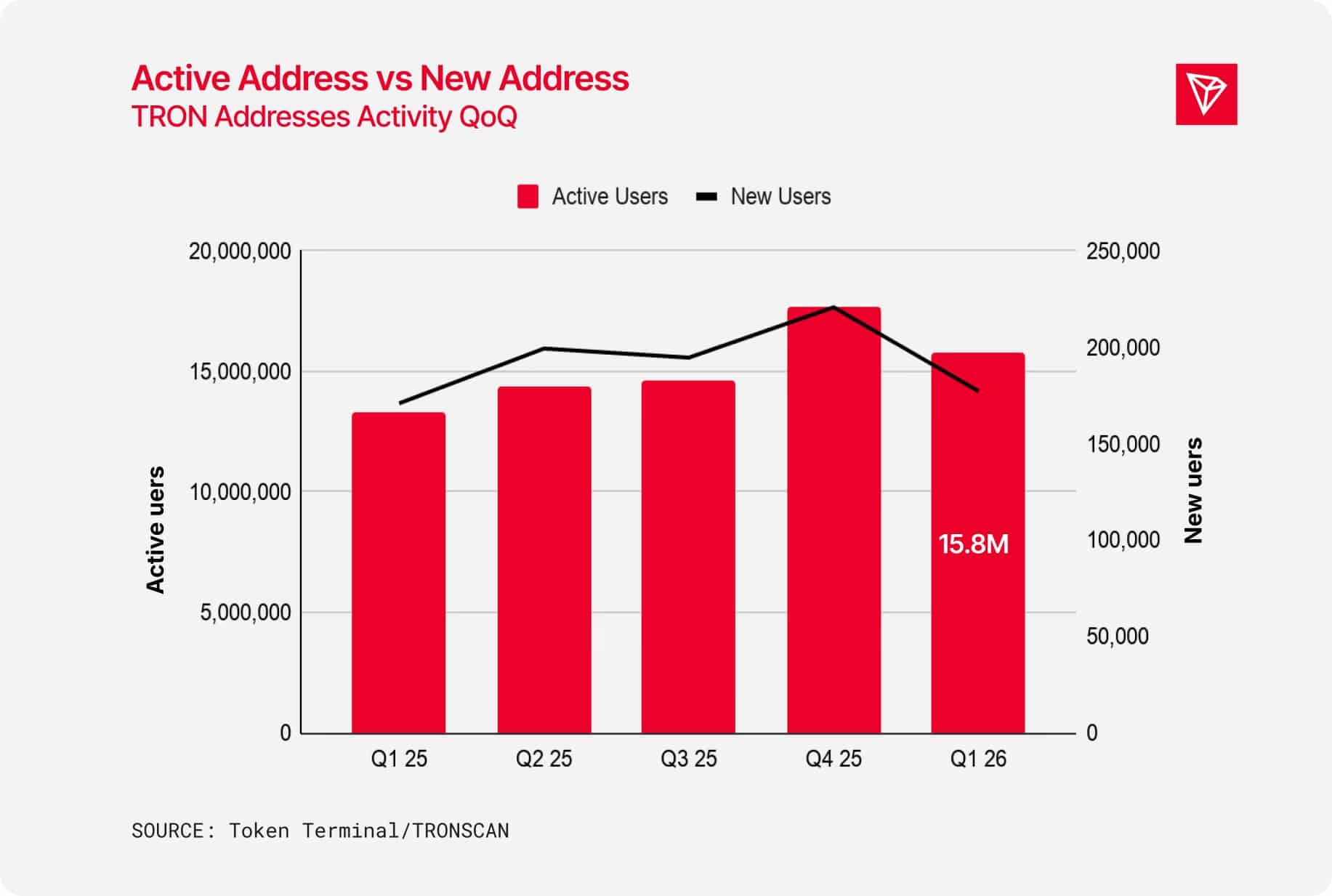
However, quarterly data shows active addresses eased to 15.8 million from the Q4 2025 peak, while new address creation also declined. Thus, it appears that despite the decline in the number of new users being added, there continues to be strong activity due to the ability of users to pay using the network’s stablecoins.

Long-term growth of the network will likely depend upon additional new users entering the ecosystem in addition to sustained payments through the stablecoins. If existing users continue driving transaction growth, network activity could remain elevated. Moreover, sustaining long-term expansion will likely require stronger new-user onboarding alongside continued stablecoin payment demand.

Capital retention supports network growth

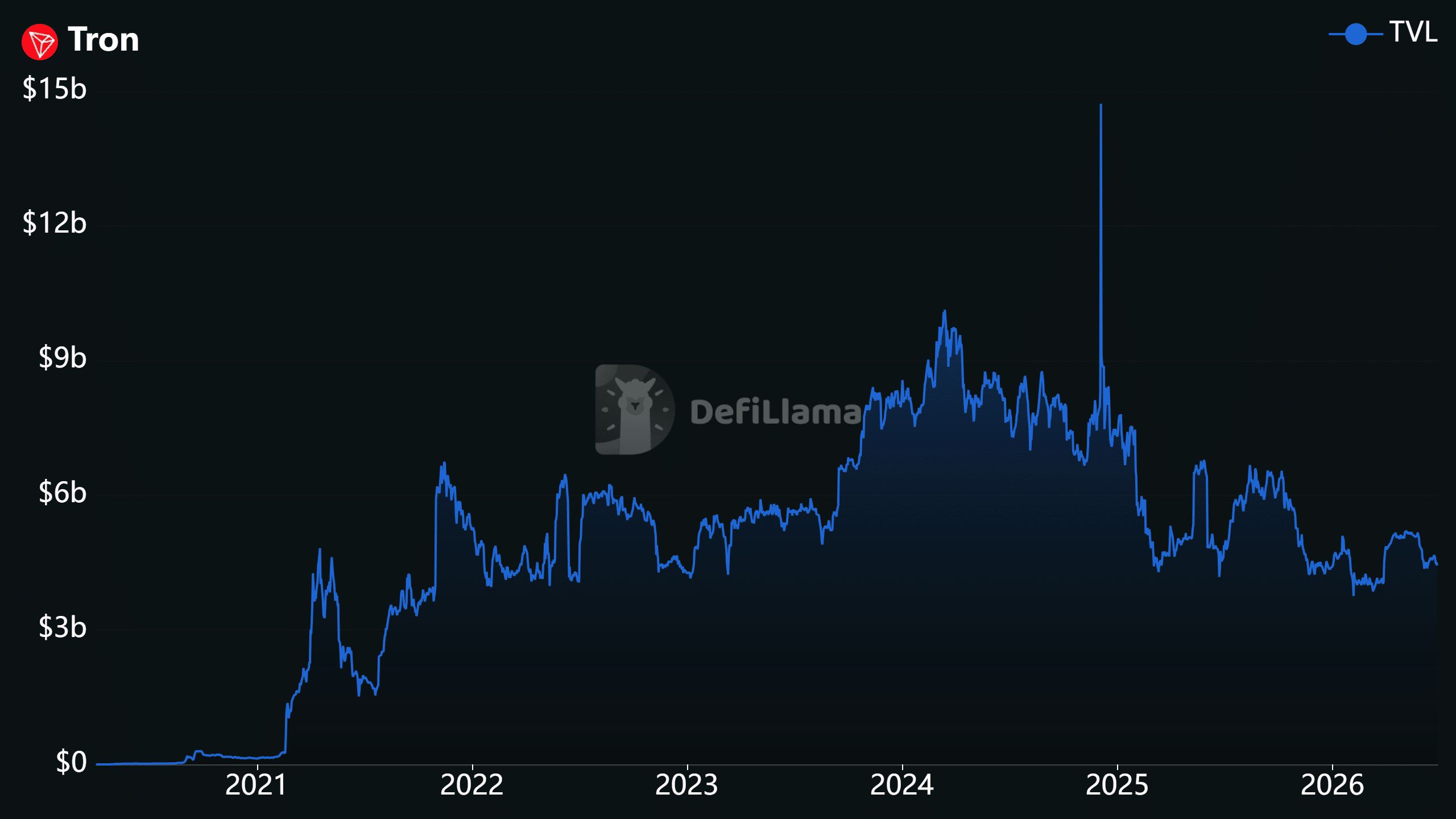
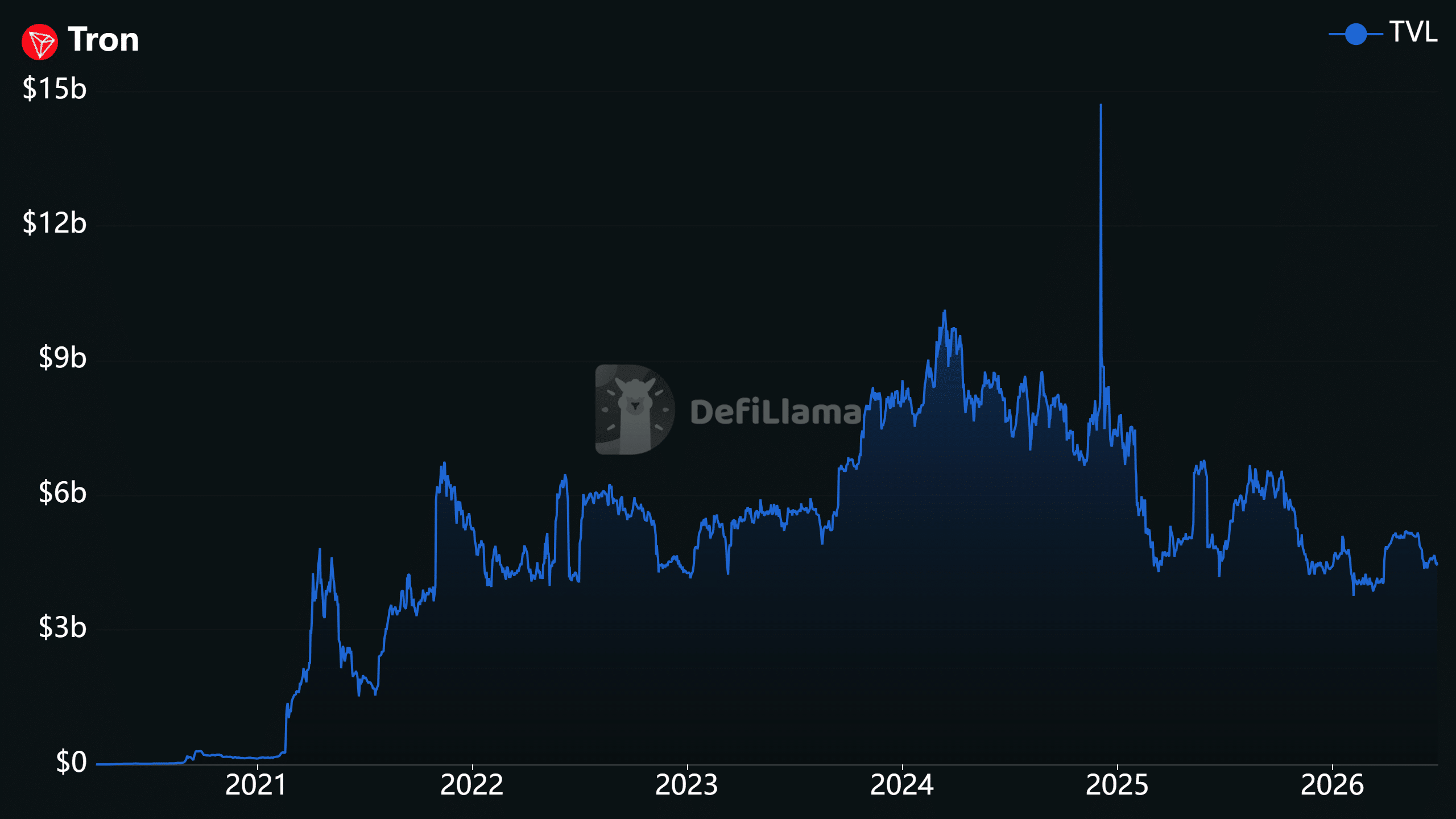
TRON’s expanding payment network is retaining capital on-chain, but growth remains concentrated in stablecoin settlements rather than broader DeFi activity. At press time, TVL has grown to roughly $4.4 billion and is supported mainly by stablecoins anchoring liquidity on the network.
Source: DeFiLlama

Rather than exiting immediately after settlement, much of that capital circulates among transfers, which sustains transaction volume and network revenue. Efficiency also supports recurring TRX burns and validator rewards without significantly raising user costs.

However, dominance in payments has not translated into strong adoption of DeFi. Lending, decentralized exchanges, and smart contract activity remain relatively smaller contributors to usage.

If retained liquidity gradually expands into these sectors, TRON can strengthen its broader ecosystem. Otherwise, it will likely continue leading payments, relying less on growth driven by DeFi.


Final Summary

  • TRON’s payment growth remained strong, but broader ecosystem expansion still depends on DeFi adoption.
  • TRX retained payment liquidity, though sustained growth requires stronger on-chain utility beyond settlements.


Criptos en tendencia

Preguntas relacionadas

QWhat key challenge does TRON still face despite its massive stablecoin settlement growth in early 2026?

ADespite processing $1.96 trillion in stablecoin settlements in Q1 2026 and growing its daily active users, TRON's broader ecosystem expansion still depends on stronger DeFi adoption (like lending and decentralized exchanges). Its growth remains concentrated in payments rather than diverse on-chain utility.

QWhat are the primary factors driving TRON's popularity for stablecoin transactions, according to the article?

AThe primary factors are its low fees, fast settlement times, and deep Tether (USDT) liquidity. These make it the preferred network for real-world dollar transfers like remittances, peer-to-peer payments, and cross-border transactions that prioritize speed over complex DeFi functionality.

QHow did TRON's user activity metrics show both positive and negative signals recently?

APositively, daily active users rose 16% to roughly 4.4 million, exceeding the Q1 average. Negatively, quarterly active addresses eased from the Q4 2025 peak, and new address creation declined, indicating a slowdown in onboarding new users despite strong activity from existing ones.

QHow is the capital from stablecoin settlements contributing to TRON's network growth?

ACapital from settlements is largely retained on-chain, circulating among transfers instead of exiting immediately. This sustains transaction volume, network revenue, TRX burns, and validator rewards. However, this retained liquidity has not significantly expanded into broader DeFi sectors like lending or DEXs.

QWhat two conditions does the article state are necessary for TRON to solidify itself as a leader in stablecoin settlement?

AFirst, the flow of payment dollars into the system must continue to grow at the same rate or increase. Second, USDT issuance on the network must continue to expand. If these conditions are not met, faster competitors could erode TRON's edge.

Lecturas Relacionadas

En la era de la IA, ¿qué le queda a Bitcoin?

Autor: Sevclub, Seven Research El precio del Bitcoin cayó recientemente por debajo de los 60.000 dólares, lo que ha generado reflexiones sobre su valor en la era de la IA. El autor sostiene que la IA y el Bitcoin son dos caras de una misma moneda. La IA ha reducido drásticamente el coste de producción de información (textos, imágenes, videos), inundando el mundo digital de contenido. Sin embargo, esto genera un problema fundamental: la dificultad para distinguir lo real de lo falso. Así, lo que se vuelve realmente valioso no es el contenido en sí, sino la capacidad de verificar su autenticidad. Aquí es donde se redefine el valor del Bitcoin. Mientras la IA "quema" energía para crear capacidades de generación, Bitcoin "quema" energía para crear y mantener una propiedad diferente: **verificabilidad**. Su red no funciona por confianza en instituciones, sino por criptografía y consenso distribuido, haciendo extremadamente costoso falsificar su historial de transacciones. Se convierte así en una "máquina de crear verificabilidad". La analogía final es con el Renacimiento: la imprenta (como la IA hoy) redujo el coste de copiar conocimiento, mientras que la contabilidad por partida doble (como el blockchain hoy) redujo el coste de la confianza en los negocios. En la era digital, la IA se encarga de la generación a bajo coste, y tecnologías como el blockchain se encargan de proporcionar una base verificable para los activos y registros. Por lo tanto, en un mundo donde la IA puede generar cualquier cosa, la verdadera escasez podría no ser "más contenido", sino "más hechos independientemente verificables". El Bitcoin es un intento de abordar esta necesidad fundamental.

链捕手Hace 45 min(s)

En la era de la IA, ¿qué le queda a Bitcoin?

链捕手Hace 45 min(s)

Trading

Spot

Artículos destacados

Cómo comprar TRX

¡Bienvenido a HTX.com! Hemos hecho que comprar TRON (TRX) sea simple y conveniente. Sigue nuestra guía paso a paso para iniciar tu viaje de criptos.Paso 1: crea tu cuenta HTXUtiliza tu correo electrónico o número de teléfono para registrarte y obtener una cuenta gratuita en HTX. Experimenta un proceso de registro sin complicaciones y desbloquea todas las funciones.Obtener mi cuentaPaso 2: ve a Comprar cripto y elige tu método de pagoTarjeta de crédito/débito: usa tu Visa o Mastercard para comprar TRON (TRX) al instante.Saldo: utiliza fondos del saldo de tu cuenta HTX para tradear sin problemas.Terceros: hemos agregado métodos de pago populares como Google Pay y Apple Pay para mejorar la comodidad.P2P: tradear directamente con otros usuarios en HTX.Over-the-Counter (OTC): ofrecemos servicios personalizados y tipos de cambio competitivos para los traders.Paso 3: guarda tu TRON (TRX)Después de comprar tu TRON (TRX), guárdalo en tu cuenta HTX. Alternativamente, puedes enviarlo a otro lugar mediante transferencia blockchain o utilizarlo para tradear otras criptomonedas.Paso 4: tradear TRON (TRX)Tradear fácilmente con TRON (TRX) en HTX's mercado spot. Simplemente accede a tu cuenta, selecciona tu par de trading, ejecuta tus trades y monitorea en tiempo real. Ofrecemos una experiencia fácil de usar tanto para principiantes como para traders experimentados.

2.3k Vistas totalesPublicado en 2024.12.10Actualizado en 2026.06.02

Cómo comprar TRX

Discusiones

Bienvenido a la comunidad de HTX. Aquí puedes mantenerte informado sobre los últimos desarrollos de la plataforma y acceder a análisis profesionales del mercado. A continuación se presentan las opiniones de los usuarios sobre el precio de TRX (TRX).

活动图片