Chips, Open-Source Models, and $50 Trillion: Joe Tsai Reassesses Alibaba Once Again

marsbitPublicado a 2026-06-22Actualizado a 2026-06-22

Resumen

Alibaba Executive Chairman Joe Tsai recently outlined the company's comprehensive AI strategy in a public discussion. He believes AI represents a massive opportunity, estimating its potential economic impact at up to $50 trillion, stemming from the automation of human intelligence and productivity. Tsai detailed Alibaba's four-layer investment approach across the AI stack: starting from the chip level, moving to cloud infrastructure (Alibaba Cloud), then the model layer with its open-source Qwen model, and finally applications within its vast digital ecosystem (e-commerce, logistics, etc.). The company avoids the energy layer due to China's efficient infrastructure. This broad strategy is designed to ensure Alibaba captures value regardless of where it ultimately concentrates in the AI value chain. He dismissed concerns about an AI investment bubble, pointing to the enormous $50 trillion opportunity. While acknowledging U.S. cloud giants' higher capital expenditure, he argued Chinese firms, including Alibaba (funded by its cash-generative e-commerce core), need to invest more in AI infrastructure. A key theme was technological sovereignty. Tsai positioned open-source models like Qwen as a solution for companies, especially in Europe, seeking independence from proprietary U.S. models and greater data privacy control. He contrasted this with the trend of U.S. giants keeping their models closed-source. Tsai highlighted Alibaba's collaborations with European manufacturers lik...

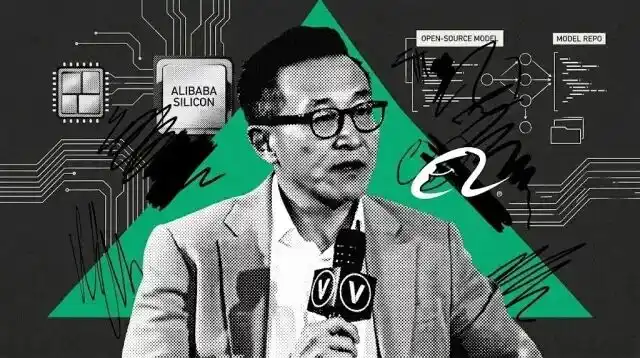
Alibaba Group Chairman Joe Tsai. Image processed via AI.

At this year's VivaTech conference, Alibaba Chairman Joe Tsai systematically outlined the company's long-term AI vision during a "fireside chat." This marks his second public reassessment of Alibaba following a summit at Yale University in late May.

"From a macro perspective, we are going all-in on AI. The logic is simple."

Tsai stated that global GDP exceeds $100 trillion, with at least half coming from human intelligence and productivity contributions. "This $50 trillion is the total addressable market for AI, far larger than any company's IT budget or the software market."

Everyone is talking about going all-in on AI, and Tsai is no exception. He summarized Alibaba's strategic approach as covering almost all layers except the energy layer, encompassing chips, cloud infrastructure, models, and applications.

"We are primarily investing in four layers, but we are not touching the bottommost energy layer because China's energy efficiency is high and costs are relatively low."

In Tsai's view, this near-full-stack strategy stems from future uncertainty, as no one can accurately predict where the ultimate value will settle—whether in chips, cloud infrastructure, or the model layer. "We choose to participate comprehensively, so no matter where the value ultimately lands, we are present."

Compared to Alibaba, U.S. cloud giants are even more aggressive, investing across the entire infrastructure stack, with a combined capital expenditure of $800 billion by 2027, which short-sellers have criticized as a "bubble." Tsai not only disagrees with the bubble theory but also emphasizes that Chinese companies need to increase their infrastructure investments.

"The investment numbers are indeed staggering," Tsai said. "But we need to go back to that $50 trillion total market. That's the reason for optimism."

Discussing open source, Tsai first mentioned the recent suspension of Anthropic's most advanced model by the Trump administration, bluntly stating this is the consequence of "putting all your eggs in one basket." In his view, models from Google, OpenAI, and Anthropic are now all closed-source, while the open-source path is currently being pursued by Chinese companies.

"You truly cannot base trust on the assumption that a third-party government will never act against your interests."

Below is an edited version of Joe Tsai's interview:

01. The $50 Trillion "Market"

Q: Alibaba has changed significantly over the years, with achievements like its open-source large model. But many still see you primarily as a B2B/B2C platform. Can you talk about the group's evolution?

Joe Tsai: When Alibaba started in 1999, it was indeed a B2B platform. The idea was simple: to bring small Chinese manufacturers and trading companies online, helping them wholesale products globally. Later, we entered the B2C space with Taobao, now China's largest consumer e-commerce platform.

Q: How many consumers does this serve?

Joe Tsai: 820 million Chinese consumers. Moreover, this platform helps European companies and brands sell approximately €30 billion worth of goods to Chinese consumers annually. But the story doesn't end there. We are heavily investing in AI and cloud.

We started investing in cloud technology 17 years ago, but out of necessity. Our e-commerce business was generating massive amounts of data daily. If we kept relying on others' database and storage technologies, eventually all our profits would go to the tech vendors. So we decided to build our own proprietary technology to manage this data, and that's how our cloud business began.

From a macro perspective, we are now going all-in on AI, and the logic is simple.

If you ask me how big the AI market is, I'd say it's far larger than any company's IT budget or the software market. Because AI is essentially about producing human intelligence and productivity. Global GDP today is over $100 trillion, with at least half ($50 trillion) related to human productivity and intelligence. That's the total AI market. So we must go all-in.

Q: Do you really believe AI can boost productivity? Many have invested heavily without seeing results yet.

Joe Tsai: Many CEOs will tell you that engineers are consuming a huge number of tokens, and costs are rising. But I'd say we are on the cusp of a real productivity explosion.

Take our company. Some engineers are super-users of AI. They not only use programming tools for their core work but also explore new uses. Give engineers a toy, and they'll find more ways to play with it, sometimes without realizing the company is paying for these usage costs. That's the current reality.

But I am deeply convinced—it's more like a belief, a conviction that artificially produced intelligence units can add value to human intelligence. It's close to a kind of faith. I don't want to try to convince you this will definitely happen, but we ourselves firmly believe it.

02. The Logic of Going All-In on AI

Q: Returning to Alibaba's layout, which AI layer do you invest the most in? Infrastructure, models, or cloud services?

Joe Tsai: We primarily invest in four layers, but we skip the bottommost energy layer because China's energy efficiency is high and costs are low.

We really started at the chip layer—that's the first layer. The second is the infrastructure layer, corresponding to our cloud business. The third is the model layer, like Qwen, which is now one of the world's hottest open-source models. The fourth is the application layer, where we have a complete digital life ecosystem—e-commerce, food delivery, local services, travel, maps, etc. These are all scenarios where AI capabilities can be directly embedded to serve users.

The advantage of this approach is that we are not betting on a single track.

Today, pure model companies have high valuations, making it seem like all the value is in the model layer. But looking five or ten years ahead, no one can say for sure whether the value will settle in chips, cloud infrastructure, models, or applications. We choose comprehensive participation so that, no matter where the value ultimately lands, we are there.

Q: Speaking of AI infrastructure, when you see such massive investments, do you think there's a bubble? Do we really need this much computing power? Some models are more efficient and don't require as many resources.

Joe Tsai: I don't think it's a bubble. The investment numbers are indeed staggering. Just looking at the U.S. hyperscale cloud providers, the combined capital expenditure of the top four or five companies next year exceeds $800 billion, potentially over a trillion the year after. Investments at this scale naturally raise concerns about overcapacity.

But we must return to that $50 trillion total market. That's the reason for optimism.

Moreover, in China, our investment in AI infrastructure and the supply chain is actually insufficient. Theoretically, all Chinese companies should increase their investments. Of course, we won't reach the investment level of the U.S. hyperscale players, but our investment intensity is already quite substantial.

Q: Why can't you reach U.S. levels?

Joe Tsai: Sometimes there are funding constraints, depending on how much free cash flow you can generate. Fortunately, Alibaba is one of the few companies with a core e-commerce business that generates about $25 billion in annual free cash flow, which can support our AI investments. So we are in a relatively good position.

Q: Currently, does the e-commerce platform business still account for 80% to 85% of Alibaba's total revenue?

Joe Tsai: Yes, e-commerce platform revenue still accounts for over 80%. This generates stable cash flow, allowing us to invest in the future, primarily in AI and cloud.

03. Open Source and the Second Basket

Q: Qwen is an open-source model. Who are your main customers, and how do you help them?

Joe Tsai: In recent weeks in Europe, I've spoken with many company executives, CEOs, and scientists. One word that came up most frequently was "sovereignty."

But what is sovereignty?

Ask ten Europeans, and you might get twelve different answers. For me, the core is two things.

First, technological independence. Everyone is worried about the risk of a "one-click shutdown," the fear of relying too heavily on technology from a single country that could flip a switch at any time. We just saw a vivid example of this in recent days.

Second is data privacy. People want to use AI technology but want their data to belong entirely to them, used within their own environment, with a firewall to protect it.

I believe open source addresses both these issues. It is essentially free software; you can download it to your own data center, even onto a laptop. At that point, it has little to do with the original manufacturer—we can't even figure out how to charge for it. That achieves independence.

More importantly, with an open-source model, you can use your own data for further training, fine-tuning, or post-training. The entire process and all data remain entirely confidential within your firewall. This point is crucial for European companies.

But I want to emphasize that open source is not a panacea or the only path, but it is a practical route to achieving a certain degree of sovereignty.

Interestingly, the open-source movement today is largely being driven by Chinese companies, while the major U.S. players have closed their models. They want you to call them via APIs; you have no idea where the data goes. When you converse with a chatbot, your most private questions and thoughts enter their data pool to further train the model. The data flow is completely opaque to you.

Q: Honestly, European sovereignty is a huge concern right now. We've just realized we were too dependent on U.S. technology. I acknowledge the benefits of open source, but I still worry about the risk of future access being cut off to models. That's a significant risk for Europe.

Joe Tsai: You're right; that concern cannot be completely eliminated. Simply put, you truly cannot base trust on the assumption that a third-party government will never act against your interests. But the problem is, right now, all your eggs are in one basket.

Why not choose a second basket and put some eggs there? Even if Europe might develop its own basket in the long term, at least for now, you have two baskets.

04. AI in the Factory

Q: That's true. How do you cooperate with German companies and what do you help them do?

Joe Tsai: These German manufacturing companies are very interesting. In the Chinese market, they are all Alibaba Cloud customers. We collaborate with them in manufacturing, covering areas like design, testing, and quality control.

I believe this will be a very important field in the future. Because most AI applications today are either consumer products like ChatGPT or tools for programmers and knowledge workers like Copilot. But in the future, these manufacturing companies will be extremely valuable because they accumulate their own unique, high-quality data from the production process, which can be used to train proprietary models to improve manufacturing processes.

We have collaborations with companies like BMW, Siemens, and Bosch. Last week, I attended the Bosch ConnectedWorld conference. They are using AI to develop driver assistance and autonomous driving technologies, requiring massive computing power.

A lot of interesting things are happening in manufacturing.

Q: Can I understand it this way: The U.S. export controls on high-end chips have actually created an opportunity for you?

Joe Tsai: You could put it that way. There are two paths here:

First, they directly adopt our open-source model and deploy it on their own infrastructure, like a data center. But our infrastructure is developed in tight integration with our models, achieving high efficiency and helping customers train models. If they use our open-source model, they can also procure computing power from us. The model and infrastructure have a symbiotic relationship. That's one path.

The other path is the emergence of inference platform companies that can offer users multiple model choices. You don't necessarily have to use Qwen. As long as there is an agreement between the model provider and the platform to open the weights in a private environment, customers can use models on these platforms.

05. AI, Agents, and Humanity

Q: A more philosophical question. What's your view on the balance between AI, large language models, and humanity, even the future of human nature? What state will humanity be in ten years from now?

Joe Tsai: Earlier today, I was chatting with colleagues at our Paris office. We just moved into a new office on the upper floors of a beautiful building. I looked out the window; there was a café outside. The weather was nice, people were sitting outdoors drinking coffee, enjoying life.

I pointed to the scene and told my colleagues, "This is the future of AI."

You might think they're just drinking coffee, having fun, seemingly not working. But in reality, they have already deployed agents to work for them. While you sleep, agents are working for you. Think about that productivity boost—having "someone" working for you 24/7.

Q: This sounds similar to some ideas in Silicon Valley, where many people might not need to work, as agents and robots will do it for them.

Joe Tsai: I believe this will definitely free up human time to enjoy life, spend time with family, and engage in more entertainment. That's also why I place great importance on live entertainment. When people spend less time in the office, where will they go? They won't just stay at home; they'll want to go to concerts, watch football, watch basketball games.

Q: The Chinese are known for their diligence. Chinese engineers, even with agents and AI, still work very long hours.

Joe Tsai: There will always be people who work harder than others. But I believe most people, deep down, wish to enjoy life a bit more and spend more time with their families.

This article is from WeChat public account "Tencent Technology," author: Su Yang.

Criptos en tendencia

Preguntas relacionadas

QAccording to Joseph Tsai, what is the total market opportunity he sees for AI, and why?

AJoseph Tsai sees a total market opportunity of 50 trillion dollars for AI. He argues that global GDP exceeds 100 trillion dollars, and at least half of it comes from human intelligence and productivity contributions. Since AI essentially produces human-like intelligence and productivity, its total addressable market is this 50 trillion dollar share of global GDP.

QWhat are the four layers of AI that Alibaba is investing in, according to Joseph Tsai?

AAccording to Joseph Tsai, Alibaba is investing in four layers of AI: 1) The chip layer, 2) The infrastructure/cloud layer, 3) The model layer (e.g., the Qwen open-source model), and 4) The application layer (integrating AI into Alibaba's digital ecosystem like e-commerce, food delivery, and travel). He stated they do not invest in the foundational energy layer due to China's high energy efficiency and low costs.

QWhy does Joseph Tsai argue that open-source models, like Alibaba's Qwen, are crucial for technological sovereignty, particularly in Europe?

AJoseph Tsai argues open-source models address two core aspects of technological sovereignty: 1) Independence from a single-point-of-failure or 'kill switch' risk, as companies can download and run the model independently, and 2) Data privacy, as companies can train, fine-tune, and use the model entirely within their own secure firewalls. He contrasts this with closed-source models from US companies, where data flows opaquely to the provider's servers.

QHow does Joseph Tsai respond to concerns about a potential bubble in massive AI infrastructure investments by cloud giants?

AJoseph Tsai does not believe it is a bubble. While acknowledging the staggering scale of investment (e.g., US hyperscalers planning $800 billion+ in capex), he argues it must be viewed in the context of the massive 50 trillion dollar AI opportunity. He further states that Chinese companies, including Alibaba, actually need to invest more in AI infrastructure and supply chains, though likely not reaching US levels due to different free cash flow realities.

QWhat is Joseph Tsai's vision for how AI will change human life and work in the future?

AJoseph Tsai envisions AI, particularly intelligent agents, will liberate human time. He believes agents will work continuously, even while people sleep, dramatically boosting productivity. This will free people to enjoy life more, spend time with family, and engage in entertainment and leisure activities like attending live sports or concerts, shifting the balance from work to life enjoyment.

Lecturas Relacionadas

La Fundación da un paso atrás, Ethlabs da un paso adelante: Ethereum experimenta su mayor reestructuración de la historia

El 23 de junio, la red Ethereum experimentó dos cambios importantes en su gobernanza. Primero, exinvestigadores de la Ethereum Foundation fundaron Ethlabs, una nueva organización sin fines de lucro. Su objetivo es abordar necesidades clave para la adopción institucional a gran escala, como velocidad de transacciones, emisión de activos nativos y escalabilidad, recibiendo el respaldo financiero de grandes tenedores de ETH como Bitmine y SharpLink. Casi al mismo tiempo, la Ethereum Foundation anunció una importante reestructuración, despidiendo al 20% de su personal (54 personas). Esto forma parte de su nueva estrategia para convertirse en una entidad más ligera, centrada en la gobernanza y el mantenimiento del protocolo, y cediendo su papel central como principal impulsora del desarrollo del ecosistema. Este movimiento de "Ethlabs hacia adelante, la Fundación hacia atrás" se interpreta como una respuesta a las críticas sobre lentitud en la toma de decisiones y excesiva dependencia de la Fundación. Ethlabs, que no cuenta con el respaldo explícito del cofundador Vitalik Buterin, busca ser una capa de ejecución más orientada al mercado, centrada en la adopción real y en mejorar la utilidad financiera de Ethereum. El análisis sugiere que la Fundación mantendrá el enfoque en la "corrección" técnica y la neutralidad, mientras que organizaciones como Ethlabs podrán perseguir de manera más directa la "eficacia" y el crecimiento del ecosistema, incluyendo la valorización de ETH. Este cambio busca equilibrar los principios de descentralización con la necesidad de una ejecución más ágil y orientada al mercado para competir en el panorama blockchain actual.

链捕手Hace 4 hora(s)

La Fundación da un paso atrás, Ethlabs da un paso adelante: Ethereum experimenta su mayor reestructuración de la historia

链捕手Hace 4 hora(s)

Segunda mitad de la política cripto en EE.UU.: El proyecto de ley CLARITY busca 60 votos, el "Comité de una sola persona" de la CFTC se convierte en la mayor incertidumbre

A medio camino de la política cripto en EE.UU.: el avance del proyecto de ley CLARITY en el Senado y las incertidumbres regulatorias El sector cripto espera un momento decisivo con el proyecto de ley CLARITY en el Senado estadounidense, que necesita 60 votos para su aprobación. Quedan solo unos 40 días legislativos este año, lo que hace crucial la negociación bipartidista. Además de CLARITY, están en juego varias propuestas fiscales derivadas del proyecto PARITY y la ley Blockchain Regulatory Certainty Act. Una gran preocupación es la composición de la Comisión de Comercio de Futuros de Materias Primas (CFTC), que actualmente opera con un solo comisionado, lo que genera incertidumbre sobre su capacidad para actuar, especialmente en la lucha por la jurisdicción sobre los mercados de predicción. La industria también lamenta la próxima salida de dos figuras clave: la comisionada de la SEC, Hester M. Peirce, y la senadora Cynthia Lummis, ambas defensoras influyentes de políticas claras para los activos digitales. Expertos del sector opinan que es improbable que CLARITY se apruebe este año debido al calendario ajustado, por lo que la SEC y la CFTC podrían tener que proporcionar más orientación. Las reformas fiscales podrían avanzar si se incluyen en proyectos de ley más amplios. Sobre los mercados de predicción, se debate si deben ser regulados como infraestructura financiera o como juegos de azar, con la CFTC trabajando en un marco más claro. En resumen, la ventana de oportunidad legislativa para 2024 es estrecha, pero el diálogo y los esfuerzos pragmáticos serán esenciales para lograr avances sustanciales.

marsbitHace 7 hora(s)

Segunda mitad de la política cripto en EE.UU.: El proyecto de ley CLARITY busca 60 votos, el "Comité de una sola persona" de la CFTC se convierte en la mayor incertidumbre

marsbitHace 7 hora(s)

Nuevo artículo de Dan Koe: Escapando del destino del asalariado, ¿Cómo sobrevivir a la ola de sustitución por IA?

Autora: DAN KOE En un mundo donde la IA parece amenazar muchos empleos, Dan Koe argumenta que el mayor peligro no es la tecnología, sino depender completamente de otros para la subsistencia y felicidad. El artículo explora cómo escapar de la mentalidad de "esclavo asalariado" y construir una carrera significativa que resista la automatización. **1. Escapar de la trampa del empleado** Koe define la "esclavitud salarial" como verse obligado a realizar trabajos sin sentido por necesidad. Aunque un trabajo puede ser un trampolín útil, rara vez ofrece el flujo constante de desafíos óptimos que genera crecimiento y satisfacción. El sistema educativo y laboral nos entrena para ser especialistas dentro de un sistema, no para entenderlo o crear el nuestro. La única manera de sobrevivir a la sustitución por IA es construir tu propio proyecto. **2. Los cinco ingredientes del éxito** Para ser resiliente y crear tu propio camino, necesitas dominar cinco elementos fundamentales: 1. **Iniciativa**: Actuar sin pedir permiso. 2. **Criterio (gusto)**: El instinto para juzgar qué tiene valor. 3. **Persuasión**: La habilidad de hacer que otros crean en lo que haces. 4. **Perseverancia**: Entender que fallar es parte del proceso. 5. **Iteración**: Ajustar el rumbo basándote en la retroalimentación. Estos elementos se resumen en dos habilidades clave: **resolver problemas** y la **experiencia** para saber qué hacer. La IA facilita la creación de activos, pero el verdadero éxito requiere estas habilidades humanas, que solo se desarrollan haciendo tus propias cosas. **3. La cura: volverse "inempleable"** La solución es transformar tu identidad para convertirte en alguien que no puede ser empleado. Esto se logra mediante tres pasos: * **Cambia tu entorno radicalmente**: Tu identidad está moldeada por tus entornos (familia, escuela, redes sociales). Para cambiar, debes alterar conscientemente todos los estímulos que recibes, sumergiéndote en un nuevo entorno que te obligue a crecer. * **Elige un medio que ofrezca retroalimentación real**: El mayor riesgo es una vida sin posibilidad de error. El crecimiento viene de perseguir metas desconocidas, fallar, aprender y ajustar el rumbo. Esto es la esencia del emprendimiento. * **Domina la creación de medios (contenido) o código**: Según Naval, estas son las palancas de apalancamiento infinito. Koe argumenta que **crear contenido (medios) es más valioso que programar (código)** en el futuro. El valor del contenido es subjetivo y requiere un criterio que la IA no puede replicar por sí sola, mientras que el código es objetivo y su distribución (marketing) depende de entender los medios. **4. Cómo empezar: 15 minutos al día** El proceso para construir tu proyecto de vida (no solo una "marca personal") comienza con una introspección guiada de 15 minutos: 1. **Excava tu materia prima**: Identifica los conocimientos profundos, habilidades naturales e intereses de la infancia que el sistema pudo haber enterrado. 2. **Encuentra tu "disenso"**: Determina en qué crees firmemente, contrario a la opinión popular o a los "expertos" de tu campo. La intersección entre esto y tu materia prima es tu dirección. 3. **Publica tu primera idea mañana**: Combina una respuesta del paso 1 y otra del paso 2 en una pieza de contenido (un post, un video) y publícala. La retroalimentación real del mundo es el único punto de partida para iterar y mejorar. En resumen, el antídoto contra la obsolescencia laboral es tomar la iniciativa, desarrollar un criterio profundo y construir en público un proyecto basado en tu experiencia única, utilizando la creación de contenido como palanca principal en la era de la IA.

marsbitHace 8 hora(s)

Nuevo artículo de Dan Koe: Escapando del destino del asalariado, ¿Cómo sobrevivir a la ola de sustitución por IA?

marsbitHace 8 hora(s)

Informe de Investigación: Morgan Stanley analiza a SanDisk SNDK, la verdad sobre el poder de fijación de precios en centros de datos en la nube y el dividendo del razonamiento de IA

**Resumen: Análisis de Morgan Stanley sobre SNDK - Poder de fijación de precios en centros de datos en la nube y oportunidades en inferencia de IA** Morgan Stanley actualizó su informe sobre SanDisk (SNDK) el 22 de junio, elevando el precio objetivo de 1100 a 1750 dólares y manteniendo la recomendación de "sobreponderar". La lógica central se basa en que la demanda de **inferencia de IA** está reescribiendo las reglas del mercado NAND. Los clientes de centros de datos en la nube, que buscan almacenamiento de alto rendimiento para cargas de trabajo como KV Cache, muestran poca sensibilidad al precio, otorgando a SNDK un sólido poder de fijación. Un pilar clave es el nuevo modelo de negocio (NBM) de SNDK, que ya ha asegurado más de un tercio de sus envíos en bits para el año fiscal 2027. Estos contratos a largo plazo (3-5 años) con precios fijos o con límites garantizan márgenes brutos de alrededor del **80% incluso en escenarios de precios bajos**, proporcionando una resiliencia significativa frente a los ciclos del sector. Se prevé que la escasez de oferta de NAND persista, impulsada por la expansión acelerada de centros de datos para IA. Morgan Stanley espera que los precios promedio (ASP) continúen subiendo hasta mediados de 2027. Los ingresos de SNDK se proyectan que crezcan de 7.355 mil millones de dólares en FY25 a 48.826 mil millones en FY27, impulsados por el negocio en la nube de alto margen, con un EPS que pasaría de 2.74 a 14.73 dólares. Los riesgos incluyen un crecimiento del sector menor al esperado, una mayor competencia y posibles pérdidas de cuota de mercado. Sin embargo, el marco de inversión se sostiene en el cambio estructural de demanda por la IA, la protección de márgenes vía contratos NBM y un entorno de oferta ajustada.

marsbitHace 8 hora(s)

Informe de Investigación: Morgan Stanley analiza a SanDisk SNDK, la verdad sobre el poder de fijación de precios en centros de datos en la nube y el dividendo del razonamiento de IA

marsbitHace 8 hora(s)

Trading

Spot
Futuros

Artículos destacados

Cómo comprar JOE

¡Bienvenido a HTX.com! Hemos hecho que comprar TraderJoe (JOE) sea simple y conveniente. Sigue nuestra guía paso a paso para iniciar tu viaje de criptos.Paso 1: crea tu cuenta HTXUtiliza tu correo electrónico o número de teléfono para registrarte y obtener una cuenta gratuita en HTX. Experimenta un proceso de registro sin complicaciones y desbloquea todas las funciones.Obtener mi cuentaPaso 2: ve a Comprar cripto y elige tu método de pagoTarjeta de crédito/débito: usa tu Visa o Mastercard para comprar TraderJoe (JOE) al instante.Saldo: utiliza fondos del saldo de tu cuenta HTX para tradear sin problemas.Terceros: hemos agregado métodos de pago populares como Google Pay y Apple Pay para mejorar la comodidad.P2P: tradear directamente con otros usuarios en HTX.Over-the-Counter (OTC): ofrecemos servicios personalizados y tipos de cambio competitivos para los traders.Paso 3: guarda tu TraderJoe (JOE)Después de comprar tu TraderJoe (JOE), guárdalo en tu cuenta HTX. Alternativamente, puedes enviarlo a otro lugar mediante transferencia blockchain o utilizarlo para tradear otras criptomonedas.Paso 4: tradear TraderJoe (JOE)Tradear fácilmente con TraderJoe (JOE) en HTX's mercado spot. Simplemente accede a tu cuenta, selecciona tu par de trading, ejecuta tus trades y monitorea en tiempo real. Ofrecemos una experiencia fácil de usar tanto para principiantes como para traders experimentados.

191 Vistas totalesPublicado en 2024.12.11Actualizado en 2026.06.02

Cómo comprar JOE

Discusiones

Bienvenido a la comunidad de HTX. Aquí puedes mantenerte informado sobre los últimos desarrollos de la plataforma y acceder a análisis profesionales del mercado. A continuación se presentan las opiniones de los usuarios sobre el precio de JOE (JOE).

活动图片