David Sacks Calls Crypto ‘The Industry of the Future’ — $BEST Stands Out Despite Dip

bitcoinistPublicado a 2025-11-04Actualizado a 2025-11-04

Resumen

Quick Facts ➡️ David Sacks calls crypto 'the industry of the future,' emphasizing the US's need to reassert digital leadership....

Trusted Editorial content, reviewed by leading industry experts and seasoned editors. Ad Disclosure

Quick Facts

  • ➡️ David Sacks calls crypto ‘the industry of the future,’ emphasizing the US’s need to reassert digital leadership.
  • ➡️ Market correction aside, on-chain and venture metrics show accelerating long-term growth.
  • ➡️ Best Wallet Token ($BEST) empowers self-custody through a mobile-first DeFi super app.
  • ➡️ $BEST presale is live at $0.025895 with staking rewards up to 78% APY and a verified contract.

Recently, David Sacks, now serving as Trump’s newly appointed ‘Crypto & AI Czar’, declared that ‘crypto is the industry of the future.’

The veteran entrepreneur and investor, best known as part of the ‘PayPal Mafia’ and an early backer of SpaceX and Airbnb, argued that the US must ‘reclaim leadership in digital innovation’ before foreign jurisdictions dominate the next technological wave.

Sacks’ remarks come at a turbulent moment for global markets. The total crypto market cap has fallen by ~10% over the past seven days, marking one of the sharpest corrections of the year.
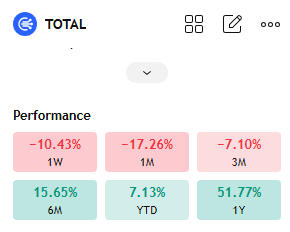
Total crypto market cap. Nov 4, 2025.

Yet Sacks dismissed short-term volatility as ‘noise,’ instead urging regulators and investors alike to focus on structural growth metrics: on-chain developer activity is going up year-on-year, Web3 wallet users now exceed 550M globally, and tokenized real-world assets (RWAs) surpassed $12B in total value locked — up since January.

His stance highlights a growing consensus among policymakers and venture investors: that digital ownership, decentralized identity, and programmable money will define the next decade of fintech evolution.

And while institutions pivot toward tokenization and blockchain-based settlements, the retail frontier lies in mobile-first, self-custodial ecosystems — precisely the kind of infrastructure being pioneered by Best Wallet Token ($BEST).

As the broader market resets, projects focused on usability, security and integrated rewards are emerging as the strongest defensive plays.

For investors seeking exposure to real utility rather than pure speculation, $BEST stands out as one of the best crypto presale tokens to align with this macro shift — a product built for function, not hype.

Best Wallet Token ($BEST) — Mobile DeFi Meets Self-Custody and Rewards

Best Wallet Token ($BEST) underpins Best Wallet, a next-gen mobile DeFi ecosystem designed to make self-custody and decentralized finance effortless for everyday users.

The app provides a free-to-use, comprehensive solution for multi-chain crypto swaps, onramping with fiat, and finding DeFi opportunities through a presale launchpad directory.

Next in the product’s roadmap come advanced crypto portfolio management, integrated third-party staking, NFT storage, and derivatives, all wrapped in an intuitive, consumer-grade interface.

Where most secure crypto wallets focus narrowly on token storage, Best Wallet operates more like a Web3 super app. Its design merges the convenience of traditional fintech platforms with the autonomy of DeFi, letting users send, trade, and HODL assets without sacrificing control of their private keys.Alt: Best Wallet key features.
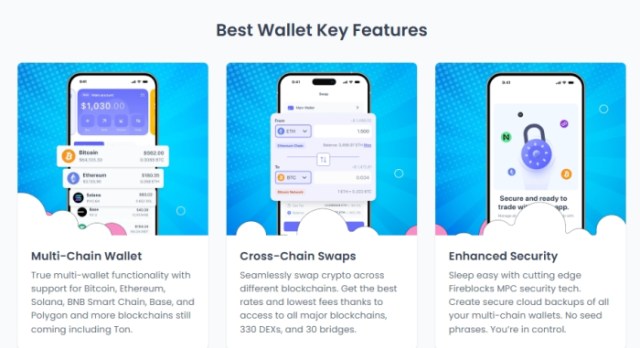
This mobile-first model directly addresses one of the crypto industry’s biggest bottlenecks: the steep usability gap that keeps mainstream users on centralized exchanges. Read more in our Best Wallet review.

At the time of writing, the $BEST presale is live at $0.025895 per token, with its verified contract on Etherscan showing over 76K transactions as of November 2025, a strong signal of community participation and transparency.
Best Wallet presale is now live.

Early investors are also drawn to the project’s staking program, offering up to 78% APY, and its upcoming gasless transaction system, which aims to eliminate one of DeFi’s biggest user pain points: transaction friction.

Right now, users can access decentralized swaps across major blockchains from Bitcoin to Solana without leaving the app, and the Token Launchpad feature allows $BEST holders to gain early access to emerging presales with the earliest entry opportunity.

In the same way that Sacks envisions a future where financial power shifts toward user-owned digital networks, Best Wallet translates that vision into a tangible product — one that democratizes self-custody while maintaining the simplicity of a modern mobile bank.

See the full Best Wallet roadmap.

The $BEST Token — Macro and Market Perspective

Historically, bear markets have proven to be incubation periods for next-cycle leaders. In 2018, it was Layer 1 networks; in 2020, it was DeFi protocols; in 2024, it was meme coins.

The next wave, according to crypto analysts, will be ‘wallet-native ecosystems’, platforms where identity, yield, and cross-chain liquidity converge under a single, secure interface.

By that measure, Best Wallet Token sits at the epicenter of one of crypto’s most scalable narratives. It provides the missing infrastructure for the next billion Web3 users — not just storage, either. The project will soon expand to offer accessible yield and cross-chain financial tools integrated directly into a single app.

📖 Learn how to buy $BEST before the presale ends on Nov 28, 2025.

📈 Analyst $BEST Token Projection: If $BEST captures even 0.05% of the global crypto wallet market share — roughly 250,000 active users — conservative forecasts estimate a price range of $0.24 to $0.62 in 2026, marking a potential 9–23x upside from its current presale valuation. This projection, while speculative, aligns with the rising demand for mobile DeFi access points as crypto adoption matures.

➡️ Join $BEST today to get DAO voting rights.

This article is for informational purposes only and should not be taken as financial advice. Always perform independent research before investing in cryptocurrencies or presales.

Authored by Bogdan Patru, Bitcoinist
https://bitcoinist.com/david-sacks-crypto-future-best-wallet-token-presale

Editorial Process for bitcoinist is centered on delivering thoroughly researched, accurate, and unbiased content. We uphold strict sourcing standards, and each page undergoes diligent review by our team of top technology experts and seasoned editors. This process ensures the integrity, relevance, and value of our content for our readers.

As a crypto writer, Bogdan’s responsibilities are split between researching and writing articles and entertaining the team with his humor bordering on the politically incorrect, an aspiring Bill Burr, if you will. Thanks to his 12+ years of writing experience in just as many fields, including tech, cybersecurity, modelling, fitness, crypto, and other topics-that-shall-not-be-named, he's become a genuine asset to the team. While his position as a senior writer at PrivacyAffairs thought him valuable lessons about the power of self-management, his entire writing career was and is an exercise in self-improvement. Now, he's ready to sink his teeth into crypto and teach people how to take control of their own money on the blockchain. With fiat as an eternally devaluing currency, Bitcoin and altcoins seem like the best-fitting alternative for Bogdan. Bogdan’s biggest professional accomplishment, aside from securing a position as a main writer for Bitcoinist, was his 5-year run as a writing manager at Blackwood Productions, where he coordinated a team of four writers. During that time, he learned the value of teamwork and that of creating a working environment that breeds efficiency, positivity, and friendship.

Lecturas Relacionadas

Previsión del precio del token Venice: VVV apunta a $15 a medida que los ingresos superan los $100 millones

El token Venice (VVV) ha llamado la atención tras un fuerte repunte de precio, impulsado por el crecimiento de la plataforma de IA Venice. Actualmente cotiza alrededor de $13.71, con ganancias del 12,29% en un día y del 16,30% en una semana. El volumen de negociación superó los $20 millones en 24 horas. El cofundador Eric Voorhees destacó que los ingresos anualizados de Venice han superado los $100 millones, alcanzando rentabilidad en el primer trimestre. La plataforma cuenta con 3,5 millones de usuarios y 1,7 millones de llamadas API diarias. El modelo tokenómico quema VVV con el uso de créditos API, habiendo eliminado ya 33,7 millones de tokens (42% de la oferta). El equipo posee más de 30 millones de VVV sin vender. Técnicamente, el token ha recuperado sus medias móviles clave y se enfrenta a una resistencia importante en $13,50. Un cierre sostenido por encima podría impulsar el precio hacia $14,50 y el nivel psicológico de $15. Los soportes inmediatos se sitúan en $13,18-$13,00 y $12,70-$12,41. Sin embargo, el interés abierto en derivados ($55,72 millones) sigue muy por debajo de máximos anteriores, y los flujos netos en spot son negativos (cerca de -$160.970), lo que señala cierta cautela. El movimiento actual parece impulsado más por demanda spot que por especulación apalancada. El futuro cercano depende de la capacidad de mantener el precio por encima de $13,50. Los sólidos fundamentales de Venice AI podrían ser el catalizador para un mayor avance, pero la toma de beneficios y los flujos de salida representan riesgos a corto plazo.

cryptonews.ruHace 18 min(s)

Previsión del precio del token Venice: VVV apunta a $15 a medida que los ingresos superan los $100 millones

cryptonews.ruHace 18 min(s)

¿Por fin han empezado a pelear los filtros de fabricación china?

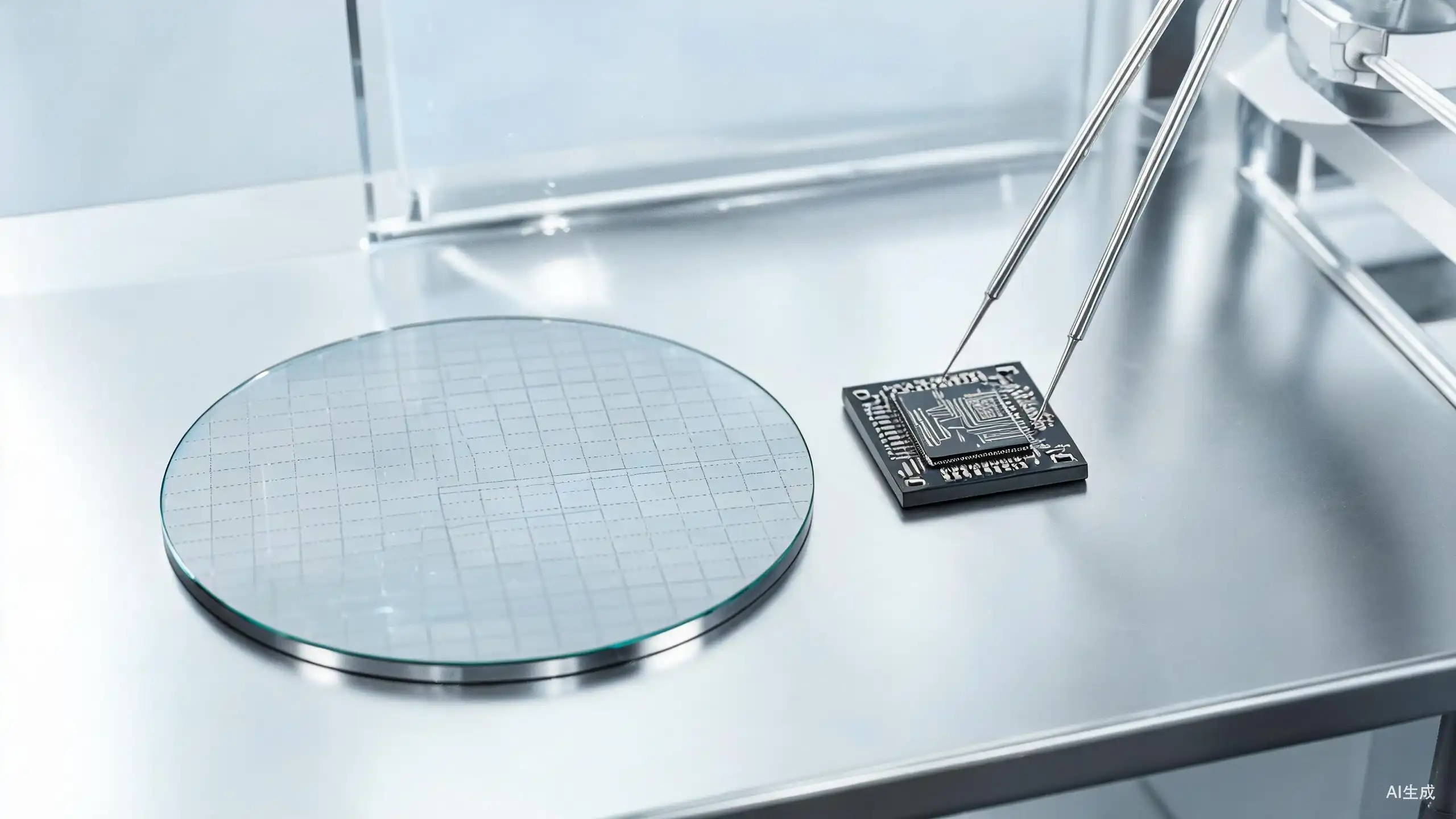
Los filtros de RF, componentes clave en los teléfonos móviles para gestionar señales inalámbricas, son un mercado en crecimiento impulsado por el 5G. Aunque China representa alrededor del 36% del mercado global de chips de front-end de RF, los fabricantes chinos solo poseen aproximadamente el 10% de la cuota doméstica, dominada por empresas estadounidenses, japonesas y coreanas. En particular, el mercado de filtros BAW (Bulk Acoustic Wave), más complejo y de mayor valor, ha estado históricamente concentrado en Broadcom y Qorvo, quienes mantienen fuertes barreras de patentes. Recientemente, la industria china de BAW ha avanzado significativamente, superando la fase de investigación para entrar en producción y competencia comercial. Empresas como Nuosimicro, Wuhan Minsensing, Hansky y NewSemi han desarrollado capacidades de fabricación y han comenzado a enviar productos. Este progreso ha llevado a una creciente rivalidad, ejemplificada por una demanda de patentes presentada por Nuosimicro contra Wuhan Minsensing en junio. Este litigio refleja una nueva etapa de competencia real dentro del sector. El desafío ya no es solo desarrollar la tecnología, sino lograr una comercialización sostenible, superando obstáculos en patentes, rendimiento, costes y capacidad de producción. Aunque el camino es difícil, con altos riesgos como lo demuestra la quiebra de la estadounidense Akoustis tras un litigio de patentes, las empresas chinas de BAW finalmente están posicionadas para competir por una parte de este lucrativo mercado.

marsbitHace 26 min(s)

¿Por fin han empezado a pelear los filtros de fabricación china?

marsbitHace 26 min(s)

Zhang Lei, ¿por qué se ha convertido en la mayor carnicería de este año?

El ganador de la suerte más grande del año, Zhang Lei, fundador de Puzhun Laser, vio cómo las acciones de su empresa, recién listadas en la STAR Market, se dispararon un 488.61% en su debut, generando ganancias de hasta 556,600 yuanes por lote para los suscriptores. Esta "carne gorda" récord se basa en una sólida tecnología: láseres ultraprecisos con una anchura de línea extremadamente estrecha (kHz/Hz) esenciales para computación cuántica, utilizados por líderes mundiales como Harvard y Caltech. Fundada en 2017, la empresa pivotó desde satisfacer la demanda de investigación (como el primer cliente, USTC) hacia aplicaciones industriales, especialmente en semiconductores, ofreciendo fuentes de luz DUV para inspección de obleas. Este movimiento impulsó los ingresos del segmento de semiconductores a 104 millones de yuanes en 2025, con un margen bruto general superior al 69% durante tres años. Zhang Lei, con un 41.04% de participación, personifica el éxito de un modelo de "capital paciente". Recibió apoyo temprano crucial del Hangzhou Institute of Optics and Fine Mechanics, parte del ecosistema de fondos gubernamentales de Hangzhou (clúster de 300,000 millones de yuanes) diseñado para acompañar a científicos-empresarios, reduciendo requisitos de re-inversión y ampliando horizontes de inversión. Este caso, junto con el de Unitree Robotics, ilustra cómo Hangzhou está construyendo una red densa de apoyo para la tecnología dura, ganando reconocimiento como muestra nacional de finanzas tecnológicas. La paciencia estratégica, ya sea la tenacidad de Hefei con Changxin Technology o la densidad institucional de Hangzhou, es finalmente lo que transforma la ciencia de laboratorio en éxitos de mercado.

marsbitHace 31 min(s)

Zhang Lei, ¿por qué se ha convertido en la mayor carnicería de este año?

marsbitHace 31 min(s)

Trading

Spot
活动图片