Feds Demand Five Years for Samourai Wallet Founders: Best Wallet Remains Private

bitcoinistPublicado a 2025-11-04Actualizado a 2025-11-04

Resumen

Quick Facts: 1️⃣ Prosecutors want the full five-year prison sentence for Samourai Wallet's founders after they pleaded guilty to an...

Trusted Editorial content, reviewed by leading industry experts and seasoned editors. Ad Disclosure

Quick Facts:

1️⃣ Prosecutors want the full five-year prison sentence for Samourai Wallet’s founders after they pleaded guilty to an illegal money-transmitting charge.

2️⃣ A key piece of evidence is an internal message where a founder called their mixing feature ‘money laundering for Bitcoin.’

3️⃣ Best Wallet remains a private and secure multi-chain wallet for all your crypto needs.

Get ready for a tense week in the world of crypto law. The co-founders of the privacy-focused Samourai Wallet, Keonne Rodrigues and William Lonergan Hill, are due in court for sentencing, and US prosecutors are demanding the maximum five years in prison for both men.

The government isn’t pulling any punches, painting Rodriguez and Hill as anything but simple software developers.

In a new filing, prosecutors argue that the pair were basically running a digital ‘money laundering for Bitcoin’ service, actively encouraging criminals to use the platform to hide their dirty money. They’re definitely not buying the defense’s claim that they were just bystanders.

Here’s a breakdown:

  • The Crime: The duo pleaded guilty back in July to conspiracy to operate an unlicensed money-transmitting business. This was strategic, as it let them avoid three more serious charges, including money laundering, which carries a 20-year sentence.
  • The Stakes: They face up to five years on the charge they admitted to. Prosecutors say that over $237M in criminal cash, from drug cartels, darknet markets like Silk Road, and even sanctioned entities, flowed through Samourai’s mixing service.
  • The Evidence: The government’s smoking gun? Internal messages in which one of the founders allegedly referred to the mixing feature as ‘money laundering for Bitcoin’ and even promoted the tool on dark web forums as a way to ‘clean dirty Bitcoin.’

While the court’s probation office suggested a shorter 42-month sentence, the prosecutors are determined to make a statement by getting the full five-year term.

This case is seen as a huge test for the crypto community, raising major alarms for developers and privacy advocates who worry that simply creating tools for financial anonymity could now be seen as a crime.

It’s a high-profile showdown that’s putting the entire concept of crypto privacy under intense scrutiny. The legal crackdown on crypto mixers like Samourai Wallet underscores a fundamental tension in the industry: the clash between financial anonymity and regulatory compliance.

As the spotlight shifts away from privacy-focused tools targeted by law enforcement, the market is increasingly looking toward all-in-one, multi-chain wallets that offer robust features alongside transparent, audited security. One player standing out is Best Wallet.

Best Wallet: The New Guard of Secure Crypto Management

Unlike the old-guard, which often focused on singular aspects like deep anonymity (as Samourai did), Best Wallet is positioning itself as the gold standard for secure, non-custodial, multi-chain asset management.

It’s an all-in-one platform that’s racked up a huge user base by offering features that go far beyond simple storage, making it a powerful and secure alternative in the wake of all these regulatory crackdowns.

What truly sets Best Wallet apart is its next-level security and commitment to making crypto accessible without sacrificing safety. It ditches the biggest point of failure for most users, the easily lost or phished seed phrase, by using Fireblocks’ secure multi-party computation technology.
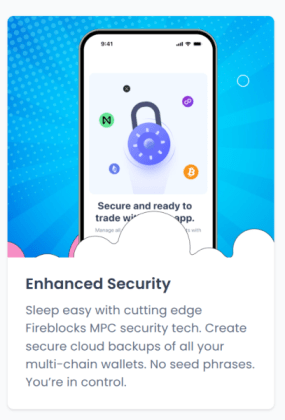
Infographic explaining the security features of Best Wallet.

This kind of military-grade security, combined with features like biometric login and advanced anti-fraud checks, gives you real peace of mind.

On the functionality side, the wallet is a hub for everything: you can manage, swap, and trade assets across six blockchains, including Bitcoin, Ethereum, and Solana. And the team has plans to expand this to over 60 blockchains.

Plus, its integrated DEX aggregator automatically scouts hundreds of exchanges to guarantee you get the best price and lowest fees on every single trade.

Best Wallet is built for the modern crypto user who needs speed, security, and smart trading all in one place. It’s no surprise it’s at the number one spot on our list of the best crypto wallets.

$BEST: The Fuel Behind Best Wallet

The entire Best Wallet ecosystem is fueled by its native asset, Best Wallet Token ($BEST), which is designed to be much more than just a typical crypto coin. This token is built on utility and access, and it’s why the ongoing presale has already raised a massive amount – close to $17M.

Holding $BEST essentially means a VIP pass to the entire ecosystem. The most direct benefit is a significant reduction in transaction fees for swaps and trades made within the wallet. It’s one of the main reasons our experts see $BEST potentially reaching $0.072 by the end of 2025.

But the real game-changer is the exclusive early access to the Upcoming Tokens launchpad. This allows you to get in on the top high-potential crypto presales through a vetted, secure channel, eliminating the risk of falling for scam links.
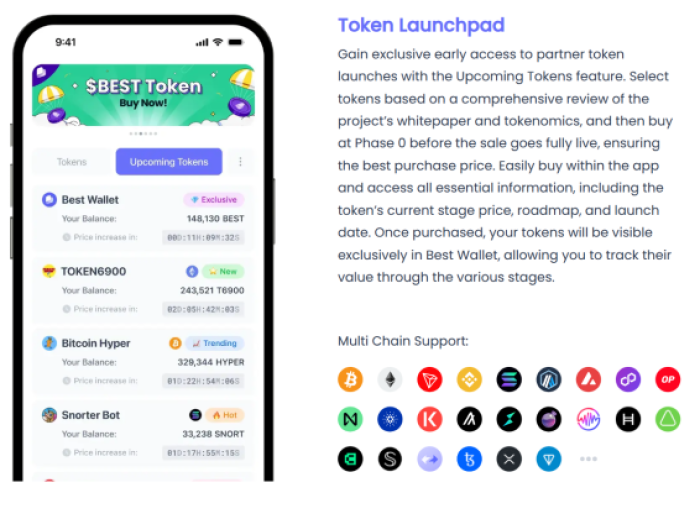
Token Launchpad explanation and the planned roll out for additional blockchains.

As the team continues to build out its roadmap, the utility will grow, with plans to integrate $BEST with a future crypto debit card for reduced spending fees, enhanced staking rewards, and full governance rights over the platform.

Time is running out, though, if you want to join the presale and secure your $BEST at its current early-bird price of $0.025895, with 78% staking rewards. The Best Wallet team has announced that the presale will end on November 28 – so the clock is ticking.

Remember, this is not intended as financial advice, and you should always do your own research before making any investments.

Authored by Ben Wallis, Bitcoinist – https://bitcoinist.com/samourai-wallet-devs-crypto-laundering-charges-best-wallet-stays-private/

Editorial Process for bitcoinist is centered on delivering thoroughly researched, accurate, and unbiased content. We uphold strict sourcing standards, and each page undergoes diligent review by our team of top technology experts and seasoned editors. This process ensures the integrity, relevance, and value of our content for our readers.

Ben is a freelance writer specializing in crypto developments (mainly altcoins) and the intricate ways global economics shape the digital asset space. His B.Ed. in Education provides a unique foundation for his writing, enabling him to distill complex crypto concepts and market shifts into clear, digestible insights. This skill is key to helping readers adapt and apply their understanding to the ever-evolving world of crypto investment. Passionate about making crypto accessible, Ben crafts content designed to educate a broad audience, from current market events to the essential foundational knowledge that underpins them. His goal is to empower readers through understanding. When he’s not immersed in crypto analysis and breaking down complex topics, Ben is an avid Pokémon fan and enjoys all things Disney.

Lecturas Relacionadas

Previsión del precio del token Venice: VVV apunta a $15 a medida que los ingresos superan los $100 millones

El token Venice (VVV) ha llamado la atención tras un fuerte repunte de precio, impulsado por el crecimiento de la plataforma de IA Venice. Actualmente cotiza alrededor de $13.71, con ganancias del 12,29% en un día y del 16,30% en una semana. El volumen de negociación superó los $20 millones en 24 horas. El cofundador Eric Voorhees destacó que los ingresos anualizados de Venice han superado los $100 millones, alcanzando rentabilidad en el primer trimestre. La plataforma cuenta con 3,5 millones de usuarios y 1,7 millones de llamadas API diarias. El modelo tokenómico quema VVV con el uso de créditos API, habiendo eliminado ya 33,7 millones de tokens (42% de la oferta). El equipo posee más de 30 millones de VVV sin vender. Técnicamente, el token ha recuperado sus medias móviles clave y se enfrenta a una resistencia importante en $13,50. Un cierre sostenido por encima podría impulsar el precio hacia $14,50 y el nivel psicológico de $15. Los soportes inmediatos se sitúan en $13,18-$13,00 y $12,70-$12,41. Sin embargo, el interés abierto en derivados ($55,72 millones) sigue muy por debajo de máximos anteriores, y los flujos netos en spot son negativos (cerca de -$160.970), lo que señala cierta cautela. El movimiento actual parece impulsado más por demanda spot que por especulación apalancada. El futuro cercano depende de la capacidad de mantener el precio por encima de $13,50. Los sólidos fundamentales de Venice AI podrían ser el catalizador para un mayor avance, pero la toma de beneficios y los flujos de salida representan riesgos a corto plazo.

cryptonews.ruHace 18 min(s)

Previsión del precio del token Venice: VVV apunta a $15 a medida que los ingresos superan los $100 millones

cryptonews.ruHace 18 min(s)

¿Por fin han empezado a pelear los filtros de fabricación china?

Los filtros de RF, componentes clave en los teléfonos móviles para gestionar señales inalámbricas, son un mercado en crecimiento impulsado por el 5G. Aunque China representa alrededor del 36% del mercado global de chips de front-end de RF, los fabricantes chinos solo poseen aproximadamente el 10% de la cuota doméstica, dominada por empresas estadounidenses, japonesas y coreanas. En particular, el mercado de filtros BAW (Bulk Acoustic Wave), más complejo y de mayor valor, ha estado históricamente concentrado en Broadcom y Qorvo, quienes mantienen fuertes barreras de patentes. Recientemente, la industria china de BAW ha avanzado significativamente, superando la fase de investigación para entrar en producción y competencia comercial. Empresas como Nuosimicro, Wuhan Minsensing, Hansky y NewSemi han desarrollado capacidades de fabricación y han comenzado a enviar productos. Este progreso ha llevado a una creciente rivalidad, ejemplificada por una demanda de patentes presentada por Nuosimicro contra Wuhan Minsensing en junio. Este litigio refleja una nueva etapa de competencia real dentro del sector. El desafío ya no es solo desarrollar la tecnología, sino lograr una comercialización sostenible, superando obstáculos en patentes, rendimiento, costes y capacidad de producción. Aunque el camino es difícil, con altos riesgos como lo demuestra la quiebra de la estadounidense Akoustis tras un litigio de patentes, las empresas chinas de BAW finalmente están posicionadas para competir por una parte de este lucrativo mercado.

marsbitHace 26 min(s)

¿Por fin han empezado a pelear los filtros de fabricación china?

marsbitHace 26 min(s)

Zhang Lei, ¿por qué se ha convertido en la mayor carnicería de este año?

El ganador de la suerte más grande del año, Zhang Lei, fundador de Puzhun Laser, vio cómo las acciones de su empresa, recién listadas en la STAR Market, se dispararon un 488.61% en su debut, generando ganancias de hasta 556,600 yuanes por lote para los suscriptores. Esta "carne gorda" récord se basa en una sólida tecnología: láseres ultraprecisos con una anchura de línea extremadamente estrecha (kHz/Hz) esenciales para computación cuántica, utilizados por líderes mundiales como Harvard y Caltech. Fundada en 2017, la empresa pivotó desde satisfacer la demanda de investigación (como el primer cliente, USTC) hacia aplicaciones industriales, especialmente en semiconductores, ofreciendo fuentes de luz DUV para inspección de obleas. Este movimiento impulsó los ingresos del segmento de semiconductores a 104 millones de yuanes en 2025, con un margen bruto general superior al 69% durante tres años. Zhang Lei, con un 41.04% de participación, personifica el éxito de un modelo de "capital paciente". Recibió apoyo temprano crucial del Hangzhou Institute of Optics and Fine Mechanics, parte del ecosistema de fondos gubernamentales de Hangzhou (clúster de 300,000 millones de yuanes) diseñado para acompañar a científicos-empresarios, reduciendo requisitos de re-inversión y ampliando horizontes de inversión. Este caso, junto con el de Unitree Robotics, ilustra cómo Hangzhou está construyendo una red densa de apoyo para la tecnología dura, ganando reconocimiento como muestra nacional de finanzas tecnológicas. La paciencia estratégica, ya sea la tenacidad de Hefei con Changxin Technology o la densidad institucional de Hangzhou, es finalmente lo que transforma la ciencia de laboratorio en éxitos de mercado.

marsbitHace 31 min(s)

Zhang Lei, ¿por qué se ha convertido en la mayor carnicería de este año?

marsbitHace 31 min(s)

Trading

Spot
活动图片