Whales Inject an Extra $329K+ Into Bitcoin Hyper Ahead of Uptober – The Next 1000x Crypto?

bitcoinistPublicado a 2025-09-30Actualizado a 2025-09-30

Resumen

With ‘Uptober’ just around the corner (literally tomorrow), anticipation is building for what could be a pivotal moment for $BTC....

Trusted Editorial content, reviewed by leading industry experts and seasoned editors. Ad Disclosure

With ‘Uptober’ just around the corner (literally tomorrow), anticipation is building for what could be a pivotal moment for $BTC.

October is historically one of the strongest months for the world’s largest crypto, with average returns at 21.89%.

So, what better time for the Bitcoin Hyper Layer-2 (L2) to soon go live? Suppose this peak demand takes shape, it could position itself as a go-to solution for scaling Bitcoin, precisely when the network needs it most.

It’s no surprise, then, that whales have latched on. Just yesterday, three invested $113.8K, $109.9K, and $105.4K into the ecosystem’s $HYPER presale, signaling strong confidence in the L2’s potential.

Suppose this buzz continues, $HYPER might even become the next 1000x crypto.

$BTC Rockets 4.5% in One Month, Before Possible October Rally

Since last month, $BTC has increased by over 4.5%, a sign that bullish momentum may already be underway.

Yes, $BTC has plummeted from $114K to $113K since just yesterday. But it’s not all doom and gloom for the #1 crypto.

Even during the most challenging market cycles, October is often a turning point where $BTC sentiment flips from bearish to bullish.

Take 2023 as a prime example. After a modest 3.91% gain in September, it soared by 28.52% the following month.
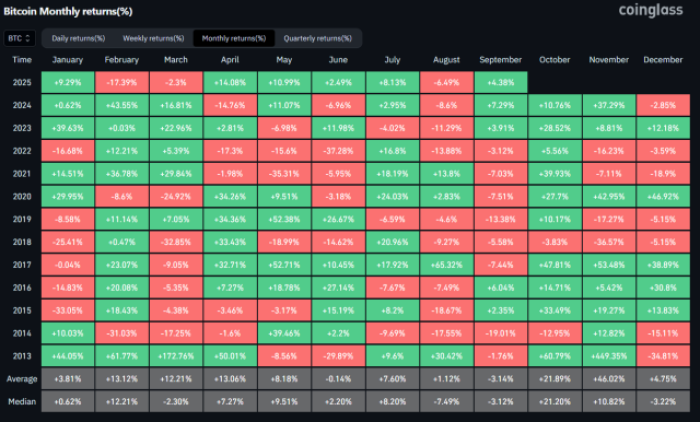
Bitcoin monthly returns on Coinglass.
Source: Coinglass

Given this, it’s no wonder that institutions are positioning themselves for what might be another legendary spike.

Just yesterday, Michael Saylor announced that his firm – Strategy (formerly MicroStrategy) – has acquired an additional 196 $BTC, worth roughly $221M.

As of September, Strategy now holds an eye-boggling 640,031 $BTC valued at $47.35B+. The average price per token is approximately $73,983.

Michael Strategy announced Strategy’s most recent BTC acquisition on X.
Source: X (Michael Saylor)

Strategy isn’t the only public company acquiring sizable amounts of $BTC in the hope of capitalizing on the next bull run.

Over the past 30 days, MARA Holdings has boosted its stack to 52,477 $BTC valued at nearly $5.94B.

XXI also bets big on the crypto leader jumping to greater heights. In total, it owns 43,515 $BTC, currently worth approximately $4.92B.
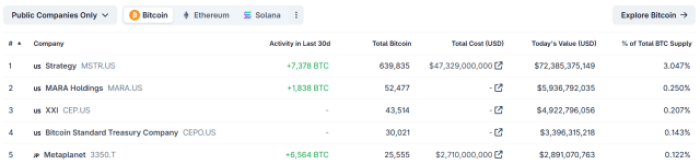
BTC held by public companies on CoinGecko.
Source: CoinGecko

When firms commit billions to $BTC, it validates the asset’s role as a store of value as opposed to being yet another speculative asset.

In turn, they fuel demand for $BTC and boost market confidence. But there’s a hitch: as the coin’s popularity surges and transaction volumes increase, the network often faces mounting pressure.

Bitcoin Processes Fees 43%+ Slower Than Ethereum

Bitcoin’s no stranger to scalability challenges. Today, the network can process just 12.47 transactions per second (tps), 43.32% lower than Ethereum’s 22.01 tps.

Even at its record level, Bitcoin has only managed 13.2 tps – a far cry from Ethereum’s 62.34 tps and nowhere near Solana’s 65K tps.

The network’s limited throughput often causes higher gas costs during peak activity. Following the halving event last October, average transaction fees rose as high as $8.36 one month later.

While fees have since dropped to just $0.84, they’re still no stranger to fluctuating. This makes it tricky for everyday traders to rely on Bitcoin for everyday transactions.
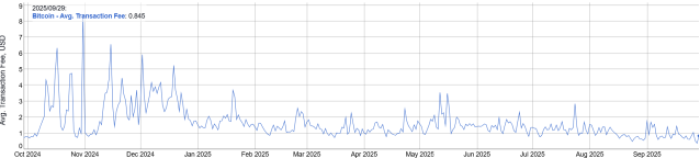
Average Bitcoin transaction fee.
Source: BitInfoCharts

Thankfully, there’s a solution. It’s Bitcoin Hyper, and it’s getting set to launch this quarter to address the network’s bottlenecks.

Bitcoin Hyper L2 to Bring Solana’s Speeds to Bitcoin

Built on the Solana Virtual Machine (SVM), Bitcoin Hyper strives to deliver Solana-level speeds and scalability to Bitcoin. In turn, it’ll enable thousands of tps at a lower price tag.

For even faster, cheaper, and more versatile transactions, the L2 will leverage a Canonical Bridge. But that’s not all; it’ll help turn Bitcoin into a hub for DeFi, dApps, launchpads, and even the best meme coins.
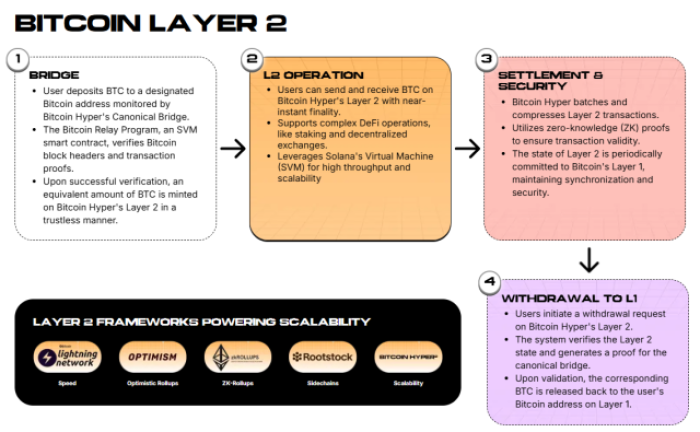
How the Bitcoin Hyper bridge works.
Source: Bitcoin Hyper

All is achieved by enabling $BTC to move seamlessly between the Bitcoin base layer and the Hyper L2 ecosystem. And once bridged, $BTC can interact directly with smart contracts, dApps, and liquidity protocols.

$HYPER Fuels L2 Growth & 61% Staking Rewards

$HYPER is at the heart of the entire ecosystem, supercharging every aspect of its utility and growth. A sizable 30% of its total token supply is allocated to fund development, after all.

Also fueling its long-term growth is an additional 25% of $HYPER being earmarked for the ecosystem treasury.
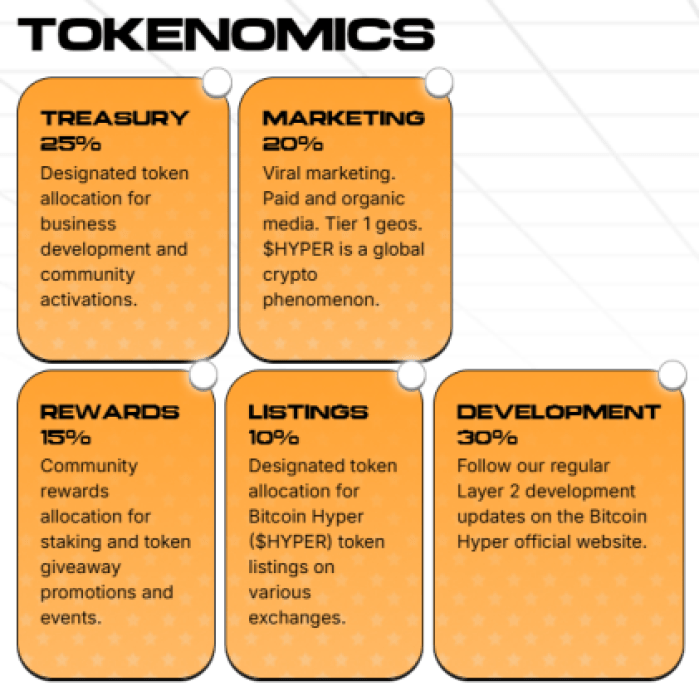
30% of Bitcoin Hyper goes to development funding.
Source: Bitcoin Hyper

Holding $HYPER doesn’t only mean you’ll contribute to the project’s sustainability; it also unlocks meaningful utility.

By purchasing $HYPER on presale – now available for $0.013005 – you’ll gain governance rights, enjoy reduced gas fees, and can stake your token at a 61% APY.

But time is of the essence: the APY will nosedive as more investors lock up their tokens. So, now’s an opportune moment to start staking $HYPER for the greatest possible gains.

Our Bitcoin Hyper price prediction also anticipates $HYPER to surpass $0.32 this year, following its listing on major CEXs. So, joining now could generate 20 times the returns (and that’s not even counting the staking rewards).

Join Bitcoin Hyper today.

We’re not financial advisors. Always do your own research and never invest more than you’d be sad to lose. 

Authored by Leah Waters, Bitcoinist – https://bitcoinist.com/bitcoin-hyper-next-1000x-crypto-whales-buy-329k/

Editorial Process for bitcoinist is centered on delivering thoroughly researched, accurate, and unbiased content. We uphold strict sourcing standards, and each page undergoes diligent review by our team of top technology experts and seasoned editors. This process ensures the integrity, relevance, and value of our content for our readers.

Leah is a British journalist with a BA in Journalism, Media, and Communications and nearly a decade of content writing experience. Over the last four years, her focus has primarily been on Web3 technologies, driven by her genuine enthusiasm for decentralization and the latest technological advancements. She has contributed to leading crypto and NFT publications – Cointelegraph, Coinbound, Crypto News, NFT Plazas, Bitcolumnist, Techreport, and NFT Lately – which has elevated her to a senior role in crypto journalism. Whether crafting breaking news or in-depth reviews, she strives to engage her readers with the latest insights and information. Her articles often span the hottest cryptos, exchanges, and evolving regulations. As part of her ploy to attract crypto newbies into Web3, she explains even the most complex topics in an easily understandable and engaging way. Further underscoring her dynamic journalism background, she has written for various sectors, including software testing (TEST Magazine), travel (Travel Off Path), and music (Mixmag). When she's not deep into a crypto rabbit hole, she's probably island-hopping (with the Galapagos and Hainan being her go-to's). Or perhaps sketching chalk pencil drawings while listening to the Pixies, her all-time favorite band.

Lecturas Relacionadas

Fidelity advierte: el auge de los agentes de IA no necesariamente es una fiesta para las blockchains públicas

**Fidelity advierte: el auge de los agentes de IA no garantiza un festín para las blockchains públicas** La aparición de agentes de IA autónomos, capaces de gestionar tareas como pagos, podría apuntar a un mayor uso de cadenas de bloques. Sin embargo, Fidelity Digital Assets advierte que conectar directamente este auge con una revalorización de las criptomonedas nativas supone varias suposiciones arriesgadas. Primero, es posible que muchos agentes de IA, especialmente en entornos corporativos, operen en sistemas cerrados o privados que priorizan velocidad, control y cumplimiento normativo, en lugar de en redes públicas. Segundo, incluso si las transacciones en cadena aumentan, su valor podría ser capturado por stablecoins o proveedores de servicios, sin beneficiar directamente al token nativo de la blockchain. Tercero, aunque la IA abarate y acelere el desarrollo de software y contratos inteligentes, una mayor oferta no se traduce automáticamente en más demanda real o valor económico, pudiendo llevar a una rápida homogeneización. Además, la IA también reduce el coste de los ataques, aumentando los riesgos de seguridad si la expansión no va acompañada de infraestructuras de auditoría maduras. Por último, las grandes instituciones pueden necesitar blockchains con mayores controles de permisos e identidad, en lugar de redes completamente abiertas. En conclusión, Fidelity subraya que la narrativa combinada de IA y blockchain debe examinarse con detalle. La clave no es si la IA usará blockchains, sino **qué infraestructuras capturarán realmente el valor económico generado** y cómo se distribuirá ese valor en el ecosistema. Es necesario pasar de las historias especulativas a un análisis económico concreto.

marsbitJusto ahora

Fidelity advierte: el auge de los agentes de IA no necesariamente es una fiesta para las blockchains públicas

marsbitJusto ahora

Tras investigar Silicon Valley, Goldman Sachs concluye: Los Agentes entran en la era de la ejecución, la competencia de la IA se desplaza hacia los flujos de trabajo, emerge el modelo del mundo

Tras una visita al ecosistema de IA en Silicon Valley, Goldman Sachs concluye que la inteligencia artificial está entrando en una nueva fase: de "saber responder" a "poder ejecutar". La comercialización de la IA está evolucionando desde suscripciones por usuario hacia modelos basados en consumo, volumen de transacciones o resultados. Los agentes de IA están pasando de ser herramientas de asistencia a ejecutores autónomos de flujos de trabajo, lo que desplaza el valor desde el modelo en sí hacia los datos propietarios, el contexto empresarial y la experiencia de dominio específico. La competencia se centra ahora en quién domina e integra realmente los flujos de trabajo empresariales, siendo la "controlabilidad" y la trazabilidad de las decisiones barreras clave para la adopción masiva. Se observa una división del trabajo entre los modelos: los modelos de vanguardia (cerrados) se reservarán para tareas complejas de alto valor, mientras que los modelos de código abierto, con un coste inferior, absorberán la mayor parte de las tareas estandarizadas y del consumo de tokens. Goldman Sachs estima que hasta el 90% de los tokens de inferencia podrían ir a modelos de código abierto en los próximos 12-18 meses. Paralelamente, el interés de los investigadores se desplaza hacia los "modelos del mundo" (world models), que requieren comprender entornos físicos, causalidad y dinámicas del mundo real, lo que aumenta el valor de los datos propietarios de sectores industriales, científicos y robóticos. Esta evolución hacia la IA física podría generar una segunda curva de crecimiento de la demanda de potencia de cálculo, estimándose un aumento de aproximadamente 24 veces en los próximos cinco años, beneficiando a proveedores de infraestructura en la nube y de computación.

marsbitJusto ahora

Tras investigar Silicon Valley, Goldman Sachs concluye: Los Agentes entran en la era de la ejecución, la competencia de la IA se desplaza hacia los flujos de trabajo, emerge el modelo del mundo

marsbitJusto ahora

Telegram presentó la tecnología de proxy WEB: camuflaje del tráfico como sitios web normales

Telegram ha presentado una tecnología experimental de proxy web que enmascara el tráfico de la aplicación como navegación web normal. Esta función, lanzada el 21 de agosto de 2026, utiliza una sesión WebView basada en HTTPS o WebSocket para transmitir datos de MTProxy, haciéndolos indistinguibles de una conexión web legítima y ofreciendo una nueva perspectiva para el acceso en regiones con restricciones. El sistema canaliza múltiples conexiones lógicas de Telegram a través de un único canal encriptado, que externamente parece la carga de una página web. Un servidor retransmisor separa este flujo en conexiones individuales sin descifrar el contenido, preservando la privacidad. El proxy opera en un dominio HTTPS estándar que también aloja un sitio web público real, activándose solo con un parámetro URL específico, lo que lo oculta de los sistemas de detección automática. Actualmente en fase de prueba, la tecnología está disponible para Telegram Desktop y un cliente experimental de Android, con planes para iOS. Su implementación utiliza protocolos web comunes, lo que complica la tarea de los sistemas de filtrado que deben elegir entre bloquear todo el tráfico HTTPS o permitir el acceso a servicios normales. Esta técnica recuerda al método de "domain fronting" de la década anterior y plantea la pregunta sobre su durabilidad frente a futuras adaptaciones de los sistemas de análisis de tráfico.

cryptonews.ruHace 17 min(s)

Telegram presentó la tecnología de proxy WEB: camuflaje del tráfico como sitios web normales

cryptonews.ruHace 17 min(s)

Justin Sun declara la guerra a una altcoin: 'Congela los activos de los usuarios mediante una función oculta'

Justin Sun acusa a World Liberty Financial de incorporar funciones de "puerta trasera" en su stablecoin USD1, que permitirían congelar o destruir los activos de los usuarios en cualquier momento. Según Sun, su equipo legal logró que las demandas se mantengan en un tribunal federal público de California, en lugar de pasar a un arbitraje privado. Durante el proceso legal, Sun afirma haber descubierto que USD1 posee mecanismos de autorización similares, lo que representa un riesgo significativo para los usuarios, especialmente dentro de las estructuras centralizadas de los stablecoins. También advierte que World Liberty Financial podría haber estado dispuesta a utilizar estas facultades contra los tenedores de sus tokens WLFI en el pasado. Otra preocupación planteada por Sun es la solvencia financiera de la compañía. Sostiene que las reservas colaterales de USD1, valoradas en aproximadamente 4 mil millones de dólares, pertenecen a los usuarios del stablecoin y no podrían utilizarse para cubrir posibles demandas judiciales contra la empresa, que podrían alcanzar cientos de millones de dólares. Sun afirma no haber visto evidencia de que World Liberty Financial tenga capital suficiente para cumplir con posibles fallos judiciales u otras obligaciones, más allá de las reservas de garantía. Por ello, Justin Sun insta a los inversores a ejercer "extrema precaución". Hasta el momento, World Liberty Financial no se ha pronunciado oficialmente sobre estas acusaciones, por lo que las afirmaciones de Sun permanecen como alegaciones no verificadas.

cryptonews.ruHace 1 hora(s)

Justin Sun declara la guerra a una altcoin: 'Congela los activos de los usuarios mediante una función oculta'

cryptonews.ruHace 1 hora(s)

Trading

Spot
活动图片