MemeCore Explodes 244% In Weekly Gains, Sparks Hunt for Next 1000x Altcoins

bitcoinistPublicado a 2025-09-04Actualizado a 2025-09-04

Resumen

The altcoin market is back on the rise. Just look at MemeCore ($M), for instance. Since last week, it has...

Trusted Editorial content, reviewed by leading industry experts and seasoned editors. Ad Disclosure

The altcoin market is back on the rise. Just look at MemeCore ($M), for instance. Since last week, it has spiked by an eye-boggling 244%+.

Today marks the first time $M has reached the $1 mark. It’s now valued at a commendable $1.44 and, at least for the time being, shows no signs of slowing down.

And it’s not the only big mover in the altcoin arena. Pump.fun has jumped by over 10% in the past 24 hours, propelled by a hefty $359.2M in trading volume during the same time period.

With more capital flowing into the top altcoins, now might be the perfect time to explore the next crypto to explode to position yourself for potential gains.

Altcoin Market Exceeds 1.6T, Traders Rotate Away From $BTC

MemeCore and Pump.fun’s rallies align with broader market trends.

With the altcoin market cap above $1.6T, it shows that traders are shifting preference from $BTC – despite it being the world’s largest crypto, currently donning a $110K price tag.
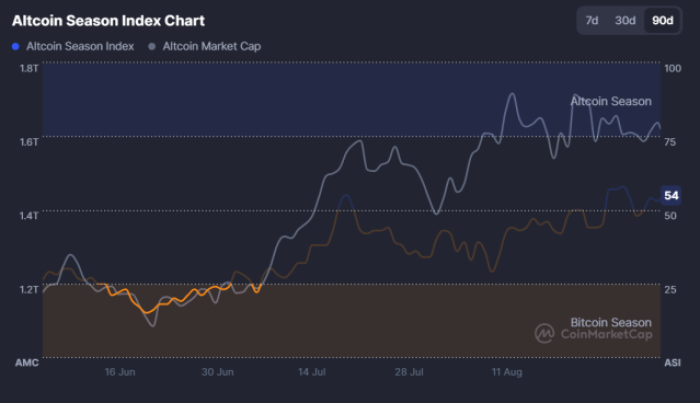
Altcoin Season Index Chart.
Source: CoinMarketCap

Also confirming the altcoin market’s current strength, the Altcoin Season Index (ACI) now sits at 55, up from 43 compared to last month.

In fact, crypto analyst ‘Crypto GEMs’ suggests that the altcoin market is on the verge of its biggest breakout to date.

On a recent X post, they posted a chart that highlights that altcoins surged 34x in 2017 and 68x in 2021–2022 following long accumulation phases.

Now, in 2025, they believe the altcoin sector is about to hit another exciting accumulation period. Their prediction points to a potential 136x rally that could propel the market cap beyond $2.1T.
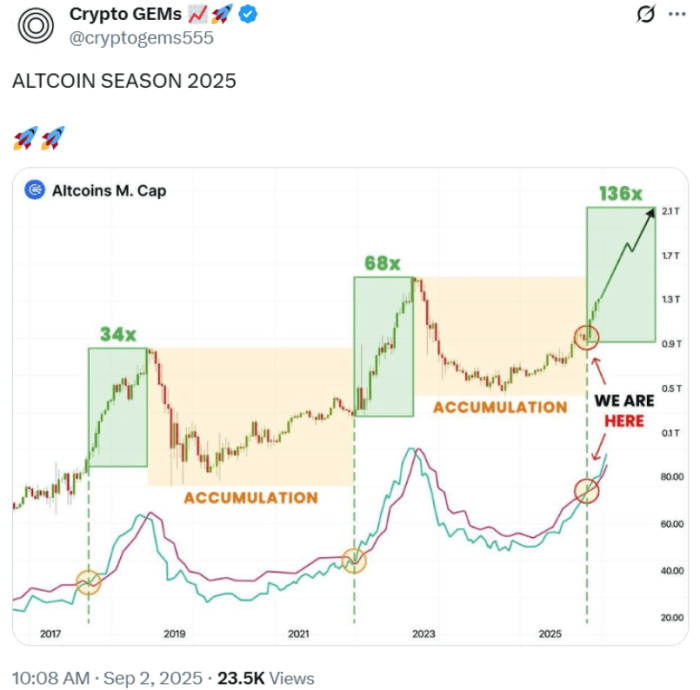
Crypto Gems tweet about alt season

With altcoins poised for even more mighty growth, there may not be a better time to check out top coins with optimal potential.

We have high hopes for Snorter Token ($SNORT), PinLink ($PIN), and Maxi Doge ($MAXI) – and for superb reasons.

1. Snorter Token ($SNORT) – Presale Tops $3.7M as Telegram Bot Launch Nears

Snorter Token ($SNORT) has quickly scooped up $3.7M+ on presale, thanks to its role as the backbone of a novel Telegram trading bot.

Once launched this quarter, Snorter Bot aims to give you a potent edge in the market by allowing you to execute trades instantly, set strategies, and tap into top market opportunitie

All can be achieved through its cutting-edge features, spanning ultra-fast swaps, automated sniping, and copy trading.
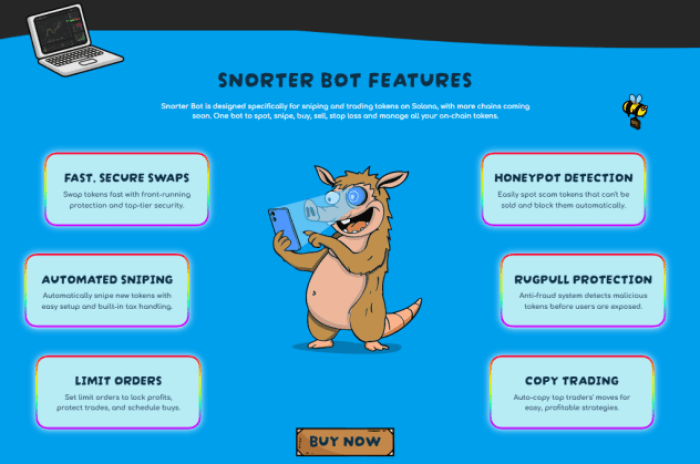
Snorter Bot features.
Source: Snorter Token

First, you can anticipate the bot launching on the Solana network as part of its plan to deliver fast execution with super low fees at just 0.85%. Owing to this, it claims that it’ll override rival bots like Maestro and Trojan.

Then, it’ll expand to Ethereum, BNB Chain, and other EVM networks. This way, you’ll be able to capture the hottest crypto opportunities across networks without having to turn to different platforms and tools.

Best of all, it promises to achieve all this without compromising security. With built-in MEV protection, plus honeypot and rugpull alerts, you can rest assured that the bot will shield you from malicious activity.

To also access premium features, governance rights, and staking rewards (currently at a 125% APY), you can purchase $SNORT on presale for just $0.1033.

But don’t wait around. Once the bot officially goes live and expands multi-chain, it’s anticipated to reach a high of $1.92 in 2026. This means that buying in now could potentially deliver an ROI exceeding 1,759% – and that’s not even counting the passive income from staking rewards.

2. PinLink ($PIN) – RWA-Tokenized Protocol Surges 10% Following Hashrate Initiative Teaser

$PIN is the foundation of PinLink, a cutting-edge RWA-tokenized protocol that connects AI developers with cost-friendly compute power. Why? To unlock new revenue streams for asset owners.

Through ERC-1155 fractionalization, DePin operators can tokenize their assets to raise capital for reinvesting in new infrastructure: expanding compute power, scaling storage, or energy networks.

In return, those who invest in these fractions gain access to steady passive income, even if they don’t own DePin hardware.

If you’re an AI developer, you’ll likely be interested in PinLink’s marketplace that delivers enterprise-grade compute and storage solutions at discounted rates.

$PIN powers the marketplace, enabling transactions, staking, and governance. Additionally, it unlocks dual revenue streams for asset owners.

And it doesn’t end there. PinLink is expanding beyond AI compute with HashLink, its new Bitcoin primitive. It’ll enable future hashrate speculation and direct $BTC payouts via Ethereum – another avenue to give you exposure to mining economics without owning traditionally pricey DePin hardware.
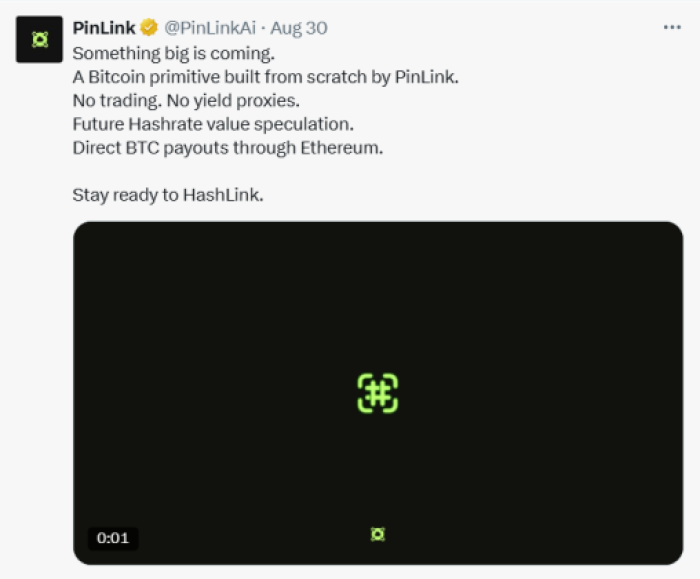
PinLink announced its new hashrate initiative on X.
Source: PinLink

Following this news breaking out, $PIN rose by over 10%. Now signals an opportune time to purchase the token, available for roughly $0.61 on some of the best crypto exchanges.

3. Maxi Doge ($MAXI) – Offers 172% Staking Rewards, Eyes Degen Trading Tournaments

Maxi Doge ($MAXI) is a meme coin on a mission to dominate the $45.1B dog-themed token niche.

As yet another Shiba Inu-inspired coin, it builds on the legacy of the top dogs on the market, $DOGE and $SHIB. But it visually sets itself apart from them, with muscles and a bold heavyweight persona that symbolizes its push toward extreme trading and market strength.
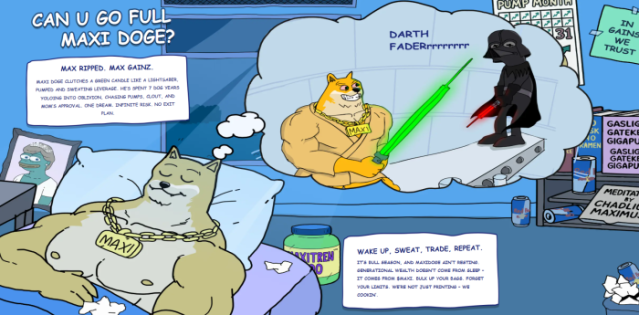
Maxi Doge presale.
Source: Maxi Doge

Despite its meme coin facade and origins, $MAXI wants to bring more to the arena than just speculation, a bit like $SHIB. But instead of launching a DEX or card game like its predecessor, it’s barking up its own path.

Despite only being live on presale thus far, it’s already engaging its community through staking. You can lock up $MAXI to earn daily rewards through smart contract distribution. Right now, its staking APY stands at an eye-catching 172% APY.

To top it off, Maxi Doge plans to host contests and reward top ‘ROI hunters’ with prizes. For the time being, the key details remain under wraps.

The project also aims to integrate futures platform integrations and host gamified tournaments in the future. Then, it’ll offer you a distinct way to partake in degen-style trading. For more information, check out our review.

Considering all the above, it’s no surprise that $MAXI has already raised over $1.8M in presales since launching on July 29, 2025.

You can join the action by acquiring $MAXI on presale for just $0.0002555. And there’s no better time to do precisely that; its price will go up tomorrow and is anticipated to break $0.0024 before 2026 gets going.

Verdict – MemeCore & Pump.fun’s Rally Sparks Growth for Top Altcoins

Hype surrounding altcoins is real, as evidenced by MemeCore and Pump.fun’s surge, plus a rising ASI.

If you’re seeking the next 1000x crypto, it might be wise to consider projects with strong utility and community hype, just like $SNORT, $PIN, and $MAXI.

Whichever one floats your boat, they each have significant growth potential.

Still, only time will truly tell their success. So, as always, DYOR and never invest more than you’d be sad to lose.

Editorial Process for bitcoinist is centered on delivering thoroughly researched, accurate, and unbiased content. We uphold strict sourcing standards, and each page undergoes diligent review by our team of top technology experts and seasoned editors. This process ensures the integrity, relevance, and value of our content for our readers.

Leah is a British journalist with a BA in Journalism, Media, and Communications and nearly a decade of content writing experience. Over the last four years, her focus has primarily been on Web3 technologies, driven by her genuine enthusiasm for decentralization and the latest technological advancements. She has contributed to leading crypto and NFT publications – Cointelegraph, Coinbound, Crypto News, NFT Plazas, Bitcolumnist, Techreport, and NFT Lately – which has elevated her to a senior role in crypto journalism. Whether crafting breaking news or in-depth reviews, she strives to engage her readers with the latest insights and information. Her articles often span the hottest cryptos, exchanges, and evolving regulations. As part of her ploy to attract crypto newbies into Web3, she explains even the most complex topics in an easily understandable and engaging way. Further underscoring her dynamic journalism background, she has written for various sectors, including software testing (TEST Magazine), travel (Travel Off Path), and music (Mixmag). When she's not deep into a crypto rabbit hole, she's probably island-hopping (with the Galapagos and Hainan being her go-to's). Or perhaps sketching chalk pencil drawings while listening to the Pixies, her all-time favorite band.

Lecturas Relacionadas

Diálogo con el fundador de 42 Macro: La "rana hervida a fuego lento" de la Fed y la economía en K

Fuente: "Anthony Pompliano" Organizado por: Felix, PANews En el podcast "Anthony Pompliano", Darius Dale, fundador de 42 Macro, analizó la política monetaria de la Fed, la economía en forma de K y la inflación. Calificó al nuevo presidente de la Fed, Kevin Warsh, como un "halcón con apariencia de paloma", quien posiblemente endurezca la política monetaria en los próximos trimestres para luego poder relajarla. Dale destacó que las expectativas de inflación no predicen resultados futuros; los verdaderos impulsores son factores monetarios y políticos, como el gasto deficitario y la monetización de deuda. Señaló que la Fed no alcanzará su objetivo del 2% de inflación y que su estrategia es una "cocción lenta" (financial repression) para evitar problemas de estabilidad. Sobre la economía en forma de K, explicó que mientras las familias en la parte superior poseen unos 12 billones de dólares en efectivo y consumen intensamente, las de la parte inferior enfrentan tasas de morosidad récord en créditos. Advirtió que quienes no inviertan en activos quedarán rezagados debido al "efecto Cantillón", que transfiere riqueza a los primeros receptores del dinero nuevo. Respecto al mercado bursátil, mencionó que los inversores están trasladando capital de las "siete grandes" tecnológicas hacia empresas más amplias de IA, pero alertó sobre el riesgo de burbuja en los gastos de capital. Finalmente, compartió su experiencia personal sobre la división económica y social, subrayando que todas las personas, independientemente de su origen, buscan dignidad y seguridad para sus familias.

marsbitHace 30 min(s)

Diálogo con el fundador de 42 Macro: La "rana hervida a fuego lento" de la Fed y la economía en K

marsbitHace 30 min(s)

Los ocho padres del Transformer, ¿dónde están ahora?

Ocho investigadores de Google Brain revolucionaron la IA en 2017 con el artículo “Attention Is All You Need”, presentando la arquitectura Transformer. Nueve años después, los ocho autores originales han dejado Google, trazando caminos divergentes en la industria. Noam Shazeer, cofundador de Character.AI y clave en el mecanismo de atención, regresó brevemente a Google DeepMind antes de unirse recientemente a OpenAI. Ashish Vaswani, co-diseñador del modelo, fundó Essential AI, aunque hay rumores de que su equipo podría integrarse en Nvidia. Niki Parmar, después de cofundar Adept AI y Essential AI, ahora trabaja en Anthropic. Jakob Uszkoreit, quien propuso la idea central, fundó Inceptive, aplicando la IA al diseño de moléculas de ARN. Llion Jones, tras una larga carrera en Google, cofundó Sakana AI en Tokio, explorando modelos colaborativos inspirados en la naturaleza. Aidan N. Gomez, el más joven del grupo, fundó Cohere, centrada en soluciones empresariales de IA. Łukasz Kaiser, con un trasfondo teórico, es investigador clave en OpenAI, contribuyendo a modelos como GPT-4 y o1. Illia Polosukhin, co-diseñador del Transformer, es cofundador del protocolo blockchain NEAR. A pesar de sus trayectorias distintas —desde biotecnología y blockchain hasta laboratorios de IA—, comparten una creencia: Transformer no es el punto final. Siguen explorando activamente la próxima arquitectura que supere claramente al actual pilar de la IA moderna.

marsbitHace 33 min(s)

Los ocho padres del Transformer, ¿dónde están ahora?

marsbitHace 33 min(s)

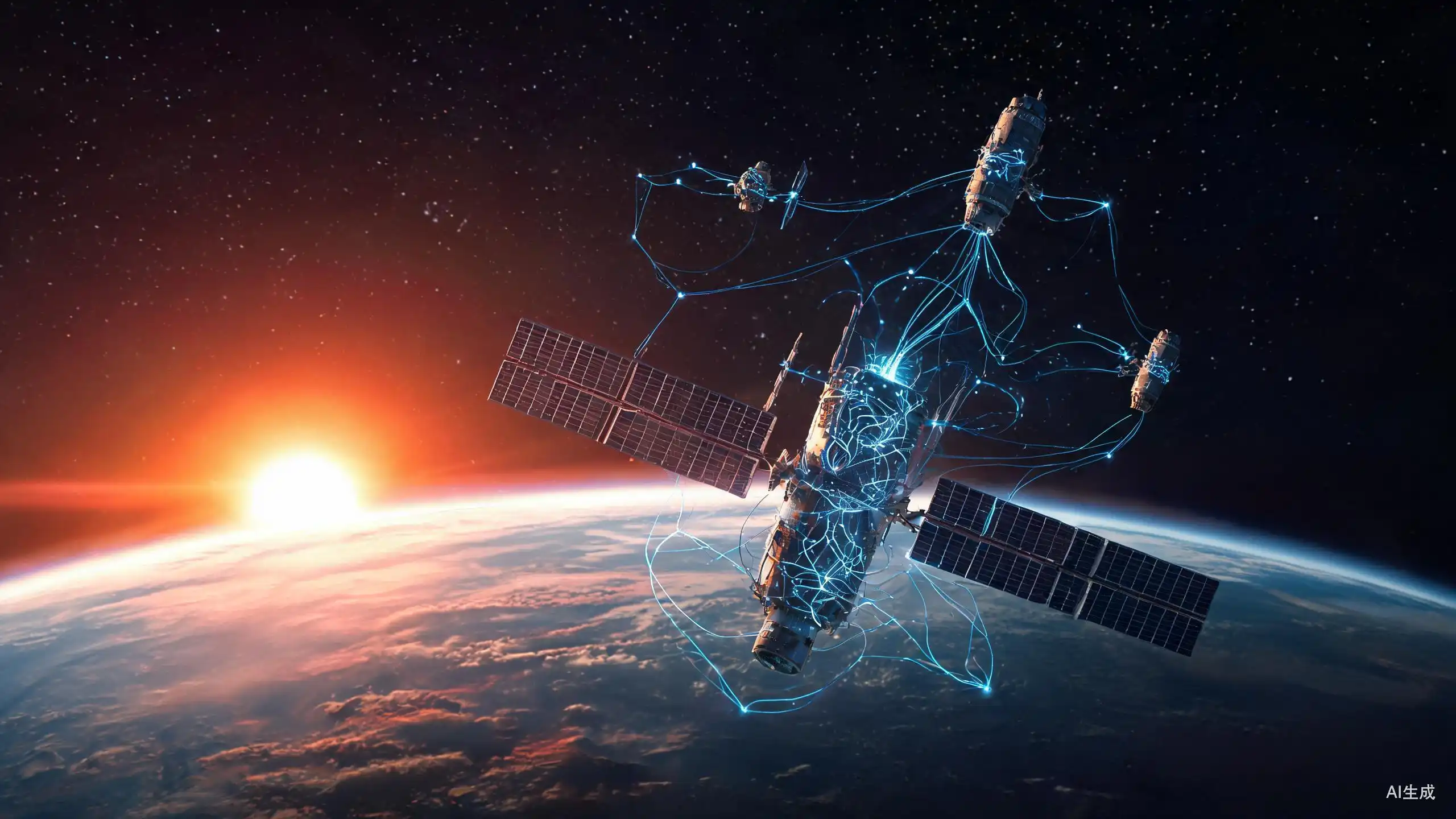
Respuesta nacional al cálculo espacial: usar fotones es más eficiente, Musk y Huang Renxun dan demasiadas vueltas

La carrera por la computación espacial se ha convertido en una verdadera competencia de armamentos tecnológicos. Figuras como Elon Musk y Jensen Huang han destacado el potencial de la inteligencia artificial y la computación en órbita. Sin embargo, los desafíos en el espacio son extremos: radiación cósmica, disipación de calor en el vacío y limitaciones energéticas severas. Aquí es donde la computación fotónica, que utiliza fotones en lugar de electrones, emerge como una solución prometedora. Sus ventajas son clave para el entorno espacial: es inherentemente resistente a la radiación, genera muy poco calor y consume menos energía. Esto permite empaquetar más potencia de cálculo en un satélite con el mismo peso y recursos, superando las limitaciones de los chips electrónicos tradicionales. Aunque la tecnología fotónica para IA, especialmente en tareas de inferencia, aún debe superar retos de integración y estabilidad mecánica para los lanzamientos espaciales, su trayectoria es distinta. No depende de la miniaturización extrema de los transistores, sino de escalar el uso de propiedades de la luz como la longitud de onda. En una carrera donde la computación electrónica se acerca a límites físicos, la vía "óptica" podría ser la carta decisiva para desplegar de forma eficiente y sostenible la capacidad de cálculo en el espacio.

marsbitHace 1 hora(s)

Respuesta nacional al cálculo espacial: usar fotones es más eficiente, Musk y Huang Renxun dan demasiadas vueltas

marsbitHace 1 hora(s)

Trading

Spot
活动图片