Ripple Vs. SWIFT Battle Heating Up As Exec Lands Major Blow To XRP

bitcoinistPublicado a 2025-09-03Actualizado a 2025-09-03

Resumen

Ripple and SWIFT’s battle for dominance is heating up, with an executive at the latter taking a dig at XRP,...

Trusted Editorial content, reviewed by leading industry experts and seasoned editors. Ad Disclosure

Ripple and SWIFT’s battle for dominance is heating up, with an executive at the latter taking a dig at XRP, the bridge currency for the crypto firm’s payment service. The executive also explained why businesses are unlikely to trust Ripple despite the conclusion of the SEC lawsuit. 

SWIFT Executive Makes Criticism Against Ripple and XRP

SWIFT Chief Innovation Officer (CIO) Tom Zschach said on LinkedIn that surviving lawsuits isn’t resilience, in response to a post that praised Ripple and XRP for battling through the SEC lawsuit. The executive claimed that neutral and shared governance is what resilience is about and that institutions won’t want to live on a competitor’s rail. 

With his comment, Zschach again raised the issue of centralization in the XRP ecosystem. The XRP Ledger and its native token have been largely criticized as being majorly dominated by Ripple, although the crypto firm has denied this. With his statement, the SWIFT CIO also suggested that most institutions won’t want to use the XRP Ledger or XRP since Ripple is a direct competitor to them. 

Notably, Ripple has applied for a national banking license, which, if approved, would put it in the same league as banks that the crypto firm aims to onboard onto its payment rail. This is unlike SWIFT, whose operation is simply to serve these banks and doesn’t operate as a competition to them. However, Ripple’s payment solutions utilize blockchain technology, which is faster, giving it an edge over SWIFT. 

Interestingly, Zschach’s comment comes at a time when Ripple executives are being criticized for dumping XRP, with crypto pundit Bitlord threatening to take action against the crypto firm if they don’t stop selling their holdings. 

The crypto pundit opined that the crypto firm may be selling their holdings because they are unprofitable and are facing too much competition. Bitlord also opined that governments won’t adopt Ripple’s technology and that banks will choose to launch their payment rails instead of using the crypto firm’s.

Ripple Is Going About Compliance The Wrong Way

The SWIFT CIO also responded to the praise about how Ripple has been vocal about prioritizing compliance by working hand-in-hand with regulators. Zschach said that compliance isn’t about one company convincing regulators that it should be allowed to operate. Instead, he said that it is about an entire industry agreeing on shared standards that no single balance sheet controls. 

It is worth mentioning that XRP Scan data shows that the top seven XRP holders are Ripple escrow accounts. These wallet addresses alone collectively hold about 32% of the token’s total supply. This explains why the XRP Ledger continues to be criticized for not being as decentralized as other blockchain networks. On-chain sleuth ZachXBT recently described XRP holders as “exit liquidity” for insiders.

Ripple
XRP trading at $2.83 on the 1D chart | Source: XRPUSDT on Tradingview.com
Featured image from Getty Images, chart from Tradingview.com
Editorial Process for bitcoinist is centered on delivering thoroughly researched, accurate, and unbiased content. We uphold strict sourcing standards, and each page undergoes diligent review by our team of top technology experts and seasoned editors. This process ensures the integrity, relevance, and value of our content for our readers.

Scott Matherson is a leading crypto writer at Bitcoinist, who possesses a sharp analytical mind and a deep understanding of the digital currency landscape. Scott has earned a reputation for delivering thought-provoking and well-researched articles that resonate with both newcomers and seasoned crypto enthusiasts. Outside of his writing, Scott is passionate about promoting crypto literacy and often works to educate the public on the potential of blockchain.

Lecturas Relacionadas

Un grupo de ingenieros de Suzhou alcanzan la libertad financiera inesperadamente

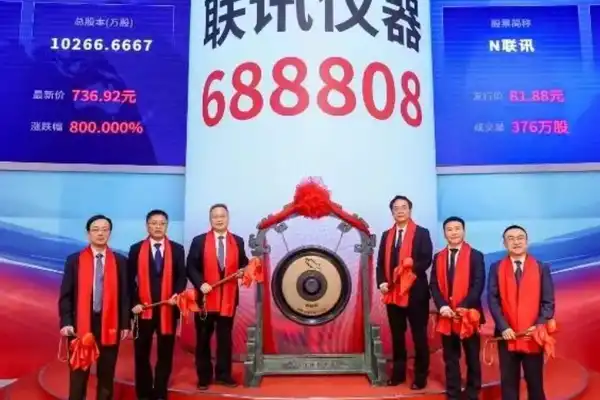
Un equipo de ingenieros en Suzhou obtiene una riqueza inesperada tras la salida a bolsa de su empresa, Lianxun Instruments. La compañía, líder en instrumentos de prueba para comunicaciones ópticas, ha visto su valor multiplicarse por 30 en solo dos meses desde su IPO en abril, alcanzando un precio por acción superior a 2.000 yuanes y una capitalización de mercado de más de 230.000 millones de yuanes (unos 230.000 millones de euros). Este espectacular aumento ha generado una fortuna colectiva de más de 36.000 millones de yuanes (3.600 millones de euros) para casi un centenar de empleados, principalmente ingenieros y talento técnico, a través de tres plataformas de participación accionarial. Fundada en 2017 por tres expertos en óptica y comunicaciones, la empresa ha crecido rápidamente desarrollando equipos de prueba de alta gama. Su éxito se atribuye a la fuerte demanda de potencia de cálculo para la IA y a tener como clientes a gigantes globales del sector. El caso ilustra una nueva tendencia de creación de riqueza en China, impulsada por la tecnología y que recompensa a los profesionales técnicos, a diferencia de las olas anteriores centradas en internet o bienes raíces. Inversores como el capital estatal de Suzhou han obtenido rendimientos extraordinarios. Historias similares se repiten en otras empresas tecnológicas chinas del sector de la IA y los semiconductores, que están generando una nueva ola de millonarios entre sus ingenieros e investigadores.

marsbitHace 2 hora(s)

Un grupo de ingenieros de Suzhou alcanzan la libertad financiera inesperadamente

marsbitHace 2 hora(s)

El artículo más 'peligroso' del año de NVIDIA: El código auto-reproductor de la IA, evolución y mejora ilimitadas

NVIDIA, junto con la Universidad de Cambridge, ha publicado un artículo titulado "Red Queen Gödel Machine" (RQGM), considerado por muchos como uno de los más arriesgados del año. El sistema implementa un mecanismo de "Recursive Self-Improvement" (RSI) donde una IA no solo escribe y prueba su propio código, eliminando las versiones fallidas, sino que también evoluciona y crea evaluadores ("examinadores") más estrictos para juzgar sus mejoras posteriores. Este ciclo de mejora mutua y acelerada entre el agente y su evaluador, inspirado en la "Hipótesis de la Reina Roja" (correr para permanecer en el mismo lugar), rompe con el límite de 20 años de la "Máquina de Gödel" original, que requería una demostración matemática previa a cualquier autocambio. En pruebas prácticas, el RQGM superó a los métodos anteriores (SOTA) en tareas como generación de código (mejorando la tasa de aprobación y reduciendo costos computacionales), escritura de artículos académicos (duplicando la tasa de aceptación simulada) y resolución de problemas matemáticos complejos. Además, logró corregir el sesgo de los LLMs que prefieren contenido generado por IA frente al humano, igualando la aceptación manteniendo alta precisión. El hallazgo aviva las predicciones, como la de Jack Clark de Anthropic, que estima un 60% de probabilidad de que surja una IA altamente autónoma y auto-evolutiva para finales de 2028. El artículo concluye que cuando una IA empieza a diseñar sus propios criterios de evaluación y a impulsarse recursivamente hacia sus límites, se acerca a un punto donde podría redefinir autónomamente la inteligencia, acortando de forma exponencial el camino hacia una Superinteligencia Artificial (ASI).

marsbitHace 2 hora(s)

El artículo más 'peligroso' del año de NVIDIA: El código auto-reproductor de la IA, evolución y mejora ilimitadas

marsbitHace 2 hora(s)

Trading

Spot
活动图片