South Korea Set To Unveil New Stablecoins Framework In October

bitcoinistPublicado a 2025-08-19Actualizado a 2025-08-19

Resumen

South Korea’s financial authority is expected to release the long-awaited regulatory framework next quarter, offering clear guidelines for the issuance...

Trusted Editorial content, reviewed by leading industry experts and seasoned editors. Ad Disclosure

South Korea’s financial authority is expected to release the long-awaited regulatory framework next quarter, offering clear guidelines for the issuance and distribution of won-pegged stablecoins.

Stablecoin Guidelines By October

On Monday, local news media outlets reported that South Korea’s financial regulator, the Financial Services Commission (FSC), is expected to release a bill for a stablecoin pegged to the Korean won (KRW) within two months.

According to MoneyToday, a member of the Democratic Party of Korea (DPK), Park Min-kyu, confirmed that he had “recently received a report from the FSC on the direction of stablecoins,” affirming, “The government’s bill is expected to be submitted to the National Assembly around October.”

The bill is anticipated to be included in the second phase of the Virtual Asset User Protection Act. Notably, the FSC has been working to develop digital assets legislation and shift its regulatory approach for over a year, establishing the Virtual Asset Committee in November to prepare the next phase of its plan and finalize it by the second half of 2025.

The second phase of the Virtual Asset User Protection Act includes regulations on the distribution of digital assets and stablecoins, continuing its efforts to align with global standards. The FSC’s Vice Chairman Kim So-young previously stated that the Korean government was “speeding up efforts” to develop the Korean crypto market while protecting users.

Attention will be focused on the content of the rules, the report affirmed, as the FSC plans to unveil a regulatory framework outlining requirements for issuing won-pegged stablecoins, collateral management, and internal control systems, which have been a concern among both the crypto and banking industries.

The FSC’s Secretary-General warned in January that the regulator needed to address listing standards, how to deal with stablecoins, and how to create rules for the behavior of virtual asset exchanges.

Meanwhile, the banking sector has been studying two legalization scenarios, since it remains unclear whether non-bank entities will be allowed to be stablecoin issuers. Financial institutions have also been considering a business model in which banks establish a joint venture to issue stablecoins.

Stablecoins’ Momentum In South Korea

As the new media outlet noted, institutionalization of won-pegged stablecoins has gained significant attention after President Lee Jae-myung pledged it during his presidential campaign. The electoral promise, which also vowed to address the status of crypto-based exchange-traded funds (ETFs), followed the US’s regulatory shift under the Trump administration and its push for USD-pegged stablecoins, which currently lead the sector.

Previously, the chairman of the South Korea Stock Exchange, Jeong Eun-bo, urged authorities to institutionalize crypto in the country, noting that the Korean market needs to be revitalized to compete with other nations and prevent falling behind international markets.

Over the past two months, multiple bills related to the issuance and distribution of KRW-pegged stablecoins have been introduced in South Korea’s National Assembly. As reported by Bitcoinist, Korea’s ruling and opposition parties proposed rival bills in July to establish the highly anticipated regulatory framework for digital assets pegged to the Korean won.

Member of the Planning and Finance Committee from the Democratic Party, Ahn Do-gil, introduced the “Act on the Issuance and Distribution of Value-Stable Digital Assets,” while member of the Land, Infrastructure, and Transport Committee from the People Power Party (PPP), Kim Eun-hye, proposed the “Act on Payment Innovation Using Value-Fixed Digital Assets.”

Both bills share several similarities, including the assignment of stablecoin oversight to the Financial Services Commission (FSC). However, the two proposed legislation differ in the issue of interest payments, with the PPP’s bill allowing interest payments and the DPK’s bill completely banning interest payments to prevent market disruption.

Min Byung-deok, a member of the National Assembly’s Government Committee, also introduced the “Digital Assets Basic Act” in June, which proposes allowing the issuance of won-pegged stablecoins and establishing a Digital Asset Committee under the direct authority of the president.

Amid the global push for stablecoins, Korean individuals investing in overseas stocks have reportedly shifted from US big tech equities to crypto-linked stocks, with a focus on stablecoin-related companies throughout July, suggesting growing interest in the sector.
stablecoins, bitcoin, btc, btcusdt

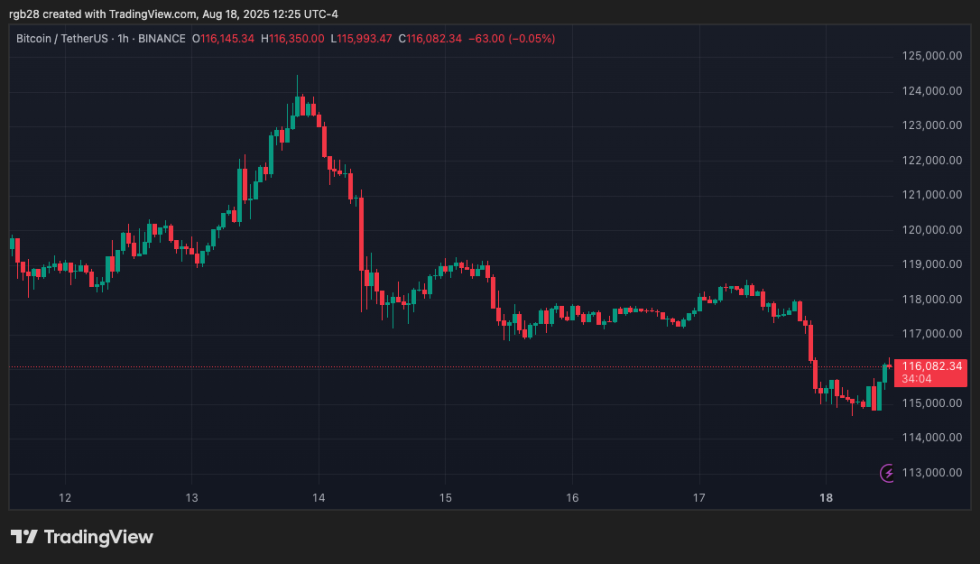
Bitcoin (BTC) trades at $116,082 in the one-week chart. Source: BTCUSDT on TradingView
Featured Image from Unsplash.com, Chart from TradingView.com
Editorial Process for bitcoinist is centered on delivering thoroughly researched, accurate, and unbiased content. We uphold strict sourcing standards, and each page undergoes diligent review by our team of top technology experts and seasoned editors. This process ensures the integrity, relevance, and value of our content for our readers.

Rubmar is a crypto enthusiast who likes learning and improving constantly. She enjoys reporting on the latest news and developments in the crypto industry. Rubmar also enjoys scrapbooking, crafting, simulation games, and watching football.

Lecturas Relacionadas

La CFTC estadounidense inicia una amplia investigación contra Polymarket, ¿se enfría la temporada de júbilo del mercado de predicciones?

La CFTC de EE.UU. ha iniciado una investigación exhaustiva sobre la plataforma de mercados de predicción Polymarket, abarcando actividades como sus campañas en redes sociales. La investigación responde a presiones de senadores estadounidenses por presuntas prácticas de marketing engañosas, incluyendo el pago a influencers para promocionar productos de apuestas. Este escrutinio regulatorio llega en un momento de crecimiento explosivo del sector, impulsado por eventos como la Copa del Mundo. Plataformas como Polymarket, Kalshi y la de Robinhood han reportado volúmenes de trading y ingresos récord, atrayendo incluso la atención de gigantes tecnológicos como Meta. La investigación destaca un conflicto más amplio entre las autoridades federales (CFTC) y los reguladores estatales de EE.UU. sobre qué jurisdicción debe supervisar estos mercados: si como derivados financieros (federal) o como apuestas (estatal). Esta batalla legal involucra también a bolsas tradicionales como el CME, que ha demandado a la CFTC. En el fondo, la disputa refleja tensiones entre intereses económicos estatales (como los impuestos del juego tradicional) y la expansión de una nueva industria. Además, se señala la influencia de figuras políticas, como Donald Trump Jr., quien tiene inversiones y roles asesor en varias de estas plataformas. El resultado podría definir el marco regulatorio futuro para los mercados de predicción, marcando el fin de su fase de crecimiento desregulado y el inicio de una era de mayor supervisión.

marsbitHace 2 hora(s)

La CFTC estadounidense inicia una amplia investigación contra Polymarket, ¿se enfría la temporada de júbilo del mercado de predicciones?

marsbitHace 2 hora(s)

La última reflexión del padre de Claude Code: la división del trabajo en equipos se reescribe en la era de la IA, estas 'cinco personas' son las más demandadas

Ante la transformación que la IA está imponiendo en la industria del software, Boris Cherny, responsable del equipo Claude Code de Anthropic, propone una redefinición de los roles en los equipos. En lugar de las etiquetas tradicionales (ingeniero, diseñador, etc.), identifica cinco perfiles basados en comportamientos y fases del ciclo de vida del producto: 1. **El Prototipador:** Genera gran cantidad de ideas disruptivas, sin enfocarse necesariamente en su implementación. 2. **El Constructor:** Transforma prototipos en productos estables y escalables, llevándolos de 0.1 a 1. 3. **El Limpiador:** Simplifica y refactoriza, eliminando redundancias para garantizar rendimiento y mantenibilidad. 4. **El Especialista en Crecimiento:** Optimiza iterativamente un producto ya lanzado para acercarlo al mercado y retener usuarios, combinando habilidades de producto, datos y experimentación. 5. **El Mantenedor:** Asegura la operación a largo plazo, la seguridad, fiabilidad y resiliencia de sistemas maduros. Estos roles no son puestos fijos. Un mismo individuo puede desempeñar varios según el proyecto y su fase (ej.: un nuevo producto necesita Prototipadores, Constructores y Limpiadores). La clave es la flexibilidad: el equipo ideal depende de la etapa del producto, y los profesionales deben adaptarse en lugar de encasillarse. Aunque herramientas como Claude pueden asistir en tareas de construcción y limpieza, la visión humana sigue siendo crucial para dirigir el proceso. Este modelo refleja cómo los equipos eficaces en la era de la IA priorizan las contribuciones funcionales por encima de las etiquetas departamentales rígidas.

marsbitHace 2 hora(s)

La última reflexión del padre de Claude Code: la división del trabajo en equipos se reescribe en la era de la IA, estas 'cinco personas' son las más demandadas

marsbitHace 2 hora(s)

Trading

Spot
活动图片