The Next Crypto Bull Run? Gemini Predicts the Next Cryptos to Explode

bitcoinistPublicado a 2025-08-12Actualizado a 2025-08-12

Resumen

Although we’ve grown accustomed to seeing bull runs in crypto, the current rally feels extra special – because it’s driven...

Trusted Editorial content, reviewed by leading industry experts and seasoned editors. Ad Disclosure

Although we’ve grown accustomed to seeing bull runs in crypto, the current rally feels extra special – because it’s driven not just by price action, but by a wave of groundbreaking pro-crypto developments happening outside the charts.

Over the past month alone, the U.S. has unleashed a barrage of policy announcements, including:

  • 401(k) Crypto Access Expansion: New rules allowing retirement savers to allocate a portion of their 401(k) plans to crypto assets, effectively democratizing access to digital assets for millions of Americans.
  • Project Crypto: Announced by the SEC Chair, this ambitious initiative aims to position the United States as the crypto capital of the world by streamlining regulations and fostering innovation.
  • The GENIUS Act: A landmark bill designed to boost blockchain adoption across sectors by funding research, incentivizing crypto-friendly startups, and creating clearer tax frameworks for digital assets. Stablecoins gained a lot after GENIUS.

And it’s not just policy. Institutions are buying up Bitcoin and Ethereum at a record pace, while market analysts are trying to outdo each other with bullish predictions.

Now, while it’s relatively easy to pinpoint why crypto could thrive over the next year, five years, or even decade, identifying the next cryptos to explode is an entirely different ballgame.

That’s why we turned to Gemini, Google’s homegrown AI chatbot with access to Google Search and cutting-edge analytical and narrative-building skills.

With the brainpower to digest the latest market developments and filter through the noise, it can zero in on the best altcoins to buy right now without much effort.

Keep reading to discover Gemini’s top picks and how they’re uniquely positioned to deliver outsized gains in the months ahead.

1. Bitcoin Hyper ($HYPER) – Bitcoin Layer 2 for High Speeds, Low Fees, and Enhanced Programmability

Bitcoin Hyper ($HYPER) is a new cryptocurrency project aiming to tackle Bitcoin’s long-standing issues of slow speeds, high costs, and limited programmability, bringing its blockchain performance up to modern standards.

Currently, Bitcoin’s base layer can process a grand total of just 7 transactions per second (TPS), while Solana can handle up to 3,000 TPS.

Moreover, Bitcoin isn’t well-suited for DeFi or other decentralized applications, as it lacks native smart contract capabilities.

Thanks to $HYPER’s Solana Virtual Machine (SVM) integration, Solana’s lightning-fast transaction speeds, ultra-low fees, and full Web3 compatibility are now coming to Bitcoin.

Simply put, the SVM allows Bitcoin Hyper to run Solana-compatible smart contracts and dApps directly on its Layer 2. This unlocks high-speed DeFi trading, NFTs, gaming, lending, staking, DAO governance, and other Web3 use cases on the Bitcoin network.

But how do you interact with this Web3 environment if Layer 1 $BTC isn’t compatible with Layer 2? This is where $HYPER’s decentralized, non-custodial canonical bridge comes in.

It lets you seamlessly convert your original $BTC into ‘wrapped’ Layer 2-compatible $BTC, unlocking entry into the Bitcoin Hyper ecosystem.

Bitcoin Hyper's layer-2 ecosystem explained, step by step.

Remember that the bridge will also convert your wrapped tokens back into native $BTC whenever you choose. All you have to do is raise a withdrawal request on Layer 2.

According to our Bitcoin Hyper price prediction, the token could surge by up to 2,400% by the end of 2025, potentially hitting $0.32.

So, if you bought $500 worth of $HYPER now, you could have $12,500 by the end of the year, if everything goes well with the presale and listing.

Here’s how to buy $HYPER now for just $0.01265 and join one of this year’s hottest crypto presales, which has already attracted an eye-popping $8.5M in early investor funding.

Visit Bitcoin Hyper for more information.

2. Best Wallet Token ($BEST) – Powering One of the Best Non-Custodial Crypto Wallets

Best Wallet Token ($BEST) is the horsepower behind Best Wallet, a free crypto wallet that’s setting new benchmarks for usability while offering foolproof security through self-custody and other advanced features.

As a self-custodial crypto wallet, Best Wallet gives you complete control over your private keys, ensuring only you can access your funds. Say goodbye to nosy third parties!

Moreover, Best Wallet also integrates advanced encryption, multi-factor authentication, and safeguards against hacks, scams, and phishing websites, offering a comprehensive security suite.

One of its biggest standouts, though, is the Presale Aggregator, which allows you to buy new meme coins on presale from directly within the app, i.e., without having to visit any external sites.

Best Wallet's useful features, from multi-chain support and swaps to keyless security.

Speaking of ease of use, it also lets you set up a new wallet in under 60 seconds, seamlessly exchange tokens across multiple blockchains, and even create separate wallets for different goals, like trading, HODLing, or staking.

Want in? Buy Best Wallet Token ($BEST), which could potentially make you a chunky 180% in gains over just the next few months, as it’s predicted to hit $0.072 by year-end.

In addition to generous staking rewards (currently yielding 92%), holding $BEST also unlocks a bunch of exclusive perks, including:

  • Reduced trading and fees
  • Early access to tokens in the Presale Aggregator
  • Governance rights

The project has already amassed more than $14.6M in presale funding, with 1 $BEST currently available at a low price of $0.025475.

Learn all about $BEST by visiting its presale website.

3. XRP ($XRP) – Payments-Based Crypto Gearing up for Another Rally

Gemini rounded off its list of suggestions with a listed, proven performer that looks primed for another explosive rally in the coming weeks. Enter XRP ($XRP).

One of the biggest positives for $XRP heading into August is the official end of its long-standing legal battle with the SEC, which wrapped up on August 7 when both parties filed a joint stipulation of dismissal with the U.S. Court of Appeals for the Second Circuit.

Additionally, growing anticipation over a potential XRP ETF approval is adding more momentum to the rally. According to the prediction market Polymarket, the odds now sit at 81%.

An ETF would make it far easier for traditional investors to gain exposure to $XRP through regulated markets, potentially unlocking a surge of fresh capital.
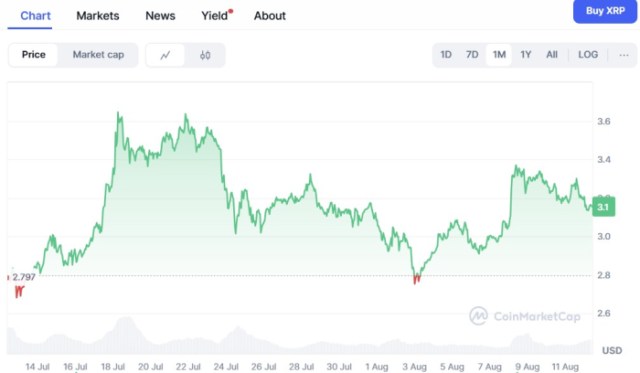
XRP ($XRP) CoinMarketCap

And there are plenty of technical positives, too. For instance, on the 4-hour chart, the token is bouncing off the 0.5-0.618 Fibonacci retracement zone, which is a key area that often signals the continuation of bullish momentum.

Meanwhile, on the all-important daily chart, $XRP’s price remains above short-term EMAs such as the 10, 20, and 50, another classic indicator that buyers are still firmly in control.

$XRP is currently trading around $3.15, and based on the trading patterns outlined above, it could climb up around 8% (a conservative prediction) in its current rally, potentially setting the stage for a push toward new all-time highs.

Conclusion

All in all, asking Gemini for its help in crafting a crypto portfolio proved to be a smart move.

The AI chatbot delivered a solid mix of low-priced, high-upside tokens like Bitcoin Hyper ($HYPER) and Best Wallet Token ($BEST), along with established performers with strong momentum, such as XRP ($XRP).

That said, kindly remember that the crypto market is highly volatile, and investments in it carry risks. Also, this article is not financial advice, and you must always do your own research before investing.

Editorial Process for bitcoinist is centered on delivering thoroughly researched, accurate, and unbiased content. We uphold strict sourcing standards, and each page undergoes diligent review by our team of top technology experts and seasoned editors. This process ensures the integrity, relevance, and value of our content for our readers.

As a crypto writer, Bogdan’s responsibilities are split between researching and writing articles and entertaining the team with his humor bordering on the politically incorrect, an aspiring Bill Burr, if you will. Thanks to his 12+ years of writing experience in just as many fields, including tech, cybersecurity, modelling, fitness, crypto, and other topics-that-shall-not-be-named, he's become a genuine asset to the team. While his position as a senior writer at PrivacyAffairs thought him valuable lessons about the power of self-management, his entire writing career was and is an exercise in self-improvement. Now, he's ready to sink his teeth into crypto and teach people how to take control of their own money on the blockchain. With fiat as an eternally devaluing currency, Bitcoin and altcoins seem like the best-fitting alternative for Bogdan. Bogdan’s biggest professional accomplishment, aside from securing a position as a main writer for Bitcoinist, was his 5-year run as a writing manager at Blackwood Productions, where he coordinated a team of four writers. During that time, he learned the value of teamwork and that of creating a working environment that breeds efficiency, positivity, and friendship.

Lecturas Relacionadas

¿Cuál es el próximo motor de crecimiento de Solana según el último estudio de Grayscale?

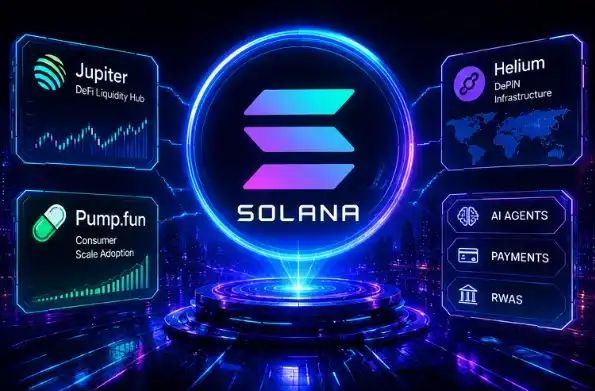
**Informe de Grayscale: El próximo motor de crecimiento de Solana** Un reciente informe de Grayscale señala un cambio significativo en la narrativa sobre Solana, pasando de ser vista como una blockchain de alto rendimiento a ser considerada un "bazar financiero de las criptomonedas". El foco ya no está principalmente en su TPS (transacciones por segundo), sino en su capacidad para sostener actividades económicas a gran escala. La competencia entre blockchains de Capa 1 ha evolucionado: ya no se trata solo de velocidad, sino de la actividad económica real en la red. Solana muestra fortalezas en este nuevo paradigma, con más de 1.000 dApps, transacciones diarias que superan los 100 millones y alrededor de 4.3 millones de usuarios activos únicos diarios. El informe destaca tres aplicaciones representativas que esbozan su potencial: * **Jupiter:** Ha evolucionado de un agregador DEX a un centro de liquidez crucial para el ecosistema DeFi de Solana, funcionando como infraestructura financiera integral. * **Pump.fun:** Más allá del auge de los memecoins, este modelo demuestra la capacidad de Solana para atraer usuarios masivos y generar modelos de negocio sostenibles con ingresos significativos. * **Helium (y el sector DePIN):** Representa la expansión de Solana hacia la coordinación de infraestructura física del mundo real (redes inalámbricas, geolocalización), conectando la blockchain con la economía tangible. La fundación de Solana está orientando su estrategia futura hacia áreas como los **agentes de IA, stablecoins, pagos, activos del mundo real (RWA) y DePIN**. El objetivo es posicionar la red no solo para transacciones financieras, sino como infraestructura de liquidación para la economía de la IA y los pagos digitales globales. Este renovado interés institucional se basa en la maduración de los modelos de negocio en la capa de aplicación, el crecimiento del ecosistema de pagos con stablecoins y la continua actividad de los desarrolladores. Sin embargo, persisten desafíos clave, como la captura efectiva de valor para el token SOL, la sostenibilidad del ecosistema más allá de ciclos de modas y la intensa competencia de otras blockchains como Ethereum, BNB Chain y Base. En resumen, el valor a largo plazo de Solana dependerá cada vez menos de su velocidad teórica y más de su capacidad para atraer desarrolladores, retener usuarios y fomentar aplicaciones con efectos de red y valor comercial sostenible.

marsbitHace 19 min(s)

¿Cuál es el próximo motor de crecimiento de Solana según el último estudio de Grayscale?

marsbitHace 19 min(s)

Para ganar ese dinero, esperaron siete años

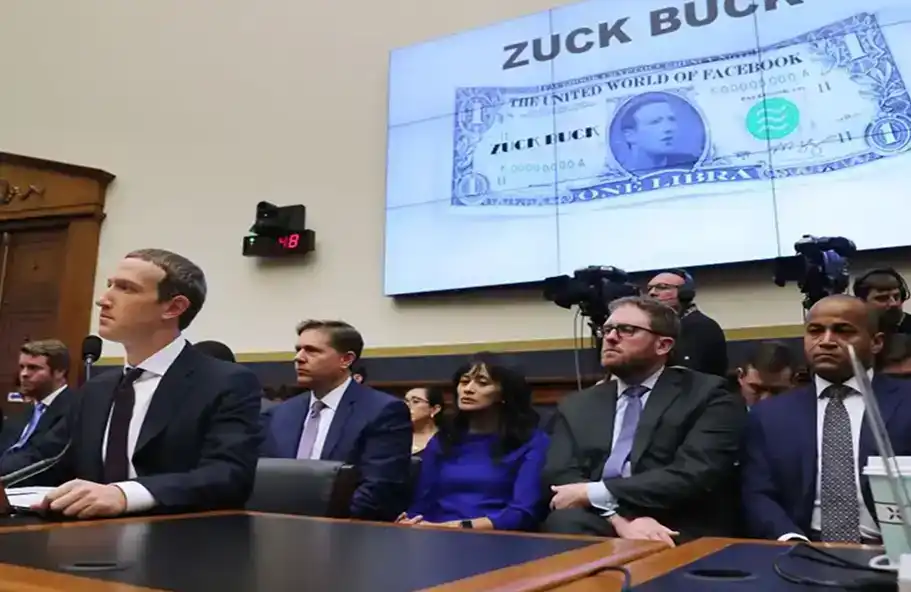
El precio de Circle, la "primera acción de stablecoins", cayó casi un 20% tras anunciarse "Open USD", un nuevo stablecoin respaldado por un consorcio que incluye a Visa, Stripe, Mastercard, Coinbase, BlackRock, Google, IBM y Ripple. Este proyecto, que planea lanzarse a finales de año, plantea redistribuir los ingresos por intereses de sus reservas entre las empresas que lo adopten, atacando directamente el modelo de negocio central de Circle con USDC. La notencia evoca el fallido proyecto Libra de Facebook en 2019, que reunió a muchas de las mismas empresas con una visión más ambiciosa y disruptiva. Libra fracasó por la presión regulatoria y la desconfianza hacia Facebook. Sin embargo, dejó clara la oportunidad: redefinir el movimiento del dinero en internet. Siete años después, el panorama ha cambiado. Existe un marco regulatorio más claro en EE.UU. y la infraestructura de cadenas de bloques es más robusta. Open USD presenta una narrativa más modesta y pragmática que Libra, centrada en ser una herramienta de pago empresarial y un estándar abierto, no una "moneda global". Aunque el nuevo consorcio enfrenta el reto típico de la lentitud y los conflictos de intereses entre muchos actores poderosos, su anuncio ha obligado al mercado a reevaluar a Circle. Ya no se la ve como el único billete a la era de las stablecoins, sino como un emisor fuerte en un campo que se vuelve más competitivo. Su valoración ha perdido el aura de exclusividad, y su dependencia de los ingresos por intereses y de socios como Coinbase queda expuesta. Open USD puede no reemplazar a USDC de inmediato, pero amenaza con capturar nuevos flujos de valor y redistribuir el poder en el ecosistema de pagos digitales.

marsbitHace 19 min(s)

Para ganar ese dinero, esperaron siete años

marsbitHace 19 min(s)

Google en crisis, su valor de mercado cae cientos de miles de millones de dólares, ¿puede Gemini Spark salvarlo?

Google se enfrenta a una tormenta perfecta en 2026. Varios talentos clave responsables de avances fundamentales en IA, como Noam Shazeer (arquitectura Transformer) y John Jumper (AlphaFold), han abandonado la compañía para unirse a competidores como OpenAI y Anthropic. Estas salidas, que afectan áreas como arquitectura, ciencia, programación y pre-entrenamiento, sacudieron la confianza de los inversores, provocando una caída bursátil que eliminó cientos de miles de millones de dólares de su valor de mercado. En medio de esta crisis de talento y del aparente retraso de Gemini 3.5 Pro, Google lanzó su apuesta más ambiciosa del año: Gemini Spark. Este no es un chatbot convencional, sino un agente de IA persistente que funciona en la nube y se integra profundamente con el ecosistema de Google Workspace (Gmail, Calendar, Docs, Drive, etc.). Utilizando el marco Antigravity, Spark puede automatizar flujos de trabajo complejos, como extraer información de correos, actualizar hojas de cálculo y gestionar documentos de forma autónoma, actuando como un "empleado digital" que trabaja continuamente. Sin embargo, su alto precio (disponible solo para suscriptores de Google AI Ultra a 100 USD/mes) y el hecho de que Google, a pesar de poseer la suite de productividad ideal para este fin, llegó tarde al mercado de agentes, plantean dudas sobre su impacto inmediato. Competidores como OpenAI y Anthropic, junto con proyectos de código abierto como OpenClaw, ya están avanzando en esta dirección. La pregunta crucial es si Spark, una herramienta prometedora para convertir la IA en una fuerza laboral activa, puede compensar la pérdida del capital humano que construyó los cimientos de la IA en Google y asegurar su futuro en la próxima década.

marsbitHace 44 min(s)

Google en crisis, su valor de mercado cae cientos de miles de millones de dólares, ¿puede Gemini Spark salvarlo?

marsbitHace 44 min(s)

Llega la liquidación de 24/7 en EE.UU., y las criptomonedas no logran su entrada

En los últimos años, la industria cripto ha promocionado que los activos digitales pueden operarse las 24 horas del día, los 7 días de la semana, en contraste con los mercados tradicionales. Sin embargo, esta narrativa central ha recibido un fuerte golpe esta semana. La Corporación Nacional de Compensación de Valores (NSCC), una subsidiaria de la Depositary Trust & Clearing Corporation (DTCC) —que gestiona transacciones por cuadrillones de dólares anuales— anunció que ahora realiza operaciones de compensación las 24 horas durante la semana laboral. La transición a este sistema de compensación continua se realizará en fases, con bolsas como Nasdaq planeando extender sus horarios de negociación hasta 2027. Aunque el sistema central funciona sin parar, algunos sistemas de soporte tendrán breves pausas de mantenimiento. Este avance deja a la industria cripto con una única ventaja diferencial residual: operar también los fines de semana. No obstante, si la demanda del mercado tradicional es alta, el DTCC podría eventualmente extender sus servicios al fin de semana. La actualización del DTCC ha decepcionado una vez más a los entusiastas de las criptomonedas, quienes a menudo especulan que dichos movimientos allanan el camino para una adopción masiva de blockchains públicas. Sin embargo, el DTCC ha priorizado consistentemente el uso de redes privadas y con permiso para sus proyectos, como la plataforma Ion y la reciente iniciativa de tokenización de bonos del Tesoro estadounidense en la red Canton. No hay evidencia de planes para integrar cadenas públicas como Ethereum o XRP Ledger. En resumen, el establecimiento de un mercado tradicional de compensación continua se ha logrado con infraestructura existente y privada, sin otorgar un papel a las criptomonedas o blockchains públicas en este hito significativo.

Foresight NewsHace 1 hora(s)

Llega la liquidación de 24/7 en EE.UU., y las criptomonedas no logran su entrada

Foresight NewsHace 1 hora(s)

Trading

Spot
活动图片