Dogecoin Follows Bearish June Trend With over 4% Losses – Is The Worst Over?

bitcoinistPublicado a 2025-06-09Actualizado a 2025-06-09

Resumen

The month of June has been historically bearish for the Dogecoin price, and so far, June 2025 is following the...

Trusted Editorial content, reviewed by leading industry experts and seasoned editors. Ad Disclosure

The month of June has been historically bearish for the Dogecoin price, and so far, June 2025 is following the same trend. With just a little over a week into the month, the Dogecoin price has already seen a decline of over 4%, suggesting it is sticking to the established trend. If this is the case, then there is still a long way to go for the meme coin, as historical data suggests that there is more decline to come.

4% Losses May Not Be The End

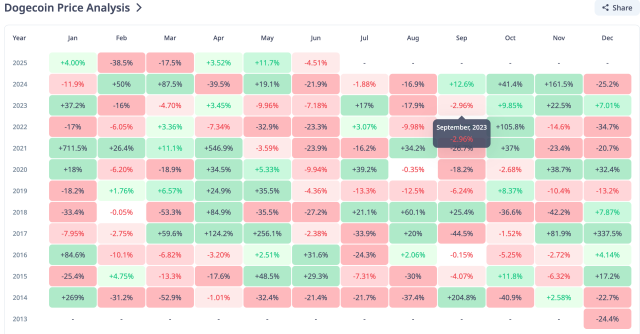
According to data from the CryptoRank website, the Dogecoin price is already down 4.57% in the month of June. But going by the performance of previous years leading up to 2025, this is still quite low compared to how much further the price could crash.

For example, the Dogecoin price suffered a 21.9% decline in June 2024 and a 7.18% crash in June 2023. Going further back, there was a loss of 23.3% back in June 2022 and then a similar loss of 23.9% back in June 2021. The latter’s performance is even more important because the 23.9% decline happened in the height of the crypto bull market.

Overall, the month of June has rarely ended well for the meme coin’s price, with only two green monthly closes in its over 11 years of existence. The average return for June is the lowest at -7.11% for the Dogecoin price, and the second lowest median return of -8.56%, second only to August’s median returns of -9.98%.
Dogecoin price June
Source: CryptoRank

Sticking to this average, a further decline could happen as the Dogecoin price moves closer to the average return for the month. A similar trend would see the price go toward the -7% territory before the month is over.

Can The Dogecoin Price Defy The Odds?

With Donald Trump’s tariff war against countries like China still in full swing, the crypto market is still feeling the effects as prices remain low. Altcoins like Dogecoin have suffered the brunt of the decline, and a continuation would push their prices further down.

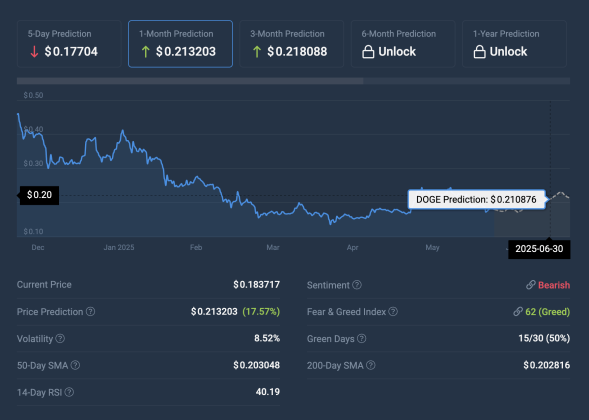
However, the machine learning algorithm on the Coincodex website has predicted a possible retracement upward that could push the Dogecoin price back toward the green this month. It suggests a recovery above $0.21 by the end of June, which would mean an over 10% increase in price from here.
Dogecoin price
Source: X

Open interest has also remained relatively stable this month, ranging above $1.9 billion, Coinglass shows. This means there is still sustained interest in trading the meme coin, with sentiment skewing toward bullish territory as the Bitcoin price remains above $100,000.

Dogecoin price chart from TradingView.com
DOGE price moves toward support | Source: DOGEUSDT on TradingView.com
Featured image from Dall.E, chart from TradingView
Editorial Process for bitcoinist is centered on delivering thoroughly researched, accurate, and unbiased content. We uphold strict sourcing standards, and each page undergoes diligent review by our team of top technology experts and seasoned editors. This process ensures the integrity, relevance, and value of our content for our readers.

Scott Matherson is a leading crypto writer at Bitcoinist, who possesses a sharp analytical mind and a deep understanding of the digital currency landscape. Scott has earned a reputation for delivering thought-provoking and well-researched articles that resonate with both newcomers and seasoned crypto enthusiasts. Outside of his writing, Scott is passionate about promoting crypto literacy and often works to educate the public on the potential of blockchain.

Lecturas Relacionadas

Solo 11 días: Claude reescribe millones de líneas de código, un proyecto épico de IA que provoca indignación

El mundo tecnológico se debate tras la controvertida decisión del equipo de Bun, un popular runtime de JavaScript/TypeScript, de reescribir en solo 11 días todo su código base (un millón de líneas) de Zig a Rust utilizando la herramienta Claude Fable 5 de Anthropic, con un coste estimado de 165.000 dólares en APIs. El motivo esgrimido son problemas de estabilidad y bugs de seguridad de memoria en la versión original de Zig, así como el veto de la comunidad Zig al código generado por IA, con la que Bun depende en gran medida. Esta decisión "épica" ha desatado una agria polémica, especialmente por la reacción del creador de Zig, Andrew Kelley, quien en un blog acusó al fundador de Bun, Jarred Sumner, de tener malos hábitos de ingeniería y generar "código basura". Kelley afirmó sentirse aliviado de que Bun abandonara Zig, por miedo a que dañara la reputación del lenguaje. La comunidad se divide entre quienes lo ven como una defensa necesaria de la calidad del código y quienes lo consideran una falta de profesionalidad. Las principales dudas giran ahora en torno al resultado: si bien el proceso fue rápido y relativamente barato, la nueva base de código en Rust, generada mayormente por IA mediante traducción directa, contiene 27.000 líneas de código "unsafe". Muchos expertos temen que esto pueda crear una enorme deuda técnica, haciendo el código difícil de mantener y entender para los desarrolladores humanos en el futuro, anulando así los ahorros iniciales. El proyecto se presenta como un hito ambivalente en la era de la IA, cuyo verdadero impacto solo el tiempo dirá.

marsbitHace 1 hora(s)

Solo 11 días: Claude reescribe millones de líneas de código, un proyecto épico de IA que provoca indignación

marsbitHace 1 hora(s)

Desglose del informe de Goldman Sachs sobre el panorama competitivo de los modelos de IA de China: ¿Quién será el ganador a largo plazo?

El informe de Goldman Sachs analiza el panorama competitivo de los modelos de IA de gran tamaño en China. Destaca que los modelos de código abierto chinos han alcanzado un rendimiento cercano al de los modelos propietarios globales líderes, con un crecimiento acelerado en su adopción. La clave del éxito radica en la innovación arquitectónica y la eficiencia de parámetros, lo que permite menores costos. El mercado se divide en dos niveles: el segmento premium (ej. GLM5.2 de Zhipu, Qwen3.7 Max de Alibaba) y el segmento de bajo costo (ej. modelos de MiniMax, DeepSeek), que apunta a usuarios globales sensibles al precio. Se proyecta que los ingresos por API y suscripciones crecerán significativamente hasta 2030. La estrategia predominante es el código abierto, aunque se espera una migración hacia modelos de "pesos abiertos" con acuerdos de reparto de ingresos para mejorar la monetización. El foco internacional, especialmente en mercados no estadounidenses, es crucial para el crecimiento futuro. Usando un marco de análisis basado en capacidad de fijación de precios, ventaja de costos y fortaleza financiera, Goldman Sachs identifica a Zhipu y DeepSeek como los mejor posicionados en modelos de texto básico, y a ByteDance (con Seed) como líder en multimodalidad/generación de video. También mantiene una valoración positiva de MiniMax y Kuaishou.

marsbitHace 2 hora(s)

Desglose del informe de Goldman Sachs sobre el panorama competitivo de los modelos de IA de China: ¿Quién será el ganador a largo plazo?

marsbitHace 2 hora(s)

Trading

Spot
活动图片