ECB Develops Blockchain Payment System for CBDC, BTC Bull Token Captures Retail Interest

bitcoinistPublicado a 2025-02-21Actualizado a 2025-02-21

Resumen

The difference between the US and EU approaches to crypto has become evident as the European Central Bank (ECB) is...

The difference between the US and EU approaches to crypto has become evident as the European Central Bank (ECB) is building a blockchain system to process CBDC (Central Bank Digital Currency) transactions.

ECB President Christine Lagarde also nixed the idea of a European Bitcoin reserve due to $BTC’s volatility and frequent use in illicit activities (which isn’t entirely true–criminals prefer cash to crypto).

In contrast, President Trump and Fed Chair Jerome Powell are strictly against CBDCs, and 20 US states have proposed establishing crypto reserves (cries in European).

Let’s unpack what the EU’s anti-crypto stance means for the market.

Inside the ECB’s CBDC Plan

The launch of an EU-wide blockchain payment system is the first step toward rolling out a fully functioning wholesale CBDC, the digital euro.

This system will be compatible with TARGET Services, a platform that currently handles large-value payments, securities settlement, and instant payments across Europe.

After integrating the new system with TARGET, the ECB will focus on its interoperability with foreign CBDC infrastructures for exchange settlements.

ECB Board member Piero Cipollone deems this innovation, but European crypto investors would likely call it an attempt at surveillance.

ECB Is Against Crypto Reserves, Czech Republic Feels Rebellious

The ECB also disapproved of the Czech National Bank’s plan to allocate 5% of its reserves to $BTC purchases.

CNB Governor Aleš Michl argued he used to run an investment fund and ‘likes profitability,’ which suggests the Czech Republic might soon set a precedent for other EU countries.

It’s clear that the EU prioritizes safety and stability over individual freedoms and technological development.

However, this might change when multiple US states create crypto reserves, particularly if they prove this strategy to be fruitful. Non-eurozone countries like the Czech Republic would be the first to go against the tide, and others could follow suit.

When this happens, $BTC will rally to new heights due to broader adoption and legitimacy.

BTC Bull Token ($BTCBULL) Celebrates Crypto’s Historic Rally With $BTC Airdrops

While government officials remain cautious, retail investors can go for riskier opportunities like new meme coins on presale that might yield greater returns.

But not all new crypto have an equal chance in this bull run.

BTC Bull Token ($BTCBULL) is the only meme coin closely linked to $BTC. It supports the OG crypto on its way to $250K with regular $BTC airdrops.

All you need to get free $BTC is to buy $BTCBULL, hold it in Best Wallet, and wait for the world’s first crypto to hit $150K and $200K.

When $BTC reaches $250K, the project will reward its loyal holders with a massive $BTCBULL token airdrop.

$BTCBULL’s deflationary tokenomics model aims to support the token’s upward price action after launch. Whenever $BTC hits $125K, $175K, and $225K, the project will permanently remove a part of the tokens for circulation to create scarcity and drive demand.

$BTCBULL’s presale kicked off on February 11 and has since raised $2.5M. One token now costs $0.002375, but the price is increasing fast as the project progresses toward new fundraising milestones.

BTC Bull Token presale

This means now is the time to take the bull by the horns and secure your share of $BTCBULL before everyone else does. Early adopters also benefit from a 172% APY, set to decrease as the staking pool expands.

Final Remarks

We aren’t just watching a battle of regulations–we’re watching two different philosophies play out in real time. While the US says, ‘let’s give crypto a shot,’ the EU is giving it a cold shoulder.

This doesn’t mean that the ECB is entirely against innovation, though. Its blockchain-based payment system could also support crypto like $BTC and altcoins in the future if the US and Czech Republic lead by example.

Institutional adoption will fuel this year’s $BTC rally, and $BTCBULL has positioned itself to capture investor appetite.

However, remember the old-school Wall Street saying: bulls make money, bears make money, pigs get slaughtered. Don’t get greedy–DYOR, diversify your portfolio, and only invest as much as you can afford to lose.

Bitcoinist

Bitcoinist

Bitcoinist is the ultimate news and review site for the crypto currency community!

Lecturas Relacionadas

Ley “Tao” de Huawei: Lista completa de empresas centrales

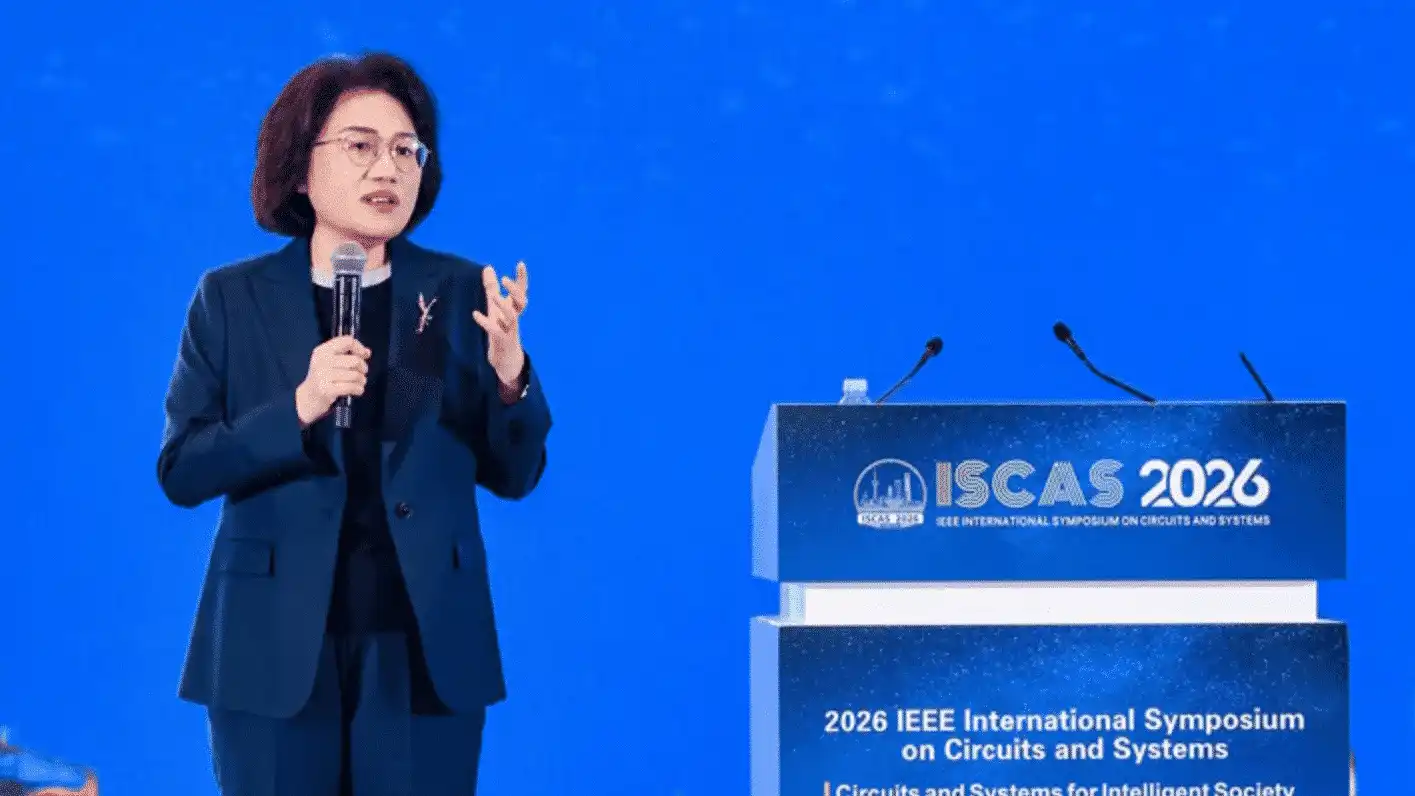
**Resumen de la Ley "Tao (τ)" de Huawei: Principios y Compañías Clave** El 25 de mayo de 2026, He Tingbo, directora de Huawei, presentó la "Ley Tao (τ)" en ISCAS 2026, un nuevo principio rector para el desarrollo de la industria de semiconductores. A diferencia de la Ley de Moore, que se centra en miniaturizar transistores, la Ley Tao busca la "miniaturización del tiempo", reduciendo continuamente la constante de tiempo (τ) para acelerar la conmutación de señales, sin depender únicamente de nodos de fabricación más pequeños. El camino central para lograrlo es la **"lógica plegada" (logic folding)**. Esta tecnología traslada el diseño de circuitos de una disposición plana bidimensional a una estructura apilada tridimensional. Al conectar componentes críticos verticalmente a través de interconexiones de corta distancia (como TSV), se reduce drásticamente la longitud de las rutas de señal y, por tanto, el retardo (τ). Huawei ya ha diseñado y producido en masa 381 chips basados en este concepto y planea lanzar un chipset Kirin con tecnología de lógica plegada en otoño de 2026. Se estima que para 2031, los chips de gama alta basados en la Ley Tao podrían alcanzar un rendimiento equivalente al de un proceso de 1,4 nm. La implementación de esta ley impulsará la demanda en tres áreas clave de la cadena de suministro: 1. **Software de diseño (EDA):** Esencial para la optimización de circuitos. Compañías clave incluyen a **Huada Jiutian** (herramientas de flujo completo), **Primarius Technologies** (modelado y verificación) y **Semitronix** (herramientas de fabricación y mejora del rendimiento). 2. **Chiplet y encapsulado avanzado:** La lógica plegada requiere tecnologías de apilamiento 3D. **Tongfu Microelectronics** (socio clave de AMD en Chiplet), **JCET Group** y **Huatian Technology** son líderes en ensamblaje y prueba avanzados (OSAT). 3. **Fundición (Foundry):** La optimización final debe plasmarse en la fabricación. **SMIC**, el principal *foundry* de China, es el candidato más probable para fabricar los futuros chips Kirin de Huawei. **Hua Hong Semiconductor** también podría beneficiarse en segmentos específicos. Este enfoque representa un cambio estratégico hacia la innovación arquitectónica para superar las limitaciones físicas de la miniaturización extrema, potenciando la cadena de suministro de semiconductores en China.

marsbitHace 1 hora(s)

Ley “Tao” de Huawei: Lista completa de empresas centrales

marsbitHace 1 hora(s)

TechFlow 情报局: Huawei lanza la "Ley Tau" y el sector de semiconductores sube; Meta despidos del 10%

IA resuelve 9 problemas matemáticos complejos por solo cientos de dólares cada uno, mostrando su valor práctico en investigación pura. En IA, DeepSeek lanza un agente de programación, mientras un estudio revela que los modelos grandes pierden restricciones en tareas complejas. Qwen 3.6 logra alta velocidad en GPU antiguas, desatando debates sobre NVIDIA vs. alternativas. En cripto, Ethereum Foundation se reduce para vender menos ETH, y rumores falsos sobre CZ provocan una explosión de memecoins. Los préstamos respaldados por RWA ganan terreno. En chips, Huawei presenta la "Ley Tau", apuntando a rendimiento de 1.4 nm para 2031, lo que impulsa las acciones del sector. La memoria ya supone 2/3 del costo de los chips de IA, y ejecutivos chinos venden acciones en máximos. Meta despidió al 10% de su plantilla. El CEO de Google fue abucheado en Stanford, y la empresa publicó un exploit de Chromium antes de parchearlo masivamente. Xiaomi sanciona a técnicos por instalaciones falsas. En bolsa, AMD es vista como retador de NVIDIA. El 99% de los CEOs planea despidos impulsados por IA. Palantir gana un contrato para monitorear empleados federales, y BlackBerry resurge en ciberseguridad. El petróleo WTI cae un 6% tras avances en negociaciones con Irán. La plata sube, y las reservas globales de crudo caen a niveles críticos. En tendencias, se descubre un ataque que usa audio inaudible para hackear asistentes de voz. CBS deja de borrar grabaciones piratas antiguas de Stephen Colbert. La narrativa central conecta la carrera de IA y chips con despidos, geopolítica y quién define el futuro tecnológico.

marsbitHace 1 hora(s)

TechFlow 情报局: Huawei lanza la "Ley Tau" y el sector de semiconductores sube; Meta despidos del 10%

marsbitHace 1 hora(s)

Trading

Spot
Futuros
活动图片