Pepecoin Could Challenge Dogecoin Marketcap, Mpeppe Presale Could 100X On Launch

bitcoinistPublicado a 2024-09-03Actualizado a 2024-09-03

Resumen

As the cryptocurrency market continues to evolve, meme coins like Pepecoin (PEPE) and Dogecoin (DOGE) remain at the forefront of...

As the cryptocurrency market continues to evolve, meme coins like Pepecoin (PEPE) and Dogecoin (DOGE) remain at the forefront of investor interest. Both of these digital currencies have carved out significant niches in the market, each boasting strong communities and unique appeal. However, a new contender, Mpeppe (MPEPE), is emerging as a potential game-changer, with its presale showing signs that it could 100X on launch.

Pepecoin (PEPE) and Dogecoin (DOGE): The Meme Coin Titans

Pepecoin (PEPE) has recently seen a surge in popularity, fueled by its connection to meme culture and a dedicated community. With its 9.8% price jump in just 24 hours, PEPE is solidifying its place as a major player in the meme coin arena. This surge is reminiscent of Dogecoin’s (DOGE) own meteoric rise, which has been driven by a similarly passionate community and widespread recognition.

Dogecoin (DOGE), the original meme coin, has become a household name in the cryptocurrency world. Initially created as a joke, DOGE has defied expectations, gaining a substantial following and achieving a market cap that has consistently placed it among the top cryptocurrencies. Despite its playful origins, Dogecoin (DOGE) has proven to be resilient, with a community that has kept it relevant and thriving.

Can Pepecoin (PEPE) Challenge Dogecoin’s Market Cap?

The question on everyone’s mind is whether Pepecoin (PEPE) has the potential to challenge Dogecoin (DOGE) in terms of market cap. While Dogecoin (DOGE)’s position is well-established, Pepecoin (PEPE)’s rapid rise suggests that it could be a serious contender. Both coins share a similar appeal—leveraging humor, community, and relatability to capture the interest of investors. However, Pepecoin (PEPE) is still in its early stages, and it will need to maintain its momentum to reach the heights that Dogecoin (DOGE) has achieved.

Dogecoin’s (DOGE) market cap is supported by its use in transactions and its status as a “gateway” cryptocurrency for new investors. For Pepecoin (PEPE) to challenge Dogecoin (DOGE), it will need to expand its utility and continue to build on its community-driven success. The recent 9.8% surge is a positive sign, but sustained growth will require ongoing innovation and engagement with its user base.

Mpeppe (MPEPE): Investors Optimism

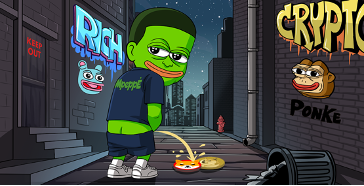
While Pepecoin (PEPE) and Dogecoin (DOGE) battle for supremacy in the meme coin world, Mpeppe (MPEPE) is quietly positioning itself as a dark horse in the race. Mpeppe (MPEPE) presale has caught the attention of savvy investors, with many speculating that the token could see a 100X return on launch. This optimism is fueled by Mpeppe (MPEPE)’s unique approach, combining the meme coin appeal with innovative features that could set it apart from its competitors.

Mpeppe (MPEPE) is not just another meme coin; it offers a blend of decentralized finance (DeFi) and artificial intelligence (AI) technology, making it an attractive option for investors looking for both entertainment and utility. The presale’s success indicates strong investor confidence, and if the token can deliver on its promises, it could quickly become a major player in the cryptocurrency market.

The Future of Meme Coins: Pepecoin (PEPE), Dogecoin (DOGE), and Mpeppe (MPEPE)

The future of meme coins is undoubtedly exciting, with Pepecoin (PEPE), Dogecoin (DOGE), and Mpeppe (MPEPE) each offering something unique to the market. Dogecoin (DOGE) has the advantage of being a well-known and widely accepted cryptocurrency, while Pepecoin (PEPE) is gaining traction with its rapid growth and strong community support. Mpeppe (MPEPE), on the other hand, represents the next generation of meme coins, integrating advanced technology to offer more than just a fun investment.

For Pepecoin (PEPE) to reach Dogecoin (DOGE)’s market cap, it will need to continue building its brand and expanding its use cases. Dogecoin (DOGE)’s established presence makes it a formidable opponent, but Pepecoin (PEPE)’s recent performance shows that it has the potential to challenge the status quo. Meanwhile, Mpeppe (MPEPE)’s potential 100X return on launch makes it a token to watch closely, as it could redefine what investors expect from meme coins.

Conclusion: A New Era for Meme Coins?

Mpeppe (MPEPE) is becoming a serious competitor with the ability to upend the current quo, even as Pepecoin (PEPE) and Dogecoin (DOGE) continue to rule the meme coin market. It remains to be seen if Pepecoin (PEPE) can overtake Dogecoin in terms of market capitalisation, but rivalry is intensifying. Given its success during its presale, Mpeppe (MPEPE) has the potential to become a major player in the cryptocurrency space and provide investors with substantial rewards.
For more information on the Mpeppe (MPEPPE) Presale: 

Visit Mpeppe (MPEPPE)

Join and become a community member: 

https://t.me/mpeppecoin

https://x.com/mpeppecommunity?s=11&t=hQv3guBuxfglZI-0YOTGuQ


Bitcoinist

Bitcoinist

Bitcoinist is the ultimate news and review site for the crypto currency community!

Lecturas Relacionadas

Diálogo con el fundador de 42 Macro: La "rana hervida a fuego lento" de la Fed y la economía en K

Fuente: "Anthony Pompliano" Organizado por: Felix, PANews En el podcast "Anthony Pompliano", Darius Dale, fundador de 42 Macro, analizó la política monetaria de la Fed, la economía en forma de K y la inflación. Calificó al nuevo presidente de la Fed, Kevin Warsh, como un "halcón con apariencia de paloma", quien posiblemente endurezca la política monetaria en los próximos trimestres para luego poder relajarla. Dale destacó que las expectativas de inflación no predicen resultados futuros; los verdaderos impulsores son factores monetarios y políticos, como el gasto deficitario y la monetización de deuda. Señaló que la Fed no alcanzará su objetivo del 2% de inflación y que su estrategia es una "cocción lenta" (financial repression) para evitar problemas de estabilidad. Sobre la economía en forma de K, explicó que mientras las familias en la parte superior poseen unos 12 billones de dólares en efectivo y consumen intensamente, las de la parte inferior enfrentan tasas de morosidad récord en créditos. Advirtió que quienes no inviertan en activos quedarán rezagados debido al "efecto Cantillón", que transfiere riqueza a los primeros receptores del dinero nuevo. Respecto al mercado bursátil, mencionó que los inversores están trasladando capital de las "siete grandes" tecnológicas hacia empresas más amplias de IA, pero alertó sobre el riesgo de burbuja en los gastos de capital. Finalmente, compartió su experiencia personal sobre la división económica y social, subrayando que todas las personas, independientemente de su origen, buscan dignidad y seguridad para sus familias.

marsbitHace 33 min(s)

Diálogo con el fundador de 42 Macro: La "rana hervida a fuego lento" de la Fed y la economía en K

marsbitHace 33 min(s)

Los ocho padres del Transformer, ¿dónde están ahora?

Ocho investigadores de Google Brain revolucionaron la IA en 2017 con el artículo “Attention Is All You Need”, presentando la arquitectura Transformer. Nueve años después, los ocho autores originales han dejado Google, trazando caminos divergentes en la industria. Noam Shazeer, cofundador de Character.AI y clave en el mecanismo de atención, regresó brevemente a Google DeepMind antes de unirse recientemente a OpenAI. Ashish Vaswani, co-diseñador del modelo, fundó Essential AI, aunque hay rumores de que su equipo podría integrarse en Nvidia. Niki Parmar, después de cofundar Adept AI y Essential AI, ahora trabaja en Anthropic. Jakob Uszkoreit, quien propuso la idea central, fundó Inceptive, aplicando la IA al diseño de moléculas de ARN. Llion Jones, tras una larga carrera en Google, cofundó Sakana AI en Tokio, explorando modelos colaborativos inspirados en la naturaleza. Aidan N. Gomez, el más joven del grupo, fundó Cohere, centrada en soluciones empresariales de IA. Łukasz Kaiser, con un trasfondo teórico, es investigador clave en OpenAI, contribuyendo a modelos como GPT-4 y o1. Illia Polosukhin, co-diseñador del Transformer, es cofundador del protocolo blockchain NEAR. A pesar de sus trayectorias distintas —desde biotecnología y blockchain hasta laboratorios de IA—, comparten una creencia: Transformer no es el punto final. Siguen explorando activamente la próxima arquitectura que supere claramente al actual pilar de la IA moderna.

marsbitHace 36 min(s)

Los ocho padres del Transformer, ¿dónde están ahora?

marsbitHace 36 min(s)

Respuesta nacional al cálculo espacial: usar fotones es más eficiente, Musk y Huang Renxun dan demasiadas vueltas

La carrera por la computación espacial se ha convertido en una verdadera competencia de armamentos tecnológicos. Figuras como Elon Musk y Jensen Huang han destacado el potencial de la inteligencia artificial y la computación en órbita. Sin embargo, los desafíos en el espacio son extremos: radiación cósmica, disipación de calor en el vacío y limitaciones energéticas severas. Aquí es donde la computación fotónica, que utiliza fotones en lugar de electrones, emerge como una solución prometedora. Sus ventajas son clave para el entorno espacial: es inherentemente resistente a la radiación, genera muy poco calor y consume menos energía. Esto permite empaquetar más potencia de cálculo en un satélite con el mismo peso y recursos, superando las limitaciones de los chips electrónicos tradicionales. Aunque la tecnología fotónica para IA, especialmente en tareas de inferencia, aún debe superar retos de integración y estabilidad mecánica para los lanzamientos espaciales, su trayectoria es distinta. No depende de la miniaturización extrema de los transistores, sino de escalar el uso de propiedades de la luz como la longitud de onda. En una carrera donde la computación electrónica se acerca a límites físicos, la vía "óptica" podría ser la carta decisiva para desplegar de forma eficiente y sostenible la capacidad de cálculo en el espacio.

marsbitHace 1 hora(s)

Respuesta nacional al cálculo espacial: usar fotones es más eficiente, Musk y Huang Renxun dan demasiadas vueltas

marsbitHace 1 hora(s)

Trading

Spot
活动图片