'Unanimous Verdict, Your Honor': Sam Bankman-Fried's Conviction Was Inevitable

CoinDeskPolicyPublicado a 2023-11-02Actualizado a 2023-11-03

Resumen

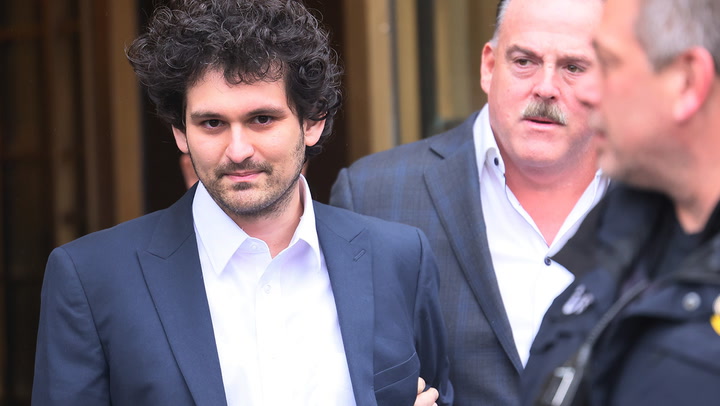
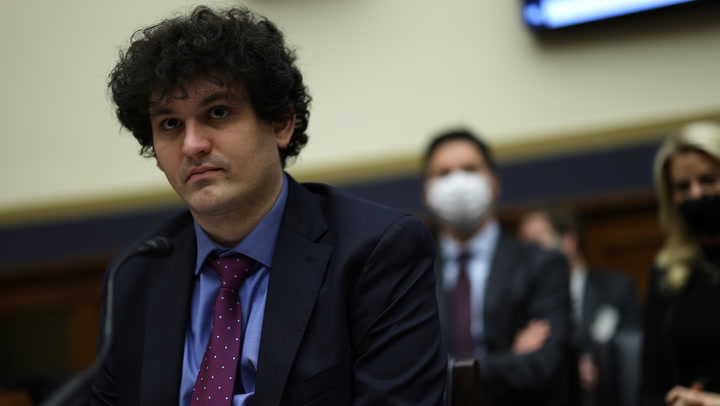
Sam Bankman-Fried was found guilty by a jury of his peers on all counts.

Sam Bankman-Fried is guilty.

Twelve jurors spent less than five hours deciding the facts. They asked for portions of transcripts from Paradigm's Matt Huang and Third Point's Robert Boroujerdi testimony, as well as highlighters and Post-it Notes, and when they didn't immediately receive the version of the indictment, they requested that too.
10
'Santa Rally' Could Spark Bitcoin to $56K by Year-End; PayPal Faces SEC Inquiry
0 seconds of 2 minutes, 16 secondsVolume 0%
Press shift question mark to access a list of keyboard shortcuts
Keyboard ShortcutsEnabledDisabled
Play/PauseSPACE
Increase Volume
Decrease Volume
Seek Forward
Seek Backward
Captions On/Offc
Fullscreen/Exit Fullscreenf
Mute/Unmutem
Seek %0-9
Up Next
Curve Finance’s Stablecoin Maintains Peg as Others Struggle: Kaiko
01:27
Settings
OffEnglish
Font Color
White
Font Opacity
100%
Font Size
100%
Font Family
Arial
Character Edge
None
Background Color
Black
Background Opacity
50%
Window Color
Black
Window Opacity
0%
Reset
WhiteBlackRedGreenBlueYellowMagentaCyan
100%75%50%25%
200%175%150%125%100%75%50%
ArialCourierGeorgiaImpactLucida ConsoleTahomaTimes New RomanTrebuchet MSVerdana
NoneRaisedDepressedUniformDrop Shadow
WhiteBlackRedGreenBlueYellowMagentaCyan
100%75%50%25%0%
WhiteBlackRedGreenBlueYellowMagentaCyan
100%75%50%25%0%
00:25
01:51
02:16
 
  • Curve Finance’s Stablecoin Maintains Peg as Others Struggle: Kaiko
    01:27
    Curve Finance’s Stablecoin Maintains Peg as Others Struggle: Kaiko
  • CoinDesk Published a Scoop on Alameda Research One Year Ago
    01:11
    CoinDesk Published a Scoop on Alameda Research One Year Ago
  • A Look Back on the Collapse of Sam Bankman-Fried's Empire
    07:06
    A Look Back on the Collapse of Sam Bankman-Fried's Empire
  • Crypto Markets Update as Federal Reserve Leaves Rates Unchanged
    16:28
    Crypto Markets Update as Federal Reserve Leaves Rates Unchanged
  • And yet, they quickly decided that Bankman-Fried was guilty on all seven counts. He defrauded FTX's customers and conspired to defraud them. He defrauded Alameda Research's lenders and conspired to defraud them. He conspired to defraud FTX's investors and customers and to conceal the proceeds by laundering funds.

    A D V E R T I S E M E N T
    A D V E R T I S E M E N T

    You're reading The SBF Trial, a CoinDesk newsletter bringing you daily insights from inside the courtroom where Sam Bankman-Fried will try to stay out of prison. Want to receive it directly? Sign up here.

    The outcome seemed inevitable. The U.S. Department of Justice had a fully fleshed out case, while the defense – as we've said for weeks – seemed to struggle. Judge Lewis Kaplan visibly appeared to lose his patience with the defendant (though he said Thursday he wouldn't share any personal views on the verdict). I wasn't personally in the courtroom when Bankman-Fried testified, nor when defense attorney Mark Cohen gave his closing. But my colleagues who were say that some of the jurors looked at the clock during the closing argument. Bankman-Fried's inability to answer certain questions – and I say inability in the sense that if he acknowledged some of AUSA Danielle Sasoon's questions, he'd open himself to follow-ups, and if he denied them, he'd open himself to claims of lying – don't seem to have endeared him to anyone. His particular speaking style – trying to answer the question he hoped he'd be asked – sparked admonitions from the judge.

    The case isn't over. A sentencing hearing has been tentatively scheduled for next March. And Bankman-Fried faces another trial on additional charges around the same time.

    A D V E R T I S E M E N T
    A D V E R T I S E M E N T

    And, as the court prepared to disperse Thursday, defense attorney Cohen asked about post-trial motions (he has a few weeks). We'll almost certainly see an appeal.

    But as I said, this outcome seemed inevitable. The judge decided to keep the jury around until 8 p.m., instead of ending the day at 4:30 p.m. as usual. The court clerk announced a verdict was reached at 7:38.

    Everyone was in the courtroom for the verdict – the overflow room was closed. So we all watched the jurors file in. We saw the court clerk show the judge the verdict form, hand the foreperson (juror 4) a microphone, ask her for the verdict on each count and poll each juror to confirm the decision was unanimous.

    Sam, the defendant, Bankman-Fried – whatever you want to call him – had to watch her read out the decision. She didn't look at him while reading the verdict. By 7:55, it was all over.

    After she sat down, you could just hear the court sketch artist for a second. Judge Kaplan thanked the jurors for their service, telling them being on a jury is a "privilege of citizenship."

    And then, after dismissing the 12 women and men, the judge returned to business, asking about sentencing hearings and a second trial on additional charges set for March. We're on to the next one.

    — Nikhilesh De

    Courtroom scenes

    • Fewer than 30 people showed up before 9:00 a.m., but the court was packed by the time we got to the verdict.
    • Judge Lewis Kaplan read the jury charge over the course of a few hours after AUSA Danielle Sassoon finished her rebuttal argument. Before he began, the court's deputy clerk announced that everyone in the courtroom would have to remain seated before instructing the U.S. Marshal to "please lock the door."
    • The press pool all had pizza in the cafeteria for dinner (shout-out to the cafeteria staff for not only baking us pizzas, but letting us stay past closing during what was already a long day!).

    — Nikhilesh De

    Editor's notes

    I want to take a moment to just contemplate something. Sam Bankman-Fried was found guilty of serious financial crimes. He left thousands of victims, some of whom are still hoping for anything back that they can get back. He's looking at potentially decades behind bars. Based on the testimony and evidence we've heard and seen over the past month, he was an active and willing participant in the crimes he was convicted of, and his role as a truthful person who made mistakes is suspect.

    A D V E R T I S E M E N T
    A D V E R T I S E M E N T

    All that being said, it is worth acknowledging that what this means is he's going to spend a decade or few isolated from society at large. If he's released early or after the conclusion of his sentence, he'll be dropped into a world different from the one he left. A decade ago bitcoin was worth pennies on the dollar compared to today, and this entire industry I spend my time covering barely existed. Smartphones were relatively infant, people used massive desktop computers instead of tablets and there were around a billion fewer people on this planet. I'm not saying people should feel sorry for Bankman-Fried or sympathetic toward his immediate future. But it's still worth acknowledging.

    And finally, a note about this newsletter. Danny, Sam, Helene, Liz and I have a month's worth of notes and quirks that didn't quite fit into the normal, everyday coverage. Over the next few days or weeks, we'll start sharing those. In the meantime, I also want to make sure that you have the opportunity to ask any questions you have, whether they're about the trial and court proceedings, the next steps, even just some aspect of what it was like inside the building where it all happened. Reply to this email or hit me up on X/Telegram (@nikhileshde) and we'll include responses in a future edition.

    — Nikhilesh De

    Edited by Nick Baker.

    Lecturas Relacionadas

    Desglose de HyperEVM: ¿Qué aplicaciones pueden aprovechar realmente el núcleo de Hyperliquid?

    **HyperEVM: Desbloqueando las Aplicaciones Nativas en Hyperliquid** HyperEVM no es simplemente otra cadena EVM, sino una capa de contratos inteligentes diseñada para programar directamente el exchange central de Hyperliquid (HyperCore). Su valor radica en permitir que las aplicaciones lean y utilicen datos únicos de HyperCore: transacciones, garantías, posiciones y riesgo. Una aplicación verdaderamente valiosa en HyperEVM debe responder positivamente a dos preguntas: ¿Por qué necesita la EVM? y ¿Por qué necesita Hyperliquid? Las aplicaciones más básicas (DEX, préstamos) son necesarias para la usabilidad, pero la ventaja competitiva real está en aquellas que no pueden funcionar sin el estado o la ejecución nativa de HyperCore. Se puede analizar el ecosistema en una matriz 2x2: 1. **Finanzas EVM Locales:** Aplicaciones que necesitan contratos inteligentes pero son en gran medida portables (ej. mercados monetarios). 2. **Extensiones Nativas del Core:** Aplicaciones que dependen fuertemente de Hyperliquid, usando la EVM principalmente para envolver o tokenizar activos nativos (ej. envoltorios para liquidez). 3. **HyperCore Programable:** El espacio más innovador, donde las aplicaciones combinan la lógica general de la EVM con una dependencia profunda del estado y ejecución de HyperCore, "productizando" la actividad del exchange (ej. estrategias delta-neutral basadas en posiciones del Core). La forma última podría ser una **cuenta financiera unificada**: un solo saldo del usuario que sirva simultáneamente para operar en HyperCore, tomar préstamos en HyperEVM, obtener rendimiento y cubrir riesgos, logrando un hogar financiero integral y controlado por el usuario. La primera ola de HyperEVM hizo al ecosistema usable; la siguiente hará a HyperCore verdaderamente programable.

    Foresight NewsHace 31 min(s)

    Desglose de HyperEVM: ¿Qué aplicaciones pueden aprovechar realmente el núcleo de Hyperliquid?

    Foresight NewsHace 31 min(s)

    El gran desplome de la valoración de las acciones "Old Dudes": La muerte del sistema de valoración de una generación de activos

    La crisis de valoración de las acciones "viejas": El colapso del sistema de valoración de una generación de activos Entre 2014 y 2017, las empresas chinas de internet se valoraban mediante el método de "descuento frente a homólogas estadounidenses". Esta lógica se derrumbó por una tormenta perfecta: la guerra comercial chino-estadounidense, la represión regulatoria interna (como el caso de Ant Group) y el riesgo de exclusión de las bolsas estadounidenses. Para 2026, esta metodología de valoración ha muerto. La crisis no es exclusiva de China. Gigantes tecnológicos estadounidenses como Microsoft también sufren. A pesar de tener fundamentos sólidos, su valoración se ha comprimido debido a los enormes gastos de capital en IA, que erosionan el flujo de caja libre y plantean dudas sobre su capacidad para transformar sus modelos de negocio rentables. Tanto los gigantes chinos como los estadounidenses, ahora llamados "acciones viejas", enfrentan el mismo dilema: invertir masivamente en IA para no quedarse atrás, o ser considerados obsoletos por el mercado. Un precedente histórico es Japón tras el colapso de su burbuja en 1989. El "premio de Japón" desapareció, y el mercado tardó unos 25 años en adoptar un nuevo marco de valoración, catalizado por inversores como Warren Buffett, quien enfatizó la rentabilidad por dividendos y las reformas de gobierno corporativo. Hoy, los activos de internet chinos se encuentran en un vacío similar: el marco antiguo ha muerto y el nuevo no se ha establecido. El lenguaje de valoración potencial podría basarse en la transformación hacia proveedores de infraestructura y servicios de IA, o en los rendimientos para los accionistas mediante recompra de acciones y dividendos. Sin embargo, ambas rutas son complejas. La primera requiere una reinvención costosa y arriesgada, mientras que la segunda aún no es lo suficientemente sólida para anclar las valoraciones. La revaloración probablemente se encuentre aún en una fase intermedia y podría extenderse.

    marsbitHace 1 hora(s)

    El gran desplome de la valoración de las acciones "Old Dudes": La muerte del sistema de valoración de una generación de activos

    marsbitHace 1 hora(s)

    Trading

    Spot
    活动图片