Economist Harry Dent Expects Biggest Crash in Our Lifetime to Hit Between Now and Mid-June
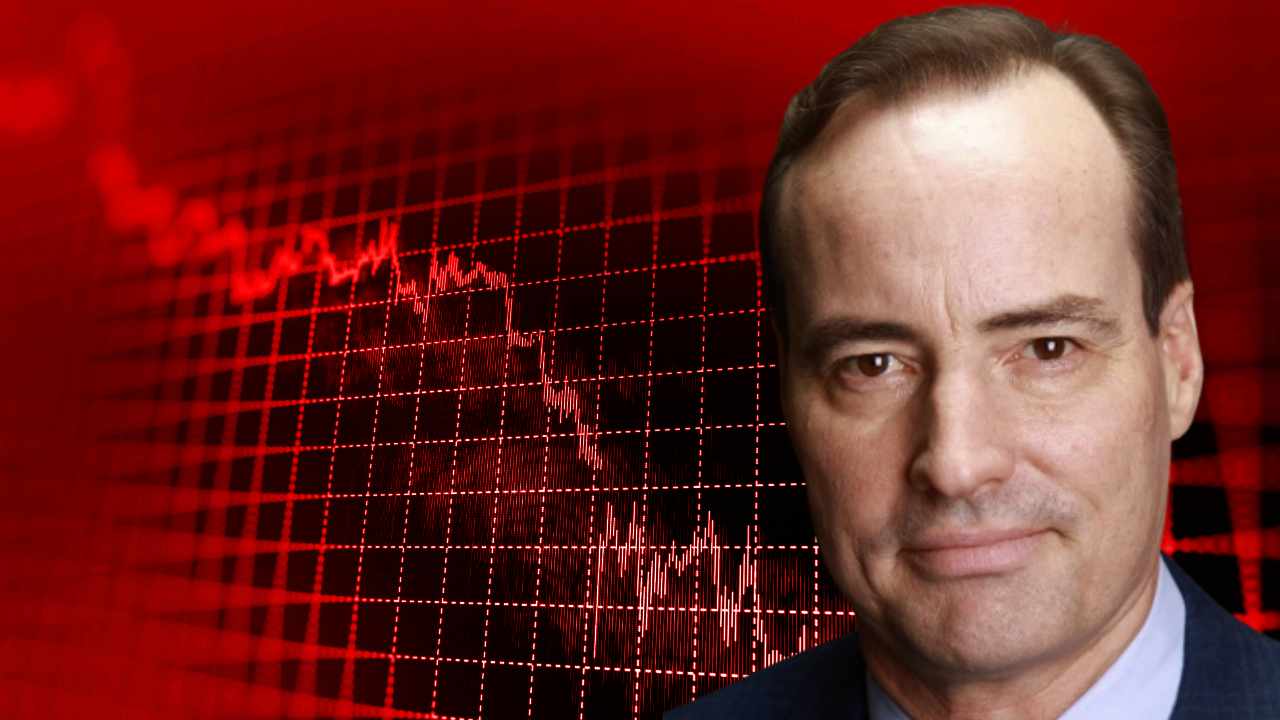
Harry Dent, economist and author of several best-selling books, has warned that the biggest crash in our lifetime is “going to hit between now and about mid-June.” He stressed: “People are going to know this is not a big correction — it is a major crash, one that you have not seen … in your lifetime.”
Harry Dent’s ‘Biggest Crash’ Warning
The founder of HS Dent Investment Management and author of several best-selling books, Harry Dent, warned in an interview with David Lin, published Friday, that the biggest crash in our lifetime will likely happen by mid-June. Dent stressed:
We won’t see this again. We will not see a bubble economy, our kids will probably not even see a bubble economy decades and decades from now … It happens once in a lifetime at most.
He explained that the biggest crash that he is predicting is what the 2008-2009 crash should have been, noting that the S&P 500 was down 57% at that time. “About a year and a half into that crash, central banks just stepped in and just started printing money at unprecedented rates … So that recession didn’t really do its job of flushing out the greatest debt bubble in history,” Dent described, adding:
I am predicting as much as 86% [decline] for the S&P 500 in this crash and 92% on the Nasdaq … Bitcoin will go down more like 95%, 96%.
Dent expects the crypto market to crash alongside stocks, with BTC falling 95%-96% from its November 2021 high. “Bitcoin will fall from $69,000 to about three to four thousand,” he said, adding that “It’s exactly what Amazon and the dot-coms did.”
The economist has repeatedly warned about the biggest crash in a lifetime. He pointed out that after his previous warning, the Nasdaq went down 38% in October last year. “That’s just the first wave down. There’s two more to follow … We have already started the next wave down which could take the Nasdaq down to $8,000 just in this next wave, not the end of it. That’s gonna be down a little over 50%,” he detailed.
“That’s when people are going to know this is not a big correction — It is a major crash, one that you have not seen … in your lifetime, and the one that even the millennials will not see a bigger crash than this,” Dent opined.
Addressing why the recent crash happened later than he previously predicted, the economist clarified that the reason was due to central banks declaring war on recession. “Never before … have central banks declared war, literal war, on recession, and said: ‘We will not let the economy fall.'” However, Dent noted that even with all the unprecedented money printing, “we keep falling back into the recession.” He stressed: “The economy underneath is really really weak and really needs to get rid of a lot of really bad debt and zombie companies and the central banks won’t let the economy do its thing … The central banks have declared war on the free market. That’s the problem.”
The economist cautioned, “We are about to hit this third wave,” emphasizing that he does not believe that the Federal Reserve will be able to stop it. “I think it’s going to creep up on them before they can reverse the tightening,” he predicted, adding:
We have not cleaned up the massive debts and overvaluations of the biggest financial assets bubble in everything. We have never had a financial asset bubble in everything like this. This bubble has not been allowed to burst and clear out its excesses which we need to do. And I think we are into that process now.
Noting that the Federal Reserve overstimulated the economy, and now they have to “tighten strong,” Dent stressed that the Fed has “pushed up interest rates and tightened” more recently than they ever did since the early 80s. “So this is serious tightening,” he exclaimed. “Now they’re tightening and they’re thinking well the economy underneath can handle it.” However, Dent argued: “No, the economy underneath has been weak since 2008 and does not get strong until a few years from now.”
Dent further explained that what looks like a correction will turn into “a crash more like 1929 to 1932, down 86% on the S&P 500,” emphasizing that it is his “best forecast at this time.” The economist clarified: “You get a first wave down, a second wave bounce which we’ve seen, we’re already into the third wave just starting.” He elaborated:
The third wave is usually the strongest and hardest wave and I think most of that’s going to happen between now and the end of the year. And the biggest part of that third wave of the third wave. It’s going to hit between now and mid-June.
“It’s not easy to time the market as most people know, but this is so important that I am timing the market,” Dent said.