Bitcoin bulls stumble at $23.4K as Fed’s ‘disinflation’ sparks BTC price rally

CointelegraphPublicado a 2023-02-08Actualizado a 2023-02-08

Resumen

Bitcoin price action returns to tackle familiar resistance, with bulls failing to make fresh inroads toward $25,000.

Bitcoin (BTC) rebounded to key resistance on Feb. 8 as crypto markets got a boost from a familiar source.
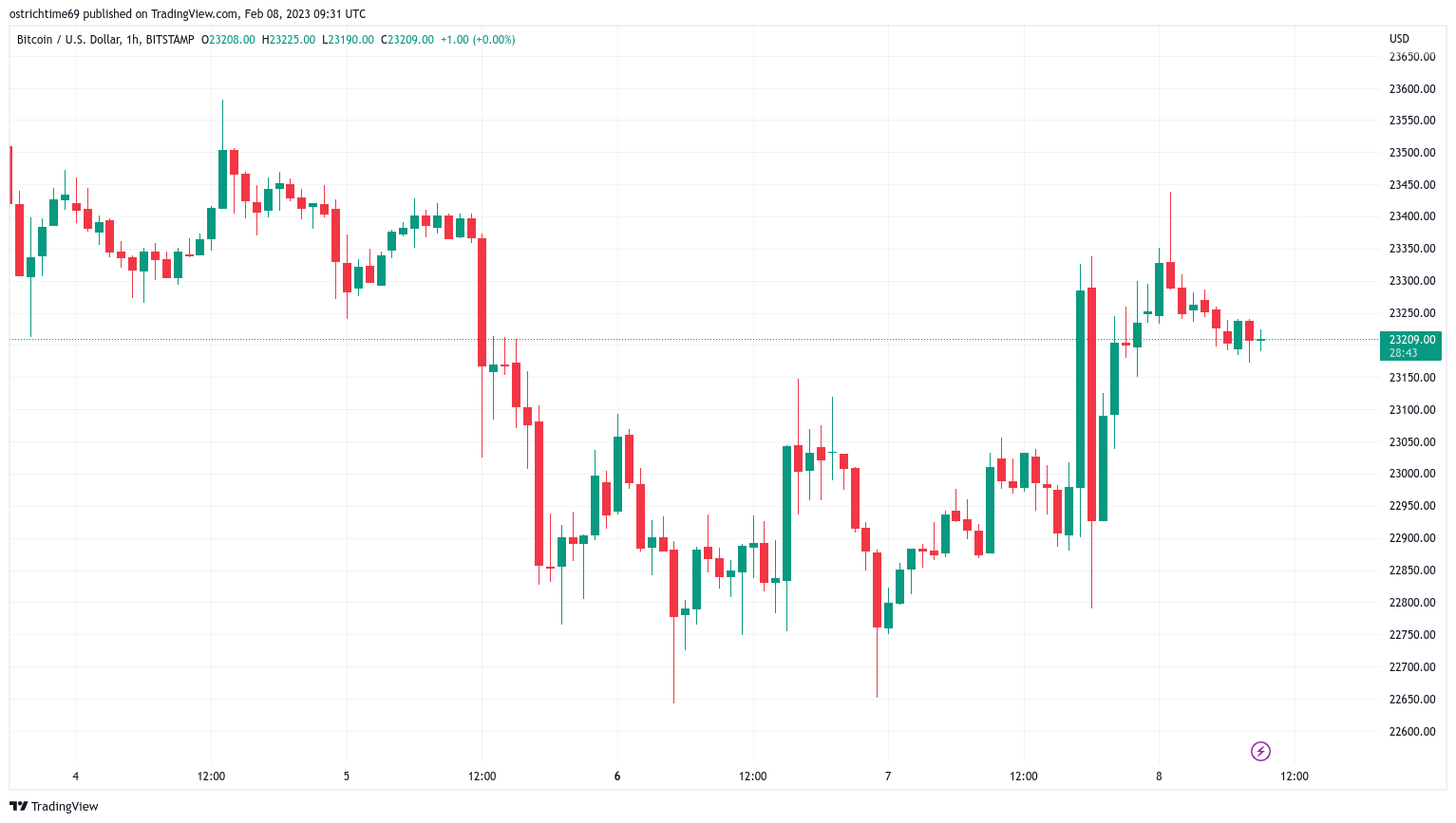
BTC/USD 1-hour candle chart (Bitstamp). Source: TradingView

”“

Powell: “Disinflationary process” is here

”“

Data from Cointelegraph Markets Pro and TradingView showed BTC/USD reaching the important $23,400 zone on Bitstamp overnight.

”“

The pair reacted positively to the latest comments from the United States Federal Reserve, which also sent equities higher during the Feb. 7 Wall Street trading session.

”“

Fed Chair Jerome Powell again mentioned “disinflation” during his appearance, reinforcing market hopes that interest rate hikes could cool more quickly in line with inflation. These stemmed from the latest meeting of the Federal Open Market Committee (FOMC) on Feb. 1, where the Fed raised rates by 0.25%.

""

“The message that we were sending at the FOMC meeting last Wednesday was really that the disinflationary process — the process of getting inflation down — has begun, and it’s begun in the goods sector, which is about a quarter of our economy,” he said at The Economic Club of Washington, D.C.

""

Powell nonetheless cautioned that there was “a long way to go” and that the U.S. was in “the very early stages of disinflation.”

""

Despite this, risk assets rallied into the Wall Street close, with the S&P 500 and Nasdaq Composite Index finishing up 1.3% and 1.9%, respectively.

""

Bitcoin also erased previous weakness, having dropped below $22,700 earlier in the week, but bulls proved unable to tackle ask liquidity at $23,400 and beyond.

""

That liquidity remained in place on the day, as visible in data covering the Binance order book supplied by on-chain monitoring resource Material Indicators.
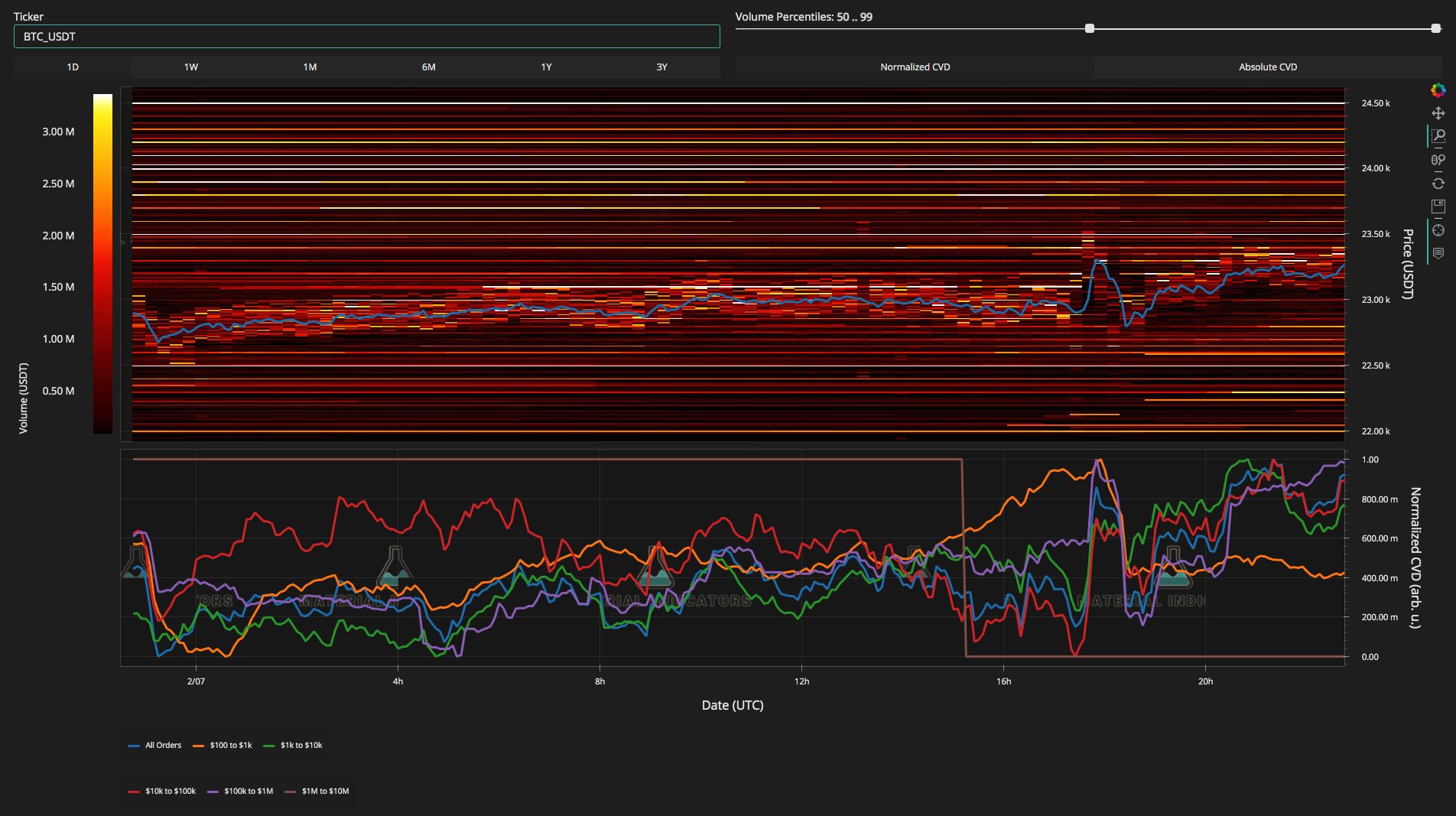
BTC/USD order book data (Binance). Source: Material Indicators/ Twitter

""

“Markets rallied into the close yesterday, with Bitcoin’s last H4 candle showing weakness at resistance & printing a shooting star,” popular trader Mark Cullen summarized about the latest events.

""

“I personally am still waiting for the lows to get swept. BUT if the BTC can close a H$ above 23.4k I will look for a push higher.”

""

Michaël van de Poppe, founder and CEO of trading firm Eight, was also encouraged by Bitcoin’s reaction. A flip of $23,300 to a more solid support, he told Twitter followers on the day, would mean that the latest BTC price correction “is over.”

""

BTC/USD traded at around $23,200 at the time of writing, with traders still counting down to volatility returning.

""

Golden cross vs. death cross to resolve in a “few days”

""

Looking ahead, the rest of the week held little by way of important macroeconomic cues for crypto markets.

""

As Cointelegraph reported, eyes were already on next week’s inflation data, coming in the form of the Consumer Price Index (CPI) print for January.

""

At the same time, chart analysts hoped for a positive outcome from Bitcoin’s latest “golden cross” on the daily chart — its first since September 2021. At the same time, however, BTC/USD weekly timeframes continued to print a “death cross,” a phenomenon which often preceded further downside in the past.

""

“Many say Death Cross/Golden Cross Lagging Indicator. It is Lagging for those who only think Golden Cross means Bullish, and Death Cross means Bearish. I use this indicator to understand Momentum,” fellow trader Jibon wrote in part of a dedicated Twitter thread on the topic on Feb. 7.

""

Jibon compared the current setup to previous instances in 2015 and 2019 and added that it would take a “few days” for the impact of the crosses to become more obvious.
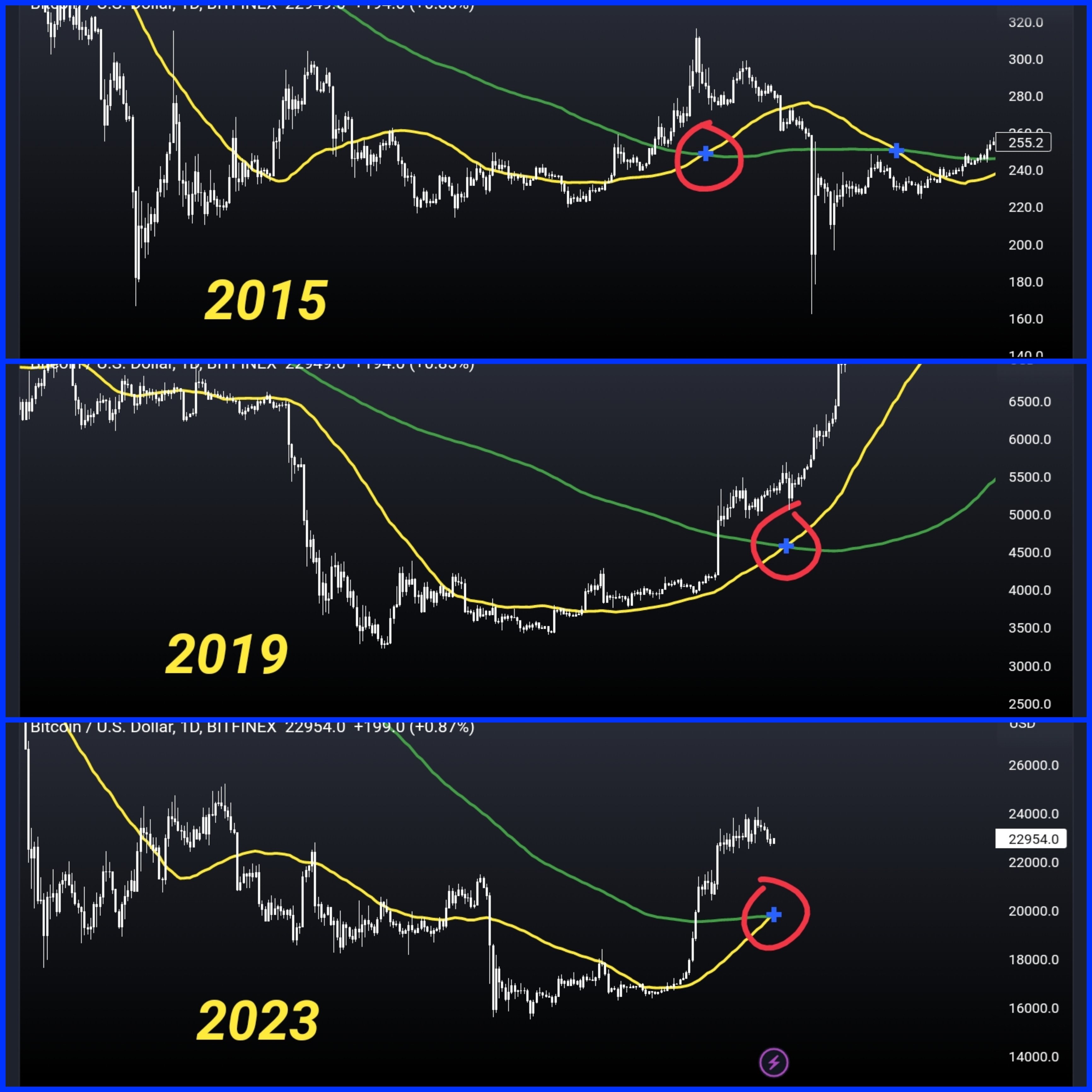
BTC/USD comparative charts. Source: Trader_J/ Twitter


Lecturas Relacionadas

Grupos católicos y de seguridad advierten que la Ley CLARITY podría debilitar las salvaguardias contra el delito con criptomonedas

Una coalición de líderes católicos, grupos vinculados a la aplicación de la ley y defensores contra la trata de personas advierte que la Ley CLARITY podría debilitar las salvaguardias utilizadas para combatir los delitos habilitados por las criptomonedas. Las críticas se centran en disposiciones que protegerían a los desarrolladores de software no custodio de ser tratados como transmisores de dinero. Este debate aborda una de las cuestiones más difíciles en la regulación de las criptomonedas: cómo distinguir el software neutral de la intermediación financiera. Los defensores de las criptomonedas argumentan que los desarrolladores que publican código no custodio no deben ser regulados como exchanges o procesadores de pagos. Los críticos temen que exenciones amplias puedan dificultar el rastreo de las finanzas ilícitas. El software no custodio es central para las finanzas descentralizadas (DeFi). La Ley CLARITY busca crear reglas más claras de estructura de mercado, pero la oposición muestra que no todas las batallas políticas tratan sobre la protección del inversor. Algunos legisladores también considerarán el impacto en la trata de personas, la evasión de sanciones y la visibilidad para la aplicación de la ley. La resistencia no significa que el proyecto de ley esté muerto, pero podría llevar a enmiendas, salvaguardias más estrictas o requisitos de información adicionales. Para las empresas de criptomonedas, las consecuencias son altas: reglas más claras podrían desbloquear inversiones, pero si el proyecto se enmarca como un debilitamiento de las salvaguardias contra el crimen, su camino político será más difícil.

bitcoinistHace 2 hora(s)

Grupos católicos y de seguridad advierten que la Ley CLARITY podría debilitar las salvaguardias contra el delito con criptomonedas

bitcoinistHace 2 hora(s)

La crónica del fraude grave que envuelve al unicornio cripto Blockstream

A lo largo de 2024, Blockstream, la empresa de cripto del pionero de Bitcoin Adam Back, se ha visto envuelta en varias controversias. Una investigación de NatInfoSec lanzó graves acusaciones sobre su producto de notas mineras, Blockstream Mining Note (BMN). Los principales señalamientos incluyen: una discrepancia entre el poder de cómputo mostrado (15 EH/s) y el necesario para cumplir con las obligaciones de los BMN (20-45 EH/s); una falta de evidencia verificable pública sobre las operaciones mineras a esa escala; rendimientos anuales fijos inusualmente altos, cercanos al 20%; y el descubrimiento de que Christopher William Cook, figura clave de la operación minera de Blockstream a través de Exacore, tiene antecedentes penales por fraude postal, información no revelada a los inversores. Aunque BitMEX Research y otros como Samson Mow han cuestionado algunos puntos por falta de pruebas o por implicar incorrectamente a BSTR, la compañía de tesorería de Bitcoin asociada a Back, las preguntas centrales sobre los BMN persisten. La comunidad y los analistas exigen mayor transparencia y capacidad de verificación sobre: el tamaño real y los límites de responsabilidad de los BMN; la fuente de los altos rendimientos prometidos; la procedencia verificable de los BTC pagados a los inversores; y el papel exacto de Cook. Hasta ahora, Blockstream no ha emitido una respuesta oficial integral a estas acusaciones.

marsbitHace 5 hora(s)

La crónica del fraude grave que envuelve al unicornio cripto Blockstream

marsbitHace 5 hora(s)

Trading

Spot
Futuros
活动图片