In early August 2026, Ajinomoto of Japan notified customers in mainland China of a 30% cut in ABF film supply, immediately shaking the industry. The news quickly spread to the downstream semiconductor sector, triggering panic over price hikes and supply shortages.
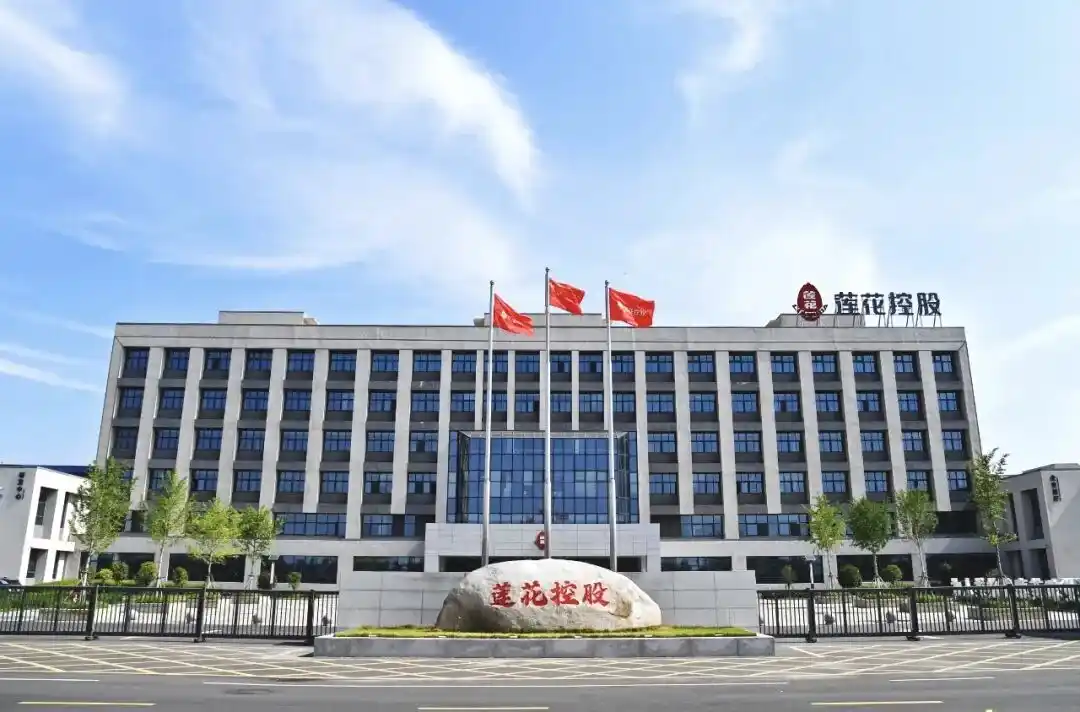
Just this past April, a Chinese company called Lotus Holding, originally known for selling monosodium glutamate, formally spent 103 million yuan to acquire an ABF film startup with annual revenue of only 6.5 million yuan, attempting to change this passive situation for China's industry.
The former is a monosodium glutamate company; the latter is also a monosodium glutamate company. As the "chokehold" blade slid from lithography machines down to an inconspicuous thin film, the battle for China's technological self-reliance had already reached the most minute, most critical points.
In the tech wars of previous years, the "choke points" were a clear list of battlefields: lithography machines, EUV technology, high-end EDA, advanced process chips...
But Rome wasn't built in a day, and the reality of the industry is far more brutal. A "chokehold" was never about a few isolated technological points, but a densely woven network. On this network, cutting off any inconspicuous node could suffocate the entire industrial chain:
A layer of insulating film, a can of photoresist, a bottle of electronic special gas, a type of packaging chemical, a piece of high-purity sputtering target. Each one seems insignificant on its own, but together they form the lifeblood of every process from chip design to packaging and testing.
The story of Ajinomoto is the most absurd and profound footnote to this network.
01
ABF film is the core insulating material for the IC substrates of high-end CPUs, GPUs, and AI computing chips; without it, the substrate is almost scrap. ABF film originated from a highly insulating resin that Ajinomoto accidentally discovered in a monosodium glutamate byproduct in the 1970s. Intel first adopted it in 1996, mass production began in 1999, and since then, Ajinomoto has monopolized this market for nearly 30 years through patent barriers, process accumulation, and partnerships with major clients.
To this day, Ajinomoto holds 95% of the global ABF film market share, with profit margins exceeding 50%. No overseas competitor can offer a large-scale alternative. A monosodium glutamate company, using a film grown from sodium glutamate, has put a chokehold on the necks of global AI chips.

The AI boom is tightening this noose even further. Traditional PC chip ABF substrates require only 4–6 layers, while high-end AI chips need 8–16 layers. The ABF film consumption per AI chip is 5–10 times that of traditional chips. On the supply side, Ajinomoto's monthly capacity of 2 million square meters is already at full production. New capacity will only start up in 2028, with a third factory slated for 2032.
Thus, a supply-demand gap has opened: a 10% shortfall in the second half of 2026, 21% in 2027, 42% in 2028. Ajinomoto's choice? To cut 30% of supply to mainland China. That is to say, at the most critical moment of global AI competition, Japan's Ajinomoto chose to target mainland China.
Domestic ABF film localization in mainland China stands at less than 5%. Ajinomoto's move is nearly a decapitation strike.
One could say this blow landed on the production lines of substrate manufacturers like Shennan Circuit, Xingsen Technology, and Shenghong Technology, and also on the packaging and shipments of domestic high-end AI chips. It tells everyone a truth ignored for too long: the weaknesses in self-reliance and controllability lie not only in lithography machines but also in the "last layer of film."
It is against such a backdrop that Lotus Holding, a monosodium glutamate company, taking up the banner of self-reliance to break through in ABF film, appears so romantic and courageous to the outside world.
If we broaden our perspective, the Ajinomoto incident is just one local battle in the grand chess game of China's technological self-reliance. Over the past six years, in the adversity of repeated blockades, Chinese technology has launched counterattacks on almost all "chokehold" battlefields.
In chip design, Huawei has been the standard-bearer of this counterattack. After the Entity List in 2019, HiSilicon did not die. Instead, it ushered in the return of Kirin chips—using DUV lithography machines for multiple exposure, an "extreme operation," to produce advanced process chips despite the ban on EUV lithography machines. Simultaneously, it advanced the Ascend series of AI chips to a level comparable to NVIDIA's high-end products. Domestic CPUs (Hygon, Phytium, Loongson) and AI chips (Ascend, Cambricon) have been deployed on a large scale in the IT application innovation and intelligent computing sectors.
In wafer manufacturing, SMIC, unable to obtain EUV equipment, independently developed its "N+1" process and achieved small-scale mass production of advanced nodes. It has massively expanded mature node (28nm and above) capacity, enabling localized production of automotive-grade and industrial chips. The quality of domestic chips is moving from "can make" to "can use."

In memory chips, the fight has been the most hardcore turnaround. YMTC independently developed its Xtacking architecture, mass-producing 294-layer 3D NAND, once surpassing Samsung and SK Hynix in layer count. Its global market share briefly reached 13%, even prompting Samsung to initiate talks about cross-licensing patents. CXMT's DRAM ranks fourth globally. Chinese memory went from being "choked" to partially overtaking in just a few years.
The common point across these battlefields is "breakthroughs forced by being choked." Having no way back instead forced the entire industry chain to place collective bets. But precisely in the gaps of these grand battlefields, there are still countless small but vital "Ajinomoto-style" pressure points—and that is exactly where companies like Lotus Holding step in to fulfill their mission.
02
Who is Lotus Holding? It is "Lotus Monosodium Glutamate," that seemingly long-dormant national brand.
In April 2026, Lotus Holding's subsidiary, Lotus Tech & Innovation, acquired approximately 51% of Shenzhen Nufis New Material Technology Co., Ltd. for about 103 million yuan through a public listing, officially entering the ABF film sector.
Nufis is a company specializing in build-up films (similar to ABF film) for semiconductor packaging substrates. It holds patents, has certifications from global leading clients, boasts 67% revenue growth, and is collaborating with Zhejiang University on NBF film R&D. It is one of the few core players in the domestic ABF field that has reached the threshold of mass production.
The market immediately labeled this transaction—"China's Ajinomoto."
Lotus Holding's acquisition of Nufis bought a "ticket"—entry qualification into a market monopolized for 30 years with a localization rate under 5%. Whether the ticket is worth it depends on whether one can walk in, but without buying it, one remains forever outside the door.
The real value of Lotus Holding lies not in whether it can replace Ajinomoto now, but in what it reveals about a profound shift occurring in China's pursuit of technological self-reliance: it is no longer just the solitary struggle of giants like Huawei and SMIC, but a collective, industry-wide wager from giants down to "monosodium glutamate factories."
03
The story of Ajinomoto and Lotus Holding is merely a replay of a scene that has repeated itself over the past six decades.
Almost every leap forward in Chinese technology has been forced by blockades. After the 2019 Entity List, Kirin chips staged a comeback against all odds. After the lithography machine embargo, DUV multiple exposure opened an alternative path. After memory chips were besieged, YMTC instead achieved a 294-layer breakthrough. The more severely a segment is "choked," the faster and more resolutely China breaks through.
The logic behind this is no mystery: blockades cut off retreat routes, forcing companies to completely abandon any notion of "relying on overseas" and compelling them to unite with upstream and downstream partners to meticulously hone technology. China's unique advantage lies in possessing the world's most complete industrial chain, the largest application market, and the dual drivers of the "whole-nation system + market vitality." Combined, these three mean that localization of any single link can quickly find fertile ground where it can "land, scale, and iterate."
Ajinomoto's supply cut will cause short-term pain for China's substrate and chip manufacturers. But in the long run, it is highly likely to become, like the Entity List of the past, the trigger that catalyzes the next "Kirin" or "YMTC"—only this time, what is forced out is not a chip, but a film.
Chokeholds are never applied in a single day, and breaking them is never achieved with a single acquisition. But every time a monosodium glutamate factory dares to dive into the deep waters of chip materials, every time 103 million yuan in "small money" starts flowing to vital pressure points like the "last layer of film," at least one thing becomes clear: China's pursuit of technological self-reliance and controllability has shifted from a desperate assault by a few to a collective march by the entire industry.
From lithography machines to ABF film, this war has no smoke, yet it determines national destiny. The true quality of China's technological self-reliance is not determined by how brightly a single point like the Kirin chip shines, but by how many Ajinomoto-style nodes on that "chokehold network" are filled in one by one.
Lotus Holding's 103 million yuan cannot buy the present reality of a "Chinese Ajinomoto," but it may buy a ticket to that future. The direction is right, but the road is long; the real test is not the acquisition itself, but whether it can wait with the patience of ten years—not a three-year gamble—for the domestic breakthrough of that film.
And the answer lies in the next leg of China's journey toward technological self-reliance—a path of thorns with no finish line, and one that absolutely must not stop.
This article is from the WeChat public account "Delinshe" (ID: delinshe), author: Delin Baoyu