Popular First-Layer Blockchain Network Announces Hard Fork Preparation Plans: 'Code Development Process to Be Completed by the End of 2026!'

cryptonews.ruPublished on 2026-08-17Last updated on 2026-08-17

Abstract

The first-layer blockchain network Cardano (ADA) has publicly released its hard fork plan for the "Dijkstra Era," representing the ecosystem's next major technical transformation. According to the roadmap published via Cardano's official channels, the network upgrade process will occur in multiple phases, with the primary goal of completing all core code development by the final quarter of 2026. The first phase involves finalizing all core software development and preparing the mainnet for the upgrade, including updating the Cardano protocol to version 12 and implementing new features. These updates are stated to bring significant improvements to network performance, scalability, and future governance mechanisms. The second phase aims to implement the Ouroboros Peras upgrade, a major innovation to Cardano's consensus mechanism, planned for activation via a hard fork in Q2 2027. Its main goal is to accelerate transaction finality and improve user experience. The Cardano team emphasized that the roadmap dates are targets for completing code development and mainnet preparation. The actual deployment of upgrades on the mainnet will require community approval through Cardano's on-chain governance mechanisms. Experts describe the Dijkstra Era as one of the most significant updates aimed at strengthening Cardano's technical foundation, with investors and developers closely watching the network's evolution over the next two years.

The first-layer blockchain network Cardano (ADA) has publicly released its hard fork plan for the "Dijkstra Era," representing the next major technical transformation of the ecosystem. According to the roadmap published via Cardano's official channels, the process of upgrading the network to the next generation will occur in several stages, with the first goal being to complete work on the code in the last quarter of 2026.

According to the announcement, the first stage involves completing all core software development originally conceived during the Dijkstra period and finalizing preparations for upgrading the mainnet. This process includes upgrading the Cardano protocol to version 12 and implementing new features. Developers state that these updates will include significant improvements to support network performance, scalability, and future governance mechanisms.

The second stage of the roadmap focuses on implementing the Ouroboros Peras update, a significant innovation in Cardano's consensus mechanism. According to the plan, this update is scheduled to be activated via a hard fork in the second quarter of 2027. The main goal of the Peras update is to speed up transaction finality and improve user experience.

The Cardano team also drew attention to an important detail regarding the announced dates. They emphasized that the targets outlined in the roadmap are estimated dates for completing the code development process and preparing the mainnet for the upgrade. However, actual deployment of the upgrade on the mainnet will require community approval in accordance with Cardano's on-chain governance mechanisms.

Experts note that the Dijkstra Era represents one of the most significant updates aimed at strengthening Cardano's technical infrastructure, and investors and developers are closely watching the network's development over the next two years. The roadmap is considered a crucial part of Cardano's long-term growth strategy.

*This is not investment advice.

end-content

Trending Cryptos

Related Questions

QWhat is the name of the blockchain network mentioned in the article and what major plan did it announce?

AThe article mentions the first-layer blockchain network Cardano (ADA). It has announced a hard fork plan for the 'Dijkstra Era', representing the next major technical transformation for the ecosystem.

QAccording to the roadmap, when is the first goal of completing the code development for the hard fork scheduled?

AAccording to the published roadmap, the first goal is to complete the code development in the last quarter of 2026.

QWhat is the Ouroboros Peras update and when is its activation planned?

AThe Ouroboros Peras update is a significant innovation to Cardano's consensus mechanism, aimed at accelerating transaction finality and improving user experience. It is planned to be activated via an internal hard fork in the second quarter of 2027.

QWhat is required for the actual deployment of the hard fork update to the mainnet, beyond completing the code?

AFor the actual deployment of the update to the mainnet, approval from the community is required in accordance with Cardano's on-chain governance mechanisms.

QWhy is the Dijkstra Era considered significant by experts according to the article?

AExperts note that the Dijkstra Era represents one of the most significant updates aimed at strengthening Cardano's technical infrastructure, and is considered a crucial part of Cardano's long-term growth strategy.

Related Reads

The Biggest Dark Horse in AI Payments Might Be Coinbase Giving Agents a Wallet

In the AI payments race, while most focus on traditional giants like Visa or AI platforms like OpenAI, Coinbase has quietly emerged as a key player. Data from 2026 shows over 90% of on-chain Agent transactions occur on Coinbase's Base network, with 99% settled in USDC and over 97% using the x402 protocol. Coinbase's pivotal move was launching "Agentic Wallets" in February 2026—a dedicated wallet infrastructure giving AI Agents their own financial identity. Unlike Visa or Stripe, which connect Agents to existing payment rails, Coinbase provides Agents with autonomous wallets to hold assets (like stablecoins), initiate transfers, and execute transactions under predefined rules. This solves core issues for machine-to-machine payments: high credit card fees for micropayments, the need for constant human authorization, and unclear transaction attribution. Coinbase's strength lies in its closed-loop ecosystem: the Base blockchain (low-cost, high-throughput), the x402 payment protocol, Agentic Wallets, and native assets like USDC. This integrated stack, built through years of infrastructure investment, positioned Coinbase to capture early Agent payment demand as the AI economy surged. The key insight is that AI payment adoption may depend less on whose standard wins and more on whose usable infrastructure is ready first. While debates over protocols and payment rails continue, real Agent transactions are already flowing—primarily through Coinbase's ecosystem. It may not be the ultimate winner, but for now, it's the frontrunner by being prepared.

marsbit13m ago

The Biggest Dark Horse in AI Payments Might Be Coinbase Giving Agents a Wallet

marsbit13m ago

Dialogue with Bitwise CIO: Bitcoin May Be Near Bottom, Who Will Drive the Next Rally?

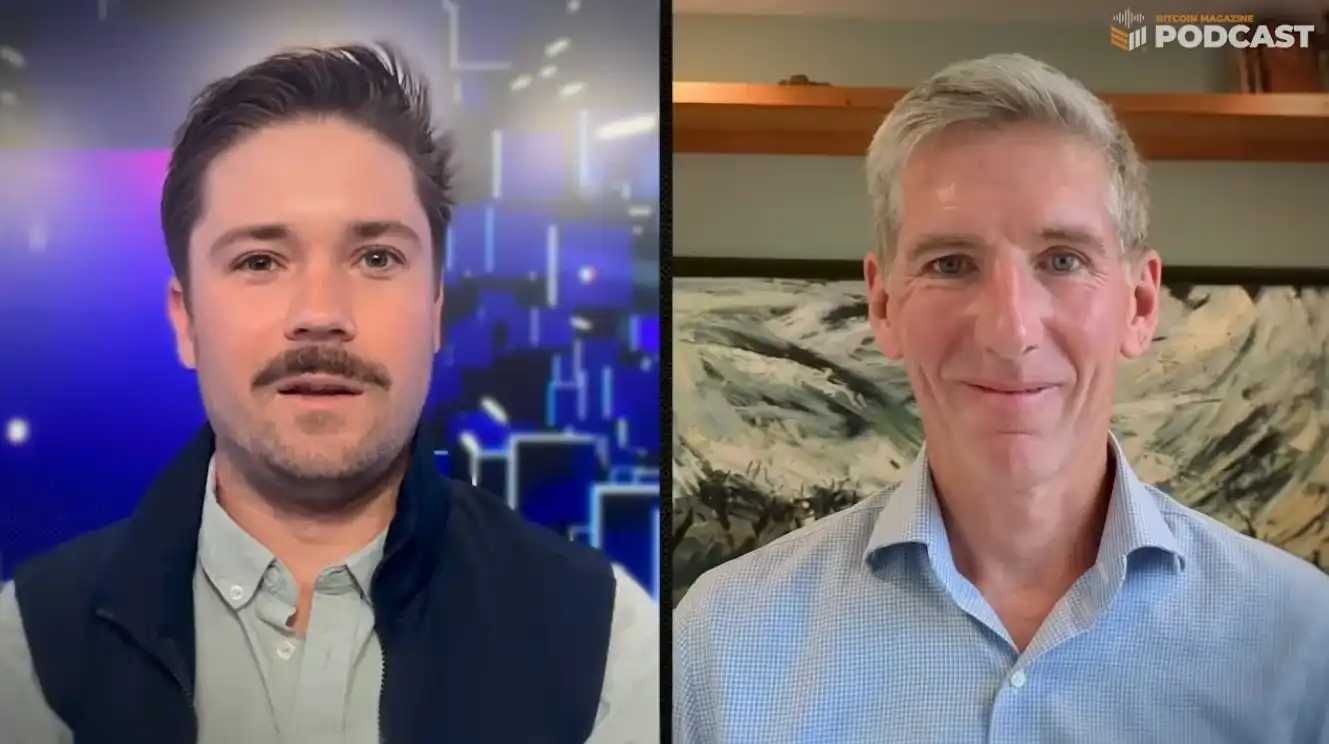
In a recent podcast, Bitwise CIO Matt Hougan analyzed Bitcoin's current market cycle, suggesting it is near a bottom characterized by low volatility and investor indifference. He believes the next major price surge will be driven primarily by wealth management platforms, financial advisors, and family offices, who control trillions in assets and are now gaining access to Bitcoin ETFs. Hougan views Bitcoin as a long-dated, out-of-the-money call option on it becoming a global reserve asset. Its value increases with global monetary system volatility, making it a natural hedge against currency disorder. He outlined Bitcoin's adoption path: first as a global digital store of value (competing with gold), and potentially later as a check against fiat currency abuse by sovereign states. Addressing the muted price action despite institutional ETF inflows, Hougan explained that significant selling by long-term retail holders has offset buying pressure. However, he is optimistic as data shows retail selling has subsided, which, combined with continued institutional inflows, could propel prices higher. Hougan downplayed the future impact of Federal Reserve interest rates and MicroStrategy's actions on Bitcoin's price, arguing they are becoming less relevant. Instead, he pointed to runaway U.S. fiscal deficits and debt as the core long-term drivers. Finally, he discussed the transformative potential of asset tokenization, predicting all traditional assets will eventually trade 24/7 on blockchains. This will merge traditional and crypto markets, increasing efficiency but also introducing crypto-like features such as overnight volatility and easier access to leverage into traditional finance.

marsbit53m ago

Dialogue with Bitwise CIO: Bitcoin May Be Near Bottom, Who Will Drive the Next Rally?

marsbit53m ago

Dalio Warns of U.S. Bond Supply-Demand Imbalance: Gold and Bitcoin Could Become Hedge Assets in Debt Crisis

Ray Dalio warns of an unsustainable imbalance in US Treasury supply and demand, drawing parallels to the mechanisms of a "big debt cycle" described in his book. Key recent developments include Japan selling US bonds to support the yen, rising US long-term yields amid weak demand, and limited Treasury buybacks. Dalio explains that when debt service burdens become too large relative to income, and bond supply outstrips market demand, a crisis point approaches. Typically, central banks then print money to buy bonds, leading to currency devaluation and inflation. He simplifies the US government's position: with ~$5.5T in revenue, ~$7.5T in spending, a $2T deficit, and $32T in debt, annual debt service is roughly $1T in interest plus ~$10T in maturing principal needing refinancing. Without change, he estimates a potential debt crisis in roughly three years, give or take two. Dalio proposes a "3% three-part solution" to reduce the deficit to 3% of GDP through balanced spending cuts, tax increases, and naturally lower interest rates. He warns that Japan's high debt, often cited as sustainable, has led to poor bond returns and significant currency losses versus gold and the dollar. In response to questions, Dalio states that all reserve currencies eventually decline via this debt cycle mechanism. He advises investors to diversify globally, favor countries with strong finances and stable politics, underweight bonds, overweight gold, and allocate a small portion (e.g., 10-15%) to Bitcoin as hedges against government-created currency devaluation.

marsbit53m ago

Dalio Warns of U.S. Bond Supply-Demand Imbalance: Gold and Bitcoin Could Become Hedge Assets in Debt Crisis

marsbit53m ago

Trading

Spot

Hot Articles

Discussions

Welcome to the HTX Community. Here, you can stay informed about the latest platform developments and gain access to professional market insights. Users' opinions on the price of LAYER (LAYER) are presented below.

活动图片