The real estate database published by New York authorities has drawn criticism from representatives of the crypto industry. In their opinion, an open list of owners of expensive properties could increase the risks of physical pressure and attacks, writes Decrypt.
This refers to an additional assessment register linked to the annual tax on non-primary residences. Its appearance in April was warned about by New York City Councilman Zohran Mamdani and state Governor Kathy Hochul. The levy is to be applied to one- to three-family homes, condominiums, and cooperative apartments valued above $5 million if the owner's primary residence is outside the city.
According to authorities, the measure targets owners of expensive secondary real estate and is expected to generate about $500 million in annual revenue. On July 24, the local Department of Finance opened the register for public review until December 31, 2026. At the same time, the department emphasized that its scope is broader than the final group of payers.
Critics Pointed to Data Aggregation Risk
Information about real estate in New York has been public before, but critics believe the problem lies in the aggregation of data and convenient search. They argue that this format makes it easier to identify owners of expensive housing.
Uniswap founder Hayden Adams called the publication "mass doxxing" and stated that the database covers too wide a range of properties.
This is the worst mass doxxing I've ever seen
— Hayden Adams 🦄 (@haydenzadams) July 27, 2026
Just personally searched several high end apartment buildings that include people I personally know's PRIMARY residence (not pied a terre)
Not only were their units listed, but nearly every unit in the entire building was listed... https://t.co/d101R8Qm9V
"I just personally checked several luxury apartment buildings where people I personally know live [...]. To hell with everyone involved in this, it's incredibly dangerous," he wrote.
Helius CEO Mert Mumtaz called the database "disturbing" and stated that the authorities have turned scattered public records into a centralized resource that highlights wealthy individuals.
this is unsettling
— mert (@mert) July 27, 2026
while this data was largely public prior to this in a messy way
they have cleaned it, organized it, singled out "the rich", and mass distributed it
only the 50th sign this year of privacy continuing to become scarcer https://t.co/o6JvI90egu
Castle Island Ventures partner Nic Carter warned that such a list could make it easier for criminals to select targets. He linked the risk to the increase in attacks on cryptocurrency asset owners.
So this is a list of wealthy people and their addresses. As we've seen in France and Sweden this leads to crypto kidnappings torturings and murders. Yes real estate records are semi public but this is an easily searchable database and target list. That makes a difference — again... https://t.co/NRcm50DUNE
— nic carter (@nic_carter) July 27, 2026
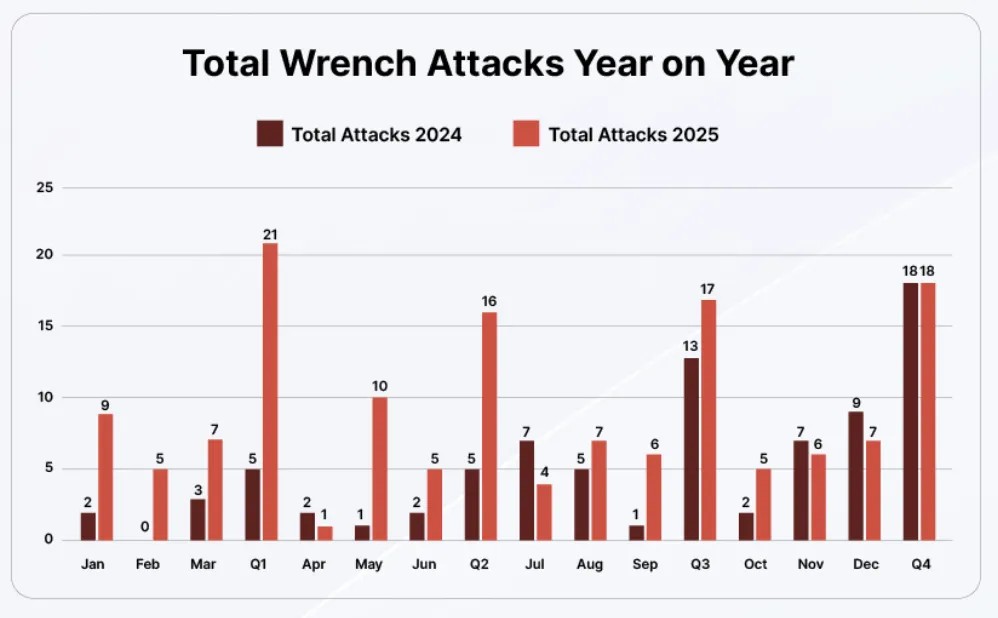
According to CertiK, 52 confirmed attacks involving physical coercion were recorded in the first half of the year. The associated financial exposure reached $124.1 million, increasing nearly 12-fold compared to the same period in 2025.
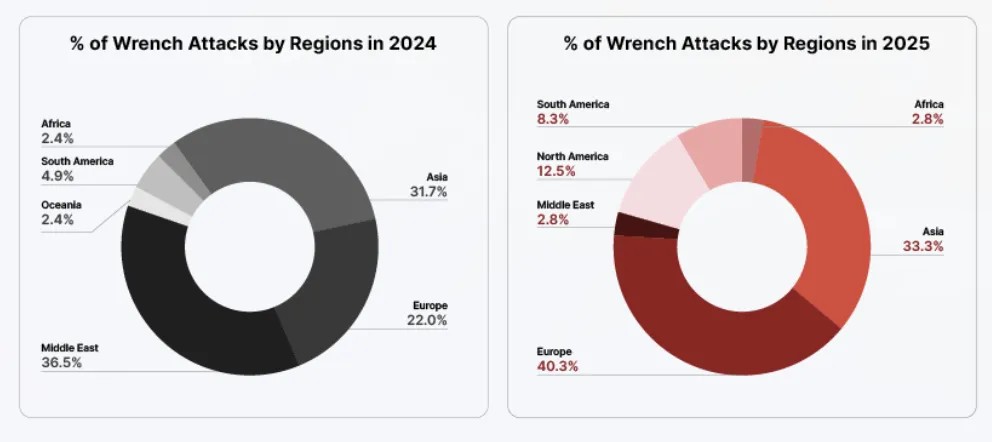
Analysts emphasized that the main type of such crimes were home invasions. Europe accounted for 39 of the 52 cases, with France seeing 33 incidents.
Recall that in May 2025, ForkLog reported that offline threats to crypto entrepreneurs had become a separate risk area.
Leak, Data... How to Protect Privacy in an Era of Total Leaks