Breaking: OpenAI Chip Veteran Joins Anthropic

marsbitPublished on 2026-06-07Last updated on 2026-06-07

Abstract

Breaking News: OpenAI Chip Veteran Joins Anthropic Clive Chan, a key early member of OpenAI's in-house chip development team, has announced his departure from OpenAI to join rival AI company Anthropic. In his statement, Chan highlighted his experience as the second hire on OpenAI's hardware team, praising its exceptional talent density but expressing a desire to "climb a new mountain from the base." He cited Anthropic's talent, values, and ambitious pace as key reasons for his move. Chan also referenced OpenAI's disclosed partnership with Broadcom, aimed at deploying a 10GW AI accelerator system starting in the second half of 2026. His career includes roles at Tesla, Google, and SpaceX, focusing on AI infrastructure and hardware. This move continues a notable trend of talent flow from OpenAI to Anthropic, following other high-profile departures like researcher Andrej Karpathy. With Anthropic's recent $65 billion funding round valuing it near $1 trillion, the competition for top AI talent between these leading firms remains intense.

Zhidongxi, June 7, Report – Today, Clive Chan, the 'employee No. 002' of OpenAI's in-house chip project, announced on platform X that he has left OpenAI and officially joined Anthropic this week.
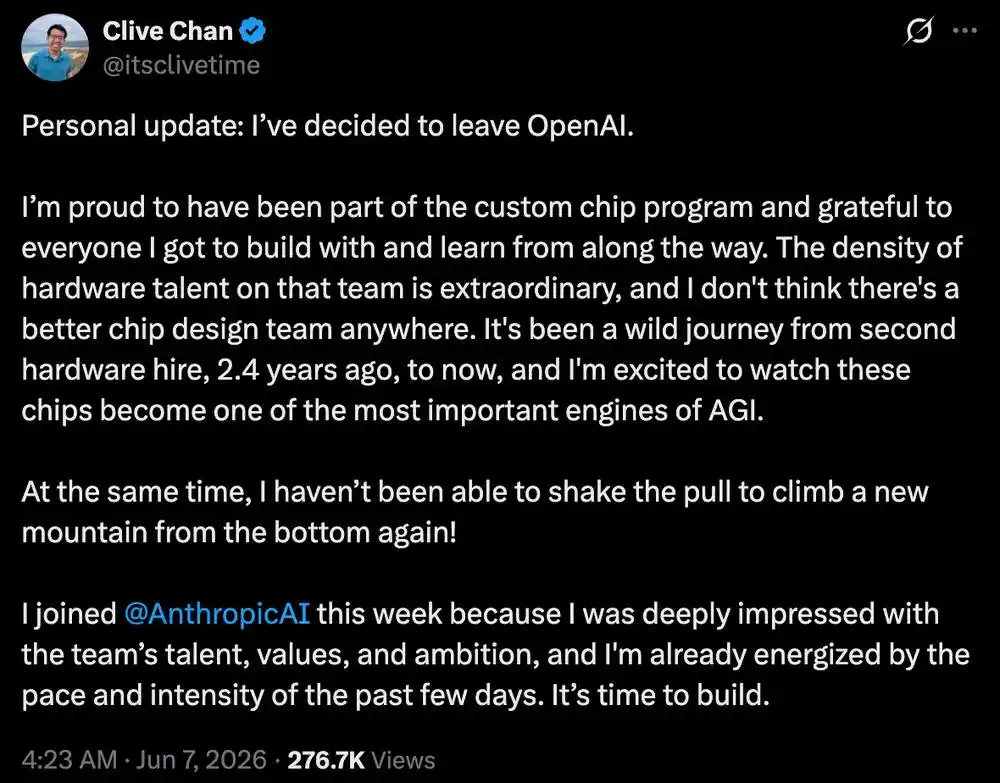
In his departure statement, Clive Chan reflected on his experience at OpenAI over the past two-plus years. He mentioned that he was the second hire for OpenAI's hardware team and witnessed the in-house chip project progress from its early formation to its current advancement. He commented that OpenAI's chip team has an incredible density of talent and that he does not believe there is a better chip design team in the world.

Regarding the future, he looks forward to seeing these chips grow into one of the most important engines for AGI.

However, Clive Chan also wrote that he could never shake the impulse to 'climb a new mountain from its base again'. This is precisely why he ultimately chose to join Anthropic.

He mentioned that the talent, values, and ambition of the Anthropic team deeply impressed him. In the short few days since joining, he has already felt the extremely high-intensity work pace, stating: "It’s time to build."

After announcing his departure, Clive Chan was questioned by netizens about the latest progress of OpenAI's in-house chip project. He responded that, apart from the information OpenAI has publicly disclosed, he cannot reveal more details at this time.
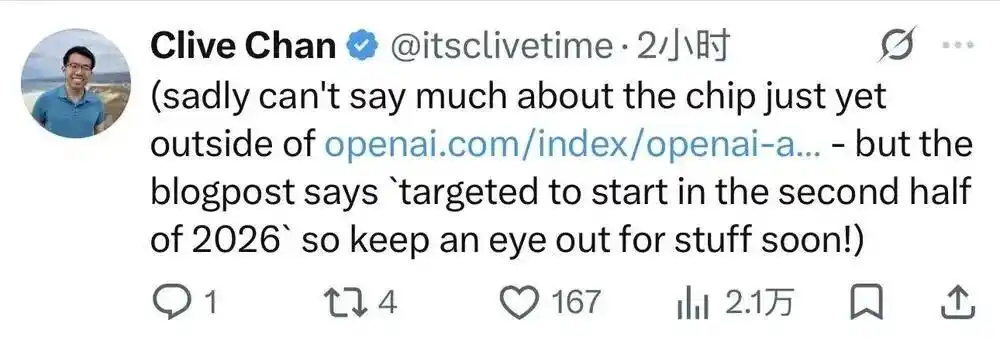
He specifically mentioned, however, the collaboration blog post previously released by OpenAI and Broadcom. According to the information disclosed in the blog, related deployment plans are targeted to commence in the second half of 2026. Clive Chan also mentioned that the outside world will soon see more related progress.
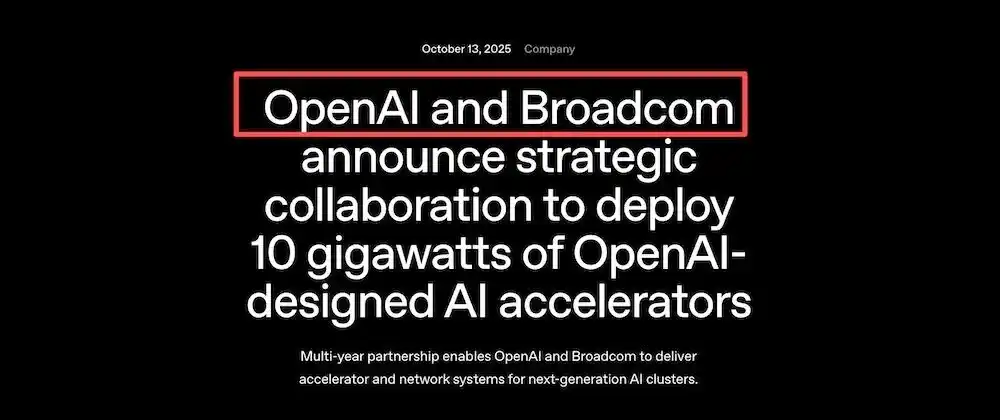
This blog post was published in October 2025. At that time, OpenAI and Broadcom announced a strategic collaboration to jointly build a total scale of 10GW for OpenAI's self-developed AI accelerator systems. OpenAI is responsible for chip and system design, while Broadcom is responsible for accelerator and network system development and deployment. The first racks are planned to begin delivery in the second half of 2026, with the entire project expected to last until the end of 2029. This marked the first time OpenAI officially disclosed a clear timeline for its self-developed AI chip project.

Looking closely at Clive Chan's career, he has worked or interned at several prominent companies including OpenAI, Tesla, Google, and SpaceX, with long-term involvement in AI infrastructure-related work.

Clive Chan graduated from the University of Waterloo in Canada in 2021. During his time there, he was also involved in the establishment of a Canadian Hyperloop-related student organization and served as co-founder and advisor for the Canadian Hyperloop Conference.
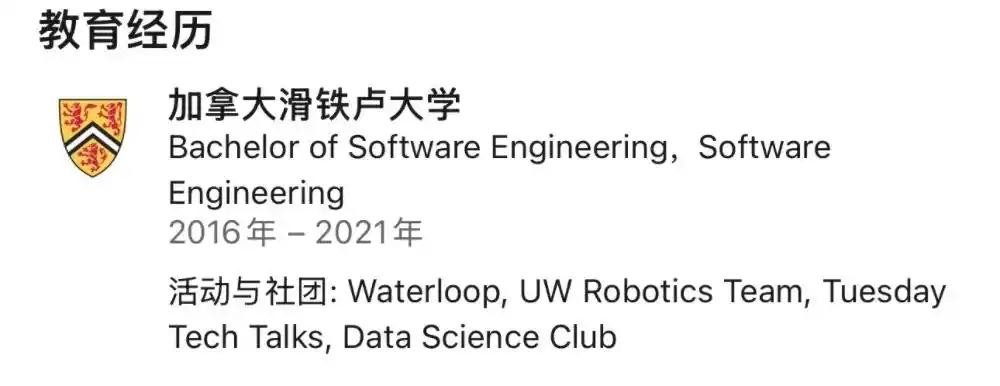
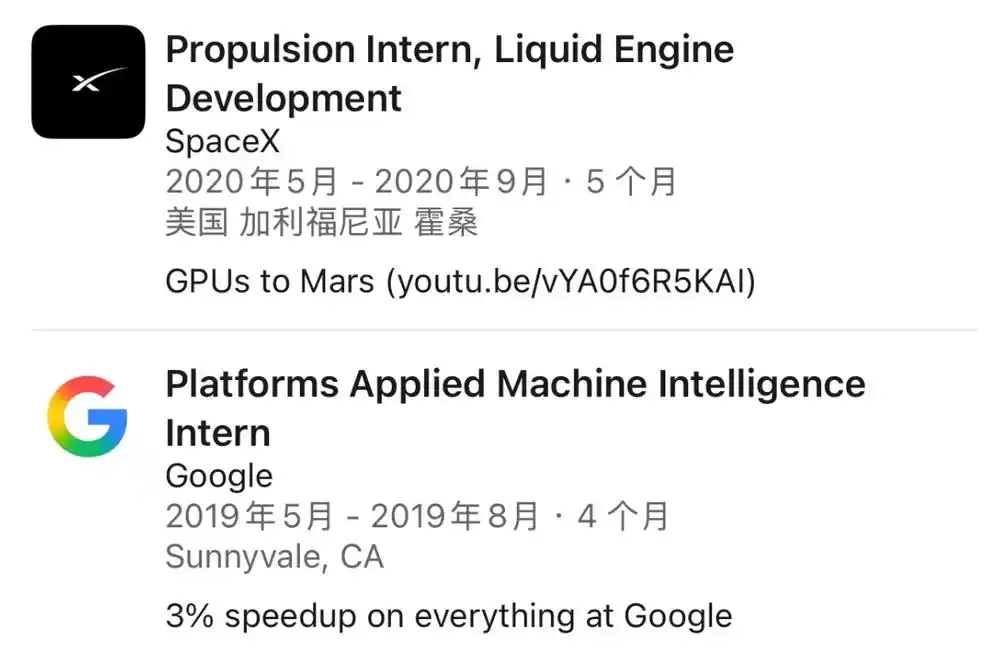
Before and after graduation, he interned or worked at Google, SpaceX, and the quantum computing company QuEra. During his time at Google, he worked on machine learning infrastructure, and at SpaceX, he participated in liquid rocket engine related projects.
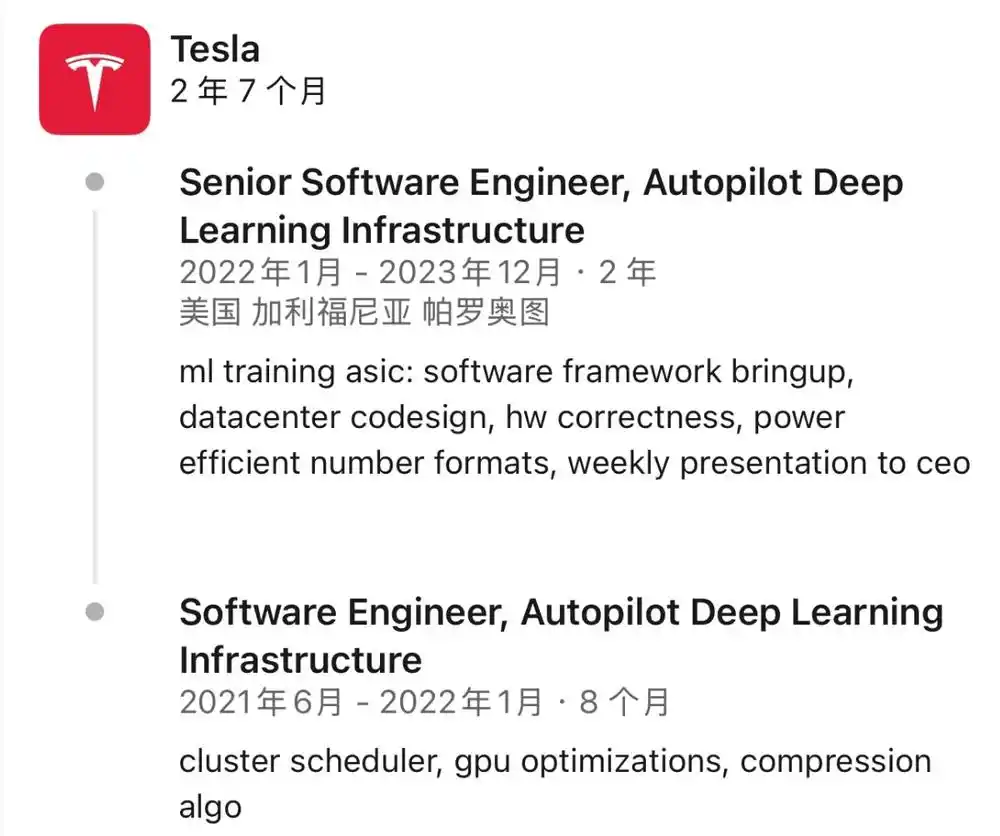
After graduation, he joined Tesla's Autopilot deep learning infrastructure team. Over nearly three years, he successively held the positions of Software Engineer and Senior Software Engineer, responsible for GPU optimization, cluster scheduling, data center software, and training infrastructure.
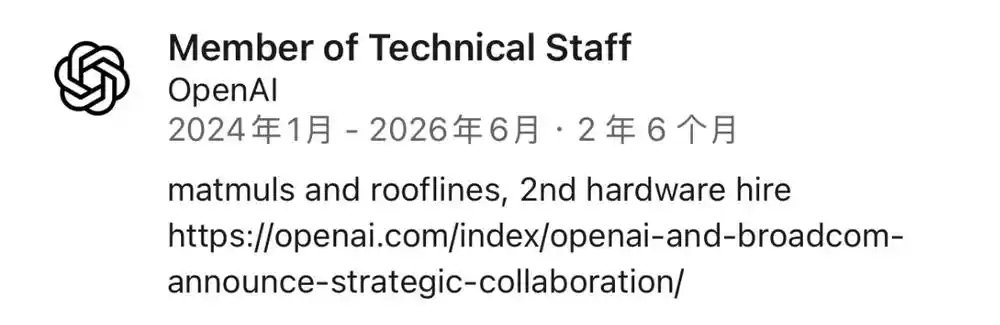
In January 2024, Clive Chan officially joined OpenAI as a member of the technical staff, responsible for matrix multiplication (Matmul), performance analysis (Roofline Analysis), and hardware-related work, and participated in the construction of OpenAI's self-developed AI chip project.
After Clive Chan announced joining Anthropic, Tony CW Liu, an Anthropic employee responsible for GPU performance optimization work, quickly appeared in the comments section with a message: "Congrats and welcome!"

Meanwhile, this job change also sparked some banter from netizens. One netizen said: "Now, every time I see 'I've decided to leave OpenAI', I know the next sentence will definitely mention Anthropic."

Another netizen made a soccer transfer analogy: "It's like leaving Real Madrid to join Barcelona."

Another netizen questioned Clive Chan's statement about "starting from the base of the mountain" in his departure announcement. Anthropic's valuation is almost a trillion dollars, how can that still be considered starting from the base?

Just on June 1, Anthropic announced the completion of a massive $65 billion Series H funding round (approximately RMB 4,397.7 billion), with a post-money valuation reaching $965 billion (approximately RMB 6.53 trillion), just one step away from the trillion-dollar club.

Conclusion: Talent Flow Between OpenAI and Anthropic Continues

It seems now that Anthropic has become one of the most important destinations for talent from OpenAI. From researchers and product leads to chip engineers, the flow of talent between the two companies has consistently attracted attention.

In May of this year, OpenAI co-founder and renowned AI researcher Andrej Karpathy announced joining Anthropic, sparking widespread discussion in the industry. One month later, Clive Chan, who participated in OpenAI's in-house chip project, also chose to join this former "competitor".

For frontier AI companies, talent remains one of the most core assets. For Anthropic, which is continuously expanding its team, this list may well grow longer.

This article is from the WeChat public account "Zhidongxi" (ID: zhidxcom), author: Jiang Yu.

Related Questions

QWho is Clive Chan and what significant career move did he announce?

AClive Chan is the second hire on OpenAI's in-house chip development team, often referred to as employee '002'. He announced that he has left OpenAI and officially joined Anthropic.

QWhat reasons did Clive Chan give for leaving OpenAI and joining Anthropic?

AHe stated he was driven by an impulse to 'climb a new mountain from the bottom again.' He was also impressed by Anthropic's talent, values, ambition, and the intense work pace he experienced after joining.

QWhat did Clive Chan reveal about the progress of OpenAI's in-house AI chip project?

AHe said he could not reveal details beyond what OpenAI has publicly disclosed. He specifically pointed to the October 2025 collaboration blog with Broadcom, which targets the first racks for the 10GW AI accelerator system to start delivery in the second half of 2026.

QWhat significant milestone did Anthropic recently achieve regarding its valuation?

AOn June 1, Anthropic announced it completed a $65 billion H-round of financing, reaching a post-investment valuation of $965 billion, putting it on the verge of joining the trillion-dollar club.

QHow have online commenters humorously reacted to this career move?

ASome compared the move to a football transfer from Real Madrid to Barcelona. Others joked that every time they see 'I've decided to leave OpenAI,' they know the next sentence will mention Anthropic. A user also questioned how joining the highly valued Anthropic could be considered 'starting from the mountain bottom.'

Related Reads

For the First Time, Pure Human Video Pretrained VLA for Dexterous Manipulation: Deployable with Minimal Fine-Tuning Data

For the first time, a purely human-video-pretrained Vision-Language-Action (VLA) model for dexterous manipulation requires only a small amount of data for fine-tuning to achieve successful real-world deployment. Achieving human-level dexterous manipulation remains a core challenge in robotics. While multi-fingered hands offer hardware potential, Visual-Language-Action (VLA) models lag behind due to the high cost of collecting diverse, high-quality robot data. A novel framework, VITRA, developed by Microsoft Research Asia and Tsinghua University, addresses this by automatically transforming massive, unlabeled real-world human activity videos into a structured V-L-A training dataset. Key innovations include precise 3D hand motion annotation from monocular video, atomic action segmentation based on hand-speed minima, and automated instruction generation using VLMs combined with 3D trajectory visualization. This process created a massive dataset of 1 million clips. Pretrained exclusively on this human video data, the VLA model (combining a VLM backbone with a Diffusion Transformer action expert) demonstrates strong zero-shot hand motion prediction in unseen environments. Crucially, it requires minimal fine-tuning (~1.2k demonstrations) on real robot data to achieve high-success-rate dexterous manipulation tasks like grasping, placing, pouring, and sweeping on hardware like the Realman robot with the XHAND1 dexterous hand. The model shows exceptional generalization to novel objects and environments. The research also observes promising scaling behavior, where performance improves with more pretraining data, paving the way for more generalized embodied intelligence.

marsbit10m ago

For the First Time, Pure Human Video Pretrained VLA for Dexterous Manipulation: Deployable with Minimal Fine-Tuning Data

marsbit10m ago

Trading

Spot
Futures

Hot Articles

How to Buy CHIP

Welcome to HTX.com! We've made purchasing USD.AI (CHIP) simple and convenient. Follow our step-by-step guide to embark on your crypto journey.Step 1: Create Your HTX AccountUse your email or phone number to sign up for a free account on HTX. Experience a hassle-free registration journey and unlock all features.Get My AccountStep 2: Go to Buy Crypto and Choose Your Payment MethodCredit/Debit Card: Use your Visa or Mastercard to buy USD.AI (CHIP) instantly.Balance: Use funds from your HTX account balance to trade seamlessly.Third Parties: We've added popular payment methods such as Google Pay and Apple Pay to enhance convenience.P2P: Trade directly with other users on HTX.Over-the-Counter (OTC): We offer tailor-made services and competitive exchange rates for traders.Step 3: Store Your USD.AI (CHIP)After purchasing your USD.AI (CHIP), store it in your HTX account. Alternatively, you can send it elsewhere via blockchain transfer or use it to trade other cryptocurrencies.Step 4: Trade USD.AI (CHIP)Easily trade USD.AI (CHIP) on HTX's spot market. Simply access your account, select your trading pair, execute your trades, and monitor in real-time. We offer a user-friendly experience for both beginners and seasoned traders.

1.4k Total ViewsPublished 2026.04.21Updated 2026.06.02

How to Buy CHIP

Discussions

Welcome to the HTX Community. Here, you can stay informed about the latest platform developments and gain access to professional market insights. Users' opinions on the price of CHIP (CHIP) are presented below.

活动图片