Why is Ethereum Urgently Needing ZK-ification?

marsbit發佈於 2026-01-13更新於 2026-01-13

文章摘要

The article discusses the urgent need for Ethereum to adopt zero-knowledge (ZK) technology as a core narrative for its future development. While Ethereum previously focused on ICOs, DeFi, and being a global financial settlement layer, it now lacks a compelling new narrative. ZK technology is highlighted as a critical solution, with Ethereum being the blockchain most invested in its development. ZK-EVM has reached the Alpha stage, a milestone celebrated by Vitalik Buterin. The primary motivation for ZK integration is to maintain Ethereum’s decentralization while improving scalability. Currently, increasing the Gas limit boosts TPS but raises node operation costs, potentially centralizing the network. ZK proofs allow nodes to verify transactions efficiently without expensive hardware upgrades, similar to automated exam grading versus manual checking. ZK itself doesn’t directly increase TPS but enables future Gas limit hikes with minimal node cost increases. The recent Fusaka upgrade, including PeerDAS, advances this goal. A ZK-powered Ethereum could achieve over 1000 TPS, strengthening its narrative. The article also addresses the role of third-party ZK teams (e.g., Polygon, Scroll, ZKsync, Taiko), which remain crucial for innovation and testing different ZK-EVM types (Type 1 to 4). ZK-VMs, like Brevis, are noted for higher performance and diversity, as they aren’t constrained by EVM compatibility. While ZK L1 may attract some L2 users, it also benefits L2s by reducing costs...

One of the most frequently asked questions recently is, how to view Ethereum's narrative?

Admittedly, Ethereum focused on ICOs and the world computer in 2017, and on DeFi and the financial settlement layer in 2021. However, for the 2025 cycle, there seems to be few new narratives that can match the height of the old ones.

Perhaps ETF and Staking ETF count as half, but this is not within the control of Ethereum developers. If there is another half, it can only be ZK.

Ethereum is undoubtedly the public chain that has bet the most on ZK in the entire Crypto world.

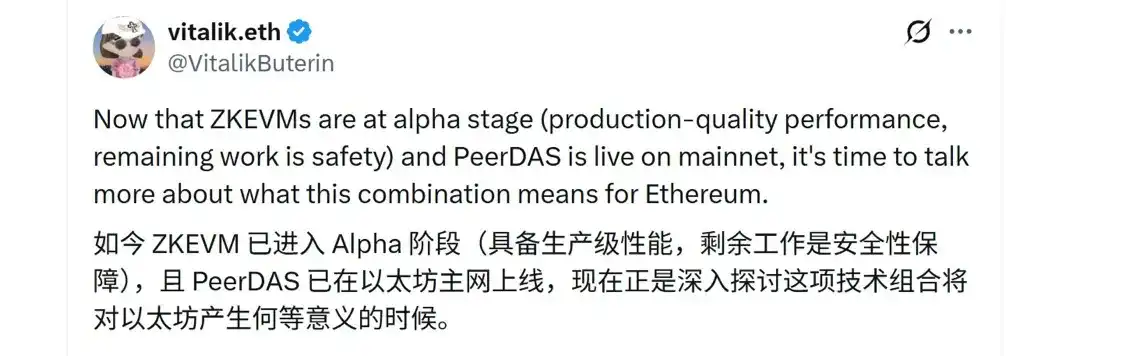
A few days ago, Vitalik was quite excited. He officially announced on Twitter that ZKEVM has now entered the Alpha stage.
Why is Ethereum so persistent about ZK?

Actually, Ethereum's TPS is not low anymore, with the theoretical peak already increased to over 200 TPS. The main reason is that Ethereum has repeatedly raised the Gas limit.
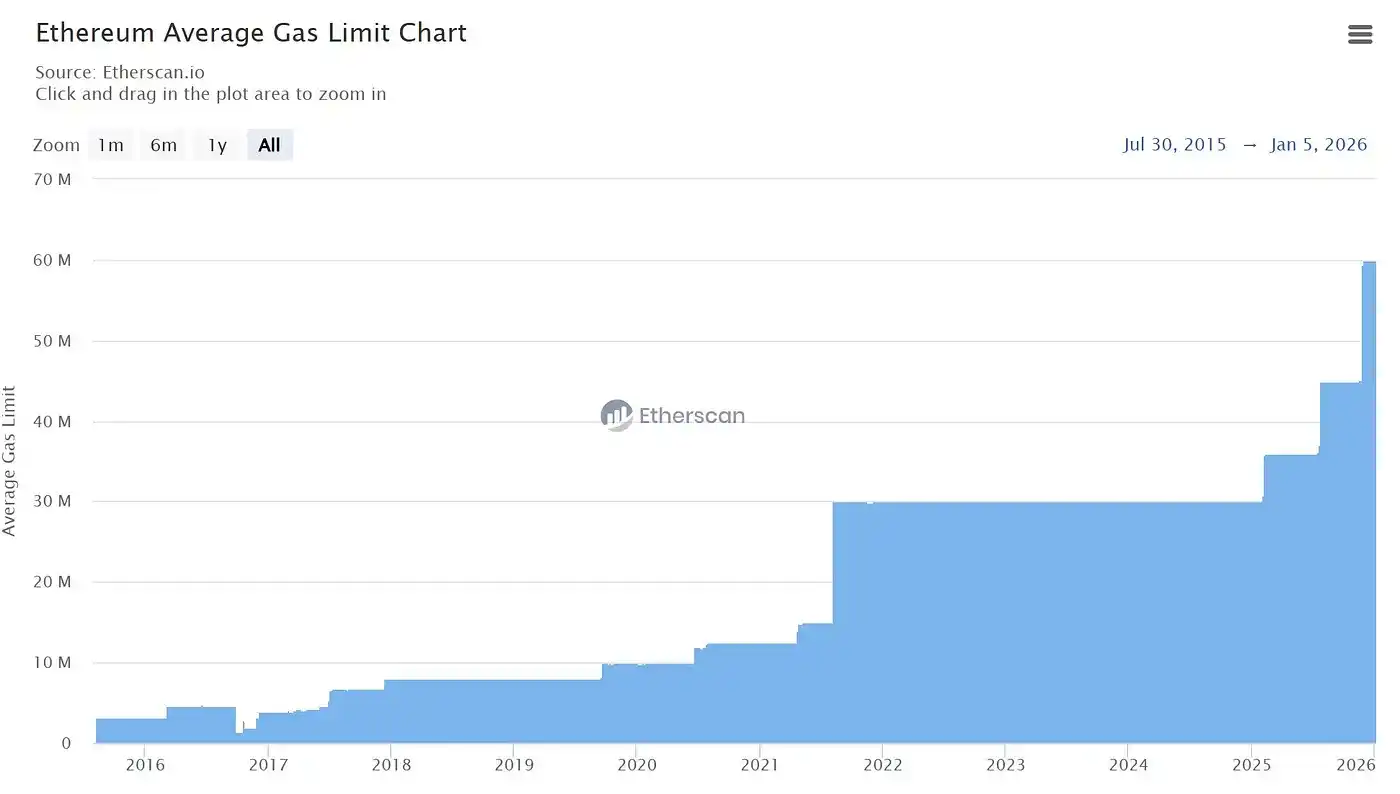
However, raising the Gas limit comes at a cost and cannot be done indefinitely. Its cost is that nodes need more expensive servers to run.

But Ethereum also wants to maintain its proud high degree of decentralization, so it cannot push node server performance too high (refer to Solana, where a single server is about 5–10 times more expensive than an ETH server).

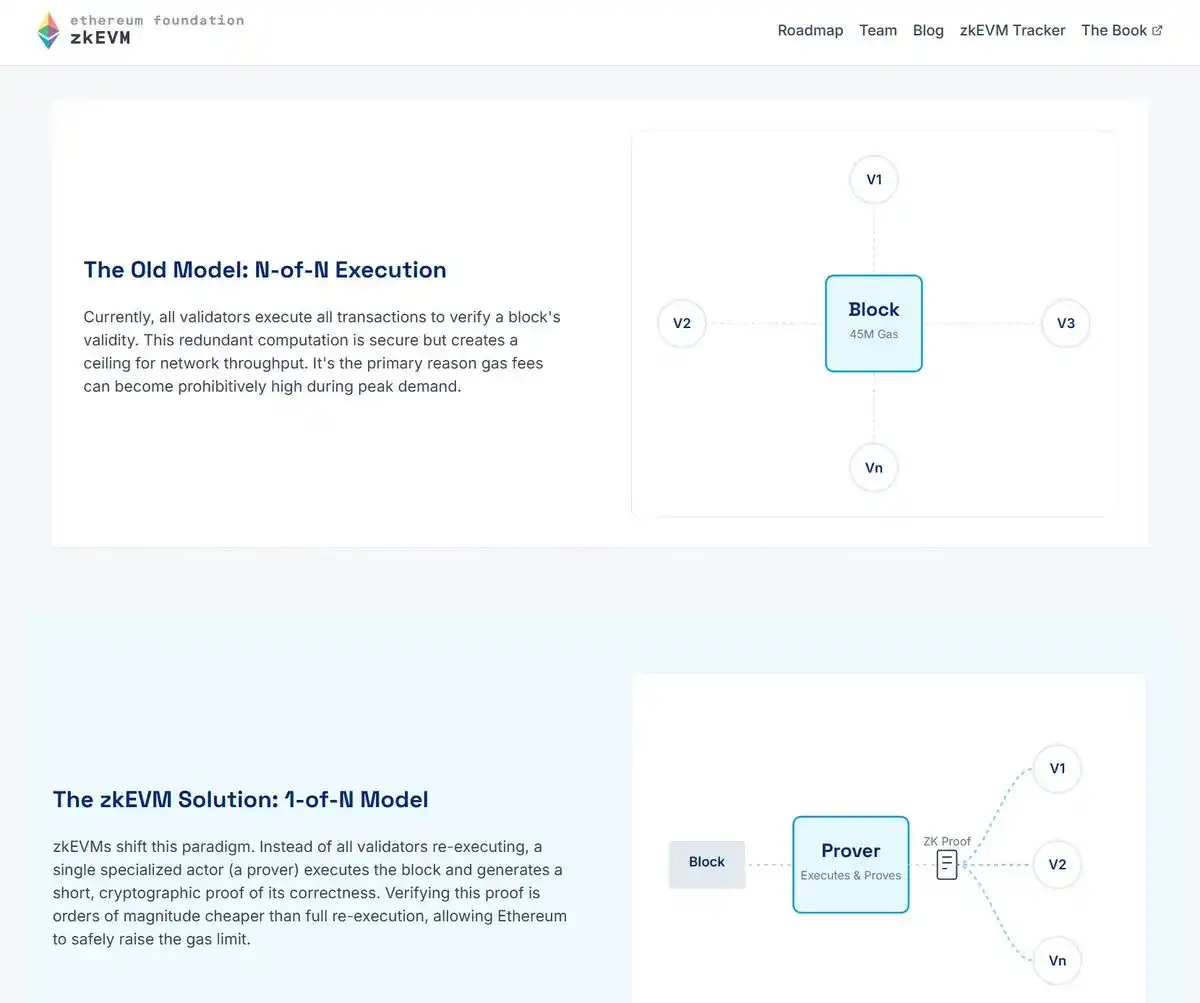
Therefore, the mainnet must be ZK-ified. Note, this is not about creating a few ZK L2s; this is a full ZK-ification of the L1 mainnet.

So what are the benefits after ZK-ification?

Those ETH nodes can simply verify these ZK proofs, without needing to tediously verify transactions one by one as in the past.
For example, if you are a grading teacher (node), the transactions are the students' exam papers.

In the past, manually grading papers was slow. But since the invention of the answer sheet (ZK-ification)神器, the machine calculates the total score in a second, so as a teacher, aren't you much more relaxed?

You are relaxed; in the past, one person could only grade 50 papers, but now they can grade 1000. The person is the same, but efficiency skyrockets.

Therefore, Ethereum must first ZK-ify the mainnet, and then it can significantly raise the Gas limit again.

ZK-ification itself does not directly increase TPS; it is a prerequisite. Improving performance still relies on raising the Gas limit, but after ZK-ification, nodes do not need to increase server costs much, making the代价很小.

After the recent Fusaka upgrade (especially the PeerDAS upgrade) performed well, Ethereum has taken another step closer to mainnet ZK-ification, which is why Vitalik is so excited.

Imagine a mainnet with TPS breaking thousands; for Ethereum, that indeed counts as a decent narrative.

Someone raised a question:

If Ethereum itself builds a ZK-EVM for the mainnet, are other ZK teams still meaningful?

First, the conclusion is, they are still meaningful.

Why?

First, ZK engineering is one of the most difficult developments in the entire network, sitting at the same table as FHE. It requires a large number of cryptography talents.

It is believed that the ETH Foundation has some reserves in this area, but as an open-source community, Ethereum adheres to the philosophy that many hands make light work. It needs a large number of third-party ZK teams for trial, error, and innovation. In return, Ethereum will give substantial support.

Second, there are four types of ZK-EVM, from type 1 to type 4. Several groups, including Polygon, Scroll, ZKsync, and Taiko, are like each认领任务,分别实现其中一个类型.

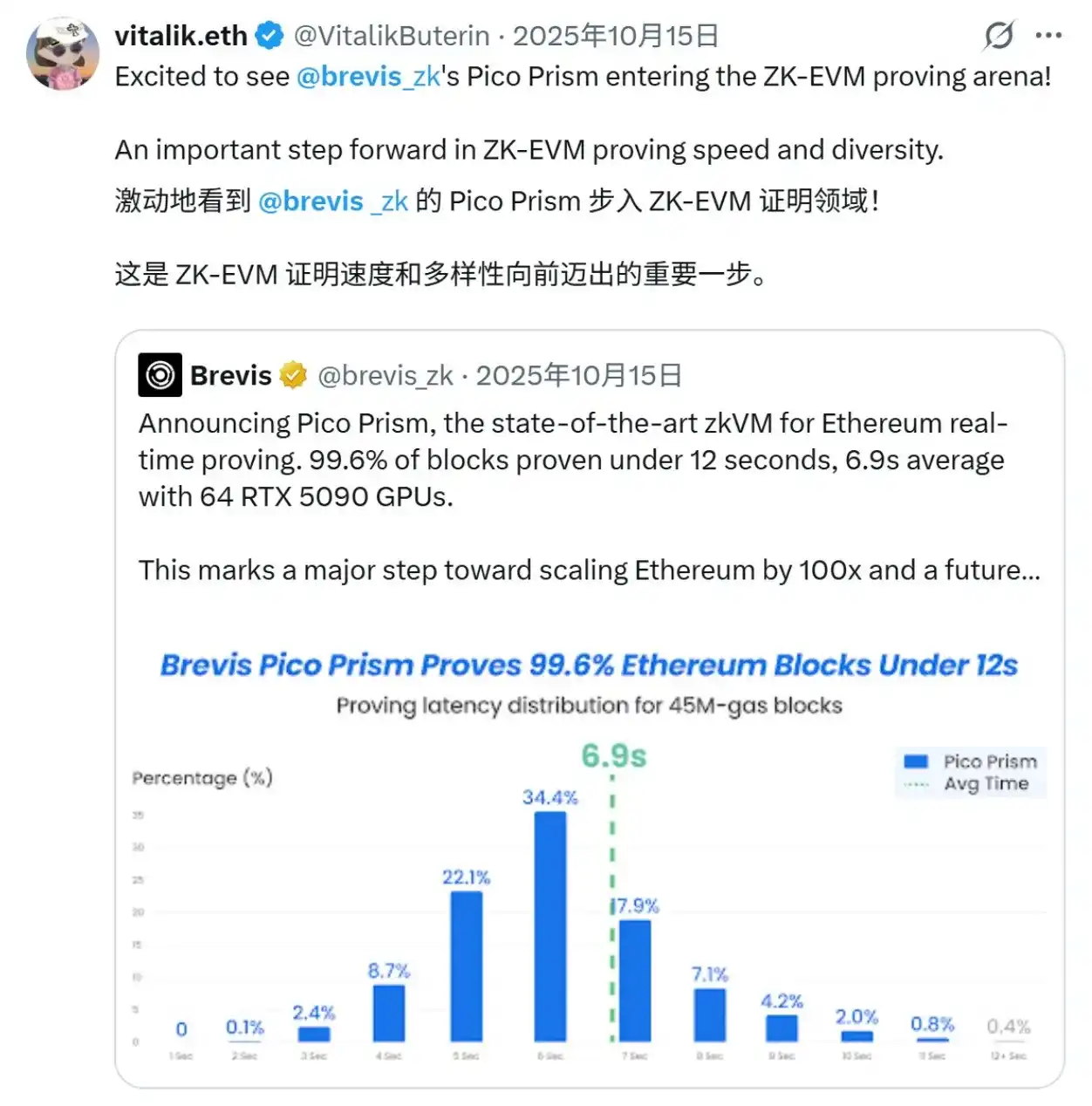
Additionally, there is ZK-VM, such as Brevis.

In fact, ZK-VM's position is even more stable compared to ZK-EVM.

The reason is that among the four major ZK-EVM types, it is highly likely that one with the best cost-performance ratio will eventually be chosen to become part of the designated solution for Ethereum's mainnet ZK-EVM, which may affect the other three.

However, for ZK-VM, it is not EVM-compatible by nature, so it will definitely be part of Ethereum's diversity.

Moreover, since VM is not constrained by EVM limitations, its performance can run very high. Ethereum's ZK-EVM poses no threat to it; instead, the Ethereum official will continue to encourage it.

For example, Vitalik previously specifically mentioned the performance of Brevis's ZK-VM and expressed期待它们进入 ZK-EVM 领域.
What about L2?There might be some impact, but it's still not significant.

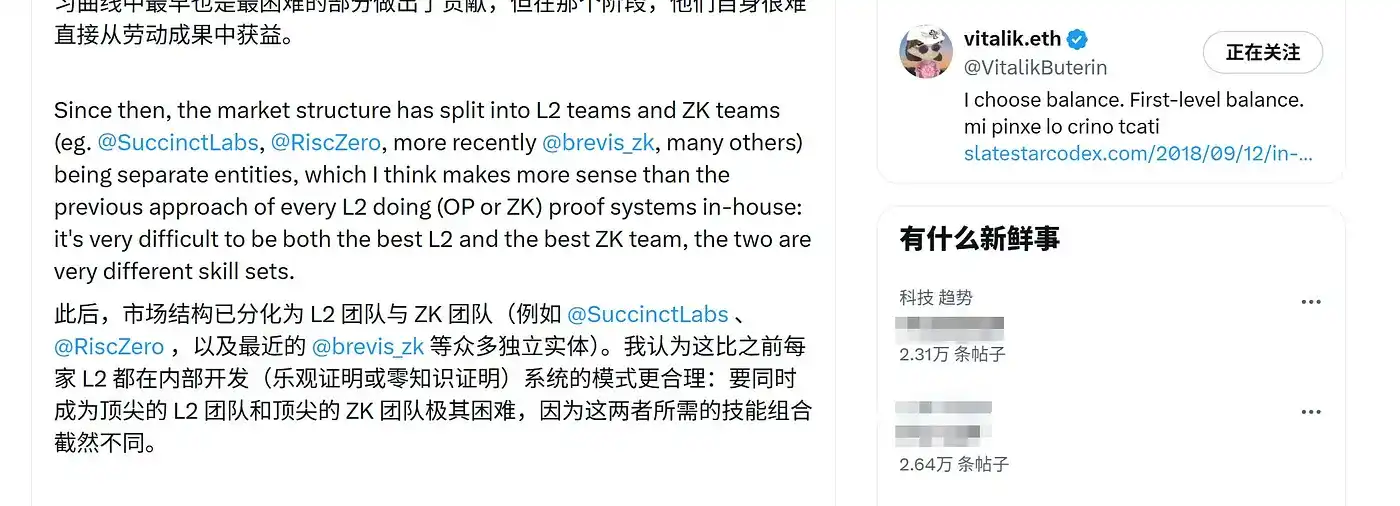
Vitalik once said when discussing Polygon that ZK and L2 should be separated比较好.

The ZK-ified L1 will certainly attract back some users from ZK L2s. After all, if L1 is cheap enough, the number of users on L2 may decrease.

But think about it the other way: if L1 is the foundation and L2 is the skyscraper, the foundation must be as solid as possible. So, if the L1 mainnet is ZK-ified, L2 fees will also decrease, which is beneficial.

Moreover, in that tweet, Vitalik also specifically mentioned Brevis, which works on ZK-VM. The reason is that much of Brevis's ZK work is not limited to L2, meaning "ZK research and L2 research are separated."

For example, they have a ZK computing power market, helping with ZK-ified reward distribution for Uniswap's hooks, which is application-driven.
In summary, Ethereum has been online for 10 years now, and the slogan of ZK-ification has been proposed for five or six years. After continuous cultivation, ZK-ification has finally entered the Alpha stage. This is thanks to the continuous investment from Ethereum and numerous third-party ZK teams including Brevis and Polygon.


相關問答

QWhy does Ethereum urgently need to become ZK-based according to the article?

AEthereum needs to become ZK-based to significantly increase its TPS by raising the Gas limit without forcing node operators to use prohibitively expensive servers, thereby preserving its high degree of decentralization while scaling.

QWhat is the role of ZK technology in improving Ethereum's node efficiency?

AZK technology allows nodes to simply verify cryptographic proofs of transaction batches instead of manually verifying each transaction individually, dramatically increasing the number of transactions a node can process without a proportional increase in computational cost.

QHow does the article differentiate between ZK-EVM and ZK-VM, and which one is considered more stable?

AThe article states that ZK-VM is considered more stable because it is not EVM-compatible and exists as part of Ethereum's diversity. It is not threatened by Ethereum's own ZK-EVM development and is performance-optimized without EVM constraints.

QWhat impact might a ZK-based Ethereum L1 have on existing ZK L2s?

AA cheaper and more scalable ZK-based L1 might attract some users back from L2s. However, it also benefits L2s by providing a more robust foundational layer (L1), which can lead to lower fees on L2s as well.

QWhat is the significance of the 'Alpha stage' announcement for ZKEVM mentioned in the article?

AThe announcement that ZKEVM has entered its Alpha stage signifies a major milestone after years of development, indicating that the core technology for Ethereum's full ZK integration is becoming operational and bringing the vision of a high-TPS, decentralized mainnet closer to reality.

你可能也喜歡

Solana 隐私生态全景图,从计算到 AI 的完整隐私栈

Solana隐私生态仍处于早期阶段,但正在快速发展。其独特架构(如ZK压缩)有望实现无需持久Rollup的大规模可组合隐私协议。理想的“最终隐私栈”可能是全同态加密(FHE)与零知识证明(ZK)的结合。 目前隐私计算主要由Arcium和MagicBlock提供。Arcium利用多方计算(MPC)构建可定制的执行环境,处理加密数据并正在开发保密代币标准(C-SPL),应用场景包括私密支付、数据分析及医疗保健。MagicBlock则基于可信执行环境(TEE)创建私密临时Rollup,确保交易的机密性、可扩展性和可组合性。两者基础设施催生了诸多应用。 私密转账与余额方面,Umbra基于Arcium构建,提供加密代币账户,实现金额、余额和关联关系的隐私,并支持选择性审计。Privacy Cash采用类似Tornado的屏蔽池处理SOL,Hush则整合了质押收益和私密兑换功能。 为消除链上痕迹,encifherio通过包装代币和TEE保护兑换隐私;Vanish Trade利用屏蔽流动性路由隐藏交易策略;Darklake构建ZK原生流动性基础设施和暗池,防止前端运行。 更高级的应用如私密预测市场(如Melee Markets)利用Arcium加密订单簿,保护参与者策略。在私密AI领域,Loyal结合Magic Block和Arcium技术,在链上加密存储和处理用户数据、对话及交易,确保用户拥有数据控制权。 总体而言,Solana隐私生态正从基础计算层向复杂应用层构建,覆盖支付、DeFi、预测市场及AI等多个垂直领域。

Foresight News6 分鐘前

Solana 隐私生态全景图,从计算到 AI 的完整隐私栈

Foresight News6 分鐘前

关于「DeepSeek 完成超 500 亿元融资」的 7 个关键问题

DeepSeek首轮融资据外媒报道已完成超500亿元,估值突破500亿美元,但尚未获官方确认。此轮融资启动于2026年4月,是DeepSeek成立以来首次对外融资,打破了其长期“不融资、不上市、不商业化”的原则。 融资有七大关键看点: 1. 整体情况:融资额超500亿元,创始人梁文锋投资200亿,其他投资方包括腾讯、宁德时代、京东、网易、IDG资本等。公司估值在两个月内从约100亿美元跃升至超500亿美元。 2. 特殊安排:大多数投资者需将资金注入由梁文锋控制的有限合伙企业,而非直接投给公司,且有5年锁定期。这些投资者无投票权,但享有优先财务信息和后续投资的优先权。唯一的例外是国家人工智能产业投资基金,可直接投资并拥有投票权,无锁定期。 3. 安排目的:核心是为了保障梁文锋对公司的绝对控制权,确保投资方是具备战略定力的“耐心资本”,以支持其推进开源AI和实现通用人工智能(AGI)的长期目标,而非短期盈利。 4. 腾讯入局:腾讯是DeepSeek的早期业务合作方,此次属于战略投资,与其长期“助力但不干预”的投资风格相符。 5. 宁德时代逻辑:投资核心结合点在于AI数据中心所需的能源解决方案。宁德时代将AI视为工具,希望在其储能业务新增长曲线上为AIDC的能源需求做出贡献。 6. 国家队意义:国家人工智能产业投资基金的入局凸显了DeepSeek战略重要性已超越技术范畴。融资条款要求核查基金背后有限合伙人身份,防范风险。 7. 后续发展:融资后,DeepSeek可能推出新模型,增加对图像、音频的支持,并迈向商业化。同时,将加大在基础设施(如自建数据中心)、人才和模型训练上的投入。实现AGI是长远目标,梁文锋需在保持技术初心与满足资本回报期望之间取得平衡。本轮融资仅是漫长征程的开端。

marsbit51 分鐘前

关于「DeepSeek 完成超 500 亿元融资」的 7 个关键问题

marsbit51 分鐘前

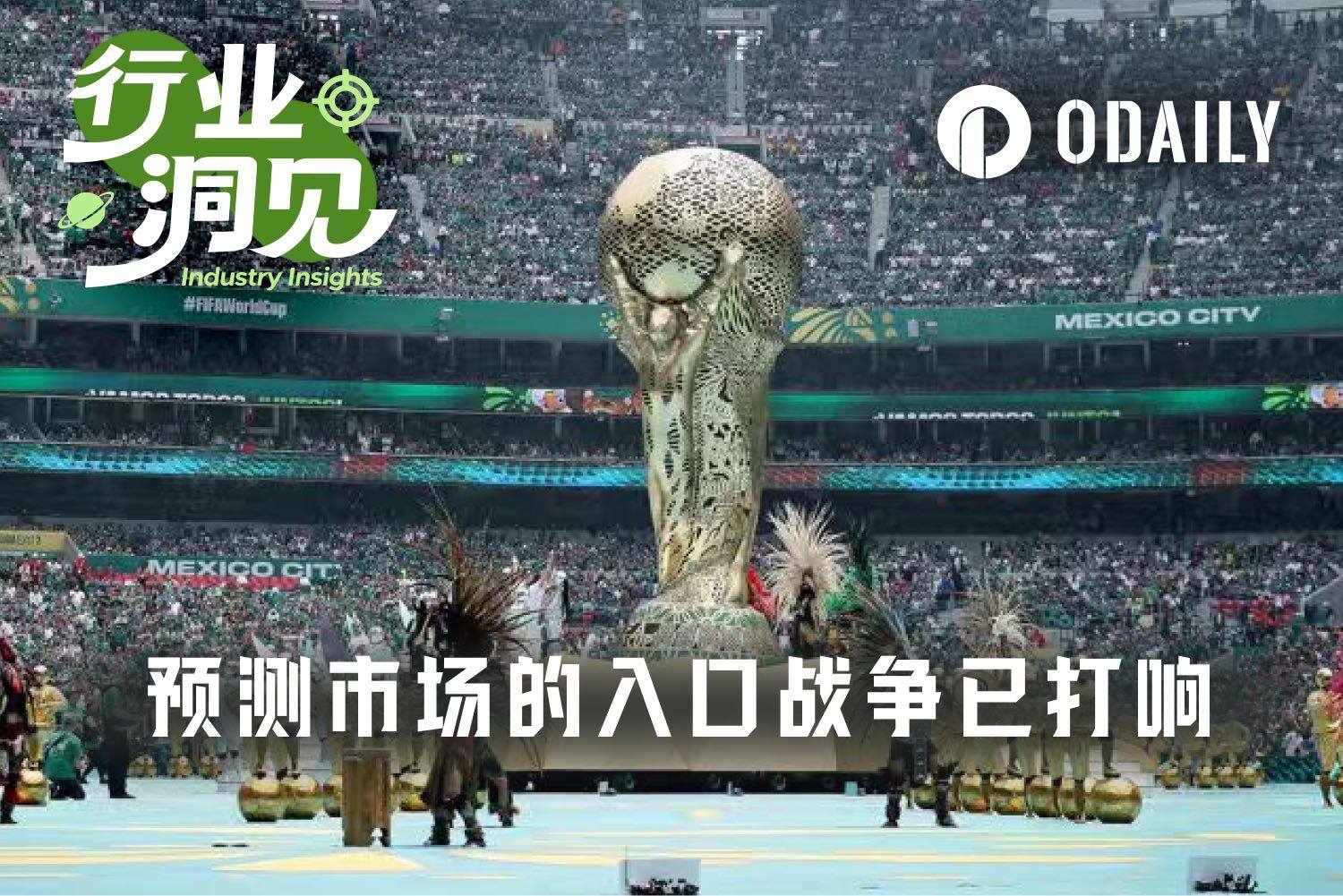
世界杯来临,预测市场的入口战争已打响

2026年美加墨世界杯拉开战幕,除了场内的竞技,场外的预测市场也成为了新看点。一种源于加密货币世界的链上工具——预测市场,正让球迷可以就比赛结果、冠军归属等进行预测和交易。 预测市场能转化群体智慧为市场概率,但在过去,其复杂的链上操作(如钱包、Gas费等)将大量潜在用户挡在门外。中心化交易所(CEX)如Gate正尝试改变这一局面。Gate通过与知名预测市场平台Polymarket合作,为用户提供了更便捷的入口。用户可直接使用交易所账户和USDT参与,无需处理钱包、跨链等繁琐步骤,大幅降低了参与门槛。 Gate提供了两种主要交互模式:“预测模式”适合普通用户,操作简单直观;“交易模式”则提供订单簿、K线等专业工具,满足高阶用户需求。同时,平台允许用户在事件结算前随时买卖,增加了灵活性。除了体育赛事,其预测市场还涵盖加密货币、宏观经济等多个领域。 为了帮助用户决策,Gate还构建了信息辅助体系,包括“聪明钱排行榜”、市场动态监控、实时Live专区以及AI洞察等工具,旨在形成从信息获取到交易执行的完整链路。 针对世界杯,Gate专门设立了主题专区,聚合赛程、积分榜和预测市场,方便球迷一站式参与。预测市场让观赛体验发生了变化,用户交易的是对比赛走势的判断和市场共识的变动。 预测市场已证明其产品价值,但大规模普及的关键在于能否吸引更多普通用户。降低学习成本、优化体验成为竞争重点。Gate等平台通过简化流程、整合服务,正推动预测市场从加密原生圈走向更广泛的大众市场。当更多人能轻松参与时,预测市场的增长故事或许才真正开始。

Odaily星球日报1 小時前

世界杯来临,预测市场的入口战争已打响

Odaily星球日报1 小時前

交易

現貨
合約

熱門文章

如何購買ZK

歡迎來到HTX.com!在這裡,購買ZKsync (ZK)變得簡單而便捷。跟隨我們的逐步指南,放心開始您的加密貨幣之旅。第一步:創建您的HTX帳戶使用您的 Email、手機號碼在HTX註冊一個免費帳戶。體驗無憂的註冊過程並解鎖所有平台功能。立即註冊第二步:前往買幣頁面,選擇您的支付方式信用卡/金融卡購買:使用您的Visa或Mastercard即時購買ZKsync (ZK)。餘額購買:使用您HTX帳戶餘額中的資金進行無縫交易。第三方購買:探索諸如Google Pay或Apple Pay等流行支付方式以增加便利性。C2C購買:在HTX平台上直接與其他用戶交易。HTX 場外交易 (OTC) 購買:為大量交易者提供個性化服務和競爭性匯率。第三步:存儲您的ZKsync (ZK)購買ZKsync (ZK)後,將其存儲在您的HTX帳戶中。您也可以透過區塊鏈轉帳將其發送到其他地址或者用於交易其他加密貨幣。第四步:交易ZKsync (ZK)在HTX的現貨市場輕鬆交易ZKsync (ZK)。前往您的帳戶,選擇交易對,執行交易,並即時監控。HTX為初學者和經驗豐富的交易者提供了友好的用戶體驗。

385 人學過發佈於 2024.12.13更新於 2026.06.02

如何購買ZK

相關討論

歡迎來到 HTX 社群。在這裡,您可以了解最新的平台發展動態並獲得專業的市場意見。 以下是用戶對 ZK (ZK)幣價的意見。

活动图片