SEC commissioner says Crypto is ‘helping to nudge reassessment’ on privacy

cointelegraphPublished on 2025-12-15Last updated on 2025-12-15

Abstract

SEC Commissioner Hester Peirce stated that cryptocurrency is prompting a reassessment of financial privacy regulations during a roundtable discussion with industry leaders. The event, part of the SEC’s efforts to shape digital asset oversight, addressed balancing investor protection with privacy as blockchain-based finance grows. Peirce and other regulators acknowledged that while public blockchains increase transparency, they also drive demand for privacy tools. The discussion included representatives from Zcash, the Blockchain Association, and the Crypto Council for Innovation. Meanwhile, U.S. Senate efforts to pass comprehensive digital asset market structure legislation before 2026 face time constraints, with a key bill unlikely to advance before the year-end recess.

Regulators at the US Securities and Exchange Commission met with cryptocurrency industry leaders on Monday to discuss financial surveillance and user privacy, as part of the agency’s ongoing efforts to shape digital asset oversight.

In opening remarks at the roundtable, SEC Commissioner Hester Peirce, who also heads the agency’s crypto task force, joined Chair Paul Atkins and Commissioner Mark Uyeda in outlining how regulators could balance investor protection with privacy considerations as blockchain-based financial activity expands.

Atkins said crypto had the potential to become “the most powerful financial surveillance architecture ever invented,” depending on how the US government handled regulation. He cited the SEC’s previous approach, “treating every wallet like a broker,” requiring more transactions to be reported.
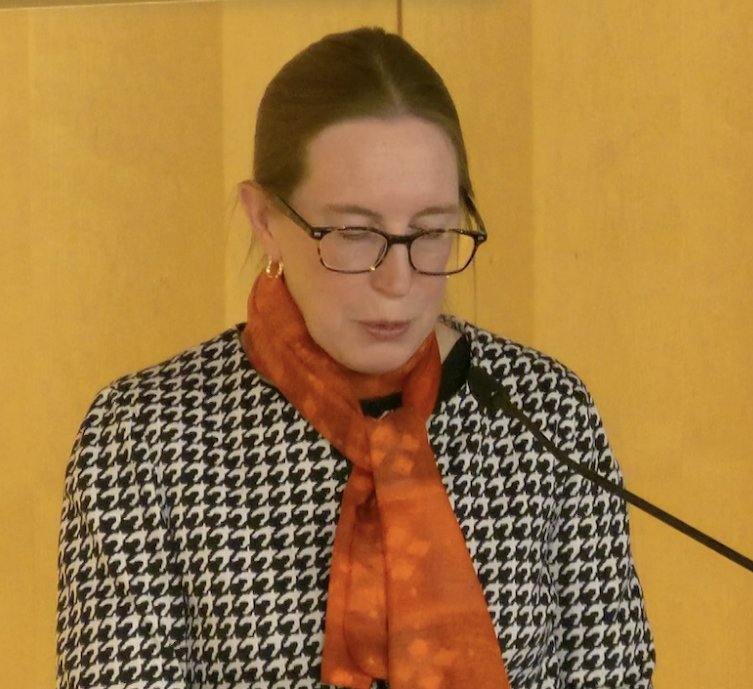
SEC Commissioner Hester Peirce addressing the roundtable on Monday. Source: SEC

Peirce echoed Atkins in her statement, suggesting that regulators need to “rethink when and how financial transactions are surveilled” as the crypto market grows.

“Our national degradation of financial privacy and the rules that embody it are overdue for a change, and crypto is helping to nudge a reassessment,” said Peirce, adding that crypto “opens new possibilities for transactions without financial intermediaries that are central to our existing financial surveillance paradigm [...].” She continued:

“On the other hand, as has been mentioned, the public blockchains on which many crypto transactions take place are viewable by everyone, which creates a demand for privacy-protecting tools.”

The surveillance and privacy roundtable, which included representatives from the privacy token Zcash (ZEC), the Blockchain Association and the Crypto Council for Innovation, was the task force’s sixth event discussing various aspects of digital asset regulation and policy since Peirce launched the group in January.

Many in the cryptocurrency industry have sounded the alarm about privacy as the market continues to grow and regulators, lawmakers and courts work to address concerns.

Related: US SEC’s Crenshaw takes aim at crypto in final weeks at agency

Market structure to revamp the SEC’s authority over digital assets

Amid the roundtable discussion and the imminent departure of SEC Commissioner Caroline Crenshaw, lawmakers in the US Senate are running out of time to address legislation to establish a comprehensive digital asset market structure before 2026.

Early drafts of the bill indicated that it could grant the Commodity Futures Trading Commission greater authority over cryptocurrency and alter the SEC’s regulatory priorities.

After a market structure bill, named the CLARITY Act, passed the House of Representatives in July, members of the US Senate have been engaged in negotiations to get the legislation onto the floor for a vote before the end of the year. As of Monday, this goal by Republican leaders appeared unlikely to be achieved.

The Senate Banking Committee and the Senate Agriculture Committee have both released discussion drafts of their respective versions of the bill. However, as of the time of publication, no markup hearing appeared on the banking committee’s schedule, with the chamber set to break for the holidays in the next few days.

Magazine: When privacy and AML laws conflict: Crypto projects’ impossible choice

Related Reads

Pricing OpenAI Pre-IPO: A New, Life-or-Death Business on Hyperliquid Lasting Half a Year

Pricing OpenAI Pre-IPO: Hyperliquid's High-Stakes, Six-Month Business Venture The article analyzes the nascent market for pre-IPO perpetual contracts on the Hyperliquid blockchain, exemplified by two contrasting teams: Trade.xyz and Ventuals. Trade.xyz, an anonymous team, successfully built the largest pre-market on Hyperliquid. Its strategy focused on near-term events, like the SpaceX IPO. By listing a SpaceX contract with a known launch date and price, the market had a tangible "anchor" (the eventual Nasdaq opening price) to converge upon, which kept speculation in check. This approach fueled significant growth. In stark contrast, Ventuals, backed by Paradigm, failed despite holding coveted contracts for OpenAI and Anthropic. Its critical flaw was its pricing mechanism for these companies, which have no imminent IPO. Ventuals' oracle price was half-derived from infrequent private market transactions and half from its own contract's moving average. This created a self-reinforcing loop where buying pressure artificially inflated the price, disconnecting it from real supply and demand. The market became illiquid and structurally skewed. Ventuals shut down nine months after launch, reportedly through an acquisition. Its final settlement prices—OpenAI at ~$1,341 and Anthropic at ~$1,618—were thus partially products of its flawed model. Ironically, some company employees and late-stage VCs reportedly used these prices for valuation reference, highlighting the desperate demand for price discovery in opaque private markets. The failure of Ventuals exposes the core challenge of this business: price for illiquid, non-public assets requires a robust, self-correcting market, which is absent without a definitive public listing event. Nevertheless, demand is driving major players like Coinbase and traditional finance (e.g., Citi) to enter the space, aiming to provide 24/7 trading for coveted private company shares. The venture's ultimate viability, however, hinges on solving the fundamental pricing problem Ventuals could not.

marsbit44m ago

Pricing OpenAI Pre-IPO: A New, Life-or-Death Business on Hyperliquid Lasting Half a Year

marsbit44m ago

Trading

Spot
Futures

Hot Articles

How to Buy MET

Welcome to HTX.com! We've made purchasing Meteora (MET) simple and convenient. Follow our step-by-step guide to embark on your crypto journey.Step 1: Create Your HTX AccountUse your email or phone number to sign up for a free account on HTX. Experience a hassle-free registration journey and unlock all features.Get My AccountStep 2: Go to Buy Crypto and Choose Your Payment MethodCredit/Debit Card: Use your Visa or Mastercard to buy Meteora (MET) instantly.Balance: Use funds from your HTX account balance to trade seamlessly.Third Parties: We've added popular payment methods such as Google Pay and Apple Pay to enhance convenience.P2P: Trade directly with other users on HTX.Over-the-Counter (OTC): We offer tailor-made services and competitive exchange rates for traders.Step 3: Store Your Meteora (MET)After purchasing your Meteora (MET), store it in your HTX account. Alternatively, you can send it elsewhere via blockchain transfer or use it to trade other cryptocurrencies.Step 4: Trade Meteora (MET)Easily trade Meteora (MET) on HTX's spot market. Simply access your account, select your trading pair, execute your trades, and monitor in real-time. We offer a user-friendly experience for both beginners and seasoned traders.

3.1k Total ViewsPublished 2025.10.24Updated 2026.06.02

How to Buy MET

Discussions

Welcome to the HTX Community. Here, you can stay informed about the latest platform developments and gain access to professional market insights. Users' opinions on the price of MET (MET) are presented below.

活动图片