XRP Wallet Founder Warns Investors Of Dangerous Scam Targeting The Community

bitcoinistPublished on 2025-12-11Last updated on 2025-12-11

Abstract

A prominent XRP wallet founder, Wietse Wind, has issued a warning about a fast-moving impersonation scam targeting the XRP community. Attackers pose as official support, wallet engineers, or recovery specialists through direct messages, emails, and cloned profiles, using convincing language to gain trust. They then attempt to steal seed phrases by framing requests as urgent account recovery needs. Since XRP transactions are irreversible, sharing seed phrases leads to immediate and irreversible losses. The community has reported significant financial damages, including a recent incident involving a $3 million loss from a compromised cold wallet. To mitigate risks, users are advised to never share seed phrases, validate identities through official channels, avoid unsolicited messages, and report suspicious activity. This coordinated scam exploits user vulnerability and highlights the growing sophistication of threats within the ecosystem.

Leading XRP wallet founder, Wietse Wind, has issued a direct warning about a fast-moving impersonation scam targeting XRP users. The alert highlights an escalating threat vector already linked to material losses, with attackers posing as official support and attempting to harvest seed phrases by framing it as wallet assistance. Their operations are expanding in scope and speed, and the XRP community is now a primary target.

Coordinated Impersonation Playbooks Are Now Targeting XRP Users

The founder’s advisory highlights an operationally disciplined scam pattern designed to exploit trust at scale. Threat actors position themselves as recovery specialists, wallet engineers or ecosystem support staff. They approach users through direct messages, E-mails, cloned profiles and polished customer-service language to create a façade of legitimacy. Once initial rapport is established, they deploy scripted escalations — often framed as urgent account recovery needs — to extract seed phrases under the guise of technical troubleshooting.

The risk exposure is significant because XRP transactions are irreversible, and wallets secured with 12- or 24-word keys become instantly compromised once those keys are shared. The scam is engineered to bypass technical safeguards by attacking the human layer, and the founder’s message underscores the scale of user losses already reported across the community.

XRP holders can mitigate this risk by operationalizing strict key-management discipline. Seed phrases must never be disclosed under any circumstance, regardless of how convincing a support agent appears. Platform teams never request private keys, and no legitimate recovery workflow requires the user to surrender control of their wallet. Users should validate identities through official channels, avoid engaging with unsolicited inbound messages and escalate any suspicious outreach to community security hubs. Maintaining a hardened posture is now mandatory as attackers increasingly weaponize user vulnerability and real-time monitoring of social platforms.

Community Reports Confirm The Escalating Threat Environment

Broader sentiment from ecosystem leaders indicates that this is not an isolated event but part of a growing pattern. A prominent developer highlighted a wave of phishing attempts circulating on X that leveraged deceptive links and direct messages to lure users into engagement, undermining trust and exploiting those seeking help.

Moreover, community members have documented multiple incidents in which attackers consistently target users seeking support. Another well-known community member reported a doubling-down scam, where victims were approached with offers to “assist” with account issues but were instead redirected to fraudulent sites and Telegram channels requesting sensitive information. In a separate case on Reddit, a fake “recovery agent” tricked an XRP holder into granting access, resulting in the theft of tokens, while a recent incident saw an XRP user lose $3,000,000 from a compromised cold wallet.

These examples reinforce the community’s assessment that attackers are systematically monitoring public discussions about wallet concerns, impersonating official support channels, and manipulating interactions to extract credentials. Together, they illustrate the scale and sophistication of the threat environment facing XRP users.

Price continues downtrend after brief recovery | Source: XRPUSDT on Tradingview.com

Trending Cryptos

Related Reads

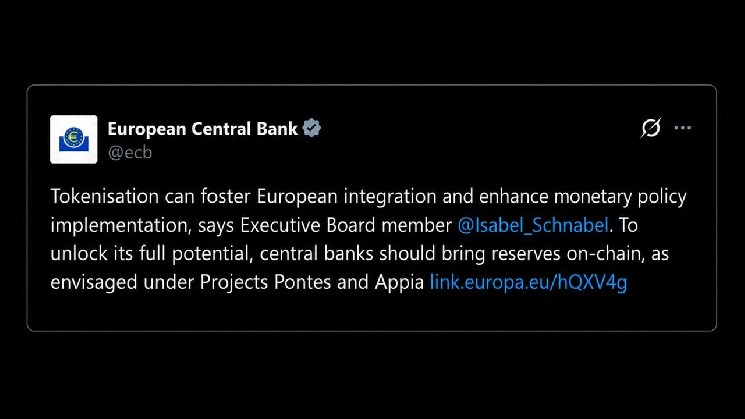
ECB's Schnabel says central bank money 'should move to blockchain'

ECB Executive Board member Isabel Schnabel stated that central bank money "must move onto the blockchain." She argued that stablecoins lack the independent ability to scale liquidity during financial stress—a gap only a central bank can fill. Her proposed solution involves tokenization, which she says can make transactions faster, safer, and more programmable, but only if the safest asset (central bank money) is on the same "rails" as other tokenized assets. This marks a notable shift for the Eurosystem, which had previously viewed Distributed Ledger Technology (DLT) mainly as a tool for regulating stablecoins and crypto, not as infrastructure to adopt directly. The first step is Project Pontes, launching in September. It will initially synchronize the ECB’s existing TARGET services with private DLT platforms. Eventually, it aims to enable settlement finality on a Eurosystem-managed DLT platform with smart contract functionality and 24/7 operation. The long-term strategy is Project Appia, tasked with developing the architecture, standards, and legal framework for a genuine European tokenized asset market by 2028. Trials have already processed around €1.6 billion, and since March 2026, the ECB accepts DLT-based assets as collateral. While not directly impacting Bitcoin's price, these developments signal that a major G7 central bank is preparing to settle transactions on-chain, lending legitimacy to the underlying infrastructure of crypto markets. The ECB's move to avoid "disintermediation" by private tokenization shows that debates in central bank boardrooms are now aligning with discussions long followed in the crypto space.

cryptonews.ru1h ago

ECB's Schnabel says central bank money 'should move to blockchain'

cryptonews.ru1h ago

Ripple Labs Warns of a New Challenge for Blockchains

Ripple Labs is preparing the XRP Ledger for quantum threats but now emphasizes a broader challenge: ensuring financial infrastructure can adapt simultaneously to quantum computing and artificial intelligence. Senior Director of Engineering Ayo Akinyele states the goal is not merely anticipating a "Q-Day" but building infrastructure capable of preemptively adopting new security mechanisms without network disruption. The shift to post-quantum cryptography involves more than swapping algorithms; it requires flexible infrastructure, improved key management, and clear upgrade paths. Financial systems were not designed with quantum computers in mind, necessitating a rethink of transaction, identity, asset, and data protection. This is underscored by significant investments, such as the $2 billion U.S.-IBM quantum factory initiative and a 2030 U.S. government mandate for post-quantum cryptography adoption. AI introduces distinct risks by driving automation and autonomous economic activity, increasing demand for an always-on, internet-oriented payment infrastructure. AI agents could soon conduct transactions independently, creating new security requirements. Ripple Labs advocates for proactive, orderly preparation rather than a crisis-driven transition, having outlined a four-phase strategy aiming for a full XRP Ledger transition by 2028, now expanded to address both quantum and AI-driven challenges.

cryptonews.ru1h ago

Ripple Labs Warns of a New Challenge for Blockchains

cryptonews.ru1h ago

Trading

Spot

Hot Articles

What is XRP 2.0

XRP 2.0: A New Frontier in the Cryptocurrency Landscape Introduction to XRP 2.0 In the ever-evolving realm of cryptocurrency, new projects continuously emerge, vying for attention and adoption. One such promising initiative is XRP 2.0, a novel cryptocurrency project designed to leverage advanced blockchain technology and robust encryption methodologies. While the name draws parallels with Ripple’s XRP, it’s crucial to note that XRP 2.0 operates independently, focusing on enhancing transaction security, privacy, and scalability. As the digital financial landscape increasingly embraces decentralized solutions, XRP 2.0 aims to contribute meaningfully to web3 and the overall expansion of crypto projects. What is XRP 2.0? At its core, XRP 2.0 is a cryptocurrency project that aims to create a secure and decentralized digital currency ecosystem. Its foundational technology integrates sophisticated blockchain principles with cutting-edge encryption techniques. The overarching goal of XRP 2.0 is to establish itself as a reliable and efficient platform enabling swift transaction execution while prioritizing enhanced privacy protections for its users. The project is promoted as a solution to many limitations faced by existing cryptocurrencies, proposing a system that can handle a higher volume of transactions with improved speed and privacy. This versatility positions XRP 2.0 as a significant contender in a marketplace riddled with various digital currencies. Who is the Creator of XRP 2.0? The identity of the creator behind XRP 2.0 has been flagged as ‘Wilbur.’ However, comprehensive details regarding Wilbur or their associated entity remain elusive. The anonymity of many cryptocurrency creators is not an uncommon phenomenon in the industry, often designed to maintain a degree of privacy and security. Who are the Investors of XRP 2.0? As of now, specific information related to the investment foundations or organizations supporting XRP 2.0 is not publicly available. In the cryptocurrency sector, the backing by reputed investors can significantly influence a project's credibility and success, yet the transparency regarding the financial supporters of XRP 2.0 has not been established. How Does XRP 2.0 Work? XRP 2.0 stands out by employing a combination of blockchain technology and advanced encryption algorithms that ensures secure and decentralized transactions. Its innovative structure includes unique features designed to foster user engagement and broaden functionalities beyond conventional cryptocurrency transactions. Among these features, XRP 2.0 incorporates AI-powered capabilities, such as text-to-image and text-to-speech functionalities. These additions are designed to enhance the interactive experience for users, promoting broader applicability across various sectors. By bridging technological advancements with user-centered design, XRP 2.0 aims to capture the attention of a diverse range of individuals and enterprises looking to integrate cryptocurrency solutions into their operational frameworks. Timeline of XRP 2.0 Understanding XRP 2.0 requires examining the milestones that have defined its journey thus far: July 23, 2023: XRP 2.0 is introduced as a novel cryptocurrency project, aiming to revolutionize secure and decentralized transaction capabilities in the blockchain domain. September 8, 2023: The launching of another project, XRP20, occurs, marking the emergence of an ERC-20 token on the Ethereum blockchain that remains unrelated to XRP 2.0. November 13, 2023: The XRP Ledger undergoes a significant update with the release of rippled server software version 2.0.0. It is essential to note that this development is disconnected from the XRP 2.0 cryptocurrency project. Key Points About XRP 2.0 To distill the essence of XRP 2.0, several critical factors emerge: Unique Features: The inclusion of features like AI-powered text-to-image and text-to-speech further diversifies the potential applications of XRP 2.0. Blockchain Technology: The framework utilizes advanced blockchain mechanisms and encryption protocols, ensuring a secure and decentralized environment for transactions. Scalability and Privacy: XRP 2.0 prioritizes enhanced privacy protections in transaction processes and the scalability necessary to accommodate a growing user base. No Affiliation with Ripple: Importantly, despite its name, XRP 2.0 does not have any allegiance or collaboration with Ripple’s XRP, distinguishing its operational framework and objectives within the cryptocurrency ecosystem. Conclusion XRP 2.0 represents an ambitious venture into the cryptocurrency sphere, aiming to offer a combination of security, privacy, and efficiency in digital transactions. By integrating sophisticated technologies and user-friendly features, the project sets out to broaden the horizons of what cryptocurrency can achieve in today's digital economy. While the anonymity of its creator and lack of disclosed investors might raise questions for some, XRP 2.0's focus on advanced functionalities and decentralisation enhances its appeal amidst an increasingly crowded crypto market. As the cryptocurrency landscape continues to evolve, XRP 2.0 may yet emerge as a pivotal player in the expansion of secure and scalable blockchain solutions.

1.7k Total ViewsPublished 2024.04.01Updated 2024.12.03

What is XRP 2.0

Discussions

Welcome to the HTX Community. Here, you can stay informed about the latest platform developments and gain access to professional market insights. Users' opinions on the price of XRP (XRP) are presented below.

活动图片