Will ETH See Fund Inflows Again? Sharplink and BitMine Make It onto the Russell Index List

marsbitPublished on 2026-05-25Last updated on 2026-05-25

Abstract

Two Ethereum (ETH)-related public companies, Sharplink (SBET) and BitMine (BMNR), will be added to the U.S. Russell Indexes on June 29, 2026. SBET is confirmed for the Russell 2000 and Russell 3000, while BMNR is on the preliminary list for the Russell 3000 and has a high chance of entering the Russell 1000. This inclusion acts as an "automatic shopping list" for massive passive investment funds like ETFs and pension plans, compelling them to buy these stocks to match the index composition. Consequently, millions of mainstream investors who do not directly trade crypto will automatically gain exposure to these Ethereum-linked equities through their index funds. This move channels significant passive capital—trillions of dollars track these indexes—into SBET and BMNR, integrating Ethereum-related investment opportunities into traditional financial portfolios. While the funds buy the companies' stocks, not ETH directly, this is expected to provide short-term price support for the stocks and increase their liquidity and institutional ownership. Over the long term, it could also indirectly incentivize the companies to acquire more ETH.

Author: Lanhu Notes

Two publicly listed companies related to Ethereum (ETH)—Sharplink (SBET) and BitMine (BMNR)—will officially be added to the U.S. Russell Indexes at the market open on June 29, 2026.

The current situation is:

  • SBET (Sharplink) is confirmed to join the Russell 2000 (small-cap index) and the Russell 3000.
  • BMNR (BitMine) is on the preliminary list and is expected to join the Russell 3000, with a high probability of also entering the Russell 1000 (large-cap index).

How to understand this?

Imagine the U.S. has a massive passive investment "automatic shopping system"—such as passive index funds, ETFs, pension funds, 401k plans, etc.

They don't pick stocks themselves; instead, they automatically buy exactly which companies and in what proportions are listed in the Russell Indexes.

SBET and BMNR being added to these lists is equivalent to:

Opening the "floodgates of passive capital" for SBET and BMNR, allowing millions of ordinary investors who don't trade cryptocurrencies or understand Ethereum to automatically hold them. This effectively pushes Ethereum opportunities into the mainstream channels of traditional finance.

Specifically,

The amount of capital tracking the Russell 2000 and Russell 3000 globally is enormous (on the scale of trillions of dollars).

Once officially included, these funds must purchase the corresponding stocks to match the index.

Previously, only investors actively researching crypto would buy these stocks.

Now, after entering the index, the money from mainstream investors (including a large number of retail and institutional investors) who "don't bother picking stocks and only buy index funds" will also automatically flow into SBET and BMNR.

This naturally integrates Ethereum-related investment opportunities into mainstream U.S. traditional financial portfolios.

The buying by passive funds creates real demand, especially around the inclusion生效 date, often providing short-term support for the stock price (the so-called "index inclusion effect").

In the long term, it also enhances stock liquidity and institutional ownership (for many established companies, passive ownership can reach 20-25% or more).

It's important to note that passive funds are buying SBET and BMNR stocks, not ETH. To match the index, funds must buy these two stocks; they won't go directly to an exchange to buy ETH. However, this will indirectly encourage the companies to buy more ETH.


Related Questions

QWhich two Ethereum-related public companies are set to be added to the US Russell indexes, and when does the addition take effect?

AThe two companies are Sharplink (SBET) and BitMine (BMNR). They are scheduled to be officially added to the Russell indexes at the US market open on June 29, 2026.

QWhat is the significance of a company being added to the Russell indexes in terms of capital inflows?

AInclusion in the Russell indexes opens the 'floodgates of passive capital.' Passive investment vehicles like index funds, ETFs, and pension funds that track these indexes are mandated to automatically buy the stock, channeling billions from mainstream traditional investors who may not otherwise invest in crypto-related assets into these companies.

QInto which specific Russell indexes are Sharplink (SBET) and BitMine (BMNR) being added?

ASharplink (SBET) is confirmed for addition to the Russell 2000 and Russell 3000 indexes. BitMine (BMNR) is on the preliminary list for the Russell 3000 and has a high probability of also entering the Russell 1000 index.

QDoes the direct purchase of these companies' stock by passive funds equate to a direct purchase of Ethereum (ETH)?

ANo, it does not. Passive funds buying SBET and BMNR stock is a direct purchase of the company's equity to match the index composition. It is not a direct purchase of Ethereum (ETH) on cryptocurrency exchanges. However, the article suggests this capital inflow could indirectly encourage the companies themselves to acquire more ETH.

QWhat are the potential market effects, both short-term and long-term, of a stock's inclusion in a major index like the Russell?

AShort-term, inclusion often creates buying pressure around the effective date, providing price support (the 'index inclusion effect'). Long-term, it increases the stock's liquidity and raises its institutional ownership percentage, as passive funds typically hold their positions, with mature companies often having 20-25%+ passive ownership.

Related Reads

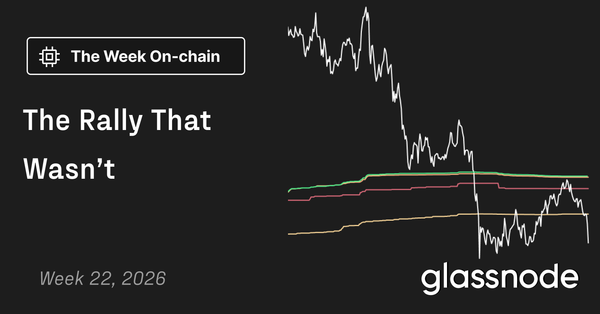
The Rally That Wasn't

The article analyzes Bitcoin's sharp decline amid a shift in macroeconomic expectations, with strong US job data leading markets to price out Fed rate cuts. Bitcoin fell 13% to around $67,000, triggering significant outflows from US spot ETFs and indicating institutional de-risking. On-chain data confirms a bearish structure. Price has dropped back into the "bear market range," with the Short-Term Holder Cost Basis falling below a key mean level—a pattern last seen in early 2022. The profitability bias has collapsed, with loss realization now dominating, mirroring a panic wave from February. Recent buyers who accumulated near the $82k top are under pressure, and loss realization is accelerating across both short-term and long-term holder cohorts. Off-chain, the rally failed at the aggregate US ETF cost basis near $83k, turning it into resistance. Spot market demand has deteriorated sharply, with sellers dominating order books. While a major long liquidation event cleared over $400M in leverage, spot buyers have not returned to absorb supply. Options markets show sustained demand for downside protection (elevated put premiums) but not panic, with volatility premiums near three-month highs. The conclusion is that the market remains fragile, with overhead supply from trapped ETF investors, weak spot demand, and accelerating losses. Without a return of spot buying and a reclaim of key cost bases, Bitcoin is vulnerable to further downside within the prevailing bear market structure.

insights.glassnode4h ago

The Rally That Wasn't

insights.glassnode4h ago

Trading

Spot
Futures

Hot Articles

Discussions

Welcome to the HTX Community. Here, you can stay informed about the latest platform developments and gain access to professional market insights. Users' opinions on the price of ETH (ETH) are presented below.

活动图片