Will Bitcoin Developer Keonne Rodriguez Be the Next Crypto Figure Pardoned by Trump?

marsbitPublished on 2025-12-16Last updated on 2025-12-16

Abstract

On December 16, Bitcoin developer Keonne Rodriguez, co-founder of privacy-focused Samourai Wallet, was brought to President Donald Trump’s attention during a meeting at the Oval Office. Although not a pardon, Trump acknowledged the case and directed the Attorney General to look into it. Rodriguez is scheduled to begin a five-year prison sentence on December 20. Rodriguez developed Samourai Wallet, a non-custodial Bitcoin privacy tool offering features like Whirlpool (coin mixing) and Ricochet (transaction obfuscation). U.S. prosecutors arrested him and co-founder William Hill in April 2024, arguing that the service operated as an unlicensed money-transmitting business. Both later pleaded guilty, with Rodriguez receiving a five-year sentence. Evidence included internal messages where Rodriguez described mixing as “money laundering for bitcoin.” The case has sparked debate over whether privacy tools constitute innovation or criminal infrastructure. Trump has previously pardoned several crypto figures, including Ross Ulbricht, BitMEX executives, and Binance’s CZ, raising speculation about a possible pardon for Rodriguez. Even if pardoned, Samourai Wallet is unlikely to revive. However, its code has been forked into more decentralized successors like Ashigaru, reflecting persistent demand for financial privacy tools. The case underscores the tension between privacy technology and regulatory enforcement, with implications for future innovation and legal boundaries in the crypto...

In the early morning of December 16th Beijing time, Washington’s spotlight gave the crypto world a long-awaited adrenaline rush. In the Oval Office of the White House, someone brought the name of Samourai Wallet developer Keonne Rodriguez to President Donald Trump. Trump’s response was brief: he had heard of the case, would look into it, and immediately instructed Attorney General Pam Bondi to follow up.

This was not a pardon, but it was enough to make a programmer who was about to report to prison the center of public discourse once again.

How close is Rodriguez to prison? According to the disclosed timeline, he is required to report to the federal prison system by this Friday, December 19th, Eastern Time (December 20th, Beijing time), to begin serving a five-year sentence. Countdowns are not common parlance in the crypto world, but a hard number on the calendar: from December 16th, he has less than four days left.


Who is Keonne Rodriguez?

Keonne Rodriguez is not a traditional crypto magnate. He did not build an exchange, lending platform, or stablecoin, but rather a Bitcoin privacy tool: allowing users to make it harder for chain analysis to trace them, without surrendering private keys or custodizing funds.

Samourai Wallet’s core selling points are supported by two types of features:

Whirlpool is a coin-mixing service that coordinates transactions from multiple users, blending the sources of funds in the on-chain records to sever traceability. Ricochet, on the other hand, adds multiple-hop intermediate transactions, lengthening and complicating the path from A to B, reducing the likelihood of being directly flagged by risk control or monitoring systems.

These features may sound like a natural evolution of privacy enhancement in tech circles, but Rodriguez’s troubles have never been solely about the technology itself—they lie in the business model and expression it was accused of adopting: prosecutors emphasized that Samourai operated centralized servers to coordinate the transaction process while charging fees for related services. This made it, in the legal narrative, more like an active business operation rather than passively released code.

The timeline of the case is clear.

In April 2024, U.S. prosecutors announced the arrest of Rodriguez and another co-founder, William Lonergan Hill, accompanied by law enforcement seizing their servers and domain. By July 2025, both pleaded guilty, admitting to conspiracy to operate an unlicensed money transmitting business, with a maximum sentence of 5 years. In November, Rodriguez was sentenced to 5 years, Hill to 4 years, and both were ordered to pay fines and undergo supervised release.

The decisive blow came from materials showing subjective knowledge and active catering to usage. Official disclosures revealed that Rodriguez described mixing as “money laundering for bitcoin” in chat software; Hill was accused of answering users on dark web forums about how to turn dirty BTC into untraceable clean coins and directly recommending Whirlpool.

This narrative pushed the case from “tools being misused” to “you knew what it would be used for, and you were promoting its use that way.” Under such premises, it’s not hard to understand why the judge sentenced Rodriguez to the statutory maximum.


Why “Pardon” Has Become a Hot Topic at This Juncture

Pardons are not uncommon in Trump’s second term: on January 22, 2025, he pardoned Silk Road founder Ross Ulbricht; on March 29, 2025, he pardoned several former BitMEX executives; and on October 24, 2025, he pardoned Binance founder Changpeng Zhao (CZ). This has led many to believe that the Samourai case might not be entirely beyond the reach of White House intervention.

At the same time, the U.S. attitude towards privacy tools is not uniformly tightening. In March 2025, the U.S. Treasury removed Tornado Cash from its sanctions list, seen as a strategic adjustment after regulatory and legal tussles. But this does not mean the U.S. has abandoned combating money laundering and sanctions evasion; it’s more of a correction in a situation where “the tool’s form is too decentralized, making enforcement difficult.”

Samourai’s awkward position lies in being portrayed by prosecutors as the type that is easier to “pin down”: having operators, charging fees, and running centralized coordination services. For the crypto industry, such cases are most likely to create a chilling effect—even if you don’t like coin mixing, it’s hard to accept a precedent being set: developers of non-custodial privacy tools ultimately being sent to prison under the logic of operating a money transmitting business.

Thus, Trump’s statement, “I’ll look into it,” feels more like a political probe: whether to pardon or not concerns not only one person’s freedom but also the most sensitive nerve of crypto voters—whether the U.S. will treat privacy tools as innovation or as criminal infrastructure.


Samourai May Be Dead, but the Questions It Leaves Behind Are Not
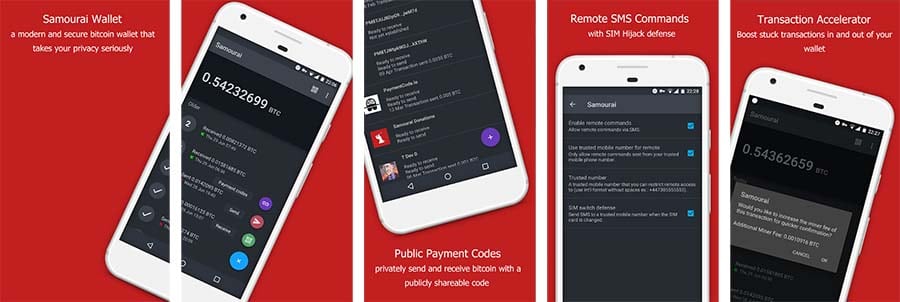
Even if a pardon occurs, Samourai Wallet as a “service-based” product is unlikely to be revived: its infrastructure was dismantled by law enforcement in 2024, and the team and distribution channels have been scattered by real-world costs.

More noteworthy is the subsequent evolution. In September 2024, a project named Ashigaru announced a hard fork of Samourai’s code to continue the privacy wallet path in a more open-source, decentralized manner—striving to remove single points of failure, making definable, targetable components越来越少.

This points to a colder outcome: strong regulation can dismantle a specific team, shut down a specific website, but it is difficult to make privacy demands disappear. As long as the demand exists, tools will evolve—from products with centralized coordination and fees to more covert, distributed, and legally ambiguous engineering puzzles. You take down one “company-like” target, and the next generation often becomes even less like a company.

The reason Keonne Rodriguez was suddenly thrust into the spotlight in December 2025 is precisely because he stands at the dividing line: on one side is the ideal of privacy technology, on the other is the enforcement system’s need for governable entities. Whether Trump pardons him or not can change one person’s fate, but may not make this dividing line any clearer.


Trending Cryptos

Related Questions

QWho is Keonne Rodriguez and what was his role in the cryptocurrency space?

AKeonne Rodriguez was a developer and co-founder of Samourai Wallet, a non-custodial Bitcoin privacy wallet. He focused on creating tools like Whirlpool for coin transactions and Ricochet for obfuscating transaction paths, aiming to enhance user privacy by making it harder to trace Bitcoin transactions on the blockchain.

QWhat legal charges did Keonne Rodriguez face, and what was the outcome of his case?

AKeonne Rodriguez was charged with conspiracy to operate an unlicensed money-transmitting business. He pleaded guilty in July 2025 and was sentenced to five years in prison in November 2025, along with fines and supervised release, due to evidence showing he knowingly facilitated money laundering through his wallet's features.

QWhy has the possibility of a pardon for Keonne Rodriguez by Donald Trump gained attention?

AThe possibility gained attention because Trump has previously pardoned several figures in the crypto industry, such as Ross Ulbricht, BitMEX executives, and Binance's CZ. Rodriguez's case involves key issues around privacy tools and innovation, making it a focal point for crypto advocates seeking leniency.

QWhat impact did the Samourai Wallet case have on the cryptocurrency privacy tool landscape?

AThe case highlighted regulatory risks for centralized privacy tools, leading to projects like Ashigaru forking Samourai's code to create more decentralized, less legally targetable solutions. It underscored that while enforcement can shut down specific services, privacy demand persists, driving evolution toward more distributed architectures.

QHow did the U.S. government's stance on privacy tools like Tornado Cash relate to the Samourai Wallet case?

AThe U.S. Treasury removed Tornado Cash from sanctions in March 2025, reflecting a nuanced approach to decentralized tools. However, Samourai's centralized operations and fee-based model made it an easier target for prosecution, emphasizing that enforcement prioritizes entities with clear operational control and profit motives.

Related Reads

Now the Greatest Regret Is to My Family: Crypto Experts Took a Stumble in the Stock Market

Summary: This article examines the significant losses recently suffered by cryptocurrency traders and influencers who ventured into the stock market, specifically by heavily investing in AI-related and semiconductor storage stocks. The narrative centers on the dramatic reversal in the Korean and US equity markets in late July, with stocks like SK Hynix and related leveraged ETFs experiencing historic plunges, erasing massive gains. The analysis highlights several key factors behind the "flip." Traders, accustomed to crypto's high volatility and frustrated by a stagnant market, chased the apparent momentum in AI-themed equities. Many made fatal mistakes: applying high-leverage strategies common in crypto (e.g., 2x ETFs, on-chain perpetual contracts) to stocks, and failing to understand the distinct rules of different stock markets (like Korean pre-market trading). This led to widespread liquidations, especially when a thin Korean pre-market trade triggered a cascading flash crash on a decentralized exchange. Post-crash reflections from prominent figures reveal deep regret and self-criticism. They acknowledge misjudging their expertise, overestimating their edge against sophisticated institutional players, and the dangers of leverage. The article concludes that while such setbacks are part of trading, surviving long-term requires recognizing one's limitations and the inherent risks of cross-market strategies.

marsbit37m ago

Now the Greatest Regret Is to My Family: Crypto Experts Took a Stumble in the Stock Market

marsbit37m ago

US Senate Makes Important Amendments to "Conflict of Interest" Section of Cryptocurrency Bill

The U.S. Senate has taken a key step regarding the CLARITY Act, which could shape the future of the U.S. crypto market. On July 29, Senators Tom Tillis and Ruben Gallego finalized amendments to the bill's "conflict of interest" rules, one of its most contentious aspects. The bipartisan bill aims to tighten restrictions on high-level federal officials' ties to digital assets. The new text, crafted as an alternative to a White House-endorsed ethics code, is expected to impose stricter rules limiting officials' ability to issue or directly participate in digital asset projects. However, with Congress entering an August recess and the revised text not yet reviewed by much of the Senate, the bill's timeline is uncertain. Senate Majority Leader John Thune indicated a procedural vote could occur between July 29 and August 1 but expressed doubt the full bill could pass before the break. The House-approved CLARITY Act, passed in July 2025, has been under Senate negotiation for over a year. Key goals of the CLARITY Act include clarifying jurisdictional boundaries between the SEC and CFTC, setting rules for digital commodity spot markets, and addressing topics like stablecoin yields, DeFi, and illicit financing. The stablecoin yield provisions could significantly impact U.S.-based DeFi protocols, exchanges, and issuers, affecting their global competitiveness. The outcome is being closely watched by both the U.S. and global digital asset markets.

cryptonews.ru1h ago

US Senate Makes Important Amendments to "Conflict of Interest" Section of Cryptocurrency Bill

cryptonews.ru1h ago

Pavel Durov Designated as a Terrorist in Russia. What Does This Mean for Telegram Users?

Pavel Durov, the founder of Telegram, has been added to Russia's list of terrorists and extremists by Rosfinmonitoring, as published on July 30. The entry includes his name and date of birth. The designation follows an announcement by the Russian Federal Security Service (FSB) on July 29, which charged Durov with aiding terrorist activity. The FSB alleges that a Telegram dating bot named "DaiVinchik" was used to recruit 46 individuals for attacks on police and arson, orchestrated by Ukrainian special services. The FSB also accuses Telegram's administration of failing to remove channels and bots used by Ukrainian intelligence and extremist groups. Durov is reportedly subject to an international arrest warrant. Inclusion on the Rosfinmonitoring list leads to significant restrictions: the freezing of Durov's bank accounts and assets, severe limitations on financial transactions, and a ban on election participation, media interaction, and event organization. Transfers to his accounts may be considered terrorism financing. For ordinary Russian Telegram users, purchasing Telegram Premium is not classified as financing terrorism, according to an IT expert. General use of the messenger—messaging, managing channels—does not automatically make a user a participant in extremist activity. There has been no official decision to ban Telegram itself. It is noted that French authorities are also investigating Durov over allegations of inadequate measures against criminal activity on the platform and insufficient cooperation with law enforcement. Durov denies all charges.

cryptonews.ru1h ago

Pavel Durov Designated as a Terrorist in Russia. What Does This Mean for Telegram Users?

cryptonews.ru1h ago

Trading

Spot

Hot Articles

What is $BITCOIN

DIGITAL GOLD ($BITCOIN): A Comprehensive Analysis Introduction to DIGITAL GOLD ($BITCOIN) DIGITAL GOLD ($BITCOIN) is a blockchain-based project operating on the Solana network, which aims to combine the characteristics of traditional precious metals with the innovation of decentralized technologies. While it shares a name with Bitcoin, often referred to as “digital gold” due to its perception as a store of value, DIGITAL GOLD is a separate token designed to create a unique ecosystem within the Web3 landscape. Its goal is to position itself as a viable alternative digital asset, although specifics regarding its applications and functionalities are still developing. What is DIGITAL GOLD ($BITCOIN)? DIGITAL GOLD ($BITCOIN) is a cryptocurrency token explicitly designed for use on the Solana blockchain. In contrast to Bitcoin, which provides a widely recognized value storage role, this token appears to focus on broader applications and characteristics. Notable aspects include: Blockchain Infrastructure: The token is built on the Solana blockchain, known for its capacity to handle high-speed and low-cost transactions. Supply Dynamics: DIGITAL GOLD has a maximum supply capped at 100 quadrillion tokens (100P $BITCOIN), although details regarding its circulating supply are currently undisclosed. Utility: While precise functionalities are not explicitly outlined, there are indications that the token could be utilized for various applications, potentially involving decentralized applications (dApps) or asset tokenization strategies. Who is the Creator of DIGITAL GOLD ($BITCOIN)? At present, the identity of the creators and development team behind DIGITAL GOLD ($BITCOIN) remains unknown. This situation is typical among many innovative projects within the blockchain space, particularly those aligning with decentralized finance and meme coin phenomena. While such anonymity may foster a community-driven culture, it intensifies concerns about governance and accountability. Who are the Investors of DIGITAL GOLD ($BITCOIN)? The available information indicates that DIGITAL GOLD ($BITCOIN) does not have any known institutional backers or prominent venture capital investments. The project seems to operate on a peer-to-peer model focused on community support and adoption rather than traditional funding routes. Its activity and liquidity are primarily situated on decentralized exchanges (DEXs), such as PumpSwap, rather than established centralized trading platforms, further highlighting its grassroots approach. How DIGITAL GOLD ($BITCOIN) Works The operational mechanics of DIGITAL GOLD ($BITCOIN) can be elaborated on based on its blockchain design and network attributes: Consensus Mechanism: By leveraging Solana’s unique proof-of-history (PoH) combined with a proof-of-stake (PoS) model, the project ensures efficient transaction validation contributing to the network's high performance. Tokenomics: While specific deflationary mechanisms have not been extensively detailed, the vast maximum token supply implies that it may cater to microtransactions or niche use cases that are still to be defined. Interoperability: There exists the potential for integration with Solana’s broader ecosystem, including various decentralized finance (DeFi) platforms. However, the details regarding specific integrations remain unspecified. Timeline of Key Events Here is a timeline that highlights significant milestones concerning DIGITAL GOLD ($BITCOIN): 2023: The initial deployment of the token occurs on the Solana blockchain, marked by its contract address. 2024: DIGITAL GOLD gains visibility as it becomes available for trading on decentralized exchanges like PumpSwap, allowing users to trade it against SOL. 2025: The project witnesses sporadic trading activity and potential interest in community-led engagements, although no noteworthy partnerships or technical advancements have been documented as of yet. Critical Analysis Strengths Scalability: The underlying Solana infrastructure supports high transaction volumes, which could enhance the utility of $BITCOIN in various transaction scenarios. Accessibility: The potential low trading price per token could attract retail investors, facilitating wider participation due to fractional ownership opportunities. Risks Lack of Transparency: The absence of publicly known backers, developers, or an audit process may yield skepticism regarding the project's sustainability and trustworthiness. Market Volatility: The trading activity is heavily reliant on speculative behavior, which can result in significant price volatility and uncertainty for investors. Conclusion DIGITAL GOLD ($BITCOIN) emerges as an intriguing yet ambiguous project within the rapidly evolving Solana ecosystem. While it attempts to leverage the “digital gold” narrative, its departure from Bitcoin's established role as a store of value underscores the need for a clearer differentiation of its intended utility and governance structure. Future acceptance and adoption will likely depend on addressing the current opacity and defining its operational and economic strategies more explicitly. Note: This report encompasses synthesised information available as of October 2023, and developments may have transpired beyond the research period.

1.1k Total ViewsPublished 2025.05.13Updated 2025.05.13

What is $BITCOIN

Discussions

Welcome to the HTX Community. Here, you can stay informed about the latest platform developments and gain access to professional market insights. Users' opinions on the price of BTC (BTC) are presented below.

活动图片