White Whale: A 'Doomed' Meme Coin's 500x Comeback in 30 Days?

marsbitPublished on 2025-12-29Last updated on 2025-12-29

Abstract

White Whale, a meme coin initially destined to fail, staged a dramatic 500x rally in under 30 days, surging from under $100k to a $57 million market cap. Launched on Pump.fun on October 13, 2025, as an unauthorized fan-made token using the image of crypto influencer @TheWhiteWhaleV2, it was conceived as “The People’s Whale”—a satire against market manipulation. Like most meme coins, it quickly faded into obscurity. The turning point came on December 7, 2025, when @TheWhiteWhaleV2 unexpectedly took over the project to protect his reputation. He committed to full transparency: all creator earnings would be returned to the community, and his personal token purchase was locked until 2063. He further invested $13k of his own funds to support liquidity and reward contributors. On-chain analysis revealed early signals of the revival: a sharp drop in top 100 supply on December 2, followed by “smart money” inflows from December 4. After the takeover, the top 100 holders (excluding CEX/DEX wallets) increased their holdings by over 80%. White Whale’s resurgence is a rare narrative of redemption and responsible management in the high-risk Solana meme coin ecosystem, transforming a near-dead joke into an anti-rug success story.

Author | DingDang (@XiaMiPP)
This is the story of a Meme coin that "should have died according to logic" but unexpectedly revived from rock bottom after being nearly forgotten by the market.

White Whale, in less than a month, surged nearly 500 times from a market cap of less than $100,000, with its current market cap temporarily reported at $57 million. The community is now calling for the next target: $100 million.

The Familiar Meme Coin Playbook: From Start to End

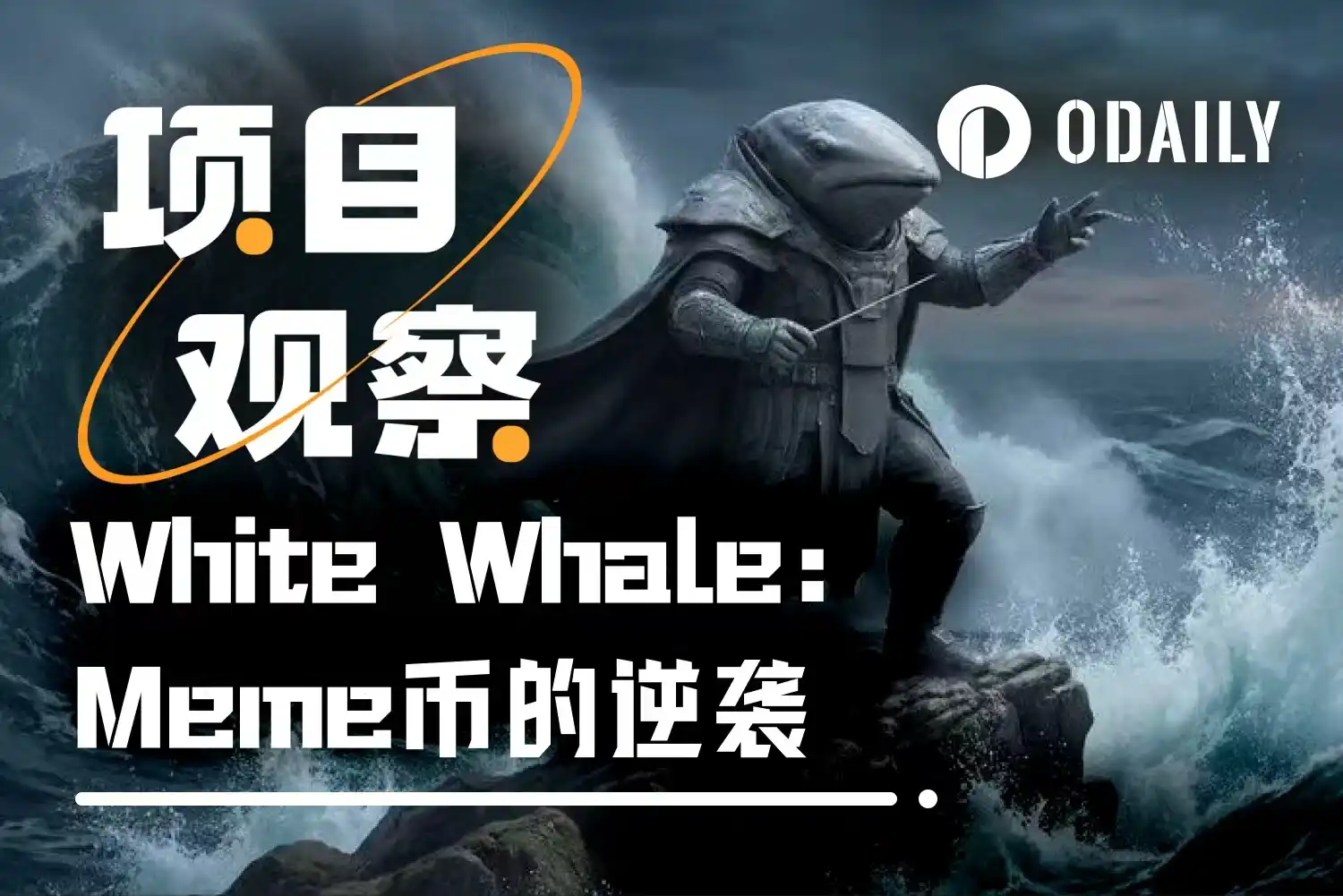
White Whale was launched via Pump.fun on October 13, 2025. It was originally created by a fan "borrowing" the avatar and image of crypto KOL @TheWhiteWhaleV2 as a joke. @TheWhiteWhaleV2 is a crypto OG on X with 828,000 followers. His avatar is a whale clad in armor with a stern and cold expression, embodying a serious and restrained style. He often shares trading philosophies and market insights. Perhaps because of this, fans see him as a positive "whale" symbol.
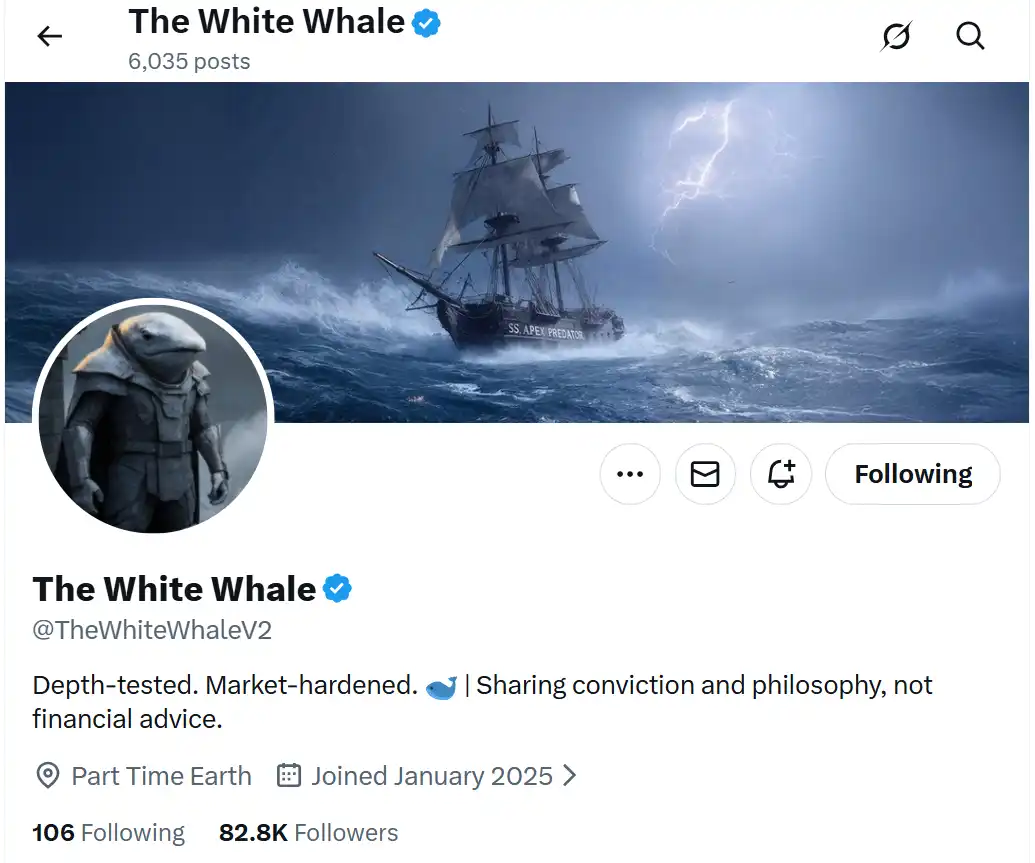
The initial narrative of the project was "The People's Whale," intended to satirize and resist manipulation by big whales or institutions in the crypto market, positioning itself as a tool for community counterattacks. But this was purely a fan's mischievous creation, without authorization or permission from @TheWhiteWhaleV2 himself. He even later tweeted that he thought "this thing will die within 48 hours." Similar incidents of "borrowing his avatar to issue a coin" had happened to him before.

This is precisely why it was originally "supposed" to be a dead Meme coin. On Pump.fun, thousands of Meme coins are born every day, and 99.9% of them die quickly; this coin was no exception. Shortly after its launch, its market cap briefly surged to around $100,000 after the bonding curve, then quickly cooled off. From mid-October to early December, the price mostly moved sideways, with trading volume near zero, almost forgotten. It was an ending the market had seen countless times.

A Dramatic Turnaround: The Whale's "Redemption" and Community Takeover

The turning point came on December 7, 2025.

@TheWhiteWhaleV2 himself suddenly posted an announcement: He was officially taking over the Treasury and control of this Meme coin. The reason was simple: fans had used his image and reputation without permission. He initially ignored it, but seeing that the coin had gained some (albeit small) traction, he was worried that if a Rug Pull happened in the future, it would damage his reputation. So he decided to "step in personally" to protect his brand.

He emphasized that this was not a coin he created and that he had even initially advised people not to buy it. But to take control of his own image and portrait rights, he had no choice but to take over.

Of course, that wasn't important.
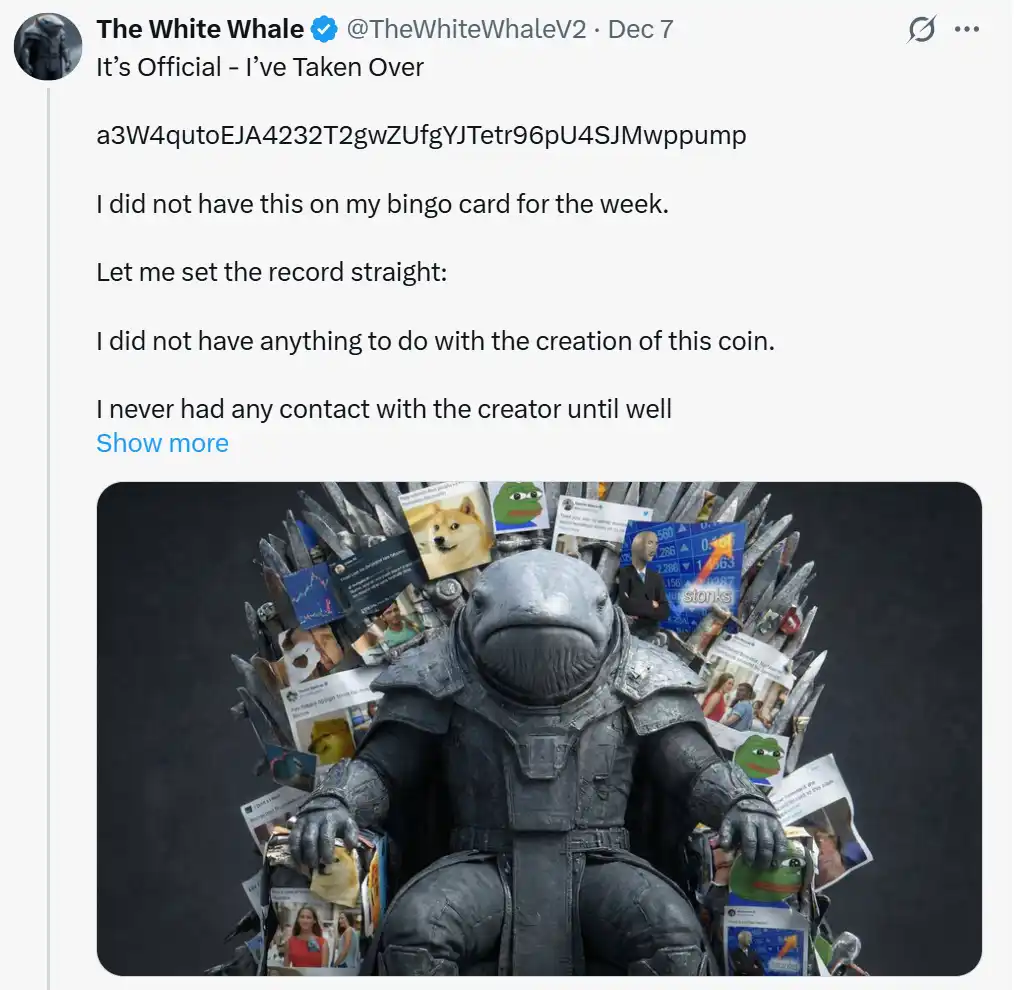
What was important was his promise: 100% of the creator revenue would be returned to the community, and he had also bought some tokens as a memento, with his own purchased portion never to be sold.

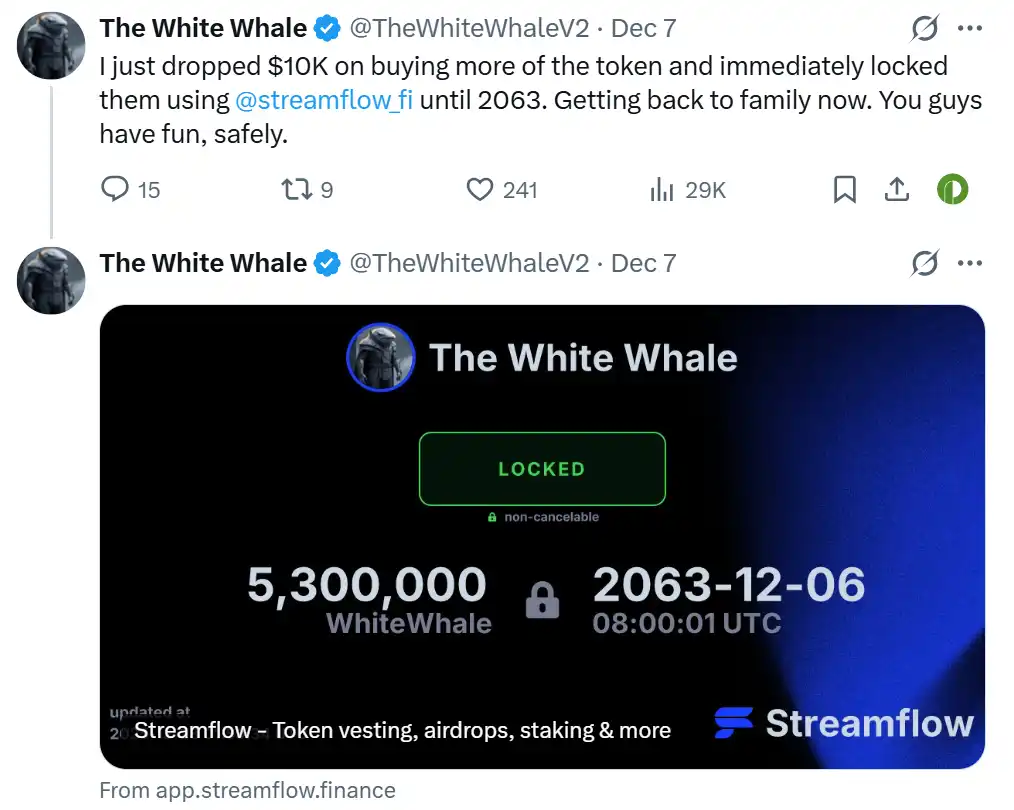
And he proved his sincerity with actions. On the day he announced the takeover, he spent $10,000 to buy 5.3 million tokens and locked them via the Streamflow protocol, with an unlock date set for 2063.
After that, he disclosed that he had already spent $130,000 to support the community, creating a pool on Wasabi and adjusting the LP bandwidth to reduce volatility for holders, and using personal funds to incentivize community contributors.

It was these series of operations that gradually allowed what was originally a "fan prank" to be reinterpreted by the community as a narrative sample about "good management."

What Story Does the On-Chain Data Tell?

After White Whale surged 100x, on-chain analyst @cryptorinweb3 revisited the token's indicator signals. According to the investigation, on December 2, @nansen_ai data showed that the token supply held by the top 100 holders suddenly dropped from 870 million to 140 million tokens. After checking the exchange labels, he found that this drop was mainly due to a large amount of funds flowing back to the main liquidity pool (LP). He reminded that when you see such a change in the top 100 holdings, it is always a signal worth investigating further.

紧接着, on December 4, the "smart money inflow" indicator he set up in Discord was triggered, accompanied by an increase in trading volume.

On December 7, @TheWhiteWhaleV2 himself announced the official takeover. And starting from December 8, after excluding CEX/DEX wallets, the real top 100 holders increased their holdings by over 80%, while exchange supply remained stable.

Let's revisit White Whale's token performance: from the "smart money anomaly" on December 4 to the official takeover on December 7, White Whale's increase was only about 6x, and it subsequently experienced a pullback; the real explosion, however, occurred in late December.

This was certainly driven by sentiment and capital, but on the other hand, the responsible attitude and transparent on-chain operations demonstrated by @TheWhiteWhaleV2 himself formed the foundation of the project.
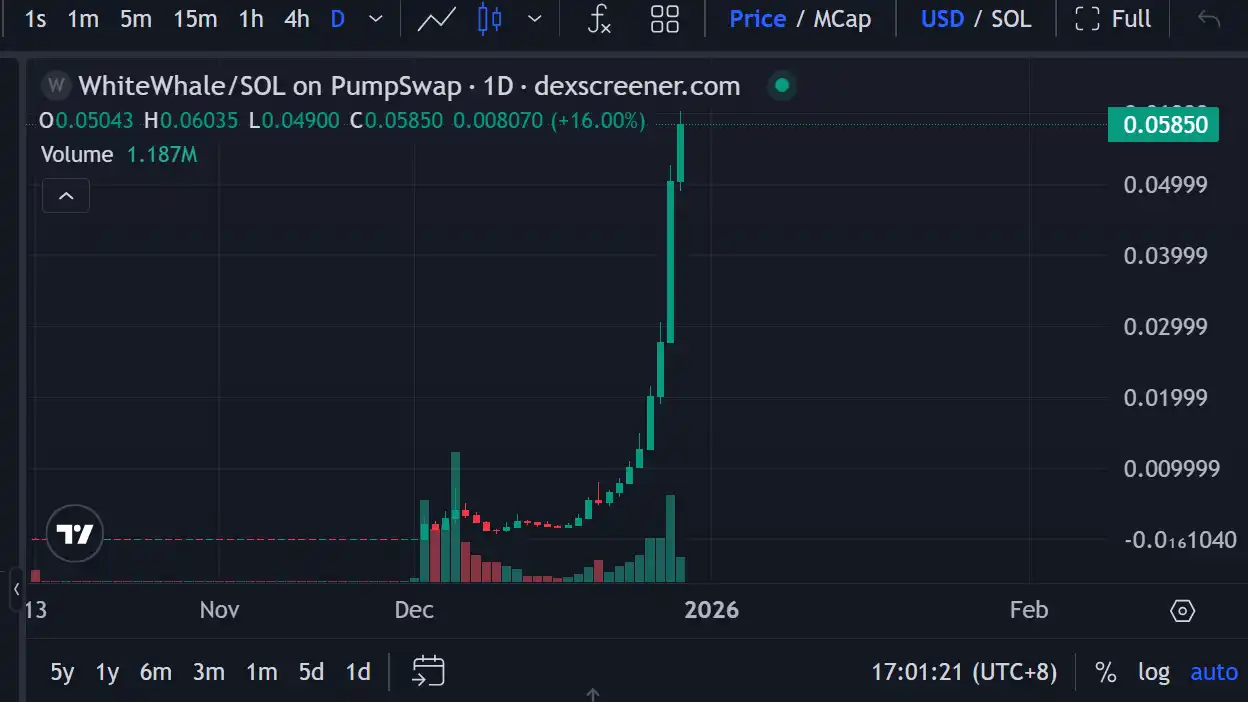
White Whale is essentially a microcosm of the Solana Meme coin ecosystem: random, chaotic, high-risk. But the reason it survived and became popular was due to an unexpected positive turn: a dying joke coin was taken over by the original figure himself in a "responsible, well-managed" manner, rebuilding trust and creating the most inspirational "anti-Rug" case at the end of 2025. Although we don't know how far it can go, in a market notorious for short-term games, this in itself is rare enough.


Trending Cryptos

Related Questions

QWhat is the initial narrative and purpose of the White Whale meme coin?

AThe initial narrative of White Whale was 'The People's Whale', designed to satirize and resist manipulation by large whales or institutions in the crypto market, positioning itself as a tool for community counter-attacks.

QWho is @TheWhiteWhaleV2 and why did he decide to take over the White Whale project?

A@TheWhiteWhaleV2 is a crypto OG with 828,000 followers on X. He took over the White Whale project to protect his brand and image, as the coin was created without his permission using his avatar, and he wanted to prevent potential rug pulls that could damage his reputation.

QWhat key actions did @TheWhiteWhaleV2 take to demonstrate his commitment to the White Whale community?

AHe spent $10,000 to buy 5.3 million tokens and locked them via Streamflow until 2063, committed 100% of creator revenue back to the community, used $130,000 of personal funds to support the community, built liquidity pools on Wasabi, and incentivized community contributors.

QAccording to on-chain data, what significant signal occurred on December 2nd that indicated a change in the White Whale token?

AOn December 2nd, data from @nansen_ai showed that the token supply held by the top 100 holders suddenly decreased from 870 million to 140 million tokens, primarily due to funds flowing back into the main liquidity pool (LP).

QHow much did the White Whale meme coin increase in value within less than a month, and what is its current market capitalization target?

AWhite Whale surged nearly 500 times in less than a month, from under $100,000 to a current market cap of $57 million, with the community now targeting a $100 million market cap.

Related Reads

NVIDIA CPU Advances, China's RISC-V Responds: Semiconductor Deep Dive - Part Four

NVIDIA is set to launch its new Vera AI data center CPU in China as early as August, with high pricing. While this move offers a new option, it highlights China's continued dependence on foreign-controlled Arm architecture. In response, the Chinese semiconductor industry is increasingly turning to RISC-V as a strategic alternative for achieving high-performance computing autonomy. The article explores the concept of the "impossible triangle" in CPU development—balancing prosperity, control, and autonomy—and posits that RISC-V's open-source, modular nature offers a unique path to achieving all three. While RISC-V is already dominant in embedded systems, the focus is now shifting to data centers and AI workloads. China has become a global hotspot for RISC-V development, driven by AI-driven compute demand, supply chain concerns from export controls, cost benefits of open-source, and strong policy support. Multiple Chinese companies have reportedly crossed the key performance threshold of 15 SPECint per GHz, a benchmark for entering the high-performance CPU club. Progress extends beyond single-core benchmarks. Companies are developing complete computing subsystems, including commercial-grade coherent network-on-chip (NoC) technology and server processors with up to 40 cores that strictly adhere to the RVA23 standard to ensure software compatibility. Real-world applications are emerging in areas like video transcoding and edge AI. However, significant challenges remain. The RISC-V ecosystem faces fragmentation, immature toolchains and verification processes, and gaps in single-core performance and energy efficiency compared to mature x86 and Arm architectures. The formidable software moat, epitomized by NVIDIA's CUDA, is a long-term hurdle. In conclusion, while RISC-V cannot immediately replace offerings like NVIDIA's Vera, it represents a viable long-term path for China to develop a self-sufficient, high-performance CPU ecosystem. The journey is acknowledged to be long and arduous, requiring sustained effort to overcome technical and ecosystem challenges.

marsbit5h ago

NVIDIA CPU Advances, China's RISC-V Responds: Semiconductor Deep Dive - Part Four

marsbit5h ago

My Coding Betting Dashboard is Profiting, but Polymarket is Truly Not a Good Place for 'Arbitrage'

The author built a custom monitoring dashboard for Polymarket, a prediction market platform, and tested it with $1,600, achieving over 30% returns. However, the core argument is that Polymarket is not a good venue for traditional arbitrage. The dashboard has two main sections: a "Portfolio Dashboard" for tracking active positions with key metrics like total capital, P&L, and a risk-control module using a tier system (T1, T2, T3), and an "Opportunity Watchlist" for monitoring markets. The article details a critical structural trap in binary markets: a bet with a high perceived probability of success still carries a 100% loss risk if wrong. The author's T1/T2/T3 system is designed to manage this by limiting position sizes based on conviction and time horizon, emphasizing that high confidence should not equal high concentration. A key insight is the danger of "pseudo-diversification"—betting on different markets driven by the same underlying variable. The author concludes that Polymarket offers few true low-risk, arbitrage opportunities. It is instead a high-risk environment where wins can create a false sense of mastery, leading to large losses. The platform is better viewed as a training ground for honing judgment through disciplined, framework-driven betting rather than a reliable income source. The tools help transform intuition into structured, rule-based decisions to mitigate the risk of catastrophic errors.

marsbit8h ago

My Coding Betting Dashboard is Profiting, but Polymarket is Truly Not a Good Place for 'Arbitrage'

marsbit8h ago

WeChat AI Card Hands-On Guide: Has the AI Shopping Era Arrived?

**"WeChat AI Card" Practical Test Guide: Has the Era of AI Shopping Arrived?** WeChat has officially launched the "AI Exclusive Card," a feature integrated into its Workbuddy AI assistant. This card is designed to handle payments for AI-initiated purchases. Our hands-on test reveals it's not yet a tool for fully autonomous AI shopping, but rather a controlled payment layer for AI agents. The AI Card functions as an isolated sub-wallet within WeChat Pay. Users must bind the card and transfer funds into it from their main wallet. Crucially, every transaction requires explicit user confirmation via smartphone scan; AI cannot spend autonomously. Currently accessible through the Workbuddy agent, the card targets specific digital consumption scenarios: purchasing paid content (reports, data), calling paid APIs/tools, and subscribing to services. Its design prioritizes security and control by separating funds and mandating approval for each payment. We tested a real-world scenario: ordering bubble tea via Workbuddy using a "Meituan Life Assistant" skill. The process encountered multiple hurdles: high "skill" usage costs (exceeding daily free credits), and most importantly, while a payment was successfully initiated, the AI purchased an incorrect product (a mismatched group-buy coupon instead of the desired drink). This highlights the current limitation: the **AI Card only solves the payment step**. The broader challenge lies in the **AI agent's execution chain**—accurately understanding intent, navigating third-party platforms, selecting the right product, and ensuring proper fulfillment. The payment succeeded, but the purchase failed to meet the user's need. In conclusion, the WeChat AI Exclusive Card is a cautious, early-step experiment in AI commerce. It provides a secure, user-controlled payment method for agent interactions but is not yet capable of reliable, end-to-end complex purchases. For now, it's best used for low-value, low-risk digital services with careful user verification at each step. The vision of AI handling complete shopping tasks remains a work in progress.

marsbit11h ago

WeChat AI Card Hands-On Guide: Has the AI Shopping Era Arrived?

marsbit11h ago

Trading

Spot
Futures

Hot Articles

Discussions

Welcome to the HTX Community. Here, you can stay informed about the latest platform developments and gain access to professional market insights. Users' opinions on the price of MEME (MEME) are presented below.

活动图片