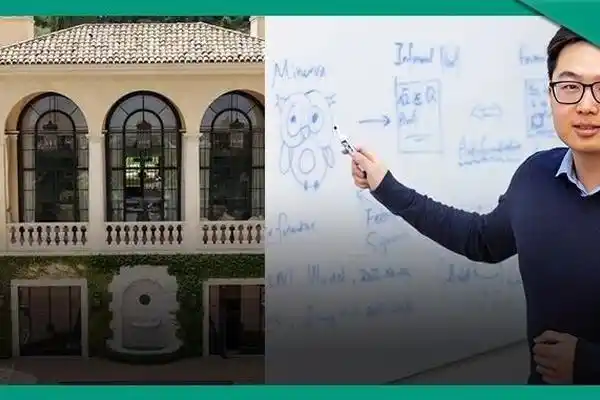
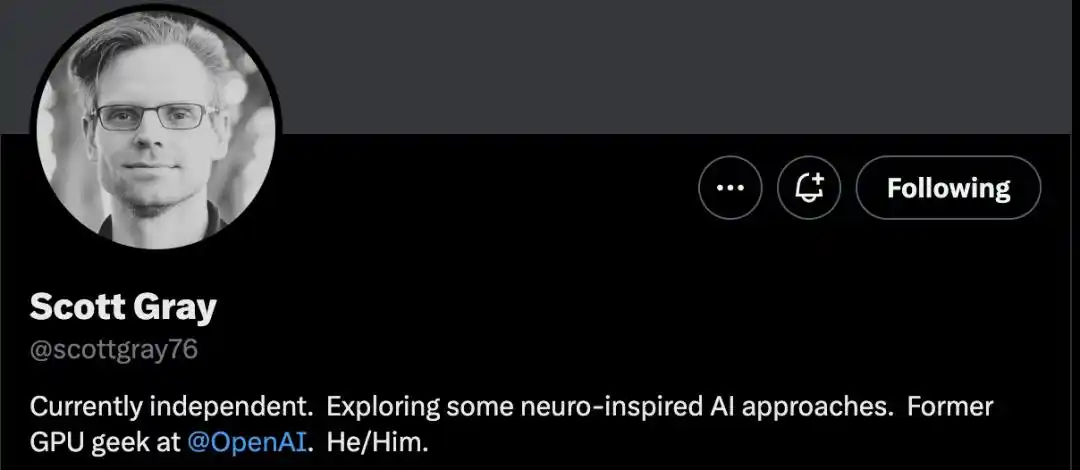
Just yesterday, Scott Gray, a ten-year veteran of OpenAI, quietly updated his X bio:
Currently independent, exploring some neuro-inspired AI directions, ex-OpenAI GPU geek.
Ten years ago today, on August 16, 2016, OpenAI posted an onboarding announcement, with Dario Amodei, Jack Clark, and Scott Gray listed.
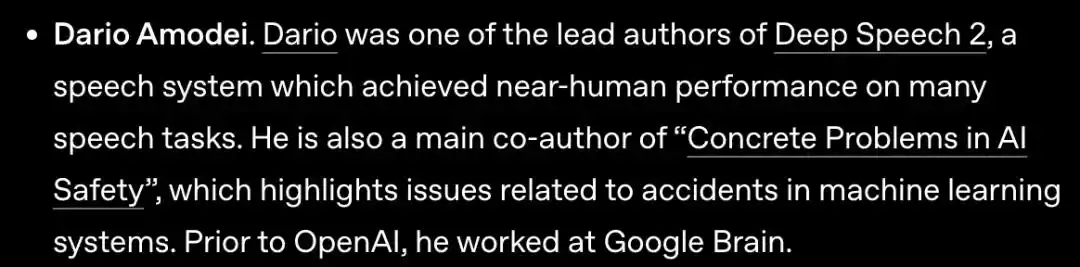
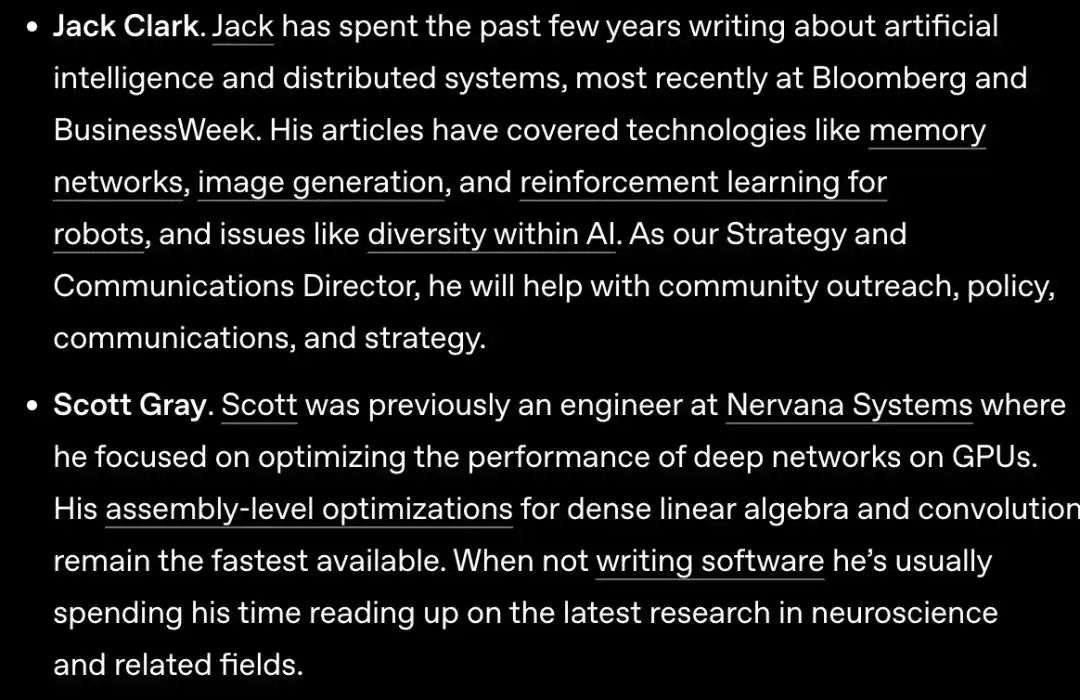
A decade later today, Dario is the CEO of Anthropic, Jack Clark manages policy at Anthropic, and Scott Gray has changed OpenAI to his "former company."
Beyond Gray, OpenAI has also lost two other core executives in succession.
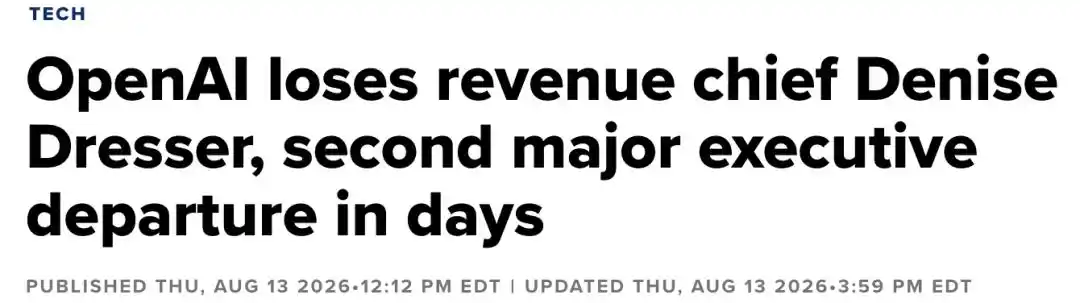
From August 11th to 13th, in just three days, Brad Lightcap, the former Chief Operating Officer who had been with OpenAI for eight years, announced his departure. Denise Dresser, the Chief Revenue Officer who had been in her role for only eight months, also announced her resignation.
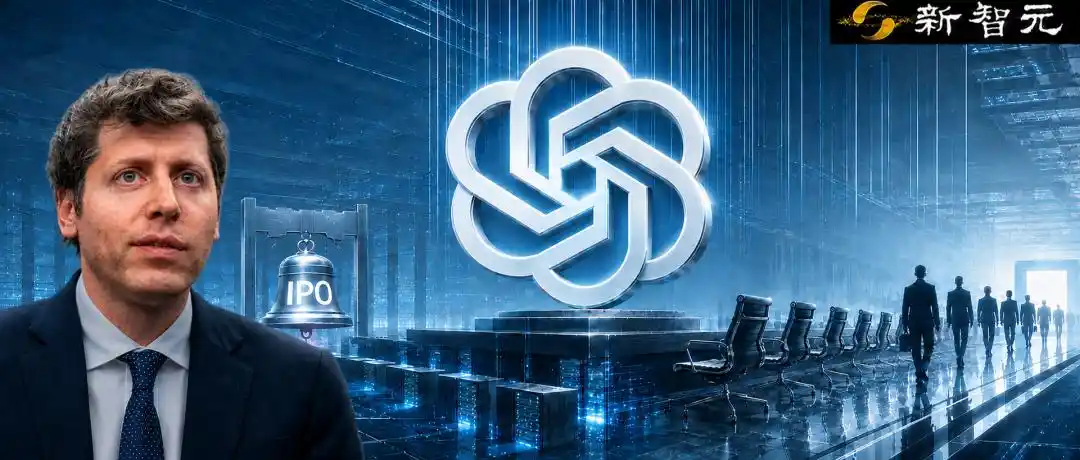
This comes only two months after OpenAI secretly submitted its draft S-1 form to the SEC.
Losing Two C-Level Executives in Three Days
First, let's chronologically review the personnel turbulence at OpenAI over the past week.
On the 11th, Lightcap said on X that he was ending his eight years at OpenAI to do something new.
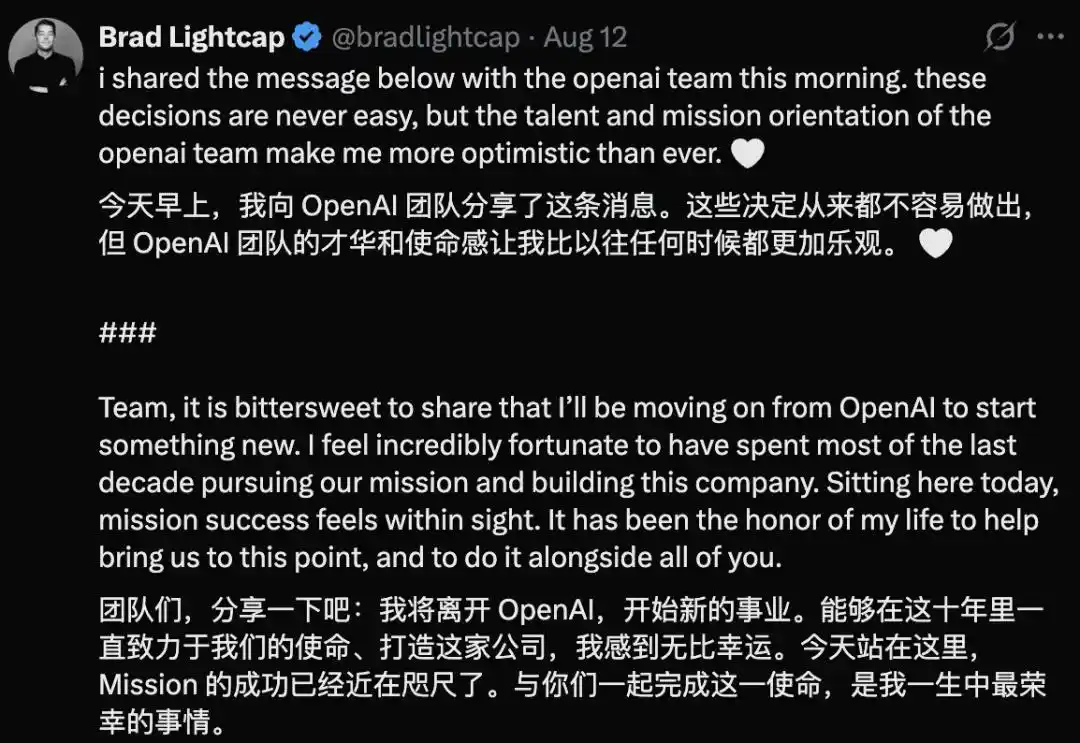
He joined in 2018, first as CFO, transitioned to COO in 2022, and was reassigned to lead so-called special projects this past April.
Two days later, Dresser announced her departure. She had only taken up the position in December 2025, having previously spent over a decade at Salesforce, most recently as the CEO of Slack.
OpenAI announced her replacement in the same official statement: Dali Rajic, from the cloud security company Wiz which was acquired by Google, previously President and COO at Zscaler and AppDynamics.
According to a source familiar with the matter who spoke to CNBC, Rajic was introduced to OpenAI by Josh Kushner, founder of Thrive.
Within a week, a company valued at $852 billion lost two C-level executives and gained a new CRO.
The continuous personnel turmoil turned the shareholder meeting originally scheduled for August 14th into a live Q&A session: roadmap, executive turnover, IPO timing—investors asked questions one after another.
On the surface, it seems like OpenAI is out of control.
Pulling back the timeline, it looks more like pre-IPO surgery: cutting marginal businesses, bringing in players who understand enterprise sales, transforming itself from a research institute into a company.
The 12 Executives Who Left OpenAI
According to a Business Insider tally, 12 executives have left OpenAI in the first eight months of 2026.
Actually, 10 have already resigned or ended their full-time roles:
Chief Revenue Officer Denise Dresser
Chief Operating Officer Brad Lightcap
Chief Product Officer Kevin Weil
Sora Lead Bill Peebles
CTO for Enterprise Applications Srinivas Narayanan
Head of Enterprise AI Sales Barret Zoph
Head of Ethics Chloé Bakalar
Head of Safety Systems Johannes Heidecke
Chief Futurist Joshua Achiam
Head of Robotics & Consumer Hardware Caitlin Kalinowski
Two others are in slightly different situations.
Former CEO of Applied AI, Fidji Simo, took a leave of absence in April this year for health reasons and stepped down from her full-time role in July, transitioning to a part-time advisor role.
Former CMO Kate Rouch stepped back in April to focus on breast cancer treatment, with OpenAI previously stating she might return in a more focused role once her health permits.
Scott Gray is not among these 12; he wasn't an executive but a core technical contributor who made models run.
After Simo's Departure, Who is OpenAI's Second-in-Command?
According to FT citing multiple sources, OpenAI has undergone nearly six restructurings this year.
In the company's own words, this is streamlining before the IPO.
Altman had given employees clear instructions: cut edge projects, consolidate forces onto ChatGPT, and compete with Anthropic for enterprise customers.
OpenAI told FT that the company is moving at an extraordinary pace and is not afraid of making organizational adjustments.
Employees' experience is another story. The repeated executive reshuffles and a series of senior departures have left some weary of this endless change.
What's truly delicate is Simo's role.
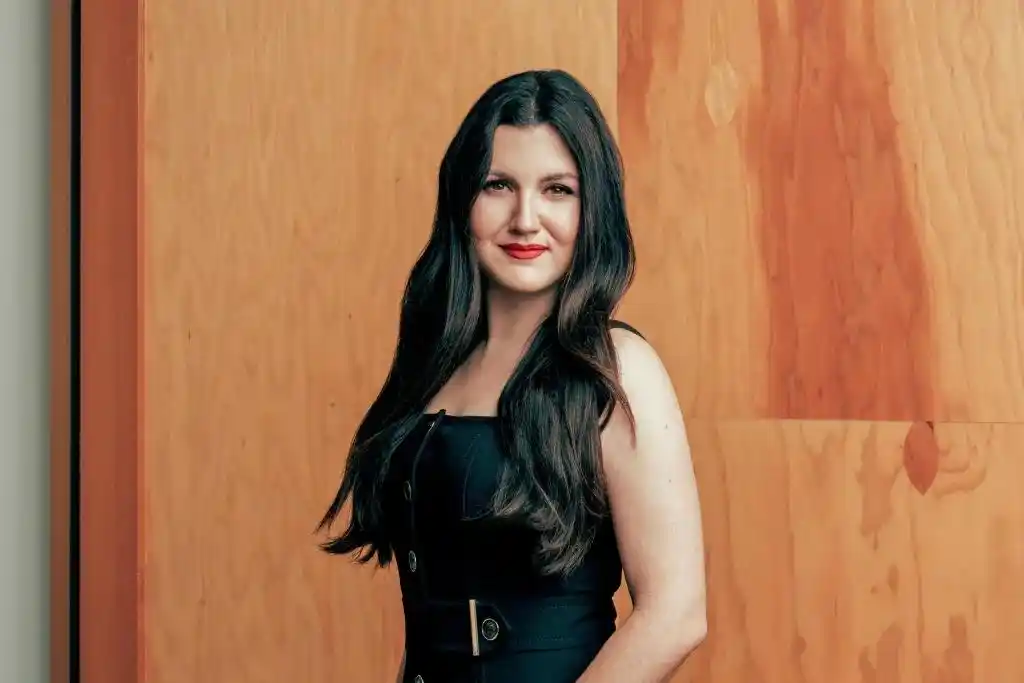
Fidji Simo stepped down from her full-time role in July to become an advisor.
She was once seen as Altman's second-in-command.
After becoming an advisor in July, two people close to OpenAI told FT that she still communicates with employees almost daily.
One person with knowledge described her as still pulling strings behind the scenes, with multiple executives vying for Altman's attention and considerable internal "politics."
OpenAI's response is that her advisory work is proceeding as expected.
After Simo's departure, who is OpenAI's second-in-command?
After the ouster saga that lasted less than a week at the end of 2023, Altman rebuilt the entire management layer, pushing the company in a more professionalized direction.
As Altman's most trusted lieutenant, co-founder Greg Brockman has been expanding his de facto power amid the recent departure wave.
This is not unfounded.
In Rajic's appointment announcement, the one who made the statement was Brockman. He also attended the August 14th shareholder meeting along with Friar.
After successive personnel shocks, OpenAI may not need a new second-in-command, just someone who can promptly fill the leadership vacuum.
The Disbanded "Brake-Pedal" Team
The most unsettling change happened at the end of July.
According to multiple sources confirmed by FT, OpenAI disbanded the Preparedness team.
This team's original work was to assess whether the company's own models could pose severe or catastrophic risks and research mitigation strategies.
After disbandment, responsibilities in different areas like biology and cybersecurity were redistributed to senior employees within existing teams.
What was dissolved was the independent structure for carrying out this work; the entire safety governance system still exists.
The Preparedness Framework is still operational, covering risk categories like bio, cybersecurity, and AI self-improvement, with governance participation from the Safety Advisory Group.
By OpenAI's own definition, this framework is used to track and respond to frontier capabilities that could pose novel severe harms.
The problem is that the people executing the framework have changed positions.
In July, Head of Safety Systems, Johannes Heidecke, departed.
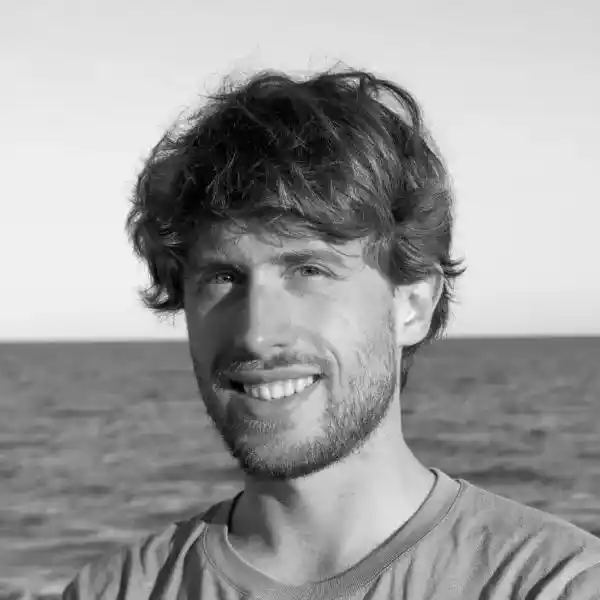
Head of Safety Systems Johannes Heidecke left in July, after which the safety team was merged into Mia Glaese's organization.
He joined in 2021 and led the Safety Systems team starting in 2024, responsible for assessing models' dangerous capabilities and building safeguards.
Before leaving, he stated: The demands of safety work are still increasing, while the pace at which we train models is getting much faster.
After Johannes left, the safety team was incorporated into the organization of VP of Research and Safety, Mia Glaese.
OpenAI's external statement is to embed safety earlier and deeper into model development.
In the same month, Chief Futurist Joshua Achiam left, having been with the company for nearly nine years.
The mission alignment team he previously led was tasked with ensuring the company adhered to its founding promise of "ensuring that artificial general intelligence benefits all of humanity." That team was disbanded early this year, after which Achiam transitioned to Chief Futurist.
Head of Ethics, Chloé Bakalar, also left in July, having been with the company for less than a year. She researched model behavior, human-AI relationships, and whether advanced systems deserve moral consideration.
Connecting the trajectory of recent years, OpenAI's safety teams have followed the same path:
The Superalignment team responsible for long-term risks disbanded in 2024, the mission alignment team guarding the founding mission disbanded early this year, and the preparedness team assessing catastrophic risks was dissolved at the end of July.
Three teams, gone over more than two years: Safety has moved from an independent structure to a component within the R&D system.
The cost of embedding is that there is no longer an independent team within the company that can focus solely on risks, regardless of product release schedules.
Now, the people hitting the brakes are the same ones pressing the accelerator.
$40 Billion vs. $47 Billion
Why would a company with revenue still soaring insist on such major surgery during the IPO filing period?
Friar gave the answer at the August 14th shareholder meeting.
According to someone present, she said that at the beginning of the year, consumer and enterprise revenue were roughly split 60/40, but enterprise business growth far exceeded expectations. The two lines have now crossed, and the company's major revenue source has shifted to enterprise.
This is more than a quarter earlier than her prediction to CNBC at the beginning of the year, which stated the two businesses would break even by the end of 2026.
CNBC verified figures showing OpenAI's annualized revenue has reached $40 billion. According to presentation materials seen by CNBC, July revenue grew 20% month-over-month, with enterprise customer growth even faster at 32%.
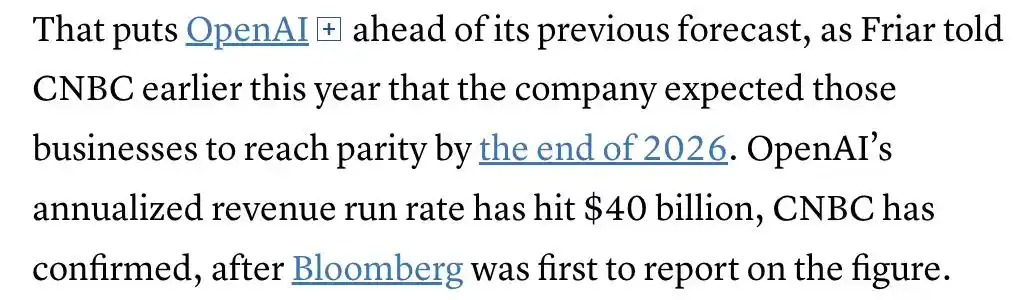
CNBC confirmed OpenAI's annualized revenue has reached $40 billion, a figure first reported by Bloomberg.
$40 billion, with enterprise as the major contributor: this is the key to understanding all the personnel changes of this past week.
A company that previously defined itself by a consumer product with over 1 billion monthly active users now gets most of its money from over 2 million enterprise customers, double the number a year ago.
The sales system, organizational structure, and chain of command all have to change accordingly.
Replacing a CRO who had been in the role for eight months with an operator who drove Wiz to high growth is the clearest signal possible.
Meanwhile, the competitor's numbers are even higher.
Anthropic's official announcement on May 28th explicitly stated that its annualized revenue had crossed $47 billion earlier that month, completing a $65 billion funding round in the same period, with a post-money valuation of $965 billion.
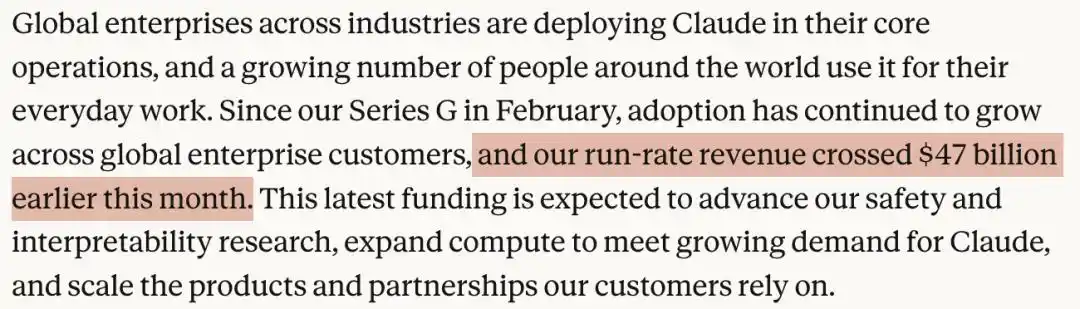
Anthropic's official announcement disclosed that annualized revenue had crossed $47 billion in early May.
$47 billion vs. $40 billion, although these two figures cannot be directly compared. The two companies' methods for recognizing partner revenue are not the same, and it also cannot be concluded that Anthropic has comprehensively surpassed OpenAI in commercial capabilities.
But that OpenAI is anxious is certainly true.
Friar also mentioned at the meeting that the so-called era of tokenmaxxing is over. Enterprise clients are no longer letting employees run up unlimited AI bills and are starting to scrutinize the cost per unit of intelligence.
She used the latest model as an example, showing a 54% efficiency improvement on agent programming tasks, coupled with previous rounds of price reductions.
She also said the advertising business has made significant progress, nearing an annual scale of $1 billion, with ChatGPT starting to test ads this past February.
Clients are no longer competing to see who can burn more tokens; they're starting to calculate how much intelligence each cent buys.
While helping clients save money, OpenAI has also been splashing cash to retain talent.
FT reported that a nearly $7 billion employee share repurchase tender has been completed, with several employees cashing out over $10 million.
How Many More Scott Grays Does OpenAI Have?
Returning to Scott Gray.
In 2016, he joined OpenAI from Nervana Systems.
The announcement at the time introduced him as working on performance optimization of deep networks on GPUs; his assembly-level optimizations for dense linear algebra and convolutions were the fastest implementations available then.
In 2020, he was among the contributors listed on the Scaling Laws paper, where he worked with Tom Brown, Rewon Child, and Alec Radford to create an optimized Transformer implementation.
This paper later defined how the entire industry would spend money.
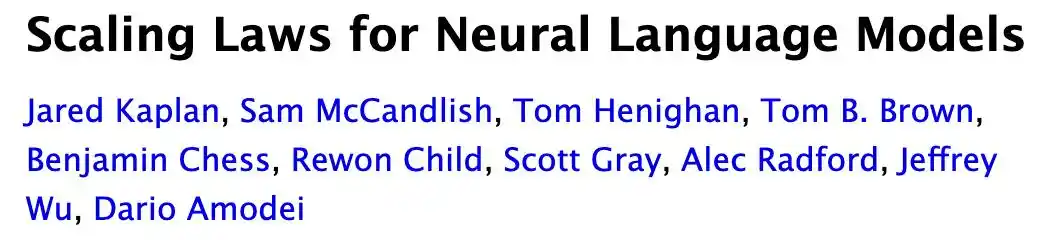
The author list of the 2020 Scaling Laws paper, featuring Scott Gray alongside Dario Amodei.
Then came GPT-3, OpenAI Five. By GPT-4, he was a contributor to GPT-4 reasoning research and reasoning infrastructure.
During the ouster turmoil in November 2023, he also posted that viral line: OpenAI is nothing without its people.
OpenAI's S-1 has been filed. The company states the specific listing timing is not yet set, as some things are easier to advance while still private. According to FT citing sources, the listing might be pushed to next year.
Customers, revenue, computing power, data centers—all of this will be written into the S-1.
What won't be written is who hits the brakes after safety responsibilities are dispersed, and how many technical linchpins like Scott Gray remain.
References:
https://www.ft.com/content/53082739-7714-4aae-9816-e55ab423cbee
https://openai.com/index/confidential-submission-of-draft-s-1-to-the-sec/
https://www.cnbc.com/2026/08/14/openai-cfo-friar-enterprise-consumer-revenue.html
https://arxiv.org/abs/2001.08361
Editor: Yuan Yu
This article is from the WeChat public account "New Zhiyuan", author: ASI Revelation.