Veterans of the 'Little Smart' Era Return, This Time Leading a Robot Company in a Sprint to an IPO

marsbitPublished on 2026-08-27Last updated on 2026-08-27

Abstract

UTStarcom Veteran Returns: Robot Maker Rushes for IPO On August 24, UDI Robot passed the listing hearing for the Hong Kong Stock Exchange main board. Known for its delivery robots in hotels and KTVs, the company was founded in 2013 by Lu Ying, former CEO of the once-dominant "PHS" phone maker UTStarcom, and other ex-colleagues. UDI has five main product series, including indoor delivery, outdoor delivery, and cleaning robots. Significantly, its business model is shifting from hardware sales to recurring service revenue. In 2025, AI vision model solutions contributed 37.5% of its total revenue of ~318 million RMB, while robot product sales accounted for 42.5%. However, its overall business remains unprofitable, with a cumulative net loss of 5.44 billion RMB from 2023 to Q1 2026. A key challenge is low hardware毛利率 (gross margin for robot products was 8.3% in 2025). Despite losses common in the robotics sector, UDI's deficit is narrowing. It has raised ~989 million RMB over 13 pre-IPO rounds from investors including Alibaba (Ele.me, Yunfeng Capital), Legend Capital, SenseTime, and hotel chains like Huazhu. The founding team, largely from UTStarcom, collectively controls 33.40% of the company. UDI ranks as China's third-largest commercial service robotics company with an 8.9% market share in 2025. Its IPO, sought via Hong Kong's special tech chapter 18C, aims to fund R&D, expansion, and working capital, marking a comeback attempt for the "PHS" veterans in a new technological ...

On August 24, UTen Robot passed the listing hearing for the main board of the Hong Kong Stock Exchange, just one step away from going public.

The name "UTen Robot" might not ring a bell for you.

But if you often visit KTVs or hotels, you've likely bumped into it near private room doors or corridor corners—that metal cart carrying trays, waiting for elevators on its own.

The prospectus shows that as of the end of March 2026, the company had cumulatively sold over 114,000 robots. Currently, over 15,000 units are in operation daily, executing more than 360,000 delivery orders.

Still can't place it? That's okay.

Swap the name, and you'll probably recognize it—UTStarcom.

Yes, that telecom company that once swept the nation with the "Little Smart".

Strictly speaking, UTen Robot was not directly renamed from UTStarcom (China).

After the curtain fell on the Little Smart era, in 2013, former UTStarcom CEO Lu Ying led some employees to switch tracks and founded UTen Robot.

Although the founding team brought technical expertise from the telecom industry and shipment figures look decent, the real-world challenges of hard-tech entrepreneurship didn't get any easier.
From 2023 to Q1 2026, UTen Robot accumulated a net loss of 513 million yuan.

It's not unusual for a robot company to incur losses.

But compared to listed peers, UTen Robot's biggest issue is its relatively weak overall product gross margin, with its robot gross margin being only around 8%.

Even so, UTen has secured investments from Alibaba-affiliated entities (Ele.me, Yunfeng Capital), Legend Capital, SenseTime, and Huazhu Group, among other industrial capital. Why?

What does UTen's prospectus say?
Not Just Selling Robots, But Also Selling 'Eyes'

To many, UTen Robot is the "delivery robot" in hotels.

A guest orders a bottle of water or a pack of tissues in their room, the robot takes the elevator upstairs, arrives at the door, and calls to notify the guest for pickup.

But breaking down the prospectus reveals that UTen's business is far more complex than just "selling robots."

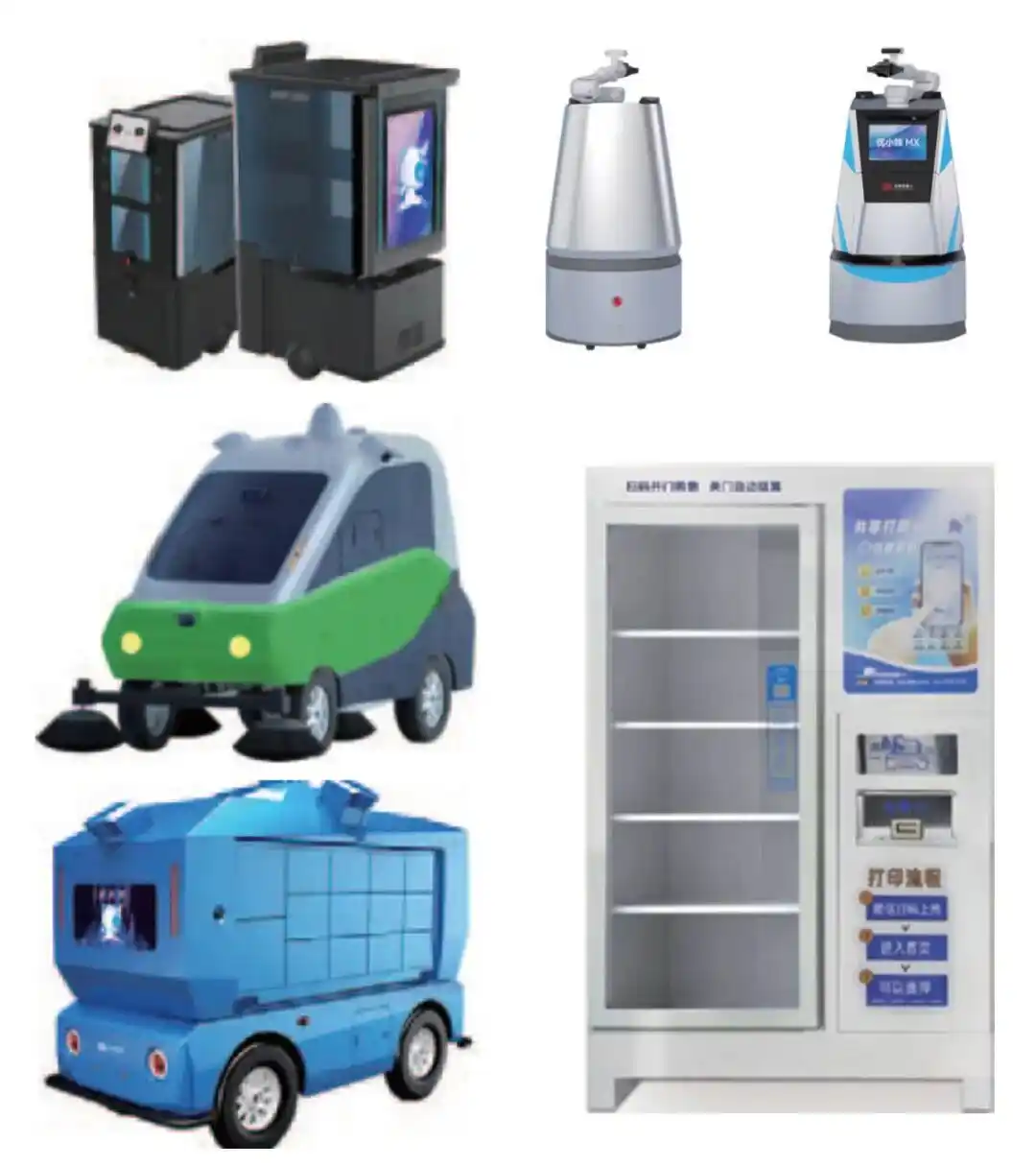
It currently has five main product lines:

  • UT Sister: Smart hotel service robot;
  • UT Brother: Entertainment and catering service robot;
  • UT Guy: Outdoor autonomous delivery vehicle;
  • UT Aunt: Indoor and outdoor cleaning robot;
  • UT Bee: Mobile intelligent vending robot.
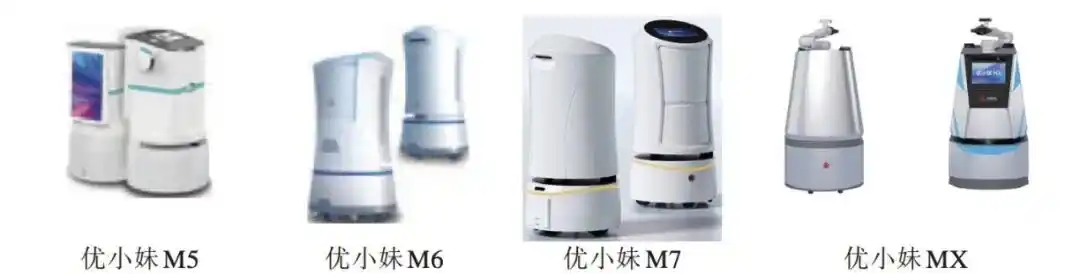
Additionally, the company has an AI visual model platform named "UT Cloud."

In simple terms, an AI visual model is like giving machines a pair of "eyes" that can judge—recognizing what's in the scene, what's happening, and whether there are any anomalies.

Currently, UTen applies this capability to scenarios such as construction, food production, elevator retrofit, sports education, and media content moderation.
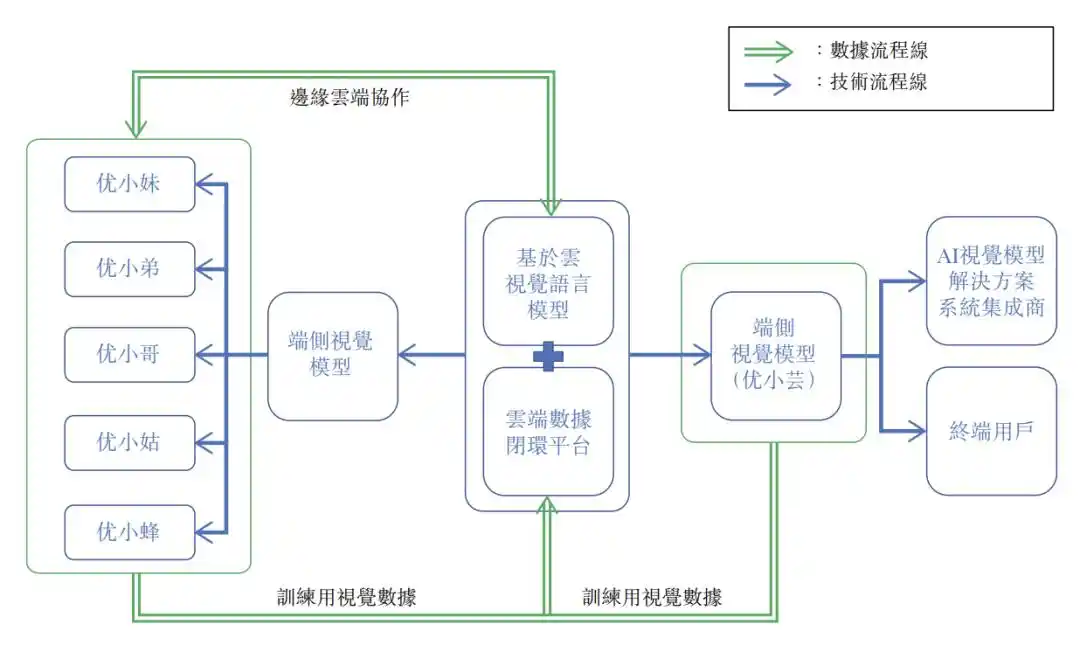
From the revenue composition, this "selling eyes" business is already quite significant.

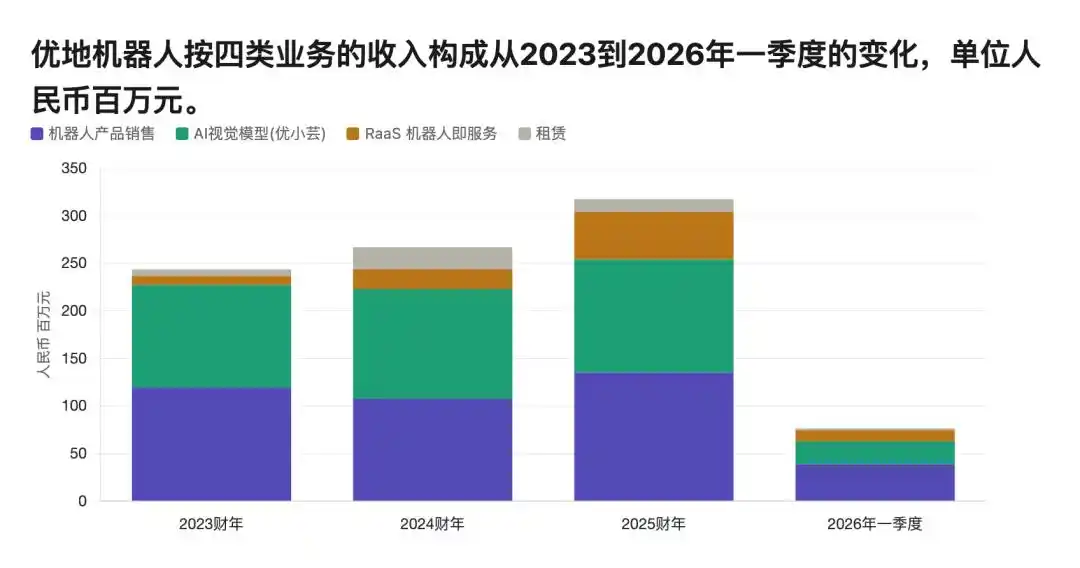
In 2025, UTen achieved revenue of approximately 318 million yuan, of which, AI visual model solutions contributed about 119 million yuan, accounting for 37.5%, second only to robot product sales revenue (about 135 million yuan, 42.5%).
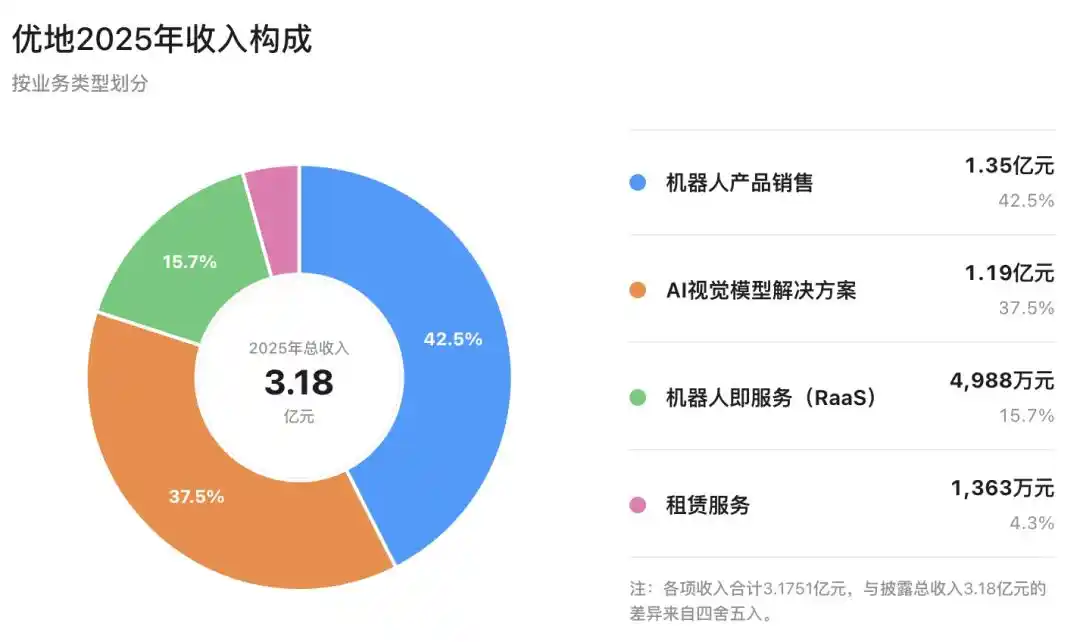
Looking at the four revenue sources combined, in 2025, over half of UTen's revenue no longer came from direct robot sales, but from AI visual projects, robot operations, and equipment leasing.
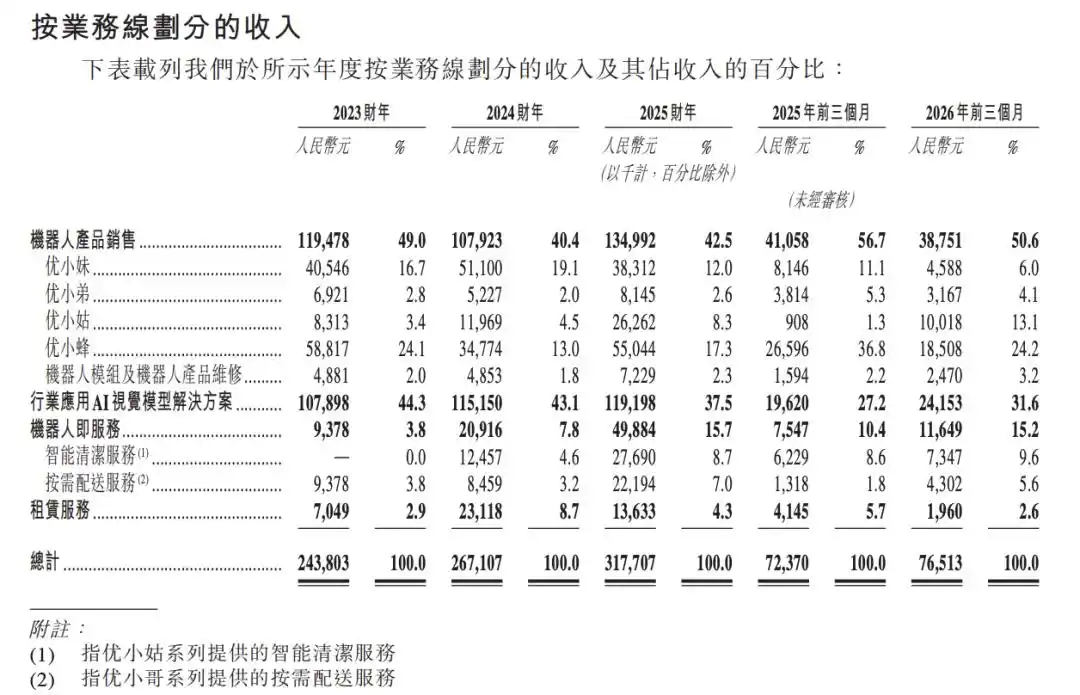
This represents the company's most significant business model adjustment in recent years.

The strategic direction is easy to understand: selling hardware only makes money once, whereas operating robots has the potential to generate recurring revenue.

If each robot executes enough orders daily, fixed costs can be spread thinner, making the business more stable.

But currently, this transformation is still in its early stages.

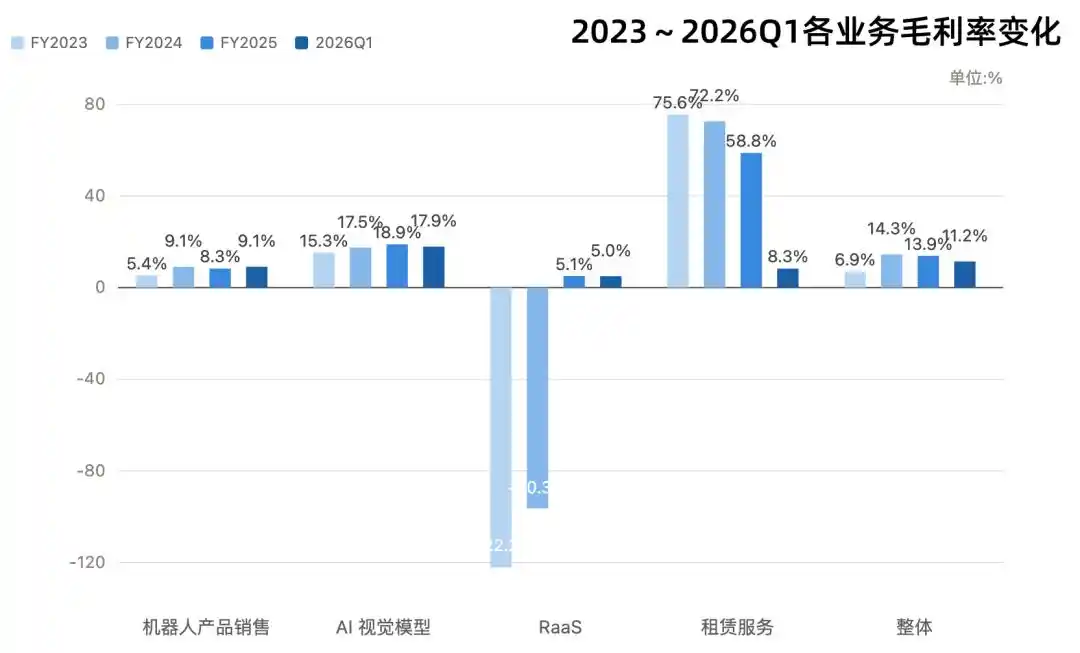
From 2023 to 2025, RaaS revenue grew from 9.38 million yuan to 49.88 million yuan, and its gross margin improved from -122.2%, -40.3% to 5.1%.

Turning positive indicates the model is starting to work.

However, a 5.1% gross margin also shows this business is not yet a mature "cash machine."
As of March 2026, UTen has cumulatively served over 5,100 clients globally and sold over 114,600 robots.

The figure of 114,600 units also needs unpacking.

In 2023, UTen sold 79,140 UT Bee vending robots, of which 79,114 were the low-priced H2 model.

That year, the average selling price of the UT Bee was only 743 yuan, with the H2's lowest price around 500 yuan.

Based on data disclosed in the prospectus, the H2 models sold in 2023 alone accounted for roughly 70% of the company's cumulative robot sales (as of end-March 2026).

These devices clearly do not hold the same commercial value as delivery or cleaning robots priced at tens of thousands of yuan or more.
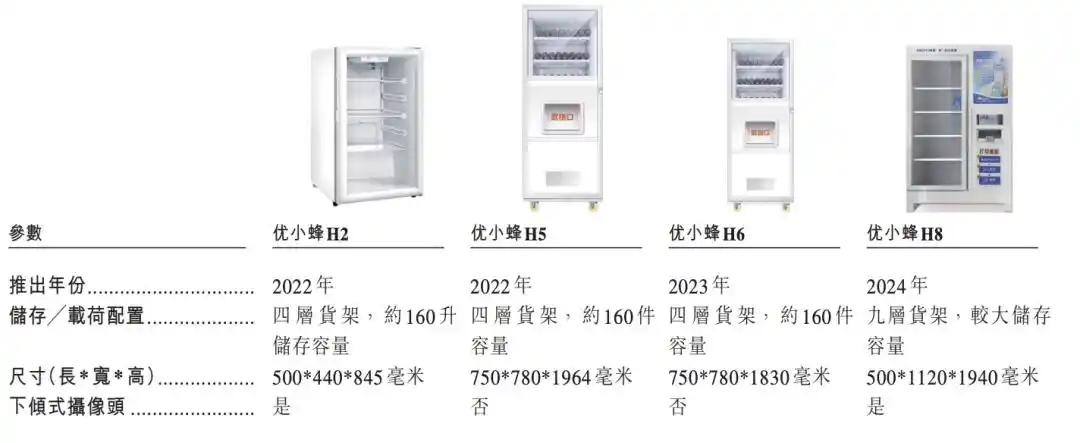
Starting from the second half of 2024, UTen gradually phased out the low-priced H2, shifting to the more functional, higher-priced H8.

In 2025, UT Bee sales dropped to 4,229 units, but the average selling price increased to 13,016 yuan.

This was an active product adjustment to "squeeze out the water."

Abandoning inflated low-price shipment volume in an attempt to gain higher unit prices and better revenue quality. Why did UTen do this?

Hardware Has Thin Profits, But Losses Are Narrowing

The prospectus shows that from 2023 to 2025, UTen's revenue was approximately 244 million yuan, 267 million yuan, and 318 million yuan, respectively, maintaining growth for three consecutive years.

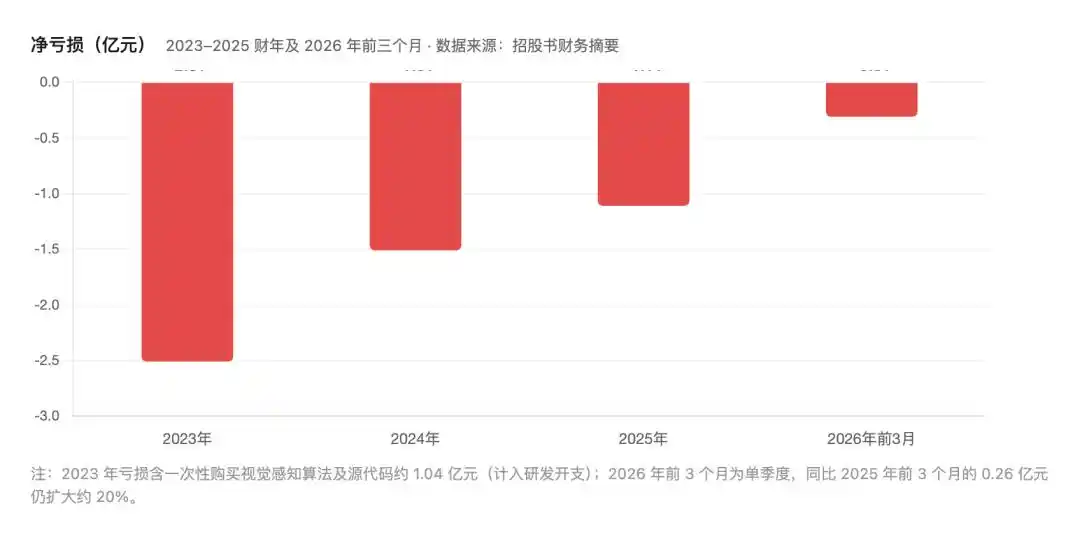
For the same period, losses before tax were approximately 251 million yuan, 151 million yuan, and 111 million yuan, showing a year-on-year narrowing trend.

Adding the 31.23 million yuan loss in the first three months of 2026, the company's cumulative loss totals about 544 million yuan.
A note here: the 2023 loss had special reasons.

That year, UTen spent approximately 104 million yuan to purchase a set of visual perception algorithms and related source code in a one-off transaction, to accelerate the development of outdoor cleaning robots and AI visual models.

This expense was directly recorded as R&D costs, significantly inflating the 2023 loss.

Therefore, the 251 million yuan loss in 2023 cannot simply be interpreted as the normal annual operating loss.

However, even excluding this one-time expense, UTen is still not profitable.

UTen hasn't reached the point of "losing money on every unit sold." Rather, the gross profit it earns is not enough to sustain the company.

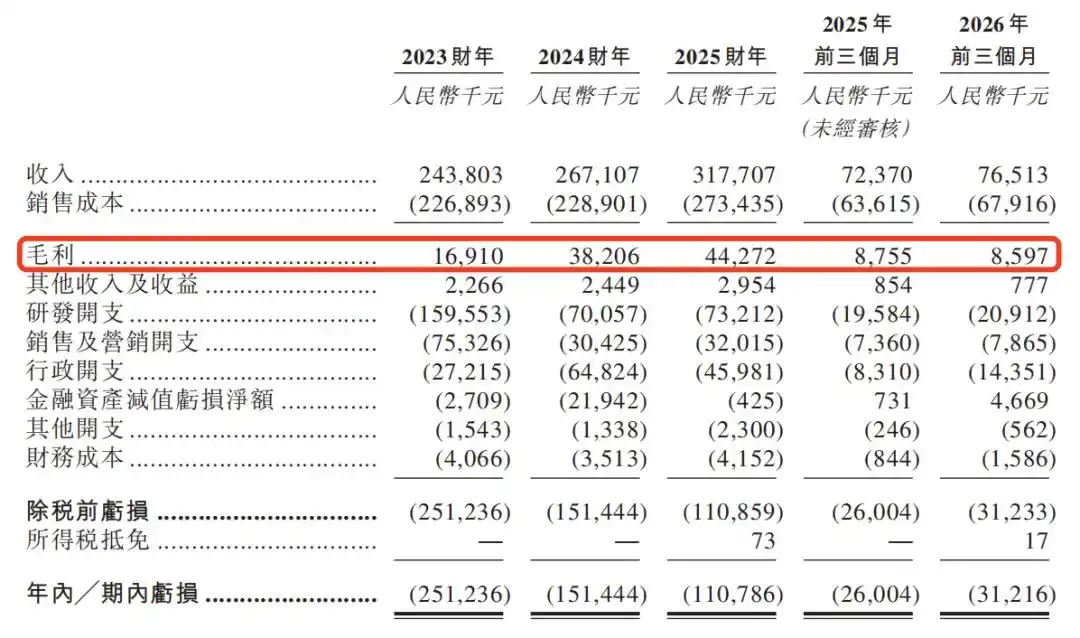
In 2025, UTen's revenue was 318 million yuan, generating a gross profit of about 44.27 million yuan. According to QbitAI's calculations, the company's overall gross margin for that year was approximately 13.9%.
By business segment:

  • Robot product sales gross margin: 8.3%;
  • AI visual model solutions gross margin: 18.9%;
  • RaaS gross margin: 5.1%;
  • Leasing services gross margin: 58.8%.

Leasing appears to be the most profitable, but in 2025, leasing only contributed 13.63 million yuan in revenue, accounting for 4.3% of total revenue—too small a volume to significantly change the overall profitability picture.

Meanwhile, the largest segment, robot product sales, has a gross margin of only 8.3%.

The prospectus provides a general explanation for gross margin fluctuations: changes in product mix, market competition, and economies of scale not yet fully realized.

From 2023 to 2025, UT Sister sales increased from 2,016 units to 2,851 units, but the average selling price dropped from 20,112 yuan to 13,438 yuan, a decrease of about one-third over two years.

In the first three months of 2026, the average price further fell to 11,138 yuan.

Sales are growing, but prices are getting cheaper, indicating that the hotel delivery robot market has entered a phase of more intense homogeneous competition.

Juxtaposed against the annual gross profit (44.27 million yuan) is UTen's R&D expenditure reaching 73.21 million yuan in 2025.

This means that even without considering sales, administrative, and financing costs, the company's entire annual gross profit couldn't even cover its R&D expenses.

Additionally, UTen had about 32.02 million yuan in sales and marketing expenses, 45.98 million yuan in administrative expenses, and 4.15 million yuan in financing costs in 2025.

This is the direct reason for the company's losses:

It's not about having no revenue, nor are products completely without gross profit. Rather, the current revenue scale and gross profit level are still insufficient to support the R&D and organizational costs.

This is a common situation among robot companies.

The good news is, the company's operational efficiency has improved.

From 2024 to 2025, UTen's revenue grew by 18.9%, while total operating expenses decreased from 189 million yuan to 154 million yuan, a drop of 18.4%; the ratio of operating expenses to revenue also fell from 70.6% to 48.5%.

Although in the first three months of 2026, the trend reversed slightly, with operating expenses growing 12.2% year-on-year, faster than revenue growth, the main reasons were related to increased listing expenses and professional service fees.

The financial data above shows that UTen has passed the stage of most severe losses but hasn't yet entered a stable state where revenue grows while losses shrink rapidly in sync.

Beyond paper profits, cash collection is another challenge.

From 2023 to 2025, the company's net cash outflow from operating activities was approximately 197 million yuan, 138 million yuan, and 98.84 million yuan, respectively.

The outflow decreasing year by year is a positive sign.

Meanwhile, UTen's accounts receivable increased from 41.60 million yuan at the end of 2023 to 125 million yuan at the end of 2025.

The accounts receivable turnover days increased from 67 days to 127 days, 165 days, and further reached 181 days in the first three months of 2026.

181 days is roughly half a year.

UTen typically grants customers credit terms of 60 to 90 days, with major customers sometimes receiving up to 120 days.

The actual collection period significantly exceeding contractual credit terms means that after delivering products and services, it's taking longer and longer for the money to return to the company's accounts.

Losses are not uncommon among robot companies filing for listing, so a company's potential cannot be judged solely by net loss.

But compared to similar listed companies, UTen's 13.9% overall gross margin is indeed not high.

Ultimately, it must find ways to increase the gross margin of robot products, expand recurring service revenue, and turn booked revenue into cash faster.

The 'Little Smart' Veterans Set Out Again

This prospectus also details the leadership team of UTen Robot, which is almost the original crew from UTStarcom (China).

Five co-founders: Lu Ying, Gu Zhenjiang, Xia Ge, Luo Pei, Liu Dazhi. The first three are all veterans of UTStarcom.

Lu Ying, 63 years old, Chairman and CEO of UTen Robot, previously served as Chairman and President of UTStarcom.
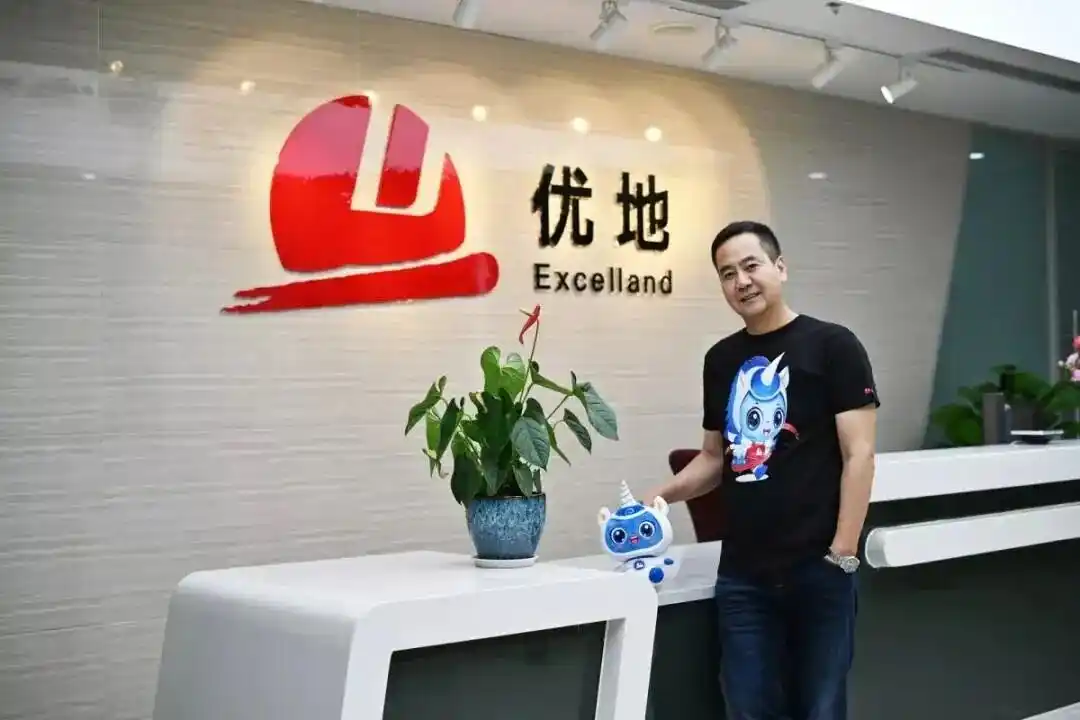
Gu Zhenjiang, 52 years old, President and General Manager of UTen. From 2002 to 2013, he served as Product Director at UTStarcom Communications Co., Ltd.

Xia Ge, R&D Vice President of UTen. According to Qixinbao, he previously worked at UTStarcom, responsible for algorithm and carrier-grade software system architecture development, from the original terminal division technical team.

The other two co-founders, Liu Dazhi (also Vice President) and Luo Pei (also R&D Vice President), are primarily responsible for system piloting and comprehensive testing.

Additionally, Liu Wei, Executive Director, Vice President, and Board Secretary of UTen, also worked at UTStarcom (China) for 9 years.

Clearly, this is a collective transformation of the old UTStarcom team.

Recall those days, riding on the popularity of its flagship product "Little Smart," UTStarcom was once immensely successful, with its market cap even surpassing Cisco's at one point.

However, the march of time is ruthless.

With the issuance of 3G licenses in China in 2009, the Little Smart had to complete frequency clearance and network shutdown, marking the end of its golden era.
During the same period, a group of professionals who emerged from UTStarcom also began seeking new paths.

Transitioning to service robots might seem far from communication equipment, but the underlying commercial capabilities share common ground.

They are not businesses solvable by just an app or an algorithm. Instead, they involve hardware-software integration, requiring component procurement, supply chain management, production quality control, as well as large-scale deployment, system integration, and after-sales maintenance.

Precisely this ability to commercialize complex systems is what the "Little Smart" veterans are most familiar with.

Before the IPO, the five co-founders and related shareholding platforms form the single largest shareholder group, collectively controlling 33.40% of UTen's shares.

Roughly estimating based on the pre-IPO post-money valuation of 3.84 billion yuan, this corresponds to a paper wealth of about 1.28 billion yuan.

The external shareholder list is also notable, essentially linking UTen's main usage scenarios.

As of the filing, Legend Capital-related entities hold 8.02%; Alibaba-affiliated Lazada (holds 7.90%); Hainan Yunfeng (holds 6.40%); SenseTime (holds 5.89%).

Additionally, entities related to Huazhu Group, BTG Hotels, GreenTree Hospitality, and iFlytek also appear on UTen's shareholder list.

This industrial capital ecosystem has two sides.

It can help UTen quickly find clients, scenarios, and partners. But it's worth continuous attention to see how much of the company's orders come from open market competition versus introductions from shareholders and industrial partners.

From September 2016 to July 2025, UTen completed 13 pre-IPO financing rounds, raising approximately 989 million yuan cumulatively.

Notably, UTen is applying through the Hong Kong Stock Exchange's Chapter 18C pathway for Specialist Technology Companies.

This is a listing channel specifically designed for "hard-tech companies that are not profitable in the short term."

However, tolerating losses does not mean this is a shortcut to listing without thresholds.

To list successfully, UTen must still meet a series of requirements including minimum expected market capitalization, revenue thresholds, and R&D investment ratios.

One More Thing

Looking at the extended timeline, UTen has actually progressed quite steadily over the past decade:

2013: Company founded;

2014: Began providing robot central control unit R&D services;

2015: Officially commenced robot product and solution R&D;

2016: First-generation indoor delivery robot "UT Sister" launched;

2018: Outdoor delivery robot "UT Guy" deployed;

2022: Cleaning robot "UT Aunt" launched; company selected as a national-level "Little Giant" specialized and sophisticated enterprise;

2023: AI visual platform "UT Cloud" commercialized, began "selling eyes" externally......

According to data from Frost & Sullivan, by 2025, UTen had become China's third-largest commercial service robot product and solutions company, with a market share of 8.9%; ranking fifth globally with a share of 4.1%.

The top player in the Chinese market held a 12.0% share, the second held 10.3%, and UTen (8.9%) trailed the leaders by only 3.1 percentage points.

This is also the most compelling part of UTen's prospectus.

A company that once earned tens of billions in revenue with the Little Smart didn't rest on its laurels when the old era ended. Its executives started from scratch, spending over a decade to re-enter the global top five in the robotics sector.

The prospectus also outlines five directions for the IPO proceeds: increasing R&D, expansion and acquisitions, sales and marketing, repaying loans, and supplementing working capital.

Half is money for the fight, half is money to survive.

This story of veterans fighting a comeback battle is quite compelling.

This article is from WeChat public account "QbitAI" (ID: QbitAI), author: Tian Yanlin

Trending Cryptos

Related Questions

QWhat is the connection between Udee Robotics and the well-known company UTStarcom mentioned in the article?

AUdee Robotics is not a direct rebranding of UTStarcom (China). After the decline of the 'Little Smart' (小灵通) business, former UTStarcom CEO Lu Ying, along with some employees, switched tracks and founded Udee Robotics in 2013. The core founding team consists largely of veterans from UTStarcom.

QWhat are the five main product series offered by Udee Robotics, according to its prospectus?

AAccording to the article, Udee Robotics has five main product series: Uxiaomei (smart hotel service robot), Uxiaodi (entertainment and catering service robot), Uxiaoge (outdoor autonomous delivery vehicle), Uxiaogu (indoor and outdoor cleaning robot), and Uxiaofeng (mobile intelligent vending robot).

QDespite having a cumulative net loss, why did Udee Robotics still attract investment from prominent investors like the Alibaba ecosystem and Legend Capital?

AThe article suggests investors are likely attracted by Udee's strategic shift towards a more diversified business model. Beyond just selling robots, a significant portion of its revenue now comes from AI visual model solutions and Robot-as-a-Service (RaaS), which offer potential for recurring revenue. Its established market position (ranked third in China) and the experienced 'Little Smart' veteran team also contribute to its appeal.

QWhat is a key financial challenge highlighted for Udee Robotics regarding its robot hardware sales?

AA key financial challenge is the low gross profit margin on its robot product sales. In 2025, the gross margin for robot product sales was only 8.3%. This thin profitability makes it difficult for the company's overall gross profit to cover its substantial research and development, sales, and administrative expenses, contributing to its continued net losses.

QWhich specialized listing channel on the Hong Kong Stock Exchange is Udee Robotics using for its IPO, and what type of companies is it designed for?

AUdee Robotics is applying for its IPO through the Hong Kong Stock Exchange's Chapter 18C route for Specialist Technology Companies. This channel is specifically designed for 'hard tech' companies that may not be profitable in the short term but meet specific requirements regarding expected market valuation, revenue thresholds, and R&D investment proportions.

Related Reads

Yangtze Memory: Is It the Second ChangXin?

The largest IPO in the history of the STAR Market is approaching. Yangtze Memory Technologies (YMTC) has filed for a listing on the Shanghai Stock Exchange's STAR Market, aiming to raise 33 billion yuan. This surpasses the previous record set by competitor ChangXin Memory Technologies (CXMT), which raised 29.5 billion yuan and saw its market capitalization surge on its debut. Despite both being leading Chinese memory chipmakers founded in 2016 and operating under the IDM model, the two companies are fundamentally different. CXMT focuses on DRAM, the memory used for temporary data processing, while YMTC specializes in NAND Flash, used for long-term data storage. Industry reports indicate the global DRAM market is significantly larger and more concentrated among three major players, where CXMT ranks as the fourth-largest supplier. The NAND Flash market is more fragmented, with YMTC ranking third globally by shipment volume in Q2 2026, though fifth by revenue due to a stronger focus on consumer-grade products. Experts are divided on whether YMTC can replicate CXMT's explosive market debut. Some analysts believe it is highly unlikely, citing a cooler market environment and YMTC's perceived lower strategic scarcity within the AI supply chain compared to DRAM/HBM-focused companies. They warn that aggressive IPO pricing could lead to downward pressure post-listing. Industry forecasts suggest the DRAM market may remain tight, while the NAND Flash market could face price corrections due to new capacity and weaker demand. Other experts argue that while short-term market sentiment differs, the long-term investment value of both companies is comparable, hinging on future performance and potential breakthroughs in areas like HBM. They believe YMTC's IPO is unlikely to face significant cooling given still-elevated market interest in the semiconductor sector.

marsbit17m ago

Yangtze Memory: Is It the Second ChangXin?

marsbit17m ago

Tether Completes Full Audit by KPMG U.S., 150 Tons of Gold and 100,000 BTC Reserves Verified

Tether Announces Completion of Full Financial Audit by KPMG US, Confirming Gold and BTC Reserves Tether CEO Paolo Ardoino announced that the company has completed its first-ever full financial audit by the "Big Four" accounting firm KPMG US. The audit covers the financial statements of Tether International, S.A. de C.V. as of December 31, 2025. Ardoino stated that Tether's delay in obtaining a full audit was primarily due to the previous US administration's hostile stance towards the digital asset industry. With a more favorable regulatory environment, the company engaged KPMG US for the rigorous review. Ardoino emphasized the audit confirmed the strength of Tether's reserves, including over $6 billion in excess equity. He also revealed the company holds substantial physical assets: approximately 150 tons of gold and over 100,000 Bitcoin (BTC). The audit process reportedly involved physically verifying each gold bar. Addressing past criticism and ongoing skepticism, Ardoino pointed to Tether's ability to handle large-scale redemptions, citing the processing of around $7 billion within 48 hours during market stress in 2022. He stated the company plans to undergo annual full financial audits alongside its ongoing quarterly attestation reports. Regarding a potential private equity round, Ardoino clarified that Tether, as a highly profitable company, does not require external capital but acknowledges significant market interest in its shares. The company remains private and mission-focused, aiming to serve users outside the traditional financial system. Looking ahead, Ardoino expressed Tether's interest in potentially funding initiatives like the "Bitcoin Red Team," which uses AI to audit Bitcoin's code and wallet security for vulnerabilities.

marsbit36m ago

Tether Completes Full Audit by KPMG U.S., 150 Tons of Gold and 100,000 BTC Reserves Verified

marsbit36m ago

Wall Street's Imagination Can't Keep Up with Nvidia's 'Speed'

NVIDIA once again delivered stellar earnings, with revenue, operating profit, and EPS all hitting record highs for Q2 FY2027 (ended July 26, 2026). Revenue reached $96.221 billion, a 106% YoY increase, while net profit surged 126% to $59.688 billion. The core driver remained the Data Center segment, which grew 117% YoY to $89.023 billion, fueled by ongoing global AI infrastructure investments. The company segmented its Data Center revenue into Hyperscale (large cloud providers) and ACIE (AI cloud, enterprise, industrial, and sovereign AI) categories, with the latter showing faster growth. Notably, shipments of Hopper architecture products to mainland China accounted for less than 1% of Data Center revenue this quarter, and future guidance excludes contributions from China's Data Center compute market. CEO Jensen Huang stated that AI has reached a "tipping point," directly generating productivity and revenue. Financially, NVIDIA maintained robust profitability with a gross margin of 75%. The company also returned approximately $26 billion to shareholders via buybacks and dividends. Looking ahead, product transitions are key. The Blackwell Ultra platform is now in large-scale deployment, while the next-generation Vera Rubin platform, including NVIDIA's first CPU designed for AI agents, has entered full production. The company is also expanding its software ecosystem with tools like the DSX platform for building AI factories. However, NVIDIA's role is evolving beyond chip supplier. It is increasingly involved in financing and facilitating massive AI infrastructure projects, exemplified by its credit support for the SB Energy project in Ohio intended for OpenAI. The company aims to mobilize over $500 billion in third-party capital for such builds, though this raises questions about future capital intensity. For Q3 FY2027, NVIDIA forecasts revenue of approximately $108 billion, signaling continued growth but at a potentially moderated pace. While still dominant, the competitive landscape is intensifying with rivals like AMD and in-house chips from major cloud customers. Key challenges include maintaining growth through the Blackwell-to-Rubin transition, sustaining the pace of AI infrastructure investment, and defending market share as inference workloads grow and competition increases.

marsbit36m ago

Wall Street's Imagination Can't Keep Up with Nvidia's 'Speed'

marsbit36m ago

MiniMax Starts Earning Money by Relying on Others

MiniMax, a Chinese AI company known initially for its consumer-facing products like Conch AI, has undergone a significant business shift according to its first post-IPO semi-annual report. While overall revenue grew to $117 million (surpassing its full-year 2025 projection), the revenue structure flipped dramatically. Revenue from its open platform and enterprise AI services surged 703.1% to $73.93 million, now constituting 63.4% of total income. In contrast, revenue from its own AI-native products, though doubling to $42.64 million, dropped from 69.7% to 36.6% of the total. This indicates MiniMax is transitioning from a product-centric to a platform-centric model, embedding its AI capabilities into other companies' workflows and developer applications rather than solely relying on its own apps. The company is now monetizing its core model technology as a service. However, profitability remains a challenge. Despite revenue growth of 283.1%, R&D expenses were $297 million—2.55 times revenue—leading to an adjusted net loss of $293 million. A positive sign is improving gross margin, which rose from 12.1% to 17.9%, suggesting initial progress toward scaling efficiently. Geographically, MiniMax demonstrates a "developed in China, monetized globally" model, with 60.8% of its revenue coming from outside mainland China. The report highlights that MiniMax has successfully moved past proving demand and model capability. The critical next phase is demonstrating that its growing enterprise and developer customer base can generate sufficient, sustainable profit to offset the high inherent costs of AI model training and inference.

marsbit47m ago

MiniMax Starts Earning Money by Relying on Others

marsbit47m ago

Trading

Spot

Hot Articles

What is LINON

Linde plc Tokenized Stock (Ondo): Revolutionizing Traditional Equity Access Through Blockchain Innovation The emergence of Linde plc Tokenized Stock (Ondo), represented by the ticker $LINON, signifies a monumental shift in the fusion of traditional financial structures and decentralized finance (DeFi). This innovative financial instrument showcases the tremendous potential of blockchain technology to democratize access to traditional equity markets while ensuring the security and regulatory compliance necessary for institutional-grade financial products. Through Ondo Finance's pioneering tokenization platform, $LINON provides a seamless pathway for global investors to engage with one of the world's leading industrial gas companies, Linde plc, creating a blockchain-native representation of the underlying equity. Introduction to Linde plc Tokenized Stock The landscape of financial markets is witnessing a groundbreaking transformation through the tokenization of real-world assets. Linde plc Tokenized Stock (Ondo) epitomizes this revolutionary approach by bridging the gap between conventional stock ownership and blockchain-enabled financial infrastructure. The $LINON token allows investors to gain exposure to one of the prominent industrial companies worldwide through decentralized technology. Operating within Ondo Finance's comprehensive ecosystem, $LINON symbolizes a practical application of tokenization technology that enhances accessibility, efficiency, and global connectivity in traditional financial markets. By leveraging blockchain infrastructure, this tokenized stock enables international investors to participate in U.S. equity markets, overcoming traditional barriers associated with cross-border investing. The significance of $LINON goes beyond technological innovation; it represents a fundamental shift in asset structuring, distribution, and trading in the digital age. This tokenized stock maintains all the economic benefits associated with traditional Linde plc shares while offering improved liquidity, programmable compliance features, and seamless integration with decentralized finance protocols. The development of $LINON indicates a growing acceptance of blockchain technology as a viable means for traditional finance, exemplifying how even well-established assets like Linde plc can integrate into blockchain systems. This approach preserves the core attributes that appeal to investors while introducing advanced capabilities that enhance the overall investment proposition. Project Overview and Objectives Linde plc Tokenized Stock (Ondo) encapsulates a strategic effort to democratize access to traditional equity markets through advanced blockchain technologies. The primary objective of $LINON is to provide approved global investors seamless access to the economic exposure associated with Linde plc shares, furthering an effort to create a more inclusive financial ecosystem. Beyond the digital representation of traditional assets, $LINON endeavors to eliminate barriers of geography and time zones that limit investor participation. Its design ensures that blockchain technology can elevate traditional investment vehicles without undermining the security or compliance requirements expected by investors. Key goals of the project include enhanced liquidity provision, programmable compliance mechanisms, and interoperability with other blockchain networks. Each $LINON token is fortified by actual Linde plc securities housed at U.S.-registered broker-dealers, allowing holders to reap economic advantages akin to traditional stockholders, such as dividend reinvestment. Furthermore, $LINON aims to establish new industry standards for institutional-grade tokenized securities, paving the way for traditional assets to embrace blockchain technology while remaining compliant with regulatory frameworks. By associating itself with a company as reputable as Linde plc, the project opens avenues for exploring tokenized equities catering to both conservative institutional players and daring retail investors. Project Creator and Development Team The vision for Linde plc Tokenized Stock (Ondo) comes from Nathan Allman, founder and CEO of Ondo Finance. His background in traditional finance coupled with expertise in blockchain technology positions him uniquely to navigate the complexities of asset tokenization. Allman's academic journey began at Brown University, focusing on Economics and Biology, equipping him with valuable analytical skills. His time at Goldman Sachs in the Digital Assets division strengthened his understanding of the interplay between financial institutions and emerging technologies, laying the groundwork for his later endeavors in alternative investment strategies. Under Allman's guidance, Ondo Finance has emerged as a leader in asset tokenization, launching $LINON as a flagship example of the company's larger mission towards revolutionizing traditional financial systems using blockchain technology. His commitment to leveraging blockchain for creating institutional-grade financial products has shaped the landscape of real-world asset tokenization. Investment and Funding Structure The growth of Ondo Finance, the platform powering Linde plc Tokenized Stock (Ondo), is bolstered by robust financial backing from prestigious venture capital firms and strategic investors. This strong investment foundation underpins the development of the key infrastructure essential for compliant tokenized securities like $LINON. In August 2021, Ondo Finance secured $4 million in seed funding led by a major venture capital firm, which enabled the company to commence platform development and establish the necessary regulatory processes for tokenizing real-world assets. This early investment cemented Ondo Finance's credibility within the industry. The Series A funding round followed, garnering $20 million with participation from renowned firms committed to transformative technology companies. This backing demonstrated substantial institutional confidence in Ondo Finance's vision, allowing it to hone its approach to asset tokenization through mechanisms that ensure compliance and accessibility. Noteworthy contributors, including institutional investors and experienced partners, have added significant value to Ondo Finance’s development efforts. Their involvement underscores the confidence across sectors in Ondo Finance's approach to bridging traditional finance with blockchain innovations. Technical Infrastructure and Innovation The technical architecture that underpins Linde plc Tokenized Stock (Ondo) represents a sophisticated melding of traditional finance systems and cutting-edge blockchain technology. The architecture's foundation is built on the Ethereum network, renowned for its security and programmability—both critical for intricate financial instruments. The $LINON tokenization process comprises creating a blockchain-native representation of Linde plc shares that preserves economic benefits while augmenting investor capabilities. Each token corresponds to actual shares held at U.S.-registered broker-dealers, creating a compliant custody structure that legitimizes the asset's existence and value. Automated compliance systems are integrated into the tokenization process, managing critical components such as know-your-customer (KYC) verification and anti-money laundering (AML) protocols. This incorporation of programmable compliance empowers $LINON to uphold regulatory standards essential for institutional proliferation. Cross-chain interoperability characterizes the advanced technical features of $LINON. While initially deployed on Ethereum, the framework is designed for expansion to other networks such as Solana and BNB Chain. This adaptability enhances liquidity and accessibility, allowing investors to select their preferred blockchain ecosystems. Historical Timeline and Development Crafting the history of Linde plc Tokenized Stock (Ondo) unfolds in parallel with the evolution of Ondo Finance's tokenization platform. The timeline's inception dates back to March 2021 when Nathan Allman laid the foundations for creating institutional-grade financial products on blockchain infrastructure. The initial funding round in August 2021 provided crucial resources for developing the platform and establishing partnerships necessary for effective tokenization. By January 2023, Ondo Finance launched its tokenized treasury products, establishing mechanisms that would facilitate future tokenized equities such as $LINON. A pivotal milestone arose in February 2025 when Ondo Chain—a Layer 1 blockchain designed specifically for asset tokenization—was introduced. This infrastructure enhances capabilities vital for institutional markets, demonstrating Ondo Finance's long-term commitment to tokenization. Subsequently, the launch of Ondo Global Markets in September 2025 marked the official debut of $LINON. This milestone showcased the successful transition from development to active trading, enabling investors around the world to access American financial markets seamlessly. Ongoing development plans include a targeted expansion of available tokenized assets to over 1,000 by the end of 2025, pointing to a bright future for Ondo Finance's ecosystem and its mission to broaden tokenized equity accessibility. Regulatory Compliance and Legal Framework The legal architecture governing Linde plc Tokenized Stock (Ondo) emphasizes a sophisticated approach to regulatory compliance, allowing tokenized securities to be implemented within a blockchain-based framework. The legal structure governing $LINON spans multiple jurisdictions while maintaining a robust legal footing. Compliance systems ensure that only eligible investors can access the token, enforced through automated verification that aligns with international regulations. This innovative regulatory technology promises real-time enforcement of complex requirements, considerably enhancing efficiency in operating within the regulatory landscape. The custody framework undergirding $LINON ensures that the underlying shares are securely held at U.S.-registered broker-dealers, complying with necessary regulations while delivering blockchain-driven access to investors. The token maintains its economic equivalency and security through this carefully structured custody arrangement. KYC and AML compliance systems are embedded within the smart contract architecture, ensuring integrity and adherence to regulatory practices while fostering transparency for investors. The jurisdictional restrictions mark a commitment to navigating the evolving landscape of international securities laws. Market Impact and Industry Significance The advent of Linde plc Tokenized Stock (Ondo) holds profound implications for the broader financial landscape, symbolizing a clear shift towards blockchain-enabled markets. $LINON serves as a proof-of-concept for integrating traditional companies into blockchain ecosystems, showcasing the potential benefits such as broader accessibility and improved efficiency. The market's response to $LINON indicates a growing acceptance of tokenization among institutional investors, contributing to the emergence of an expanding sector wherein traditional assets can be interconnected with blockchain innovations. The success of $LINON further solidifies market confidence, indicating an overarching shift towards recognizing asset tokenization as a transformative force in finance. Future Development and Expansion Plans The future trajectory for Linde plc Tokenized Stock (Ondo) centers around the expansion of the tokenization ecosystem and enhanced infrastructure supporting blockchain-enabled financial services. Plans for cross-chain integration usher in new opportunities for liquidity and flexibility within the investment framework, with existing capabilities poised for continuous enhancement. With the introduction of Ondo Chain, Ondo Finance aims to transition $LINON to an optimized blockchain environment specifically designed for asset tokenization. This new infrastructure heralds exciting prospects for the development of institutional-grade financial products, ensuring ongoing compatibility with contemporary investment strategies. Further integration with decentralized finance protocols signifies a commitment to empowering $LINON holders through advanced financial strategies. The anticipated expansion of available tokenized assets promises to broaden investor access, enhancing the utility and appeal of the platform. In alignment with ambitions for regulatory expansion, ongoing efforts to secure approvals for new jurisdictions will enhance investor access, further positioning $LINON at the forefront of the burgeoning tokenization market. Conclusion Linde plc Tokenized Stock (Ondo), as represented by the $LINON token, stands at the intersection of traditional finance and blockchain innovation. It embodies a transformative milestone in how financial assets are structured, distributed, and engaged within modern investment ecosystems. The technical sophistication behind $LINON, combined with its regulatory compliance framework, illustrates that asset tokenization can improve financial infrastructure rather than simply digitizing existing products. This pioneering effort not only enhances investor access to U.S. equity markets but also signifies an evolution of how traditional financial services can integrate blockchain technology. As the asset tokenization market grows exponentially, with prospects suggesting significant valuation increases, $LINON paves the way for a future where tokenized securities become standard fixtures in the financial landscape. The trajectory of $LINON will undoubtedly influence how traditional finance adapts to a transformed, blockchain-powered world.

4.8k Total ViewsPublished 2025.12.05Updated 2025.12.05

What is LINON

What is CRMON

Salesforce Tokenized Stock (Ondo): Revolutionising Traditional Equity Access Through Blockchain Innovation The emergence of Salesforce Tokenized Stock (CRMON) marks a pivotal advancement in integrating traditional financial markets with blockchain technology. This innovative approach offers investors unprecedented access to equity exposure through tokenisation. Developed by Ondo Finance, CRMON provides tokenholders with economic exposure equivalent to holding Salesforce stock (CRM) while automatically reinvesting dividends. This effectively bridges the gap between conventional equity markets and decentralised finance (DeFi). Introduction and Comprehensive Overview of Salesforce Tokenized Stock In recent years, the financial landscape has dramatically transformed due to blockchain technology, fundamentally altering how investors access and interact with traditional assets. The development of Salesforce Tokenized Stock (CRMON) is a prime example of this evolution, representing a sophisticated fusion of conventional equity markets with cutting-edge distributed ledger technology. CRMON is a tokenised version of Salesforce stock, emerging from the innovative work of Ondo Finance, a leading platform in the real-world asset tokenisation sector that positions itself as a bridge between traditional finance and decentralised systems. Designed to provide tokenholders with economic exposure that mirrors the performance of the underlying Salesforce stock, CRMON incorporates automatic dividend reinvestment mechanisms. This eliminates many traditional barriers associated with international equity investment, such as complex brokerage relationships, currency conversion challenges, and restricted trading hours. The tokenisation process reimagines stock ownership as a blockchain-native asset while maintaining its economic equivalence with the underlying security, offering enhanced portability and integration capabilities within decentralised finance ecosystems. CRMON transcends its individual utility as an investment instrument to represent a fundamental shift in how financial markets can operate in an increasingly digital world. By maintaining full backing through U.S.-registered broker-dealers and implementing robust compliance frameworks, CRMON demonstrates that tokenised securities can achieve the regulatory standards necessary for institutional adoption while delivering the technological advantages of blockchain infrastructure. Understanding Tokenized Real-World Assets and CRMON's Strategic Position Tokenised real-world assets signify one of the most significant innovations in modern finance, fundamentally reimagining how traditional securities are represented, traded, and utilised within digital ecosystems. CRMON operates as a tokenised equity instrument correlating directly with Salesforce stock while optimising accessibility and efficiency. This aligns with Ondo Finance's broader mission to democratise access to institutional-grade financial products through innovative tokenisation strategies. The tokenisation process guarantees complete economic equivalence with the underlying Salesforce equity. Each CRMON token represents a proportional claim on Salesforce stock held by qualified custodians, with dividend payments automatically reinvested to maintain continuous exposure to total return performance. This structure simplifies dividend management and ensures that tokenholders receive the full economic benefit of their equity exposure, encompassing both capital appreciation and income generation. Ondo Finance's strategy in tokenising Salesforce stock demonstrates its expertise in creating compliant, institutional-grade products that meet traditional financial markets' stringent requirements. The platform’s focus on merging regulatory compliance with blockchain benefits positions it at the forefront of decentralised finance, captivating both institutional and retail investors seeking blockchain-native solutions. The Technology and Innovation Framework Behind CRMON The technological infrastructure supporting CRMON integrates blockchain technology with traditional financial mechanisms, delivering institutional-grade security and compliance while maintaining the operational advantages of decentralised systems. Built on the Ethereum blockchain, CRMON utilises robust smart contract capabilities to ensure transparent, secure operations. The smart contract architecture incorporates layered security and compliance mechanisms, enabling automated compliance checks and real-time asset backing verification. Integration with oracle services maintains accurate pricing and dividend information, ensuring CRMON reflects the underlying Salesforce stock's accurate performance. This architecture delivers automated dividend reinvestments and other corporate actions, eliminating manual processing requirements and directly enhancing tokenholder benefits. Ondo Finance ensures CRMON's security structure includes daily third-party verification of holdings, independent collateral agents, and a multiple-layer custody system through partnerships with established financial institutions. This framework safeguards tokenholder interests against operational risks while providing robust asset backing. The user interface enhances integration capabilities, allowing seamless interaction between CRMON and various decentralised finance protocols, as well as cryptocurrency exchanges. This interoperability enables users to leverage their tokenised equity across multiple platforms, creating sophisticated investment strategies that marry traditional equity characteristics with blockchain-native innovation. Leadership and Corporate Structure of Ondo Finance The leadership team behind CRMON and Ondo Finance blends expertise from traditional finance and blockchain technology, presenting a robust combination of skills essential for successfully bridging conventional markets with decentralised finance. Nathan Allman, the founder and CEO, emerged from a distinguished financial background before establishing Ondo Finance in 2021. Allman's experience includes notable roles at major financial institutions, including significant contributions to developing cryptocurrency market services. His insights into regulatory compliance were paramount in developing products like CRMON that successfully unify traditional securities with blockchain technology. With a team of professionals boasting substantial experience in both conventional finance and blockchain sectors, Ondo Finance's leadership comprises diverse expertise that covers every aspect of tokenised asset development. Justin Schmidt serves as President and COO, contributing unique operational expertise, while Chris Tyrell brings essential compliance knowledge. Investment Landscape and Funding History The investment landscape surrounding Ondo Finance reflects significant institutional confidence in its mission to tokenise real-world assets. The company has raised substantial funds through various investment rounds, attracting leading venture capital firms and strategic investors that recognise the transformative potential of tokenised securities like CRMON. Notably, Ondo Finance completed a successful Series A funding round in 2022, led by well-known venture capital firms. This funding success validates Ondo Finance's innovative approach to creating compliant, institutional-grade tokenised products. In total, Ondo Finance has successfully secured substantial funding, raising significant capital for product development and market expansion, including a noteworthy token sale that reinforced its governance structure through the establishment of the ONDO token. The diverse composition of investors reflects broad market confidence in Ondo Finance's business model, demonstrating support from both traditional and blockchain-native organisations. Operational Mechanics and Technical Implementation The operational framework supporting CRMON exemplifies sophisticated integration of traditional financial mechanisms with blockchain technology. The technical implementation introduces multiple layers of security, compliance, and operational efficiency to meet institutional standards while enhancing accessibility. The tokenisation process begins by acquiring actual Salesforce stock through U.S.-registered broker-dealers, ensuring each CRMON token maintains direct correlation with the underlying equity performance. Smart contracts automate operational processes, including dividend reinvestment and corporate action processing, facilitating a streamlined user experience. The Minting and redemption processes allow authorised participants to manage CRMON tokens effectively. During U.S. trading hours, institutions can mint new tokens by depositing stablecoins that are used to purchase corresponding Salesforce equity. This structure maintains a tight correlation with underlying assets, enhancing liquidity and price discovery. Additionally, the infrastructure supports twenty-four-hour token transfer capabilities, providing CRMON holders with operations outside traditional market hours. This represents a significant advantage over conventional securities ownership, thus promoting integration with decentralised finance applications. Plans for cross-chain compatibility through partnerships signal further ambitions for CRMON's market reach. By expanding to other blockchain networks, Ondo Finance aims to enhance accessibility and user engagement with tokenised equity products. Timeline and Historical Development of Tokenized Equity Innovation The timeline of CRMON's development and Ondo Finance's broader tokenised capabilities demonstrates a systematic innovation process beginning with the company's founding in 2021. 2021: Ondo Finance is founded by Nathan Allman and co-founders, launching initial products focused on structured vault offerings on the Ethereum blockchain. 2022: The company completes substantial funding rounds—both equity and token sales—totaling significant capital and launching initial tokenised U.S. Treasury products. 2023-2024: Ondo Finance experiences substantial growth, establishing partnerships with major financial institutions while expanding its product offerings beyond fixed-income securities. February 2025: Ondo Global Markets is announced, marking the transition into equity tokenisation with plans for accessing over one hundred U.S. stocks and ETFs. September 2025: The official launch of Ondo Global Markets includes CRMON alongside other tokenised equity offerings, marking a significant evolution in Ondo Finance's product ecosystem. This timeline highlights the organisation's rapid growth and its capability to adapt its technological and compliance frameworks to accommodate different asset classes effectively while maintaining security and regulatory integrity. Regulatory Framework and Compliance Approach Ondo Finance's regulatory framework showcases a sophisticated compliance strategy, essential for achieving institutional adoption in the tokenised securities market. The company's strong partnerships with U.S.-registered broker-dealers promote adherence to Securities and Exchange Commission regulations and apply robust investor protections. Acquisitions, such as Oasis Pro—a registered broker-dealer—significantly enhance Ondo Finance's compliance capabilities, ensuring thorough alignment with existing regulatory structures. The company employs independent verification procedures that foster transparency, aiming for a solid performance standards reputation. Furthermore, Ondo Finance's commitment extends to international regulatory compliance, ensuring token access remains restricted to eligible investors while adhering to pertinent cross-border securities regulations. Comprehensive attention to tax implications and reporting requirements fortifies the security and compliance landscape of CRMON, ensuring that investor obligations remain manageable. Future Prospects and Market Positioning The forward-looking landscape for CRMON and Ondo Finance illustrates substantial growth opportunities driven by institutional adoption of blockchain technology and escalating demand for efficient alternatives to conventional securities ownership. Market projections indicate the tokenised asset sector could value multiple trillion dollars by 2030. With plans to scale CRMON offerings significantly and integrate it with a dedicated blockchain infrastructure—Ondo Chain—Ondo Finance aims to elevate its institutional-grade tokenised asset operations. Additionally, the development of strategic partnerships enhances distribution capabilities while establishing the company's credibility in the financial market. Furthermore, the integration of tokenised equity with decentralised finance protocols offers new potential for innovative financial products and strategies previously impossible with traditional securities. These factors underscore CRMON's positioning to effectively capture increased market share and deliver innovative solutions for international investment exposure. Conclusion Salesforce Tokenized Stock (CRMON) symbolises a transformative development within financial markets, successfully bridging traditional equity ownership with blockchain technology to create unprecedented accessibility for global investors. Through Ondo Finance's sophisticated tokenisation framework, CRMON provides complete economic exposure to Salesforce equity performance while enhancing operational advantages that exceed traditional ownership. The launch of CRMON reflects the broader evolution of financial markets towards blockchain infrastructures that maintain regulatory compliance while delivering increased efficiency. Ondo Finance's extensive approach to regulatory adherence, institutional-grade security, and technological innovation solidifies CRMON as a model for future tokenised securities, delivering access previously unattainable in conventional brokerage structures. As the tokenised asset sector continues to develop, CRMON is well-positioned to address historical inefficiencies in capital markets while providing investors with innovative solutions for accessing traditional securities. The outlook for CRMON looks exceptionally promising, supported by ambitious expansion plans, technological innovations, and strategic partnerships, thereby representing a pioneering model of modern financial infrastructure evolving through blockchain integration.

4.9k Total ViewsPublished 2025.12.05Updated 2025.12.05

What is CRMON

What is SHOPON

Shopify Tokenized Stock (Ondo): A Comprehensive Analysis of Real-World Asset Tokenization in Web3 This article delves into the Shopify Tokenized Stock (Ondo), recognised by its ticker symbol $SHOPON, exploring its implications at the intersection of traditional finance and blockchain technology. As a part of Ondo Finance's tokenized securities platform, Shopify’s tokenized stock exemplifies advancements in democratizing access to global capital markets through innovative digital assets. Introduction and Overview of Shopify Tokenized Stock (Ondo) Shopify Tokenized Stock (Ondo), or $SHOPON, portrays a pivotal innovation in the realm of tokenized securities, allowing investors to gain economic exposure akin to directly owning shares of Shopify Inc. This token, developed under the umbrella of Ondo Finance, not only provides investors with the ability to hold digital representations of the company’s stock but also integrates features such as automatic reinvestment of dividends. This advancement represents a substantial shift in the landscape of decentralized finance (DeFi), linking conventional equity markets with blockchain solutions designed to enhance accessibility, transparency, and liquidity. By eliminating geographical barriers and enabling 24/7 trading capabilities, $SHOPON is positioned as a bridge connecting traditional financial instruments and the emerging Web3 ecosystem. What is Shopify Tokenized Stock (Ondo), $SHOPON? The $SHOPON token serves as a digital manifestation of Shopify Inc.'s shares, engineered to provide a direct correlation to the underlying asset's performance. Through the utilization of blockchain technology, the token gives holders a mechanism to participate in the economic benefits associated with equity ownership, including capital appreciation and dividend distribution. The unique aspect of $SHOPON lies in its automatic dividend reinvestment mechanism, which allows returns to compound without necessitating active management by the investor. This feature inherently enhances its attractiveness as an investment vehicle, particularly for individuals seeking passive income growth alongside exposure to high-performing equities. The tokenization process is facilitated by the custody of actual Shopify shares through regulated intermediaries, ensuring that every $SHOPON token is verifiably backed by real equity. This structure empowers investors with the dual advantages of both traditional financial characteristics and the innovative benefits tied to blockchain technology. Who is the Creator of Shopify Tokenized Stock (Ondo)? The creator of Shopify Tokenized Stock (Ondo), Nathan Allman, is an experienced figure in the finance sector, formerly associated with Goldman Sachs. His rich background includes significant expertise in digital asset development, bridging the gap between traditional finance and cryptocurrencies. Allman’s educational journey, marked by studies at Brown University, provided him with a deep understanding of economics and biology, equipping him with analytical skills that inform his strategic vision. In 2021, he founded Ondo Finance, committing to developing tokenized securities that meet institutional-grade standards while leveraging blockchain's transformative capabilities. Under Allman's leadership, Ondo Finance has focused on creating compliant and innovative financial products that empower a diverse investor base. Who are the Investors of Shopify Tokenized Stock (Ondo)? The investment landscape surrounding Shopify Tokenized Stock (Ondo) is notably robust, underpinned by significant institutional support. Primarily, Pantera Capital stands out as a strategic partner through the Ondo Catalyst initiative, a $250 million commitment aimed at accelerating the development of on-chain capital markets. This partnership not only signifies institutional confidence in the potential of tokenized assets but also reinforces Ondo Finance's operational capabilities and market positioning. The funding pathways have included earlier rounds that amassed millions in seed funding and further structural investments, solidifying relationships with both venture capital firms and private investors. Moreover, the financial framework is complemented by strategic partnerships with established financial institutions and technology companies, enhancing Ondo’s infrastructure and operational expertise. How Does Shopify Tokenized Stock (Ondo), $SHOPON Work? At the core of $SHOPON's operational framework is a sophisticated system integrating traditional finance mechanisms with blockchain technology. The custody of actual Shopify shares ensures that token holders retain authentic economic exposure, safeguarding their investments in line with recognized legal structures. The smart contracts employed in managing $SHOPON handle various functions, including automatic dividend reinvestment and ownership transfer, offering instant settlement and increased liquidity, marking a significant departure from conventional trading systems plagued by multi-day settlement delays. By providing interoperability with other decentralized finance applications, $SHOPON empowers holders with potentially lucrative opportunities for advanced investment strategies, including lending and automated market making. This complex integration presents a unique value proposition, catering to both traditional and crypto-native investors. The innovative structure of $SHOPON also allows for real-time settlements and transactions documented on the blockchain, delivering unparalleled transparency and security—a major advancement over standard equity trading practices. Timeline of Shopify Tokenized Stock (Ondo) March 2021: Nathan Allman establishes Ondo Finance, initially focusing on decentralized finance yield optimization. August 2021: Completion of a $4 million seed funding round led by Pantera Capital. January 2023: Launch of initial tokenized treasury security products, laying the groundwork for future equity tokenization. July 2025: Announcement of the Ondo Catalyst initiative, a strategic investment program valued at $250 million, aimed at propelling the development of tokenization in capital markets. September 3, 2025: Launch of Ondo Global Markets featuring over 100 tokenized U.S. stocks and ETFs, including $SHOPON. Technical Implementation and Blockchain Infrastructure Shopify Tokenized Stock (Ondo) operates on a technical architectural framework that marries blockchain protocols with traditional financial custody arrangements. The ecosystem leverages Ethereum's smart contract capabilities, providing seamless transaction management while ensuring compliance with regulatory standards through established financial custodians. Central to this architecture are security measures and transparent transaction records that affirm the legitimacy of each tokenholder's economic stake. With automated features managed by intricate smart contracts, $SHOPON not only streamlines ownership transfers but also allows for the tactical reinvestment of dividends—a hallmark of modern investment strategies. Moreover, the incorporation of LayerZero technology facilitates cross-chain interoperability, making $SHOPON accessible across multiple blockchain environments while preserving its functional robustness. This forward-thinking technical design positions $SHOPON as an adaptable asset within the larger DeFi milieu. Regulatory Framework and Compliance Architecture $SHOPON's regulatory framework is built upon the meticulous navigation of existing financial regulations that govern securities. The custody arrangements for the underlying Shopify shares are managed by U.S.-regulated broker-dealers, ensuring compliance and protection for investors. By maintaining a separation between the blockchain tokenization process and traditional custody, $SHOPON adheres to legal requirements while offering innovative functionalities that challenge conventional constraints. This dual-layered compliance approach enhances investor confidence and underscores Ondo Finance's commitment to regulatory integrity. Notably, the availability of $SHOPON is tailored to international investors from regions such as Asia-Pacific, Europe, and Africa, as regulatory parameters in the U.S. and U.K. present challenges in accessing tokenized securities. Market Access and Global Distribution Strategy The distribution strategy of $SHOPON is keenly designed to optimize global access while conforming to regulatory standards. The platform aims to establish comprehensive coverage for eligible investors across multiple regions, effectively dismantling traditional barriers through the implementation of blockchain technology. Integration with various cryptocurrency wallets and exchanges also promotes user-friendliness and accessibility, establishing a streamlined experience for investors to manage their holdings. Moreover, the 24/7 trading capabilities afforded by the tokenized model allow participants to react promptly to market shifts, fundamentally transforming how global equities are accessed and traded. Technology Integration and Cross-Chain Functionality The remarkable technological underpinnings of $SHOPON propagate its multi-chain functionality, set to expand its reach beyond Ethereum to networks such as Solana and BNB Chain. Such cross-chain capabilities allow users flexibility when navigating between blockchains, concurrently leveraging distinct network attributes to optimize their trading experience. LayerZero serves as the backbone for ensuring decentralized transfers between networks while providing the requisite security and speed, quintessential for maintaining investor trust. This comprehensive interoperability illustrates $SHOPON's commitment to being a versatile, user-centric asset in the evolving investment landscape. Ecosystem Integration and DeFi Compatibility Incorporating $SHOPON into broader DeFi protocols signifies its potential beyond traditional stock ownership. Token holders can leverage their holdings for various sophisticated strategies and applications, enhancing investment returns and liquidity management. By establishing a presence in lending protocols and automated trading systems, $SHOPON effectively democratizes access to advanced financial strategies previously limited to institutional investors. Such integration contributes to a more competitive and dynamic financial landscape, where individual investors can capitalize on tools typically reserved for larger entities. Risk Management and Security Framework Security remains paramount in the operational infrastructure of $SHOPON. The tokenization framework employs multiple layers of protection—beginning with regulated custody of the underlying Shopify shares. The operational protocols establish rigorous auditing, key management, and transaction monitoring standards, thus safeguarding against potential vulnerabilities. Moreover, meticulous adherence to evolving regulatory requirements provides an extra layer of security, fortifying investor protections and institutional compliance. Market Impact and Industry Implications The introduction of Shopify Tokenized Stock (Ondo) heralds a transformative shift in how financial markets operate, emphasizing the potential of tokenized securities to reshape traditional investment paradigms. The successful integration of $SHOPON encapsulates the efficiencies inherent in blockchain technology and opens avenues for new user demographics previously barred from extensive market participation. The impact extends beyond the immediate benefits to token holders, indicating broader trends that may challenge the status quo of investment services, particularly in addressing geographic restrictions and operational costs typically associated with traditional brokerage platforms. Undeniably, $SHOPON encapsulates the potential for traditional institutions to innovate further, leveraging the increasing demand for seamless blockchain access to complement existing financial infrastructure. Future Development Roadmap and Strategic Vision As Ondo Finance looks forward, the trajectory of $SHOPON rests on ambitious goals aimed at broadening the spectrum of available tokenized assets significantly. Over the next few years, plans are in place to expand to more than 1,000 tokenized securities, further enhancing market participation and investment options for individuals worldwide. Continued integration with traditional financial actors, development of specialized institutional products, and enhancements in automated trading capabilities will ensure that $SHOPON maintains its position at the forefront of financial innovation. Regulatory collaboration will also remain a focal point, establishing a framework that not only supports the compliance requirements but also promotes a healthy environment for tokenized asset proliferation. Conclusion and Market Significance In summary, Shopify Tokenized Stock (Ondo), represented by the ticker $SHOPON, is more than merely a tokenized equity offering; it embodies the innovation possible when traditional finance collides with modern blockchain applications. With a robust technical architecture, a commitment to compliance, and a clear strategic vision, $SHOPON exemplifies the potential for tokenized assets to enhance liquidity, accessibility, and functionality in capital markets. As the global investment landscape evolves, the transformative implications of $SHOPON extend beyond individual investors to revolutionize how financial instruments are perceived, traded, and utilized within both traditional and decentralized frameworks.

4.9k Total ViewsPublished 2025.12.05Updated 2025.12.05

What is SHOPON

Discussions

Welcome to the HTX Community. Here, you can stay informed about the latest platform developments and gain access to professional market insights. Users' opinions on the price of ERA (ERA) are presented below.

活动图片