The True Replay of the Internet Bubble Is Web3, Not AI

marsbitPublished on 2026-03-13Last updated on 2026-03-13

Abstract

Author TVBee argues that Web3, not AI, is the true reenactment of the 2000 dot-com bubble. The article compares the three sectors: the historical internet bubble, the current AI boom, and Web3. During the 2000 bubble, capital was focused on the supply side with many unprofitable companies, while demand-side applications were scarce due to limited internet access and primitive technology. In contrast, the current AI boom is primarily driven by infrastructure leaders like NVIDIA and AMD, which have substantial profits. Demand-side applications, such as various AI models and tools, are growing and integrating into more use cases, though the ecosystem is still developing. Web3, however, is criticized for its significant supply-side speculation with high valuations based on minimal revenue (e.g., ZKsync's $1.76B市值 vs. $458 daily income). Demand-side applications are limited mostly to DeFi, memecoins, and prediction markets, with much activity driven by airdrop farming rather than genuine utility. The author concludes that Web3, with its hype-driven capital and lack of practical products, mirrors the 2000 bubble most closely. Predictions include a likely U.S. stock market correction (but not a crash), a moderate impact on Bitcoin, and a prolonged, painful consolidation for altcoins to separate valuable projects from speculative ones. The author warns that the altcoin market decline since late 2024 is not yet over.

Author: TVBee

Both stock market and crypto players are worried that AI might repeat the 2000 internet bubble, but in reality, Web3 is the true replay of the internet bubble.

Bubble: Supply-Side Self-Indulgence, Lackluster Demand

During the 2000 internet bubble phase, capital was self-indulgent on the supply side. Many internet-listed companies had no profits or cash flow, yet their stock prices soared wildly.

On the other end, internet applications on the demand side were pitifully few... Before 2000, there was no Douyin or Kuaishou, no Alibaba or JD.com, no WeChat.

The mainstream internet applications at the time were only the雏形 of QQ like OICQ, MSN and other chat software, download tools like FlashGet and NetAnts, information platforms like Yahoo,网易, and搜狐, basic applications like Google Search and email, and the early stages of e-commerce like Amazon and eBay, which had very few users.

At that time, there was no mobile internet. Personal computers were considered luxury items, and most households in China did not have one. Monitors were those big, bulky CRT monitors. Laptops were as thick as bricks, and internet access relied on dial-up connections through telephone lines. Even older were the storage media; the primary storage was floppy disks—yes, the A drive. Their capacity was only 1.44MB, not even enough to hold a single moderately sized image today.
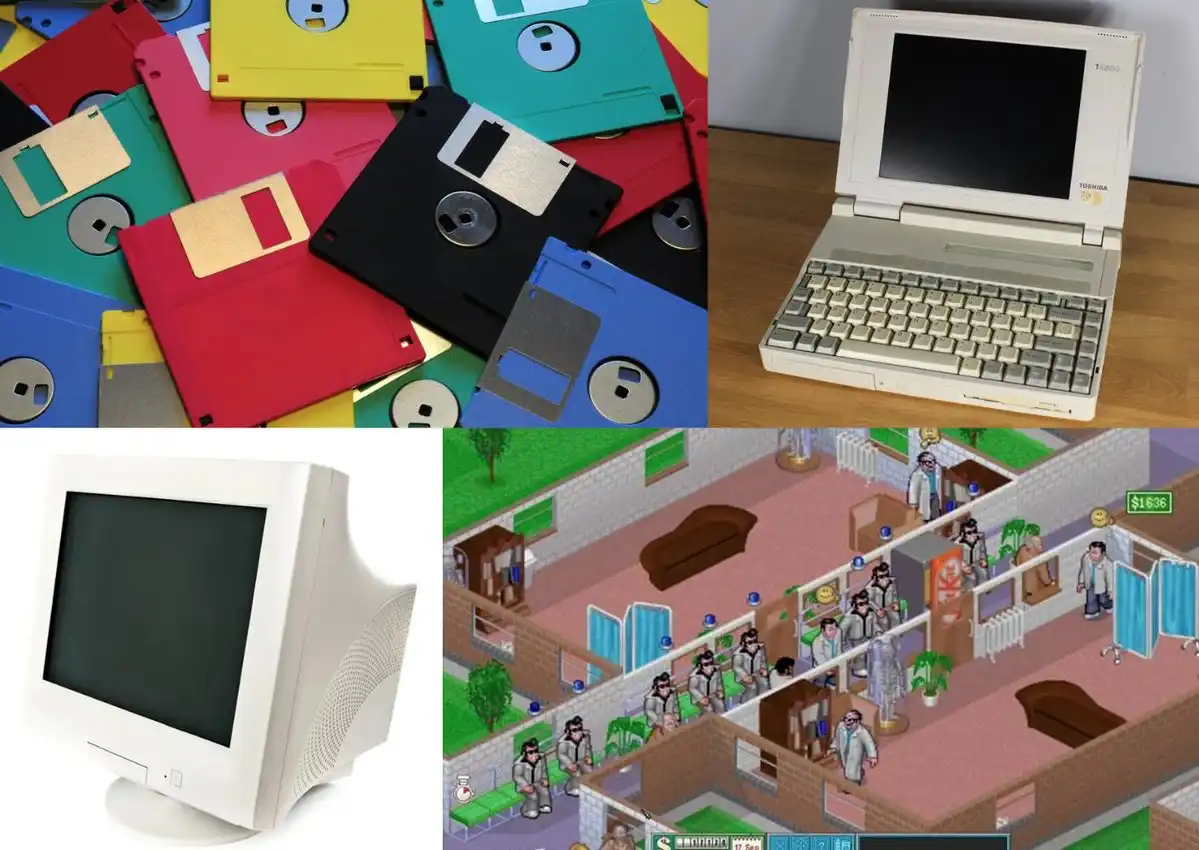
It's worth mentioning that there were single-player games back then, but they were pixelated games.

AI: Infrastructure Leaders Soar, Products Growing

Looking at the AI industry, stock prices have surged, but the main gainers are AI leaders, primarily in infrastructure—NVIDIA, AMD, SK Hynix, Samsung, Micron... This is because AI requires extensive training before deployment. On the supply side, AI does not have the exaggerated bubble seen in 2000. At least these leading AI companies do have considerable profits.

On the demand side, we can at least see Gemini, Claude, GPT, Doubao... various UGC applications. And the recently popular Lobster, the newly launched Perplexity Personal Computer... the highly eye-catching AI robots at the Spring Festival Gala... Although the breadth of AI products still can't be compared to that of the internet in 2000, this is because AI development has high infrastructure requirements. AI needs to develop its infrastructure first before it can integrate into more types of applications.

Web3: Technology as a Gimmick, Applications Few and Far Between

Circulating Market Cap and Profit

Now look at the Web3 industry. Various technological narratives emerge one after another, but how many applications actually have users? Aside from a handful of DeFi leaders, there might only be MEME platforms, prediction markets, and Perp DEXs, with much of the activity in the latter two coming from interaction behaviors driven by airdrop expectations.

Corresponding to the scarcity of products on the demand side is the self-indulgence on the supply side.

⏵ Example from the ZK track: ZKsync with a daily income of $458 has a circulating market cap of $176 million, equivalent to a P/E ratio of 1052.

⏵ Example from the L2 track: Optimism with a daily income of $2,427 has a circulating market cap of $253 million, equivalent to a P/E ratio of 285.

⏵ Example from the L1 track: Sei with a daily income of $3,564 has a circulating market cap of $424 million, equivalent to a P/E ratio of 327.

And there's Blast with a daily income of -$6...
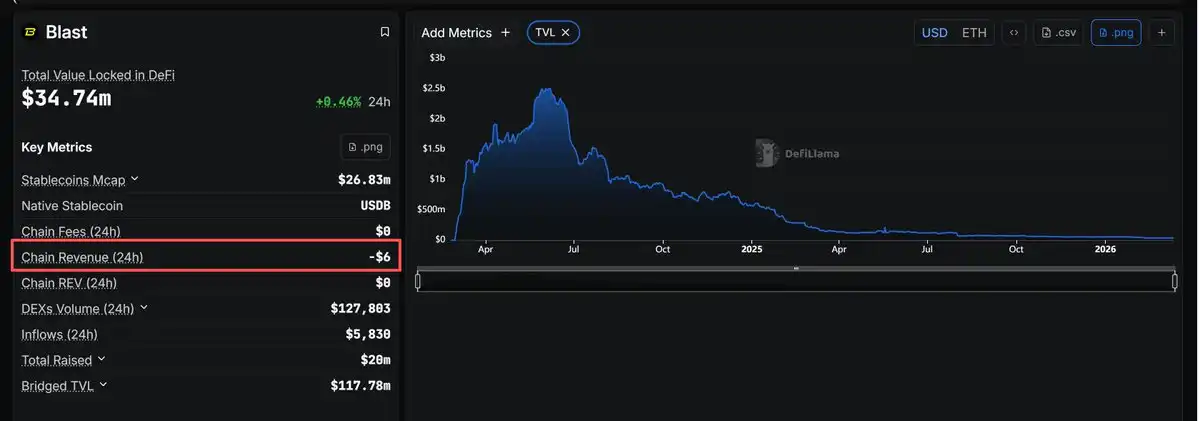
If we follow stock market logic, shareholders of the first three projects would have to wait 1052 years, 285 years, and 327 years respectively to break even, and this doesn't even include the infrastructure and operational costs required to keep these chains running.

Although these ecosystems are not meant to break even and profit from on-chain revenue, for shareholders, i.e., token holders, this is a nightmare...

What Web3 Applications Are There?

Now, what Web3 applications are there?

Former applications like the metaverse,链游, inscriptions, social... and probably some others we can't even remember are almost never mentioned now.

Currently, besides DeFi and RWA, the only ones with users are almost just meme coins, prediction markets, and perp DEXs. Among these, meme coins are PvP among existing capital, and part of the activity in prediction markets and Perp DEXs is still driven by interaction behaviors due to airdrop expectations.

Compared to the internet applications mentioned from 2000, Web3 applications are truly few and far between...

Final Thoughts

Therefore, the sector that is truly indulging on the supply side while lacking achievement on the demand side is not AI, but Web3.

US stock market players overlap with those from 26 years ago. Investors and Wall Street are deliberately avoiding a repeat of history. AI has a bubble, but it differs from the 2000 internet bubble.

Instead, it's the younger Web3 field where capital is speculating on technology on the supply side, while the demand side has few truly practical products. This is the true reappearance of the 2000 internet bubble.

Based on the reasoning of a moderate AI泡沫 and a high Web3泡沫:

  • First, the US stock market will correct, but a crash like in 2000 is unlikely.
  • Second, BTC, which is correlated with US stocks, will be moderately affected.
  • Third, just like the 2000 internet bubble,山寨币 will continue to be washed out, forming a painful process of separating the wheat from the chaff. This process might be even longer than I imagine.

So far,山寨币 have generally been falling for about 15 months since the end of 2024, but this is not the end.

Don't believe the talk that山寨币 have bottomed out. Some have, others have no bottom.

Related Questions

QAccording to the article, which sector is more likely to repeat the 2000 internet bubble: AI or Web3?

AThe article argues that Web3 is more likely to repeat the 2000 internet bubble, not AI.

QWhat was a key characteristic of the supply side during the 2000 internet bubble?

AA key characteristic was that capital was indulging in self-amusement on the supply side, with many internet companies having no profits or cash flow but their stock prices soared wildly.

QHow does the article describe the current state of Web3 applications?

AThe article describes Web3 applications as scarce and lacking truly practical products, with only a handful like some DeFi leaders, meme platforms, prediction markets, and perpetual DEXs having users, some of which are driven by airdrop expectations.

QWhat is the article's view on the profitability and valuation of major Web3 infrastructure projects like ZKsync, Optimism, and Sei?

AThe article highlights their extremely high Price-to-Earnings (PE) ratios (e.g., 1052 for ZKsync) based on meager daily revenues, suggesting it would take centuries for token holders to recoup their investment, representing a nightmare for them.

QWhat are the article's three main predictions based on its analysis of AI and Web3 bubbles?

A1. The U.S. stock market will correct but is unlikely to crash like in 2000. 2. Bitcoin, being associated with U.S. stocks, will be moderately affected. 3. Altcoins will continue to be washed out in a painful process of eliminating the false and preserving the true, which may be a prolonged cycle.

Related Reads

The King of Blind Date Attire in Korea: How SK Hynix Made a Comeback Against Samsung?

In South Korea's dating scene, SK Hynix employees are now highly sought after, a status shift fueled by the company's astronomical profits and employee bonuses, projected to reach up to 6.1 million RMB per person by 2027. This marks a dramatic reversal for the long-time second-place player in memory semiconductors, which has now surpassed its rival Samsung in annual operating profit. The turnaround story began in 2008 when a struggling Hynix, emerging from bankruptcy restructuring, took a risky bet by agreeing to develop High Bandwidth Memory (HBM) with AMD. At the time, HBM had no clear market beyond high-end graphics cards and was a costly, complex technology. Major players like Samsung, pursuing its own HMC technology, declined. For Hynix, with only memory as its core business, it was a gamble born of necessity. The pivotal moment came in 2012 when SK Group Chairman Chey Tae-won acquired Hynix. Defying industry downturns, he invested heavily in R&D and fabrication, sustaining the HBM project through over a decade of commercial uncertainty and internal challenges. A key break occurred around 2016-2017 when Samsung faced production issues supplying HBM2 for Google's TPU, allowing SK Hynix to gain a crucial foothold in the data center market. The AI explosion post-ChatGPT in 2022 was the catalyst, turning HBM into a critical bottleneck for AI accelerators like NVIDIA's GPUs. By 2025, SK Hynix captured 62% of the global HBM market, leaving Samsung at 17%. For the first time, its annual operating profit exceeded Samsung's. Analysts point to the "innovator's dilemma" to explain Samsung's miss: its vast, successful business portfolio made it risk-averse, preventing an all-in bet on the initially niche HBM technology. In contrast, SK Hynix, as a challenger with its back against the wall, had no choice but to commit fully. The story highlights how Korea's chaebol system allows for ultra-long-term bets beyond quarterly pressures. However, SK Hynix's lead isn't guaranteed. Samsung is aggressively catching up on HBM4, and challenges like customer concentration (heavy reliance on NVIDIA) and technical hurdles in advanced packaging remain. The narrative underscores a market truth: the greatest alpha often comes from betting on uncertain, long-term directions others dismiss, much like HBM in 2008.

marsbit12m ago

The King of Blind Date Attire in Korea: How SK Hynix Made a Comeback Against Samsung?

marsbit12m ago

Understanding Hash in One Article: The "Browser Miner" on Ethereum

Hash is an Ethereum-based ERC-20 token described as a "browser-minable post-quantum token." Its key features include enabling browser-based GPU mining without specialized hardware, a fixed supply cap of 21 million tokens, immutable and permissionless smart contracts with no team allocation or pre-mining, and an emphasis on post-quantum security using Keccak256 hashing. The mining mechanism is a simplified on-chain proof-of-work where miners solve unique challenges tied to their wallet address. Key design elements prevent answer theft, with epochs resetting every 100 blocks (~20 minutes) and a per-block minting limit. Emission follows a Bitcoin-like halving schedule every 100,000 mints, starting at 100 tokens per mint. Projections suggest all tokens could be mined within approximately 294 days if a target rate of one mint per minute is sustained. Hash emphasizes "post-quantum" security by leveraging hash-based primitives like Keccak256, which are considered more resistant to quantum attacks compared to elliptic-curve cryptography. While not a fully post-quantum asset, it aligns with Ethereum's broader post-quantum research narrative. The project completed its Genesis sale at $0.03 and began trading on Uniswap, with its price reaching around $0.19. The initial circulating supply is small, with 5% sold in Genesis and 5% allocated to liquidity. The majority (47.6% of total supply) is allocated to early-stage mining, leading to a front-loaded emission schedule. This structure, combined with low initial liquidity, makes Hash a high-volatility, high-risk project dependent on sustained miner participation and market demand to absorb new supply.

marsbit26m ago

Understanding Hash in One Article: The "Browser Miner" on Ethereum

marsbit26m ago

OpenAI's Largest Internal Wealth Creation: 600 People Cash Out a Total of $6.6 Billion, 75 Take Home the Maximum $30 Million Each

A Wall Street Journal report reveals OpenAI's unprecedented pre-IPO wealth creation. In a single employee stock sale last October, over 600 current and former employees sold shares, collectively cashing out approximately $6.6 billion. Due to high investor demand, the company tripled the individual sale cap to $30 million, with about 75 employees selling the maximum amount. This event represents the largest such transaction in tech industry history for a private company. OpenAI's valuation was $500 billion for this tender offer. Employees with over two years of tenure were eligible, allowing many post-ChatGPT hires their first liquidity event. The company's stock has reportedly grown over 100-fold in seven years. Following a restructuring, employees collectively hold about 26% of OpenAI. The scale of executive wealth is also staggering. In court testimony related to Elon Musk's lawsuit, President and co-founder Greg Brockman confirmed his OpenAI stake is worth around $30 billion. Analysis indicates about 165 current and former employees hold a combined ~$164.9 billion in equity, averaging nearly $1 billion per person in paper wealth. OpenAI's per-employee stock-based compensation is estimated to be 34 times the average of major tech firms before their IPOs. OpenAI continues its rapid ascent, closing a $122 billion funding round at an $852 billion valuation in March. With monthly revenue hitting $2 billion, over 900 million weekly ChatGPT users, and plans for a potential trillion-dollar IPO in late 2026, this wealth-creation engine shows no signs of stopping.

链捕手48m ago

OpenAI's Largest Internal Wealth Creation: 600 People Cash Out a Total of $6.6 Billion, 75 Take Home the Maximum $30 Million Each

链捕手48m ago

Trading

Spot
Futures

Hot Articles

Discussions

Welcome to the HTX Community. Here, you can stay informed about the latest platform developments and gain access to professional market insights. Users' opinions on the price of AI (AI) are presented below.

活动图片















