The Most Mysterious Boss Lady: She Founded a VC Firm

marsbitPublished on 2026-08-17Last updated on 2026-08-17

Abstract

"The Most Mysterious 'Boss's Wife' Who Started a VC" Recently, a name has been frequently mentioned among investors—Yang Jingting, the founder behind XINHE Capital. While not widely known herself, her husband is Liu Sheng, Chairman of trillion-dollar market cap company Zhongji Innolight. The couple entered the public eye during a Tsinghua University donation ceremony in April. However, Yang has been quietly building a significant investment portfolio through XINHE Capital since 2021, where she holds a 90% stake. With a background starting in 2014 across various investment firms, she now focuses XINHE Capital on upstream photonics and semiconductor sectors like materials, chips, and equipment, targeting data centers, smart devices, and automotive. The fund has accelerated its pace in 2024. Yang's broader activities include direct investments (e.g., Suzhou Suna Optoelectronics) and acting as an LP in funds like those from Yongxin Fangzhou and Qianrong Holdings. Her investments are strategically separate from her husband's core business. Her story is part of a larger trend: China's industrial tycoons are increasingly moving into tech VC. Examples include "Glass Queen" Zhou Qunfei (Lens Technology) investing in AI, Zhu Xingming (Inovance Technology) via family office Minghui Investment targeting brain-computer interfaces, and Luxshare Precision's family office. Liu Yi (Andon Health) recently participated in DeepSeek's funding round. These entrepreneurs leverage their industr...

"Do you know the fund run by the wife of Zhongji Innolight's boss? Looking for an introduction."

Recently, while networking with investors, one name has been mentioned frequently—Xinhe Capital, backed by a female investor: Yang Jingting.

The outside world might not be familiar with this name, but mention her husband—Liu Sheng, Chairman of Zhongji Innolight—and everyone recognizes him. This past April, the couple made a public appearance together at a donation ceremony at Tsinghua University, marking the first time Yang Jingting stepped into the public eye.

But in fact, over the years, she has been quietly leading Xinhe Capital and has already built a hidden investment portfolio.

The Wife of Zhongji Innolight's Boss, Runs a VC Firm

Unraveling the story starts with a donation.

In April this year, Tsinghua University's Schwarzman College announced a donation—Liu Sheng, a 1989 alumnus and Chairman of Zhongji Innolight, and his wife Yang Jingting donated to Tsinghua University to support the construction and development of Schwarzman College. A group photo from the ceremony included key figures such as Liu Sheng and Yang Jingting, and Stephen Schwarzman, head of Blackstone.
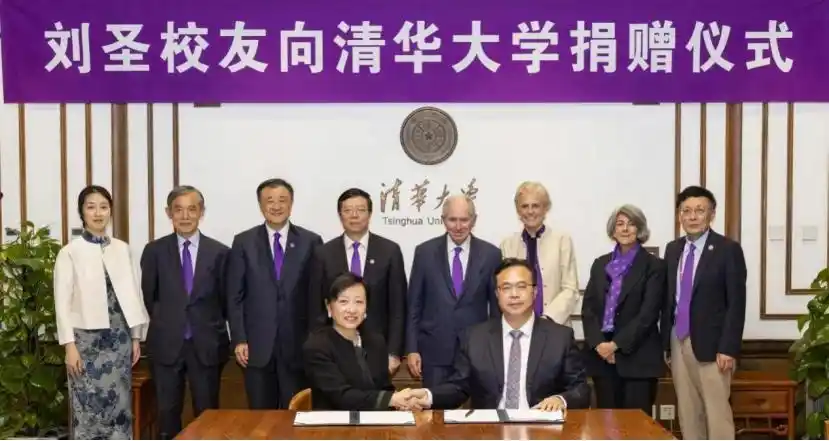
Image Source

Liu Sheng is no stranger to the public. According to Zhongji Innolight's previous H-share listing prospectus, Liu Sheng graduated with a bachelor's degree in Mechanical Engineering from Tsinghua University in 1994, then pursued a master's degree in Industrial Automation at the Chinese Academy of Sciences' Institute of Automation. The company he leads, Zhongji Innolight, broke the trillion-yuan market capitalization mark this year.

His spouse—Yang Jingting—is extremely low-profile, with almost no past information about her available online. This donation to Tsinghua University is likely the first time the public has seen her openly.

Tianyancha (a Chinese corporate data platform) shows that Yang Jingting is associated with nearly 20 companies. These include direct investments in single projects, LP investments in venture capital funds, and a fund she personally operates—Xinhe Capital.

The private fund manager for Xinhe Capital is Hainan Xinhe Private Fund Management Partnership (Limited Partnership) (abbreviation: Hainan Xinhe). According to information disclosed by the Asset Management Association of China, the executive partner of Hainan Xinhe is Zhu Rui, holding 10% of the shares, while Yang Jingting holds 90%. Zhu Rui previously served as Investment Director in the Investment Department of Zhongji Innolight.
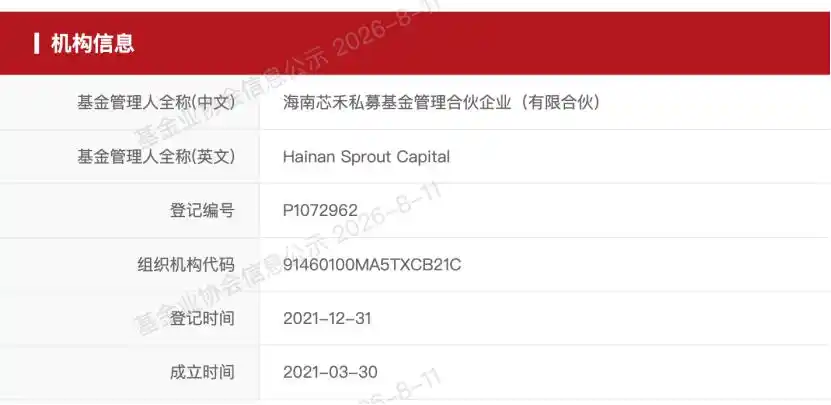
Yang Jingting's resume also emerges. According to AMAC information, from July 2009 to June 2013, she served as Assistant to the Chairman in the President's Office of Shanghai Xintaiyang Real Estate Co., Ltd.

Starting in February 2014, she officially began her professional investment career, working successively at Suzhou Garden Construction Industry Equity Co., Ltd., Changzhou Qizhi Investment Management Co., Ltd., Suzhou Industrial Park Jimu Growth Investment Management Partnership (Limited Partnership), and Changzhou Naxin Venture Capital Partnership (Limited Partnership). She held positions such as Deputy General Manager of Marketing, Risk Control Director, Senior Advisor and Member of the Investment Decision Committee.

In March 2021, Hainan Xinhe was registered and established, with the institution type being Private Equity and Venture Investment Fund Manager, managing assets of 1-2 billion RMB. In August of the same year, Yang Jingting joined, serving as Partner, Information Filing Responsible Person, and Deputy General Manager in the General Office of Hainan Xinhe.
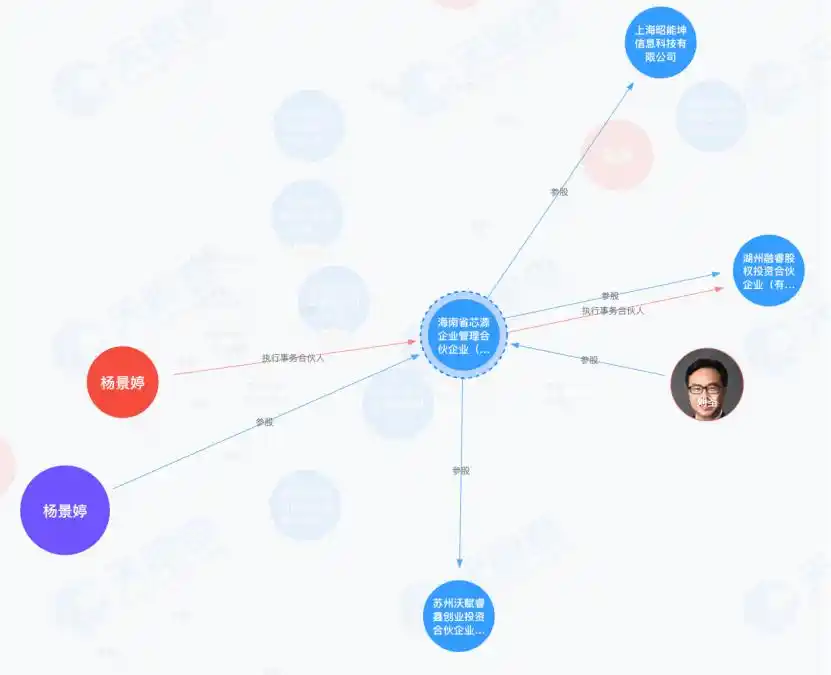
Overall, Yang Jingting does not have many direct business connections with her husband Liu Sheng; they jointly hold shares in only two companies: Hainan Province Xinyuan Enterprise Management Partnership (Limited Partnership) and Shanghai Changge Enterprise Management Co., Ltd., both with Yang Jingting holding 51% and Liu Sheng holding 49%. The former has invested in a sub-fund under Wofu Capital.

Unveiling the Investment Portfolio

Peeling back the layers reveals a hidden investment map.

First, direct investments. Yang Jingting directly invested in Suzhou Suna Optoelectronic Co., Ltd.. Founded in 2014 by technology professionals from Tsinghua University and the Chinese Academy of Sciences, the company focuses deeply on the fields of optical communication and optical sensing chips. Backers include SDIC Capital, Forise Fund, Yongxin Ark, Wofu Capital, among others. Suna Optoelectronic has now initiated its IPO process.

As an LP, Yang Jingting has invested in Yongxin Ark's sub-fund "Suzhou Yongxin Ronghui Venture Capital Partnership (Limited Partnership)", as well as two sub-funds under Qianrong Holdings.

Recall in April this year, Wei Yong, Managing Partner of Yongxin Ark, mentioned to us the origin of their connection with Zhongji Innolight—as early as 2016, Yongxin Ark invested in Zhongji Innolight, which was Wei Yong's first deal after founding the fund, a single investment exceeding 180 million RMB.

Yang Jingting's core investment platform, however, is still Xinhe Capital.

This institution focuses on upstream core segments such as optoelectronic semiconductor materials, chips, components, and equipment parts, primarily investing in cutting-edge fields like data centers, smart terminals, and smart vehicles. Since its establishment in 2021, Xinhe Capital hasn't made many investments, but this year has been particularly active, investing in about 13 projects since the beginning of the year, double that of last year.

In July 2026, fourth-generation semiconductor company Mingjia Semiconductor completed a Pre-B round of financing exceeding 150 million RMB, with Xinhe Capital participating. In the same month, Hefei Jiusi Electronics completed its A+ round of financing, led by Xinhe Capital. Earlier, Xinhe Capital also invested in semiconductor companies like Vertilite.

In the field of optical interconnection and photonics, Xinhe Capital participated in the nearly 500 million RMB Series A financing of Guanglian Xinke in June this year. In the power semiconductor field, it just invested in Xizhi Technology, which specializes in automotive-grade power and power supply modules. Additionally, Xinhe Capital has invested in tech companies like Qinghe Jingyuan and JBD (Jade Bird Display) and, last year, signed an agreement with Huaian to establish the Xinhe Ningrui Fund to promote regional industrial upgrading and advanced manufacturing project landing.
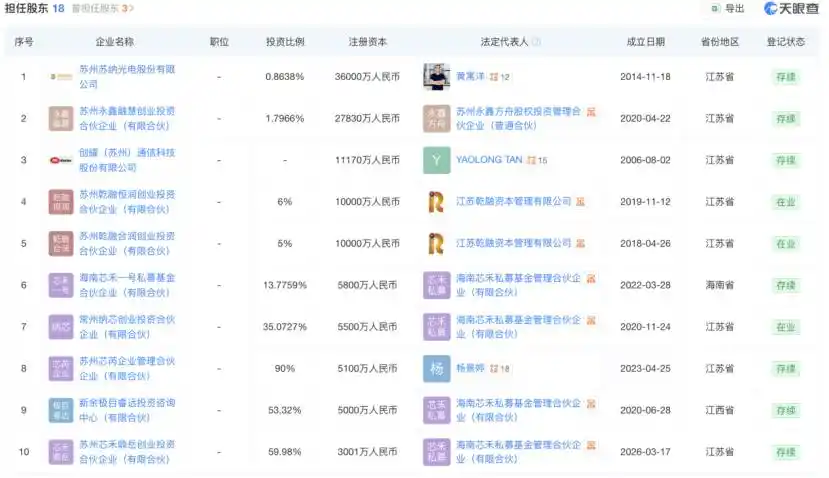
From semiconductor materials to optical interconnection, from power devices to equipment components, Xinhe Capital's path is distinct—making systematic strategic investments around key nodes of the optoelectronic semiconductor industry chain.

Betting on the Next Future

Looking from this perspective, a trend is becoming increasingly clear: Chinese tycoons who built their fortunes in industry are collectively turning their attention to the technology sector. They are no longer content with just being LPs but are getting directly involved, using family offices or their own capital to bet on the next generation of technology.

A look at this year's batch of star AI companies reveals the dense presence of Lens Technology behind them. Behind this is a female leader, Zhou Qunfei, who wrote a legendary entrepreneurial story with a piece of glass, becoming the "Glass Queen" presiding over a hundred-billion-yuan market cap. In recent years, she and Lens Technology have begun appearing in the VC circle, investing in a batch of star companies like BrainCo, Star Atlas, Qingtian Zu, Kuawei Intelligence, Zuji Dynamics, and Gestalt Technology.

Zhu Xingming, Chairman of Inovance Technology, which commands a market cap of hundreds of billions, has been deploying in frontier technology through the family office "Minghui Investment", mainly investing in areas like brain-computer interfaces and AI computing. Earlier this year, it invested in the hundred-billion embodied intelligence unicorn Qianxun Intelligence. Luxshare Precision, with a market cap close to 500 billion, also established a family office—Liling Fund, investing in tech companies like Winanor Chip, SMIC Integration, and Xinlian Power.

Not long ago, in the first round of financing for DeepSeek, the unexpected appearance of Andon Health was noted. At its helm is Liu Yi, who built Andon Health, a 30-billion-yuan market cap company, from scratch. After achieving financial freedom, he extended his reach into the venture capital circle: acting as an LP investing in funds like MiraclePlus and 9F Capital, and also directly investing in star projects like Moonshot AI (Kimi), Stepfun, Zhiyuan Robot, and Independent Variable Robot.

Summarizing, these entrepreneurs share common traits: they have accumulated deep industrial knowledge and massive wealth in the industrial sector, and are now using that knowledge and wealth to define the next generation of technology. Compared to financial investment, they offer not just money, but also orders, application scenarios, and industrial chain synergy.

The flow of money is always profoundly influential.

For a long time in the past, the money of China's wealthy often flowed into real estate and traditional manufacturing. Now the tide is turning, with large amounts of capital collectively rushing into frontier hard-tech fields like AI, semiconductors, embodied intelligence, brain-computer interfaces, and controlled nuclear fusion. After all, this is the direction of the future; falling behind means being out of the game.

This article is from the WeChat public account "PEdaily" (ID: pedaily2012), author: Zhou Jiali.

Trending Cryptos

Related Questions

QWho is Yang Jingting and what is her main business role as described in the article?

AYang Jingting is the wife of Liu Sheng, the chairman of Zhongji Innolight. She is a low-profile investor who leads Xinhe Capital, a venture capital firm focused on upstream segments of the optoelectronic semiconductor industry.

QWhat company does Yang Jingting directly invest in, according to the article?

AShe directly invests in Suzhou Suna Optoelectronic Co., Ltd., a company in the optical communication and sensing chip field that is preparing for an IPO.

QWhat are the main investment areas of Xinhe Capital, the VC firm led by Yang Jingting?

AXinhe Capital focuses on upstream core areas of the optoelectronic semiconductor industry, including materials, chips, components, and equipment. It invests in sectors like data centers, smart terminals, and smart vehicles.

QAccording to the article, what is a common trend among China's wealthy entrepreneurs who built their fortunes in traditional industries?

AThey are increasingly shifting their capital from real estate and traditional manufacturing to invest directly in cutting-edge hard tech sectors like AI, semiconductors, embodied intelligence, and brain-computer interfaces, often through family offices or personal funds.

QApart from Yang Jingting, which other female entrepreneur is mentioned as having entered the VC space with her company's investments?

AZhou Qunfei, the chairwoman of Lens Technology, known as the 'Glass Queen,' has led her company to invest in AI startups like BrainCo, Singularity, and LimX Dynamics.

Related Reads

Report on the State of the Crypto Industry by 2026, Featuring Sumsub Vice President for North America, Danielle LaBarbera

The cryptocurrency industry is entering an era of regulated maturity, driven by frameworks like the CLARITY Act and the $GENIUS Act in the US. These provide clearer rules but also raise operational standards, requiring platforms to effectively demonstrate compliance. Simultaneously, fraud is evolving into sophisticated, AI-powered, lifecycle-based attacks, moving beyond simple onboarding scams. According to Daniel LaBarbera, VP of Sumsub for North America, companies must shift from one-time KYC checks to continuous, risk-based verification. This involves integrating identity, behavioral, device, and transaction data into a unified risk view. The 2026 State of Crypto Industry report highlights that while 55% of crypto firms faced fraud last year, effective strategies now combine AI-driven detection, continuous monitoring, and behavioral analytics. Key compliance challenges persist, particularly with the Travel Rule. Only 23% of companies are fully compliant, with high implementation costs, data security concerns, and regulatory fragmentation being major hurdles. Meanwhile, stablecoins are gaining traction, accounting for 36% of all crypto transactions in 2025, and evolving from trading tools into financial infrastructure for payments and settlements. The path forward lies in risk-based approaches that balance security, speed, and user experience. This includes adopting documentless verification, reusable KYC, and breaking down silos between compliance functions to create a holistic, lifecycle view of customer risk and trust.

cryptonews.ru6m ago

Report on the State of the Crypto Industry by 2026, Featuring Sumsub Vice President for North America, Danielle LaBarbera

cryptonews.ru6m ago

U.S. National Debt Approaches $40 Trillion in 5 Months, Bitcoin Debate Gains Momentum

The US national debt has surged to nearly $40 trillion in just five months, the fastest trillion-dollar increase on record. The debt's growth has accelerated dramatically over time, from taking 192 years to reach the first $1 trillion in 1981 to adding the latest $1 trillion in only five months. The federal budget deficit for the fiscal year is already over $1.8 trillion, exceeding last year's total, and net interest payments on the debt have surpassed $1 trillion, now exceeding defense or Medicare spending. This rapid debt accumulation is fueling arguments within the cryptocurrency industry that Bitcoin serves as a hedge against government-backed currencies and fiscal irresponsibility. Proponents, including some lawmakers and industry leaders, argue Bitcoin could act as a "hard currency" fiscal control mechanism. Legislation has even been proposed for the Treasury to acquire Bitcoin to help reduce the national debt. The International Monetary Fund has warned that global public debt could hit 100% of world GDP by 2029 if current trends continue, with the US and China as primary drivers. Some analyses suggest a sovereign debt crisis could drive capital into alternative assets like Bitcoin, similar to past regional banking crises. However, skeptics point out that both Bitcoin and gold have fallen in price at times during 2026 despite record debt, indicating the depreciation hedge theory may operate over a much longer timeframe than short-term price action.

cryptonews.ru16m ago

U.S. National Debt Approaches $40 Trillion in 5 Months, Bitcoin Debate Gains Momentum

cryptonews.ru16m ago

Technological Self-Reliance in China: A War from Lithography Machines to ABF Films

"China's Tech Independence: A Battle from Lithography Machines to ABF Film" In August 2026, Japan's Ajinomoto announced a 30% supply cut of ABF film to Chinese mainland clients, causing industry-wide shock and fears of price hikes and shortages in the semiconductor supply chain. That same year, Chinese company Lotus Holdings, known for its MSG business, acquired a small domestic ABF film startup for 103 million yuan, aiming to change this passive situation. ABF film is a core insulating material for advanced CPU, GPU, and AI chip packages. Ajinomoto, originally a food flavoring company, has monopolized over 95% of the global ABF film market for nearly 30 years, deriving its technology from byproducts of monosodium glutamate production. With AI chips consuming 5-10 times more ABF film than traditional chips, the supply-demand gap is widening. Ajinomoto's supply cut to China, where domestic ABF film production accounts for less than 5%, directly threatens the production of domestic high-end AI chips and their substrates. This incident highlights a crucial but often overlooked truth: the vulnerabilities in China's quest for technological self-reliance extend beyond headline areas like lithography machines to critical but seemingly minor components—insulating films, photoresists, electronic specialty gases, etc. The article frames China's tech independence as a multi-front war. While major breakthroughs have been achieved in chip design (e.g., Huawei's HiSilicon), foundry (e.g., SMIC), and memory chips (e.g., YMTC), countless smaller "Ajinomoto-style" chokepoints remain. Lotus Holdings' acquisition represents a significant shift: the battle is no longer fought only by tech giants but has become a collective, industry-wide effort involving companies from diverse backgrounds. Historically, external blockades have often spurred China's technological breakthroughs, as seen with Huawei's Kirin chips and YMTC's 3D NAND flash memory. Ajinomoto's supply cut, while a short-term challenge, may similarly catalyze domestic innovation in ABF film and other critical materials. The path to technological sovereignty is long and arduous, requiring sustained patience and investment to fill every gap in the complex supply chain. Lotus's move is not an immediate solution but a step towards that future, symbolizing a broader, relentless march toward independence.

marsbit35m ago

Technological Self-Reliance in China: A War from Lithography Machines to ABF Films

marsbit35m ago

Trading

Spot

Hot Articles

What is SONIC

Sonic: Pioneering the Future of Gaming in Web3 Introduction to Sonic In the ever-evolving landscape of Web3, the gaming industry stands out as one of the most dynamic and promising sectors. At the forefront of this revolution is Sonic, a project designed to amplify the gaming ecosystem on the Solana blockchain. Leveraging cutting-edge technology, Sonic aims to deliver an unparalleled gaming experience by efficiently processing millions of requests per second, ensuring that players enjoy seamless gameplay while maintaining low transaction costs. This article delves into the intricate details of Sonic, exploring its creators, funding sources, operational mechanics, and the timeline of significant events that have shaped its journey. What is Sonic? Sonic is an innovative layer-2 network that operates atop the Solana blockchain, specifically tailored to enhance the existing Solana gaming ecosystem. It accomplishes this through a customised, VM-agnostic game engine paired with a HyperGrid interpreter, facilitating sovereign game economies that roll up back to the Solana platform. The primary goals of Sonic include: Enhanced Gaming Experiences: Sonic is committed to offering lightning-fast on-chain gameplay, allowing players and developers to engage with games at previously unattainable speeds. Atomic Interoperability: This feature enables transactions to be executed within Sonic without the need to redeploy Solana programmes and accounts. This makes the process more efficient and directly benefits from Solana Layer1 services and liquidity. Seamless Deployment: Sonic allows developers to write for Ethereum Virtual Machine (EVM) based systems and execute them on Solana’s SVM infrastructure. This interoperability is crucial for attracting a broader range of dApps and decentralised applications to the platform. Support for Developers: By offering native composable gaming primitives and extensible data types - dining within the Entity-Component-System (ECS) framework - game creators can craft intricate business logic with ease. Overall, Sonic's unique approach not only caters to players but also provides an accessible and low-cost environment for developers to innovate and thrive. Creator of Sonic The information regarding the creator of Sonic is somewhat ambiguous. However, it is known that Sonic's SVM is owned by the company Mirror World. The absence of detailed information about the individuals behind Sonic reflects a common trend in several Web3 projects, where collective efforts and partnerships often overshadow individual contributions. Investors of Sonic Sonic has garnered considerable attention and support from various investors within the crypto and gaming sectors. Notably, the project raised an impressive $12 million during its Series A funding round. The round was led by BITKRAFT Ventures, with other notable investors including Galaxy, Okx Ventures, Interactive, Big Brain Holdings, and Mirana. This financial backing signifies the confidence that investment foundations have in Sonic’s potential to revolutionise the Web3 gaming landscape, further validating its innovative approaches and technologies. How Does Sonic Work? Sonic utilises the HyperGrid framework, a sophisticated parallel processing mechanism that enhances its scalability and customisability. Here are the core features that set Sonic apart: Lightning Speed at Low Costs: Sonic offers one of the fastest on-chain gaming experiences compared to other Layer-1 solutions, powered by the scalability of Solana’s virtual machine (SVM). Atomic Interoperability: Sonic enables transaction execution without redeployment of Solana programmes and accounts, effectively streamlining the interaction between users and the blockchain. EVM Compatibility: Developers can effortlessly migrate decentralised applications from EVM chains to the Solana environment using Sonic’s HyperGrid interpreter, increasing the accessibility and integration of various dApps. Ecosystem Support for Developers: By exposing native composable gaming primitives, Sonic facilitates a sandbox-like environment where developers can experiment and implement business logic, greatly enhancing the overall development experience. Monetisation Infrastructure: Sonic natively supports growth and monetisation efforts, providing frameworks for traffic generation, payments, and settlements, thereby ensuring that gaming projects are not only viable but also sustainable financially. Timeline of Sonic The evolution of Sonic has been marked by several key milestones. Below is a brief timeline highlighting critical events in the project's history: 2022: The Sonic cryptocurrency was officially launched, marking the beginning of its journey in the Web3 gaming arena. 2024: June: Sonic SVM successfully raised $12 million in a Series A funding round. This investment allowed Sonic to further develop its platform and expand its offerings. August: The launch of the Sonic Odyssey testnet provided users with the first opportunity to engage with the platform, offering interactive activities such as collecting rings—a nod to gaming nostalgia. October: SonicX, an innovative crypto game integrated with Solana, made its debut on TikTok, capturing the attention of over 120,000 users within a short span. This integration illustrated Sonic’s commitment to reaching a broader, global audience and showcased the potential of blockchain gaming. Key Points Sonic SVM is a revolutionary layer-2 network on Solana explicitly designed to enhance the GameFi landscape, demonstrating great potential for future development. HyperGrid Framework empowers Sonic by introducing horizontal scaling capabilities, ensuring that the network can handle the demands of Web3 gaming. Integration with Social Platforms: The successful launch of SonicX on TikTok displays Sonic’s strategy to leverage social media platforms to engage users, exponentially increasing the exposure and reach of its projects. Investment Confidence: The substantial funding from BITKRAFT Ventures, among others, emphasizes the robust backing Sonic has, paving the way for its ambitious future. In conclusion, Sonic encapsulates the essence of Web3 gaming innovation, striking a balance between cutting-edge technology, developer-centric tools, and community engagement. As the project continues to evolve, it is poised to redefine the gaming landscape, making it a notable entity for gamers and developers alike. As Sonic moves forward, it will undoubtedly attract greater interest and participation, solidifying its place within the broader narrative of blockchain gaming.

2.4k Total ViewsPublished 2024.04.04Updated 2024.12.03

What is SONIC

What is $S$

Understanding SPERO: A Comprehensive Overview Introduction to SPERO As the landscape of innovation continues to evolve, the emergence of web3 technologies and cryptocurrency projects plays a pivotal role in shaping the digital future. One project that has garnered attention in this dynamic field is SPERO, denoted as SPERO,$$s$. This article aims to gather and present detailed information about SPERO, to help enthusiasts and investors understand its foundations, objectives, and innovations within the web3 and crypto domains. What is SPERO,$$s$? SPERO,$$s$ is a unique project within the crypto space that seeks to leverage the principles of decentralisation and blockchain technology to create an ecosystem that promotes engagement, utility, and financial inclusion. The project is tailored to facilitate peer-to-peer interactions in new ways, providing users with innovative financial solutions and services. At its core, SPERO,$$s$ aims to empower individuals by providing tools and platforms that enhance user experience in the cryptocurrency space. This includes enabling more flexible transaction methods, fostering community-driven initiatives, and creating pathways for financial opportunities through decentralised applications (dApps). The underlying vision of SPERO,$$s$ revolves around inclusiveness, aiming to bridge gaps within traditional finance while harnessing the benefits of blockchain technology. Who is the Creator of SPERO,$$s$? The identity of the creator of SPERO,$$s$ remains somewhat obscure, as there are limited publicly available resources providing detailed background information on its founder(s). This lack of transparency can stem from the project's commitment to decentralisation—an ethos that many web3 projects share, prioritising collective contributions over individual recognition. By centring discussions around the community and its collective goals, SPERO,$$s$ embodies the essence of empowerment without singling out specific individuals. As such, understanding the ethos and mission of SPERO remains more important than identifying a singular creator. Who are the Investors of SPERO,$$s$? SPERO,$$s$ is supported by a diverse array of investors ranging from venture capitalists to angel investors dedicated to fostering innovation in the crypto sector. The focus of these investors generally aligns with SPERO's mission—prioritising projects that promise societal technological advancement, financial inclusivity, and decentralised governance. These investor foundations are typically interested in projects that not only offer innovative products but also contribute positively to the blockchain community and its ecosystems. The backing from these investors reinforces SPERO,$$s$ as a noteworthy contender in the rapidly evolving domain of crypto projects. How Does SPERO,$$s$ Work? SPERO,$$s$ employs a multi-faceted framework that distinguishes it from conventional cryptocurrency projects. Here are some of the key features that underline its uniqueness and innovation: Decentralised Governance: SPERO,$$s$ integrates decentralised governance models, empowering users to participate actively in decision-making processes regarding the project’s future. This approach fosters a sense of ownership and accountability among community members. Token Utility: SPERO,$$s$ utilises its own cryptocurrency token, designed to serve various functions within the ecosystem. These tokens enable transactions, rewards, and the facilitation of services offered on the platform, enhancing overall engagement and utility. Layered Architecture: The technical architecture of SPERO,$$s$ supports modularity and scalability, allowing for seamless integration of additional features and applications as the project evolves. This adaptability is paramount for sustaining relevance in the ever-changing crypto landscape. Community Engagement: The project emphasises community-driven initiatives, employing mechanisms that incentivise collaboration and feedback. By nurturing a strong community, SPERO,$$s$ can better address user needs and adapt to market trends. Focus on Inclusion: By offering low transaction fees and user-friendly interfaces, SPERO,$$s$ aims to attract a diverse user base, including individuals who may not previously have engaged in the crypto space. This commitment to inclusion aligns with its overarching mission of empowerment through accessibility. Timeline of SPERO,$$s$ Understanding a project's history provides crucial insights into its development trajectory and milestones. Below is a suggested timeline mapping significant events in the evolution of SPERO,$$s$: Conceptualisation and Ideation Phase: The initial ideas forming the basis of SPERO,$$s$ were conceived, aligning closely with the principles of decentralisation and community focus within the blockchain industry. Launch of Project Whitepaper: Following the conceptual phase, a comprehensive whitepaper detailing the vision, goals, and technological infrastructure of SPERO,$$s$ was released to garner community interest and feedback. Community Building and Early Engagements: Active outreach efforts were made to build a community of early adopters and potential investors, facilitating discussions around the project’s goals and garnering support. Token Generation Event: SPERO,$$s$ conducted a token generation event (TGE) to distribute its native tokens to early supporters and establish initial liquidity within the ecosystem. Launch of Initial dApp: The first decentralised application (dApp) associated with SPERO,$$s$ went live, allowing users to engage with the platform's core functionalities. Ongoing Development and Partnerships: Continuous updates and enhancements to the project's offerings, including strategic partnerships with other players in the blockchain space, have shaped SPERO,$$s$ into a competitive and evolving player in the crypto market. Conclusion SPERO,$$s$ stands as a testament to the potential of web3 and cryptocurrency to revolutionise financial systems and empower individuals. With a commitment to decentralised governance, community engagement, and innovatively designed functionalities, it paves the way toward a more inclusive financial landscape. As with any investment in the rapidly evolving crypto space, potential investors and users are encouraged to research thoroughly and engage thoughtfully with the ongoing developments within SPERO,$$s$. The project showcases the innovative spirit of the crypto industry, inviting further exploration into its myriad possibilities. While the journey of SPERO,$$s$ is still unfolding, its foundational principles may indeed influence the future of how we interact with technology, finance, and each other in interconnected digital ecosystems.

407 Total ViewsPublished 2024.12.17Updated 2024.12.17

What is $S$

What is AGENT S

Agent S: The Future of Autonomous Interaction in Web3 Introduction In the ever-evolving landscape of Web3 and cryptocurrency, innovations are constantly redefining how individuals interact with digital platforms. One such pioneering project, Agent S, promises to revolutionise human-computer interaction through its open agentic framework. By paving the way for autonomous interactions, Agent S aims to simplify complex tasks, offering transformative applications in artificial intelligence (AI). This detailed exploration will delve into the project's intricacies, its unique features, and the implications for the cryptocurrency domain. What is Agent S? Agent S stands as a groundbreaking open agentic framework, specifically designed to tackle three fundamental challenges in the automation of computer tasks: Acquiring Domain-Specific Knowledge: The framework intelligently learns from various external knowledge sources and internal experiences. This dual approach empowers it to build a rich repository of domain-specific knowledge, enhancing its performance in task execution. Planning Over Long Task Horizons: Agent S employs experience-augmented hierarchical planning, a strategic approach that facilitates efficient breakdown and execution of intricate tasks. This feature significantly enhances its ability to manage multiple subtasks efficiently and effectively. Handling Dynamic, Non-Uniform Interfaces: The project introduces the Agent-Computer Interface (ACI), an innovative solution that enhances the interaction between agents and users. Utilizing Multimodal Large Language Models (MLLMs), Agent S can navigate and manipulate diverse graphical user interfaces seamlessly. Through these pioneering features, Agent S provides a robust framework that addresses the complexities involved in automating human interaction with machines, setting the stage for myriad applications in AI and beyond. Who is the Creator of Agent S? While the concept of Agent S is fundamentally innovative, specific information about its creator remains elusive. The creator is currently unknown, which highlights either the nascent stage of the project or the strategic choice to keep founding members under wraps. Regardless of anonymity, the focus remains on the framework's capabilities and potential. Who are the Investors of Agent S? As Agent S is relatively new in the cryptographic ecosystem, detailed information regarding its investors and financial backers is not explicitly documented. The lack of publicly available insights into the investment foundations or organisations supporting the project raises questions about its funding structure and development roadmap. Understanding the backing is crucial for gauging the project's sustainability and potential market impact. How Does Agent S Work? At the core of Agent S lies cutting-edge technology that enables it to function effectively in diverse settings. Its operational model is built around several key features: Human-like Computer Interaction: The framework offers advanced AI planning, striving to make interactions with computers more intuitive. By mimicking human behaviour in tasks execution, it promises to elevate user experiences. Narrative Memory: Employed to leverage high-level experiences, Agent S utilises narrative memory to keep track of task histories, thereby enhancing its decision-making processes. Episodic Memory: This feature provides users with step-by-step guidance, allowing the framework to offer contextual support as tasks unfold. Support for OpenACI: With the ability to run locally, Agent S allows users to maintain control over their interactions and workflows, aligning with the decentralised ethos of Web3. Easy Integration with External APIs: Its versatility and compatibility with various AI platforms ensure that Agent S can fit seamlessly into existing technological ecosystems, making it an appealing choice for developers and organisations. These functionalities collectively contribute to Agent S's unique position within the crypto space, as it automates complex, multi-step tasks with minimal human intervention. As the project evolves, its potential applications in Web3 could redefine how digital interactions unfold. Timeline of Agent S The development and milestones of Agent S can be encapsulated in a timeline that highlights its significant events: September 27, 2024: The concept of Agent S was launched in a comprehensive research paper titled “An Open Agentic Framework that Uses Computers Like a Human,” showcasing the groundwork for the project. October 10, 2024: The research paper was made publicly available on arXiv, offering an in-depth exploration of the framework and its performance evaluation based on the OSWorld benchmark. October 12, 2024: A video presentation was released, providing a visual insight into the capabilities and features of Agent S, further engaging potential users and investors. These markers in the timeline not only illustrate the progress of Agent S but also indicate its commitment to transparency and community engagement. Key Points About Agent S As the Agent S framework continues to evolve, several key attributes stand out, underscoring its innovative nature and potential: Innovative Framework: Designed to provide an intuitive use of computers akin to human interaction, Agent S brings a novel approach to task automation. Autonomous Interaction: The ability to interact autonomously with computers through GUI signifies a leap towards more intelligent and efficient computing solutions. Complex Task Automation: With its robust methodology, it can automate complex, multi-step tasks, making processes faster and less error-prone. Continuous Improvement: The learning mechanisms enable Agent S to improve from past experiences, continually enhancing its performance and efficacy. Versatility: Its adaptability across different operating environments like OSWorld and WindowsAgentArena ensures that it can serve a broad range of applications. As Agent S positions itself in the Web3 and crypto landscape, its potential to enhance interaction capabilities and automate processes signifies a significant advancement in AI technologies. Through its innovative framework, Agent S exemplifies the future of digital interactions, promising a more seamless and efficient experience for users across various industries. Conclusion Agent S represents a bold leap forward in the marriage of AI and Web3, with the capacity to redefine how we interact with technology. While still in its early stages, the possibilities for its application are vast and compelling. Through its comprehensive framework addressing critical challenges, Agent S aims to bring autonomous interactions to the forefront of the digital experience. As we move deeper into the realms of cryptocurrency and decentralisation, projects like Agent S will undoubtedly play a crucial role in shaping the future of technology and human-computer collaboration.

1.1k Total ViewsPublished 2025.01.14Updated 2025.01.14

What is AGENT S

Discussions

Welcome to the HTX Community. Here, you can stay informed about the latest platform developments and gain access to professional market insights. Users' opinions on the price of S (S) are presented below.

活动图片